
Honey Pairing — Dubai & Abu Dhabi
Sidr & Manuka
Two Honeys That Complete Each Other
عسل السدر from the mountains of the Gulf. Manuka — عسل المانوكا — from the wilderness of New Zealand. Neither is better. Together they are something else entirely.
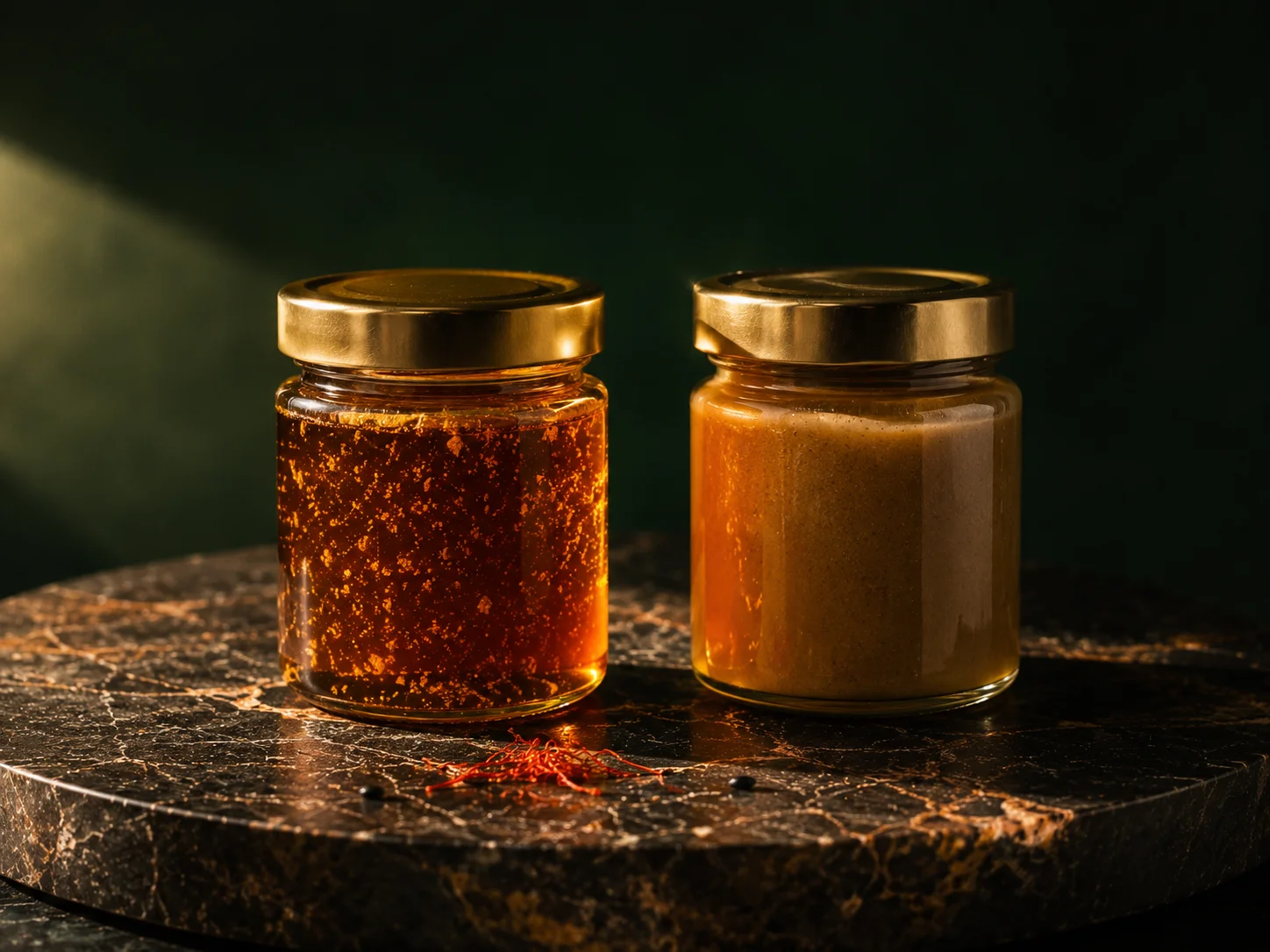
For years, the honey conversation in the UAE has been framed as a competition. Sidr versus Manuka. East versus West. Ancient tradition versus modern science. Buyers in Dubai and Abu Dhabi are pushed to choose sides, as if choosing one means dismissing the other. We think this is the wrong framing. These two honeys do not compete. They occupy different ground entirely — and understanding what each does that the other cannot is far more useful than declaring a winner.
Two Different Genius
عسل السدر — Sidr honey — comes from Ziziphus spina-christi, the jujube tree native to the Arabian Peninsula and referenced in the Quran. It blooms for a few weeks each year. The honey it produces is dense, amber-dark, with a warmth on the palate that lingers — caramel, wood, wildflower, all at once. Its phenolic profile is one of the richest of any monofloral honey. Its cultural weight in the Gulf is centuries deep.
Manuka — عسل المانوكا — comes from Leptospermum scoparium, a bush that grows in the remote wilderness of New Zealand. Its distinction is biochemical: a compound called methylglyoxal (MGO), found in no other honey at comparable concentrations, independently verified through UMF and MGO grading systems. Its flavour is assertive, slightly medicinal, unmistakably its own.
Both are genuinely rare. Both are genuinely monofloral. They share almost nothing else.
| Criterion | Sidr — عسل السدر | Manuka — عسل المانوكا |
|---|---|---|
| Source | Ziziphus spina-christi | Leptospermum scoparium |
| Origin | Yemen, UAE (Hatta), Oman, Morocco | New Zealand, parts of Australia |
| Colour | Deep amber to mahogany | Dark cream to warm brown |
| Taste | Warm, woody, long finish | Earthy, medicinal, intense |
| Key compound | High phenolics, natural enzymes | MGO (methylglyoxal), unique |
| Certification | Origin + pollen lab analysis | UMF / MGO graded, independent labs |
| Cultural weight | Quran, Gulf tradition, centuries | Modern science, global reputation |
Asking whether Sidr is better than Manuka is like asking whether the desert is more beautiful than the ocean. The question misses the point of both.
What Each Brings That the Other Cannot
Sidr — عسل السدر — offers something that no certification system can replicate: place. A jar from the Hatta mountains, 105 kilometres from Dubai at the border between the Emirates and Oman, carries a provenance story that is geographically and culturally local in a way that matters differently when you live here. Our Emirati Sidr from Hatta received recognition at the London Honey Awards 2022 — an external validation by people who tasted it without knowing its story first. Its flavour versatility is also unmatched: it dissolves beautifully in warm tea, pairs with labneh, carries emotional resonance in households from Sharjah to Abu Dhabi that no New Zealand product can claim.
Manuka — عسل المانوكا الأصلي — offers something different: precision. Its MGO activity is quantifiable and independently certified in a way that Sidr, with all its qualities, is not. For a buyer in Abu Dhabi who wants an externally verified biochemical guarantee, Manuka’s grading system is the most rigorous available in the honey market.
The choice between them has always been a false one. Use the one that fits what you are looking for — or, better, use both.
The Blends: When Honey Meets Something Older
The tradition of combining honey with spices and botanicals runs through Arab, Persian, and Ayurvedic medicine for centuries. These are not marketing combinations. They are pairings with documented history — and a logic to each that makes sense once you understand what the ingredients actually bring.
Sidr + Saffron — عسل السدر + الزعفران
Saffron — الزعفران — requires roughly 150,000 flowers for a single kilogram. When its stigmas steep in raw Sidr honey, the crocin compound releases — the same pigment behind saffron’s gold — and the honey shifts: warmer in colour, more complex on the palate, with a hay-floral note beneath the Sidr’s woodiness that is unlike anything you can replicate synthetically. This is the pairing behind our Royal Collection. It is a gift for someone who understands what they are receiving.
Sidr + Black Seed — عسل السدر + الحبة السوداء
Nigella sativa — الحبة السوداء — is described in Hadith tradition as beneficial for every illness. Mixed through raw Sidr honey, black seed creates something savoury and warming — slightly bitter, deeply aromatic, unmistakably traditional. This is the daily morning combination that has been practised in kitchens from Sharjah to Damascus for generations. It does not need rebranding as a “superfood” to earn its place.
Sidr + Manuka Together — عسل السدر + عسل المانوكا معاً
Half a teaspoon of each in warm water in the morning. The cultural warmth of عسل السدر, combined with the independently certified MGO activity of عسل المانوكا. No precise ratio is required — this is a daily practice, not a formula. Some buyers in Dubai keep both jars and alternate by week. The principle is the same: two distinct nutritional profiles, both genuine, both premium, working in the same direction.
Manuka + Ginger — عسل المانوكا + الزنجبيل
Manuka’s assertive profile finds a natural counterpart in ginger — الزنجبيل. The warming sharpness of the root extends Manuka’s depth rather than competing with it. This pairing suits the cooler months in Abu Dhabi, people who want something warming rather than sweet, and the kind of morning where a gentle throat soothing is the real goal.
2
Distinct phenolic profiles that work differently in the body
150k
Flowers needed to produce one kilogram of saffron
0
Reason to choose between Sidr and Manuka if you can use both
About This Pairing
Neither is universally better — they address different things. Sidr offers greater flavour complexity and cultural resonance. Manuka offers the only independently certified MGO compound found in honey at meaningful concentrations. For daily flavour and nutritional diversity, Sidr is typically more versatile. For documented antibacterial activity, Manuka has the certification to back it. Using both removes the need to choose.
Yes, without any issue. The flavour profiles complement rather than clash. A common approach is a small amount of each in warm water in the morning. There is no chemical interaction that diminishes either honey’s properties — they are two natural foods used together, not a reaction requiring caution.
If you are buying the genuine article, yes. Real saffron honey is made with actual saffron stigmas steeped in raw honey — and real saffron cannot be cheap. If a jar labelled saffron honey in Abu Dhabi or Dubai is priced like ordinary honey, the saffron is almost certainly artificial flavouring. Genuine saffron honey has an immediate, unmistakable aroma on opening that synthetic versions cannot replicate.
If you are already using quality raw Sidr as your primary honey, a UMF 10+ (MGO 263+) is sufficient to bring meaningful MGO activity to the pairing. The highest Manuka grades make sense when Manuka is your sole premium honey. When paired with Sidr, a mid-grade provides the complement without the top-tier price.
Our Position, Simply Stated
We carry both Sidr and Manuka because they are genuinely different products that earn their place for different reasons. We also carry saffron and black seed blends because the tradition behind them is real, not invented. None of these need inflated promises to be worth buying — the ingredients speak clearly enough on their own.
Explore the range