
Ramadan Heritage — Meski · Dubai · Abu Dhabi
Honey and Ramadan:
A Tradition That Never Needed Explaining
Long before anyone wrote about the nutritional benefits of breaking a fast with something sweet — the tables of the Gulf already knew. Honey has been part of رمضان in this region for as long as anyone can remember. Here is why, and how.
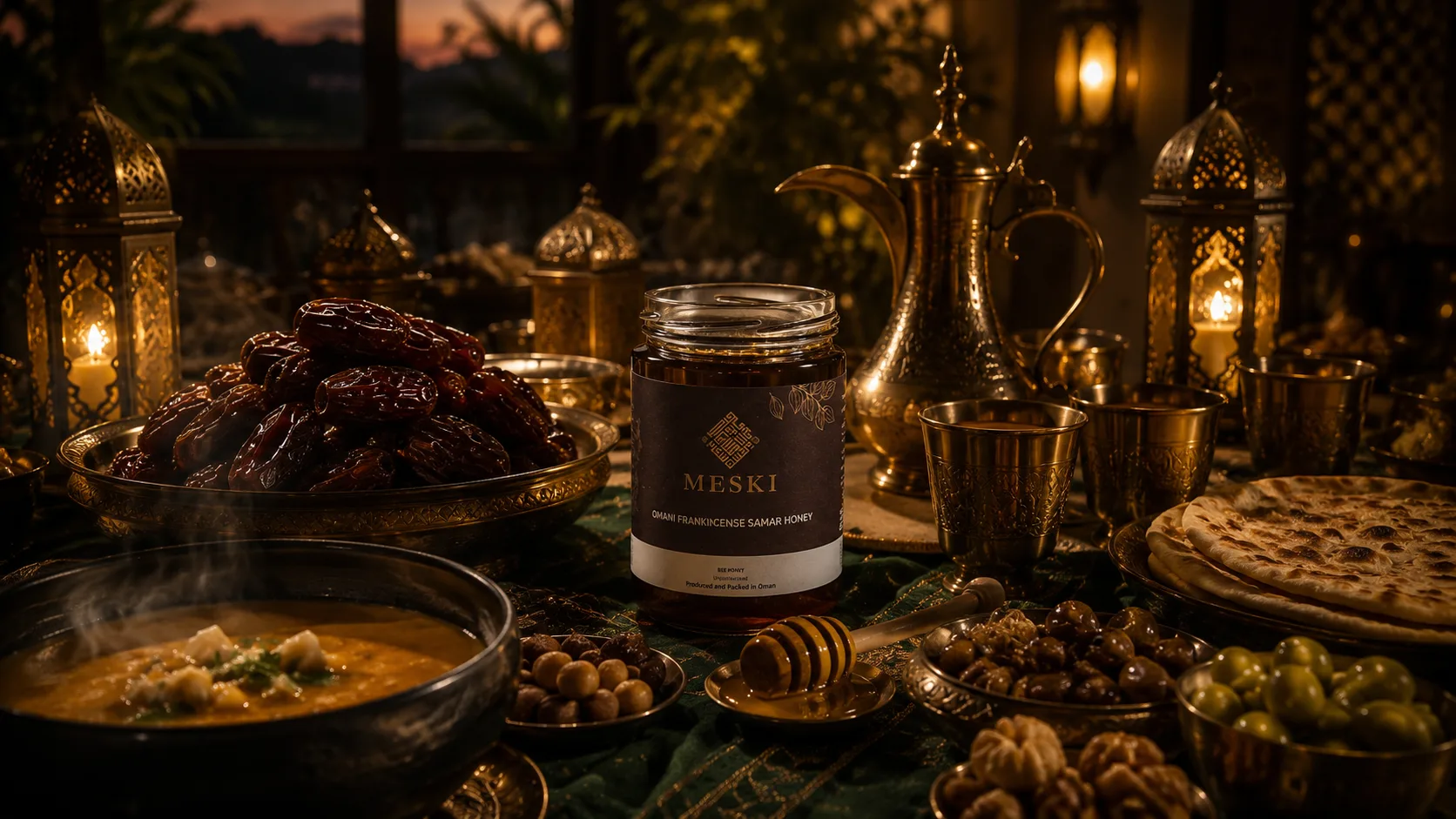
Ramadan changes the relationship between people and food. What you eat at iftar is not just a meal — it is the end of something and the beginning of something. The first bite after a long fast carries a weight that ordinary meals do not. In the Gulf, honey has always had a place at that moment. Not as a health supplement. Not because someone read about its glycaemic index. Because it belongs there — on the table, in the sweets, in the warm drink before sleep — the way certain things belong to certain seasons without needing to be explained.
Why Honey at Iftar Makes Sense
The body after a long fast is in a specific state. Blood sugar is low. Energy reserves are depleted. The digestive system needs to be reintroduced to food gradually — which is why the tradition of beginning iftar with dates and water has persisted unchanged across Islamic cultures for fourteen centuries.
Honey works on the same principle, and extends it. Its glucose provides immediate energy. Its fructose — metabolised more slowly in the liver — provides a sustained release that carries you through the iftar meal without the sharp spike that refined sugar causes. A small amount of raw honey — عسل السدر dissolved in warm water, or drizzled over dates — before the main meal is not a wellness trend. It is what sensible people have always done.
The first bite after a long fast carries a weight that ordinary meals do not. Honey has always known how to belong to that moment.
The Ramadan Table — Where Honey Appears
Honey does not appear at one point in the Ramadan day. It runs through it — from the first moment of iftar to the quiet of suhoor before dawn. Here are the places it has always belonged.
Luqaimat — اللقيمات
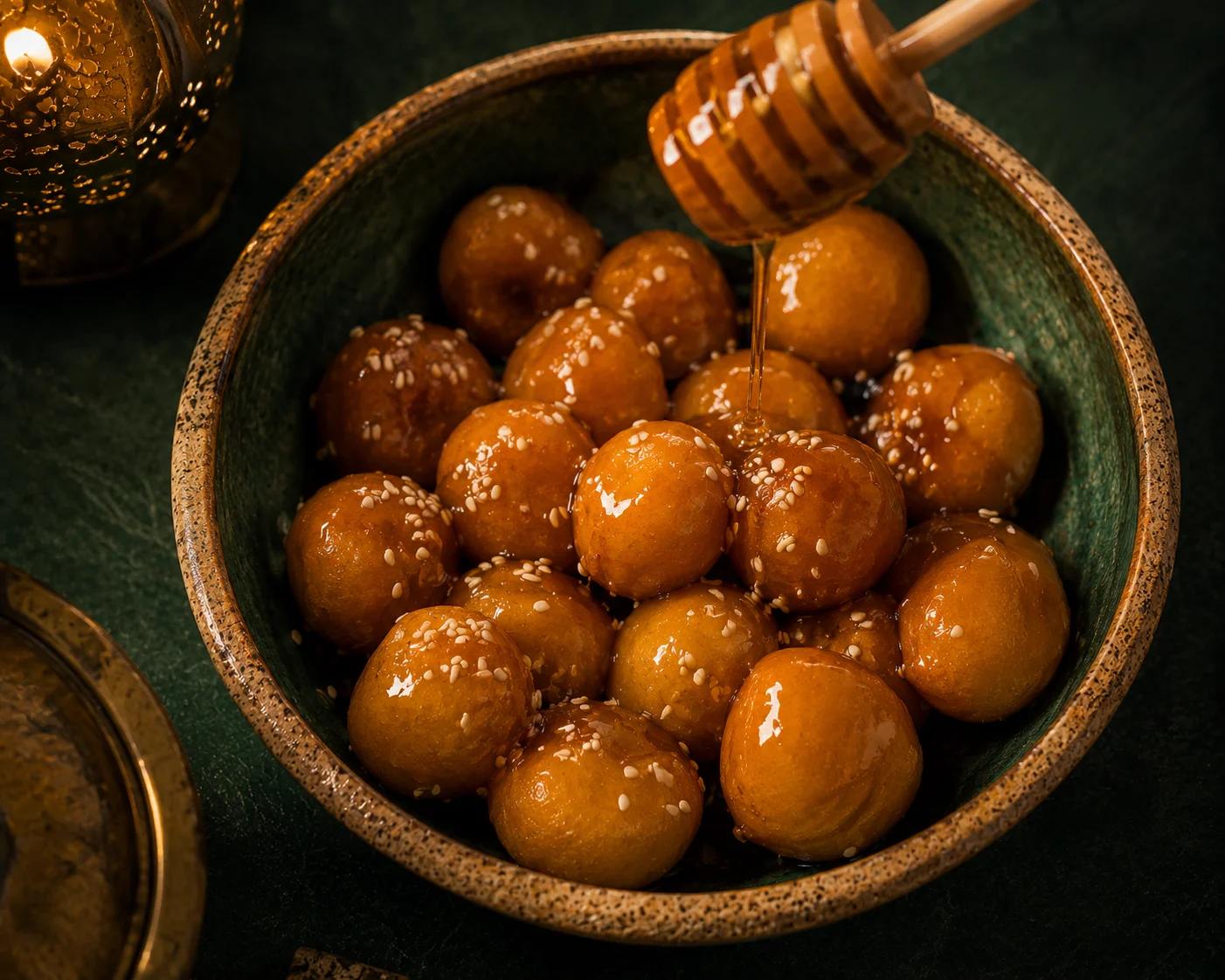
The Emirati Ramadan table without luqaimat is almost unimaginable. These small fried dough balls — crisp outside, soft inside — are finished with date syrup or honey poured generously over them at the moment of serving, while they are still warm enough that the honey thins slightly and soaks into every crevice. In Dubai and Sharjah, luqaimat carts appear across the city as soon as Ramadan begins. The smell of frying dough and warm honey is, for many people, the smell of the month. A dark Sidr drizzled over fresh luqaimat is a combination that needs no improvement.
Dates and Honey — تمر وعسل
The Prophet Muhammad is reported to have broken his fast with dates and water. Adding honey to this first moment amplifies the sweetness, extends the energy, and adds a warmth that dates alone do not carry. The combination is simple. Three dates. A small spoon of honey. A glass of water. Done before the main dishes arrive.
Honey Water at Suhoor — ماء عسل في السحور
Suhoor — the pre-dawn meal before the fast begins — has its own logic. A glass of warm water with a teaspoon of raw honey — taken as one of the last things before the fast begins — provides a slow-release glucose layer that helps sustain energy through the early hours of fasting. This is what generations of Gulf families have done because experience taught them it worked.
Ramadan Sweets and Pastries — حلويات رمضان
Across the Arab world, Ramadan sweets are inseparable from honey. Moroccan chebakia — sesame and anise pastries deep-fried and coated in warmed honey — are prepared days before Ramadan begins. Baklava and maamoul across the Gulf and Levant are finished with honey syrups. Qatayef are often served with honey alongside their syrup. In every case, honey adds depth, complexity, a faint floral note that makes a simple sweet into something with character.
Four Ramadan Moments, Four Honey Uses
First Iftar: Dates + a teaspoon of raw Sidr honey + warm water. Before anything else. · With Luqaimat: Dark raw honey drizzled over warm luqaimat — the Emirati moment. · In Warm Tea: Honey instead of sugar in evening tea — the tradition that spans every Ramadan table. · At Suhoor: A teaspoon in warm water as the last thing before dawn.
Which Honey for Ramadan
Any good raw honey works. But for a table that is deliberately assembled — for iftar guests, for family, for the meals that carry the most intention — the honey matters as much as the dates.
Our Emirati Sidr from Hatta is the natural choice for an Emirati Ramadan table. Local, award-winning, with the deep amber warmth that belongs to the season. For gifts — honey is one of the most appropriate Ramadan gifts in the Gulf, carrying cultural weight without the ambiguity of other luxury products. Our gifting collection is specifically assembled with Ramadan in mind.
Questions About Honey During Ramadan
Honey is not prescribed as a specific religious requirement for breaking the fast — dates and water are the documented prophetic sunnah. But honey has been used across the Muslim world at iftar for centuries for practical reasons that align perfectly with the body’s needs after a long fast: its combination of glucose (fast energy) and fructose (sustained energy) is exceptionally well suited to the first moments of eating. It is a culturally embedded practice with a sound physiological basis.
For the iftar table and daily use, a good raw Sidr honey — عسل السدر — from a verified origin is the most culturally and nutritionally appropriate choice in the Gulf context. Our Emirati Sidr from the Hatta mountains is locally produced, award-winning, and carries the provenance story that makes it meaningful beyond its flavour. For Ramadan gifting, our curated honey collections are assembled specifically for this season.
Yes, as a general substitute in warm drinks, on food, and in some cooking contexts. Raw honey has a slightly lower glycaemic impact than refined sugar and offers a more complex nutritional profile. For Ramadan sweets that require baking above 40°C, much of honey’s natural enzyme activity will be reduced by heat — but the flavour contribution remains significant. Use slightly less honey than sugar in recipes, as honey is sweeter per gram than refined sugar.
It is one of the most appropriate Ramadan gifts in the Gulf — culturally resonant, practically useful, and appropriate across all backgrounds and nationalities in the UAE’s diverse social environment. Unlike alcohol or overly personalised gifts, premium honey carries meaning without ambiguity. A well-presented jar of Emirati Sidr or a curated honey collection communicates thoughtfulness. Order Ramadan honey gifts at least two weeks in advance — demand peaks significantly during the holy month.
For Ramadan Tables and Ramadan Gifts
Our raw honeys are available year-round, but Ramadan is when they belong most naturally on the table. From the Emirati Sidr of Hatta for the iftar moment, to our curated gifting collections for the relationships that the holy month calls you to honour.
Explore gifting