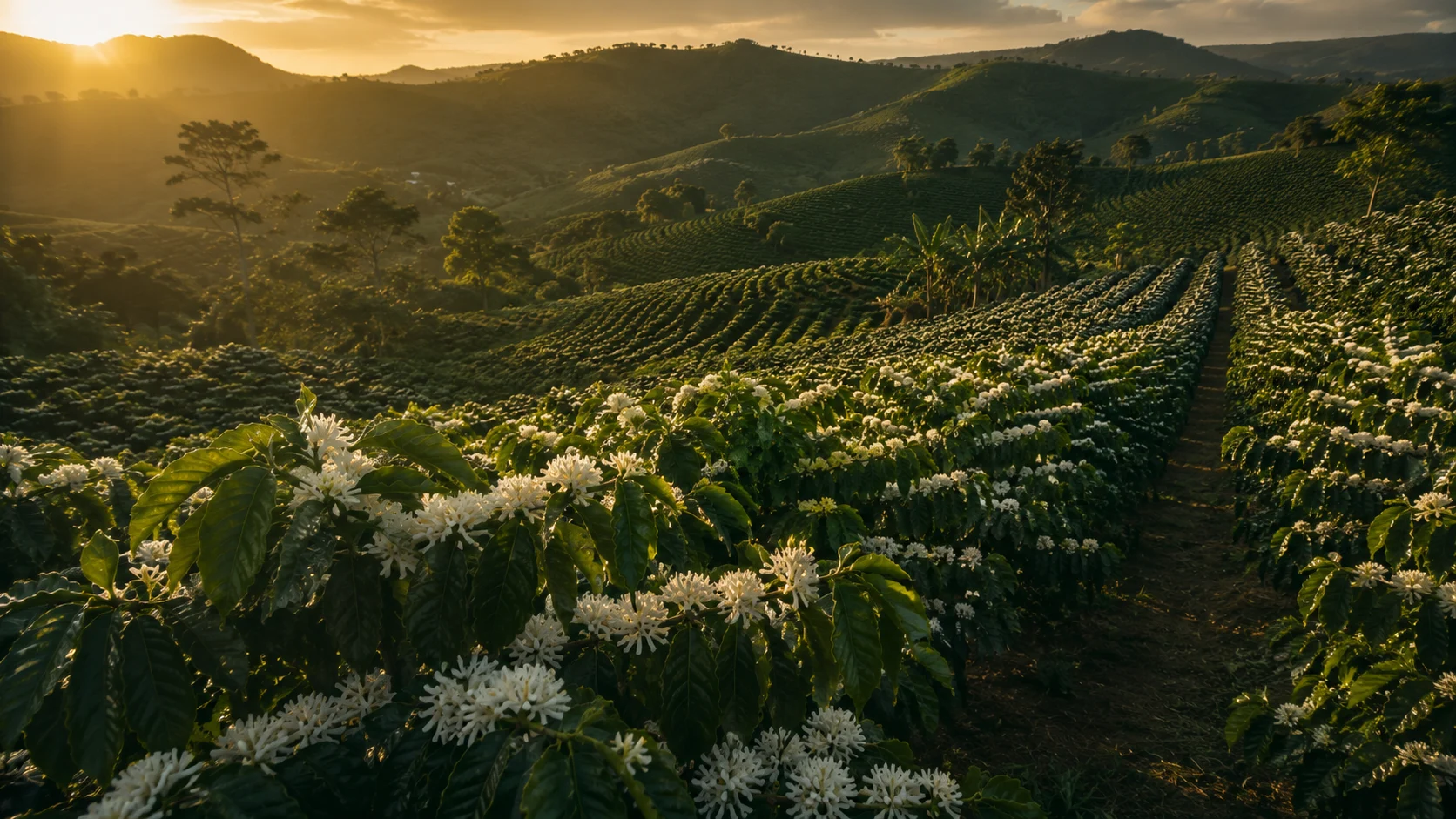
Brazil · Espírito Santo · Muqui
Brazilian
Coffee Blossom Honey
عسل زهر البن البرازيلي
The one honey in this Atlas a laboratory has already spoken for.
For a few weeks each autumn, coffee plantations in Espírito Santo, Brazil, erupt in small white blossom — and the honey bees make from it carries something almost no other honey does: a genuine, measurable trace of caffeine.
Terroir
Espírito Santo, where coffee flowers like a forest
In Muqui and the surrounding hills of Espírito Santo state, Coffea arabica is grown across sloped plantations that, for a few weeks each year, turn from working farmland into something closer to an orchard in bloom.
The flowers are small, white, and intensely fragrant — and when hives are placed among the plantations during that window, the resulting honey is overwhelmingly drawn from coffee nectar alone.
| Location | Muqui and surrounding hills, Espírito Santo, Brazil |
| Tree | Coffee — Coffea arabica |
| Bloom | October to November |
| Harvest | Following the bloom, once a year |
| Confirmed purity | 75–78% coffee pollen in published pollen analysis |
“Even the bees seem to know a coffee flower doesn’t wait for anyone.“
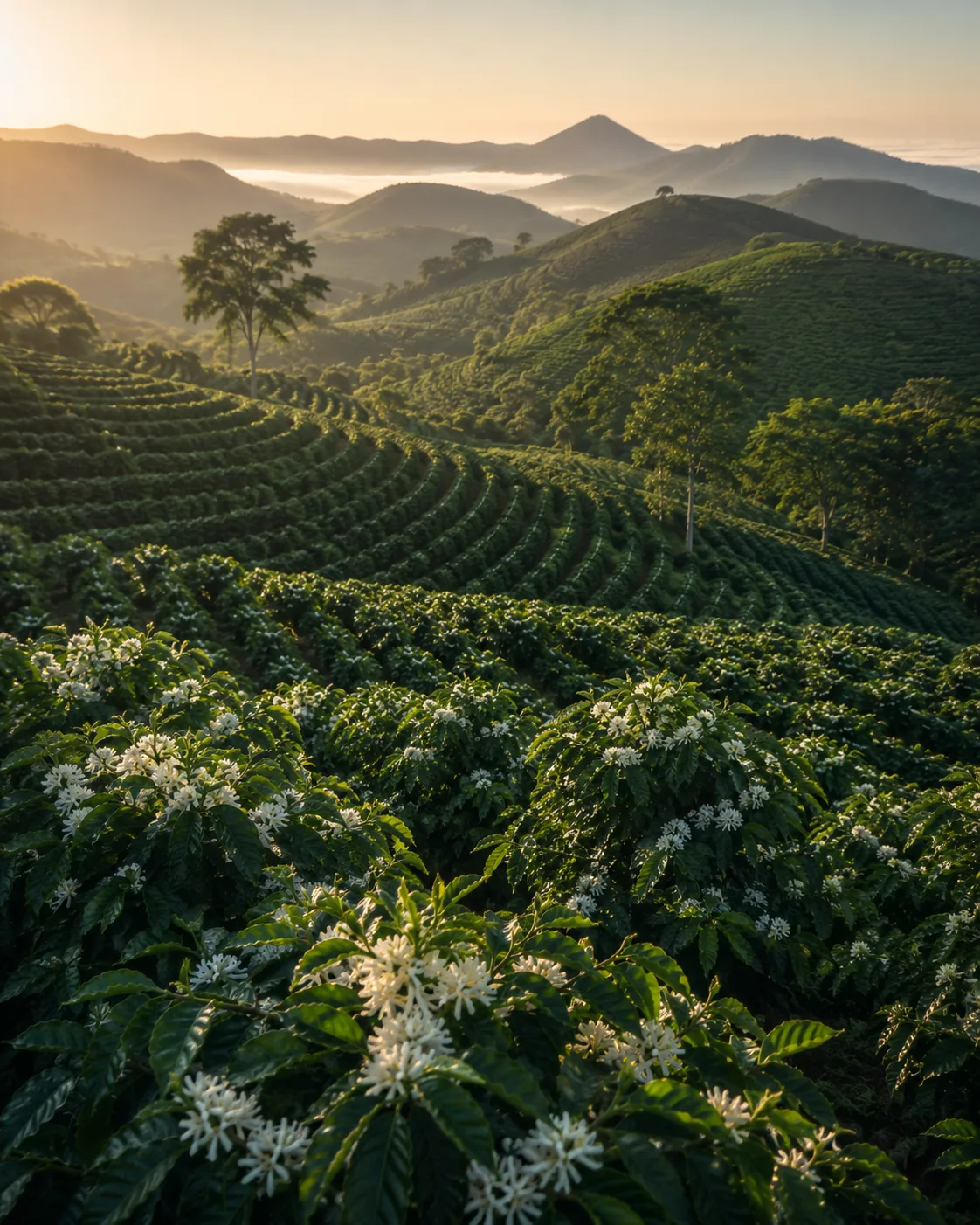 Espírito Santo · coffee hills
What research has confirmed
This is the Atlas’s one lab-documented origin
A published study of Coffea arabica honey from Muqui, Espírito Santo, confirmed the honey as genuinely monofloral (75–78% coffee pollen), and measured real trace caffeine along with notably high ascorbic acid and potassium levels. Every other honey in this Atlas is read by taste and appellation; this one, uniquely, has already been read by a laboratory.
Tradition
A byproduct of a much older crop
Coffee has shaped Espírito Santo’s economy for generations; the honey is a far newer idea, made possible only once beekeepers began placing hives directly among plantations during the brief flowering window.
It remains a minor product beside the coffee itself — but one that has drawn real scientific curiosity precisely because coffee nectar is such an unusual thing for a honey bee to work.
Generations
Coffee before honey
Coffee has anchored Espírito Santo’s agricultural identity for generations, long before anyone thought to keep bees among the plantations.
Modern beekeeping
Hives among the rows
Beekeepers began placing colonies directly in coffee plantations during the short bloom, discovering a honey unlike the region’s other florals.
2016
A study confirms it
Published research characterised Espírito Santo coffee honey by pollen, chemistry and mineral content — rare scientific attention for a single-origin honey.
Today
A curiosity with a following
Still a minor product beside the coffee crop itself, but one that keeps finding new, curious drinkers.
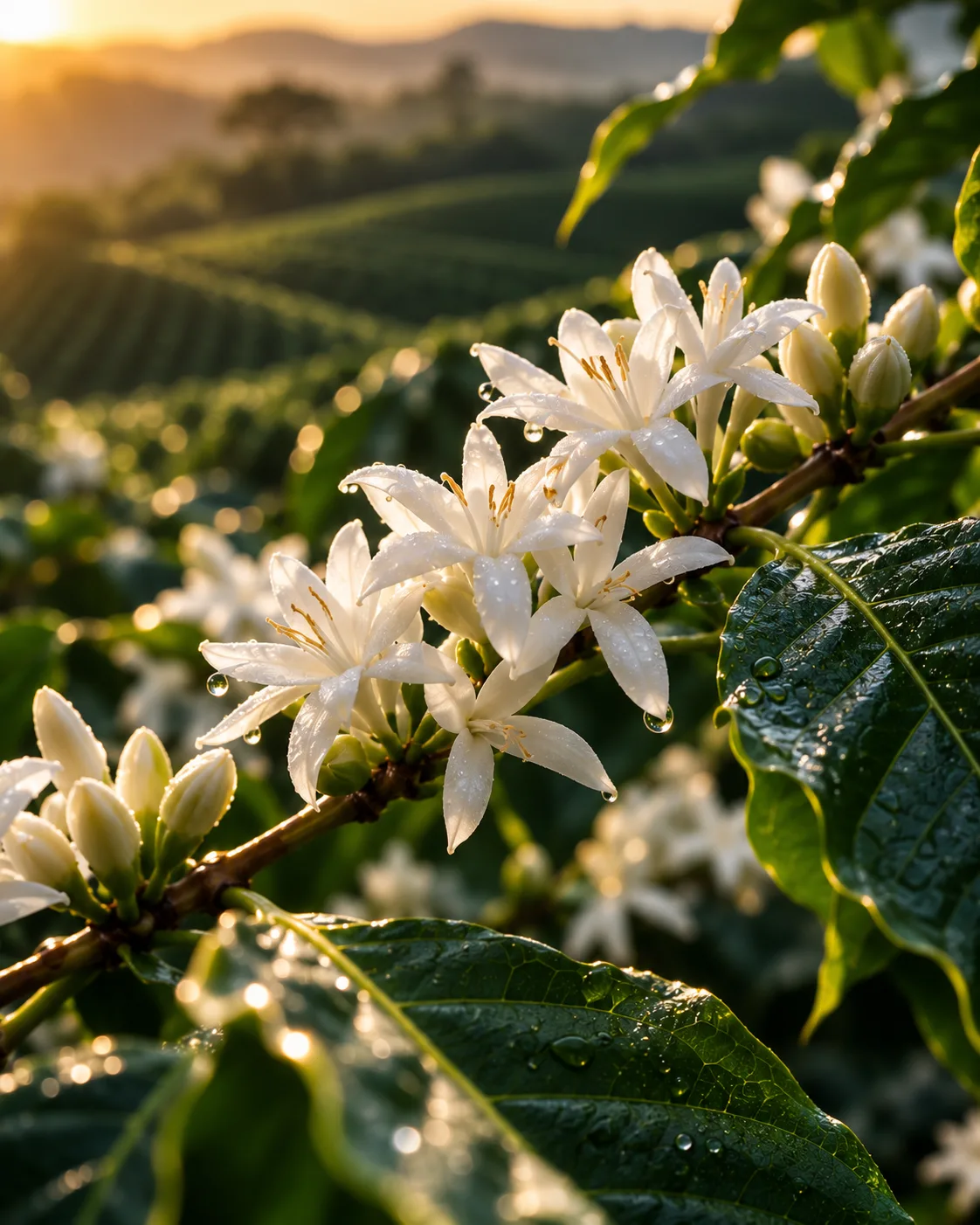 Coffee blossom · Espírito Santo
“A flower that only opens for coffee’s sake still owes the bees nothing — and gives them everything anyway.”
— The House of Meski
Rarity
A bloom timed to a crop, not a season
Coffee flowers according to its own agricultural calendar, and the window during which hives can draw a genuinely monofloral coffee honey is narrow — miss it, and the plantation returns to being simply a coffee farm again.
Why it cannot scale
Coffee is grown for its cherries, not its flowers. The honey exists only because a beekeeper chose to be in the right rows at the right two weeks.
Beekeeping
Hives placed for a crop, not a landscape
Unlike a wild valley or mountain forest, this origin is agricultural: hives are placed directly within working coffee plantations, timed precisely to the blossom, then moved on once the flowering ends.
The practice
Extraction follows standard modern practice — smoker, uncapping knife, extractor — identical to any other apiary; what differs is entirely the crop the bees were placed beside.
Sensory reading
Familiar and unfamiliar at once
Texture
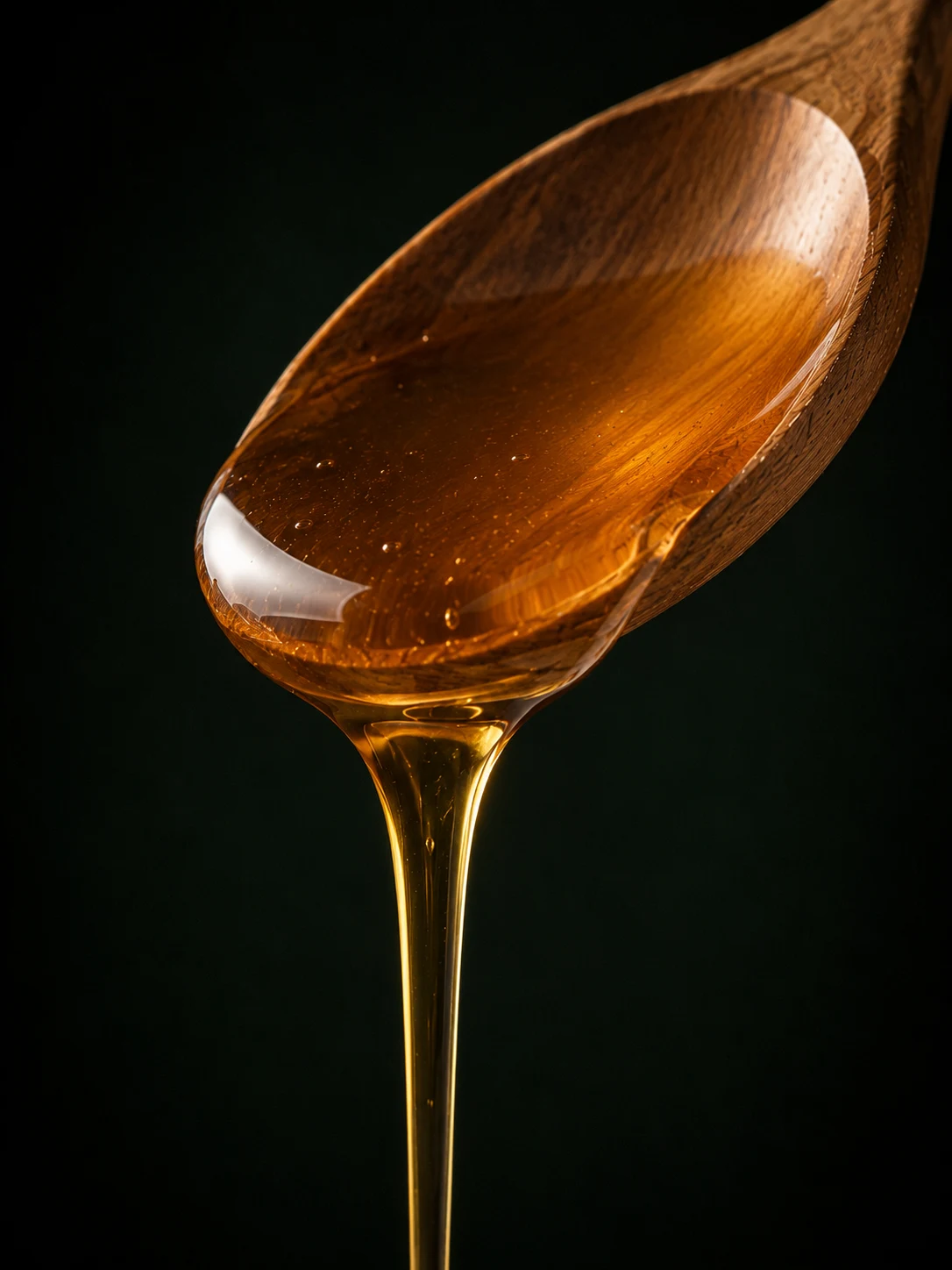
Fluid and smooth — nothing in the texture hints at its unusual floral source; that only shows up in the flavour.
Harvest notebook
From the field — a plantation in bloom
For most of the year, a coffee plantation in Espírito Santo looks like exactly what it is: rows of a working crop. For a few weeks in October, it becomes something else — small white flowers opening across every row, and a fragrance beekeepers know to watch for.
Hives go in only for that window. Too early, and there’s nothing to forage; too late, and the cherries have already begun to set, the flowers gone.
What comes back has been measured in ways most honeys in this Atlas have not — pollen counted, minerals logged, even trace caffeine confirmed. It is, in its own understated way, the most scientifically documented honey in the collection.
Pairings
How to serve it
Its faint roasted echo makes it a natural match for the drink it’s named for.
Meski rating
An editorial reading, not a certification
Six criteria of the House, judged in tasting. This rating describes the appellation, is revised for each lot presented, and replaces no analysis or certificate.
Provenance
The Meski Confidence Chain
Rare honey is one of the most counterfeited foods in the world, and Sidr is no exception. Confidence does not come from a single certificate — it comes from a chain that stays continuous, from bloom to jar.
Read: How to read a rare honeyAnalysis describes the sample received by the laboratory. It does not automatically prove that every jar sold under the same name comes from that sample. A continuous chain does.
Continue the Atlas
An origin is never an island
Compare not to name a winner, but to understand what place, season and craft shift in the cup.