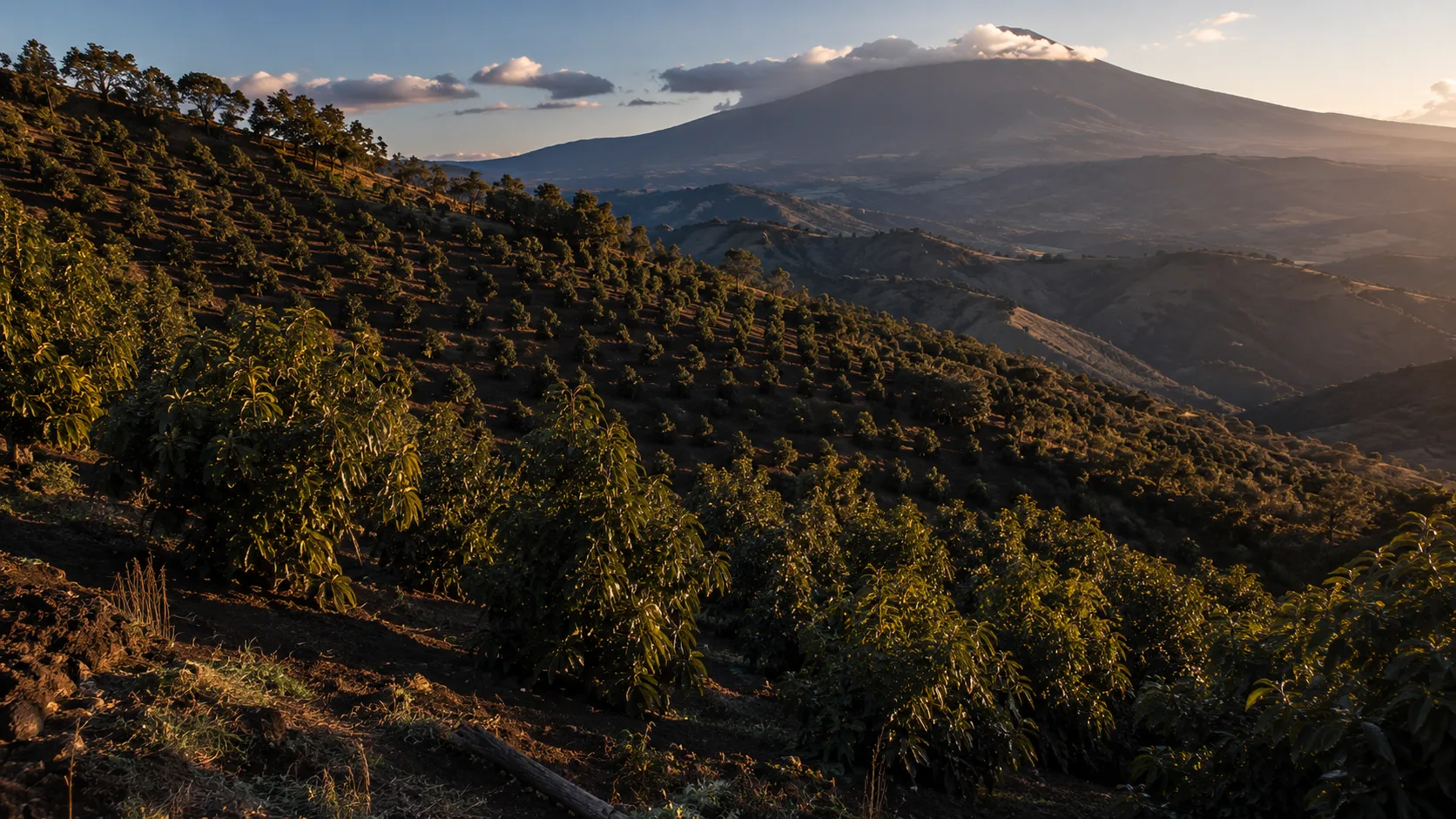
Mexico · Michoacán · Uruapan
Mexican
Avocado Honey
عسل زهر الأفوكادو المكسيكي
From the one place on Earth where an avocado tree is always somewhere in bloom.
On the volcanic slopes around Uruapan, Michoacán, avocado orchards flower in four overlapping cycles across the year — and the honey bees draw from that near-endless blossom is as dark and unlikely as the fruit itself.
Terroir
Michoacán, volcanic ground for an unlikely blossom
Around Uruapan, in the heart of the Trans-Mexican Volcanic Belt, avocado orchards climb the slopes at elevations from 2,000 to over 10,000 feet — rich volcanic soil, reliable rain, and a microclimate for nearly every altitude in between.
Few people picture an avocado tree in flower — the fruit gets all the attention — but each one can produce close to a million small blossoms in a season, and it is those blossoms, not the fruit, that give this honey its name.
| Location | Uruapan and surrounding orchards, Michoacán, Mexico |
| Landscape | Volcanic mountain slopes, 2,000–10,000 ft elevation |
| Tree | Avocado — Persea americana |
| Bloom | Overlapping cycles nearly year-round |
| Harvest | Chiefly during Michoacán’s main autumn honey flow, September to November |
“Somewhere in Michoacán, an avocado tree is always in bloom — which means somewhere, a bee has already found this honey before anyone else does.“
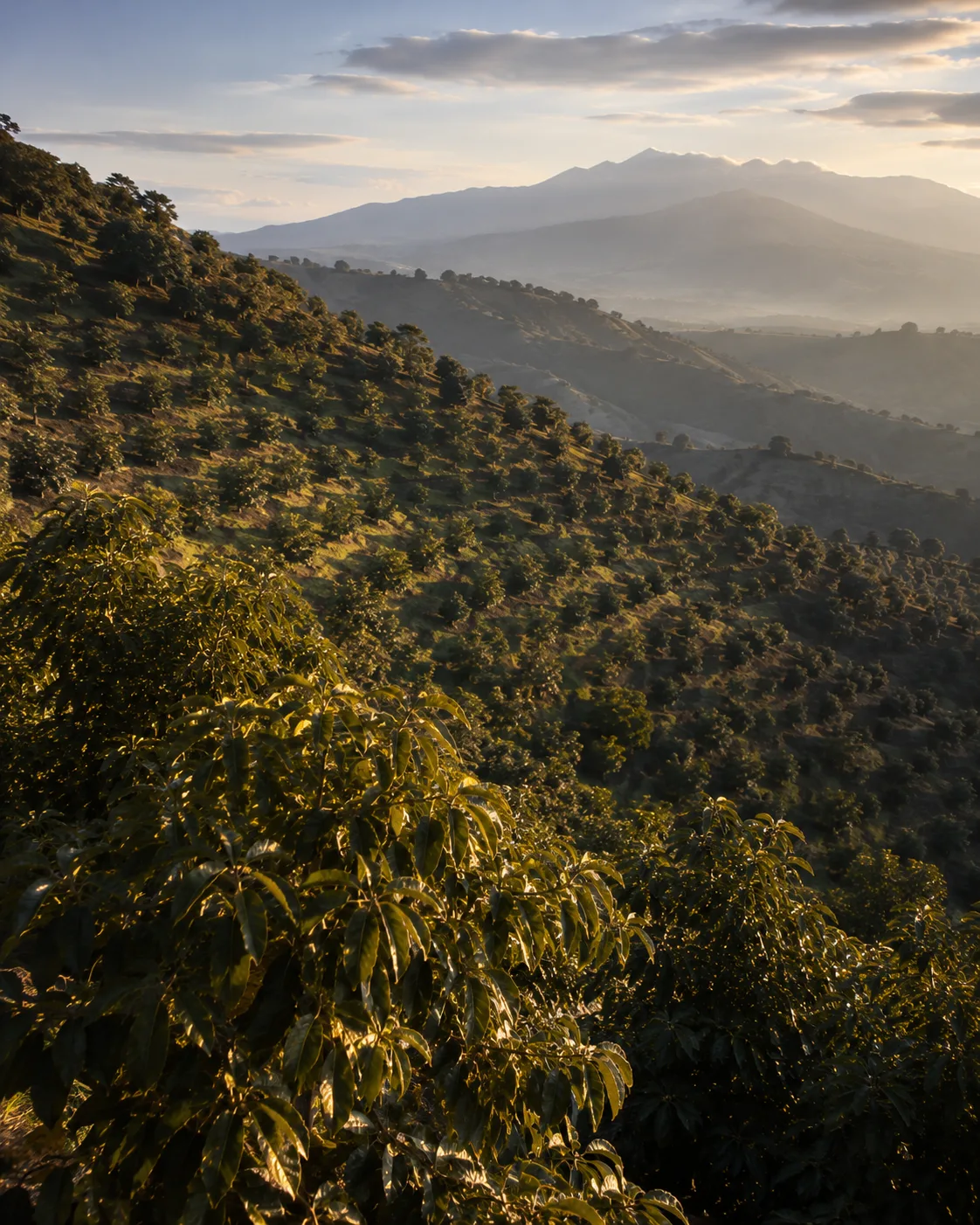 Michoacán · avocado country
Tradition
A mountain that never stops flowering
Michoacán is the only place on Earth where avocado orchards bloom nearly year-round — a trick of altitude, not variety. Different elevations across the same volcanic slopes flower at different times, so somewhere in the state, an avocado tree is almost always in blossom.
Growers have long named each window its own season. For a beekeeper, that calendar is less a curiosity than a map of where to place hives next.
Michoacán’s four blooms
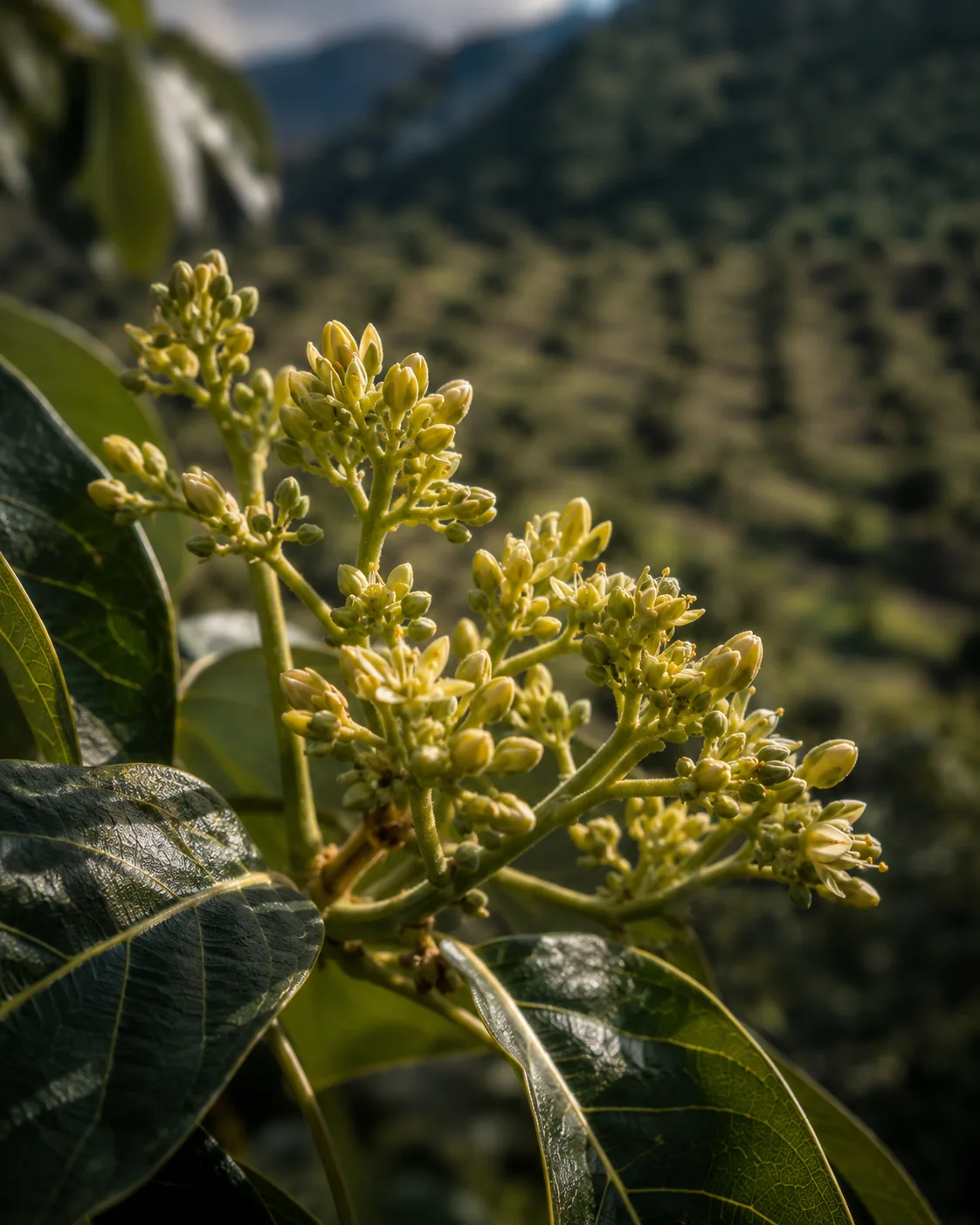 Avocado blossom · Michoacán
“Four seasons, one mountain: the bees never once have to wait for spring.”
— The House of Meski
Rarity
Abundant blossom, a narrower honey window
The blossom itself is almost never absent from Michoacán’s slopes — but a genuinely avocado-forward honey still depends on beekeepers placing hives where and when a single bloom cycle dominates the forage, rather than a blur of everything flowering at once.
Why it cannot scale
Continuous blossom does not mean continuous honey. A hive still needs to be in the right orchard, at the right elevation, at the right time.
Beekeeping
Following the mountain’s shifting bloom
Beekeepers here track Michoacán’s rotating bloom cycles by elevation, moving hives to whichever slope is flowering most heavily — a form of vertical transhumance unique to this volcanic terrain.
The practice
Extraction follows standard modern methods — smoker, uncapping knife, extractor — the complexity in this honey lies entirely in reading the mountain’s bloom calendar, not in the equipment.
Sensory reading
Dark, dense, and unmistakably its own
Texture
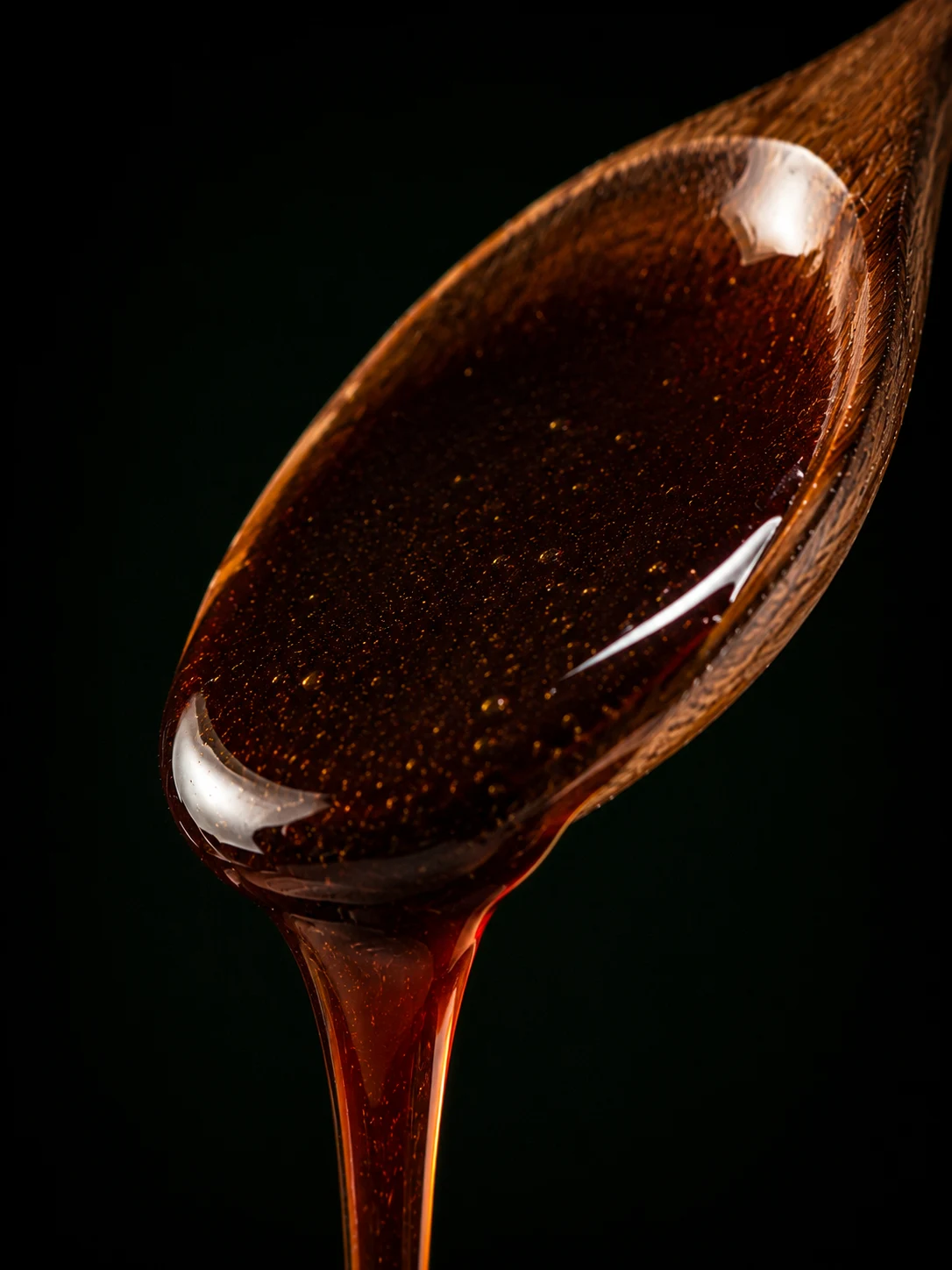
Velvety and dense, closer in body to molasses than to a typical floral honey.
Harvest notebook
From the field — reading a mountain in bloom
No single month defines this harvest. Somewhere on Michoacán’s volcanic slopes, avocado trees are always flowering — the question a beekeeper answers each season is simply where, and how heavily.
Hives follow the elevation gradient, chasing whichever bloom cycle currently dominates a given slope, timed to Michoacán’s broader autumn honey flow for the fullest harvest.
What returns is dark enough to surprise anyone expecting the pale, buttery fruit itself — a reminder that a blossom and its fruit rarely taste anything alike.
Pairings
How to serve it
Dark and dense — built for desserts and breakfasts that can carry its weight.
Meski rating
An editorial reading, not a certification
Six criteria of the House, judged in tasting. This rating describes the appellation, is revised for each lot presented, and replaces no analysis or certificate.
Provenance
The Meski Confidence Chain
Rare honey is one of the most counterfeited foods in the world, and Sidr is no exception. Confidence does not come from a single certificate — it comes from a chain that stays continuous, from bloom to jar.
Read: How to read a rare honeyAnalysis describes the sample received by the laboratory. It does not automatically prove that every jar sold under the same name comes from that sample. A continuous chain does.
Continue the Atlas
An origin is never an island
Compare not to name a winner, but to understand what place, season and craft shift in the cup.