The house
We Ran
Everywhere
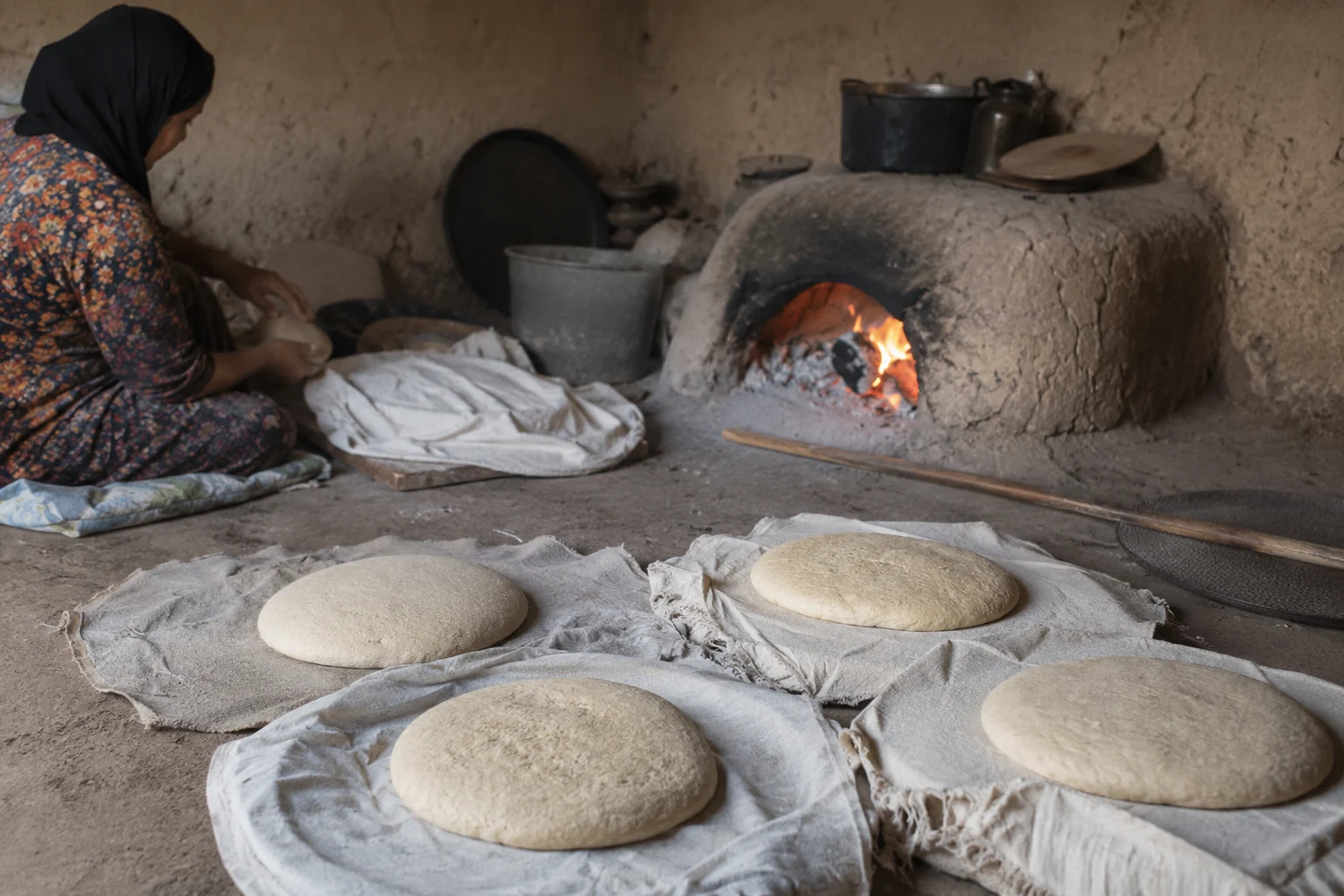
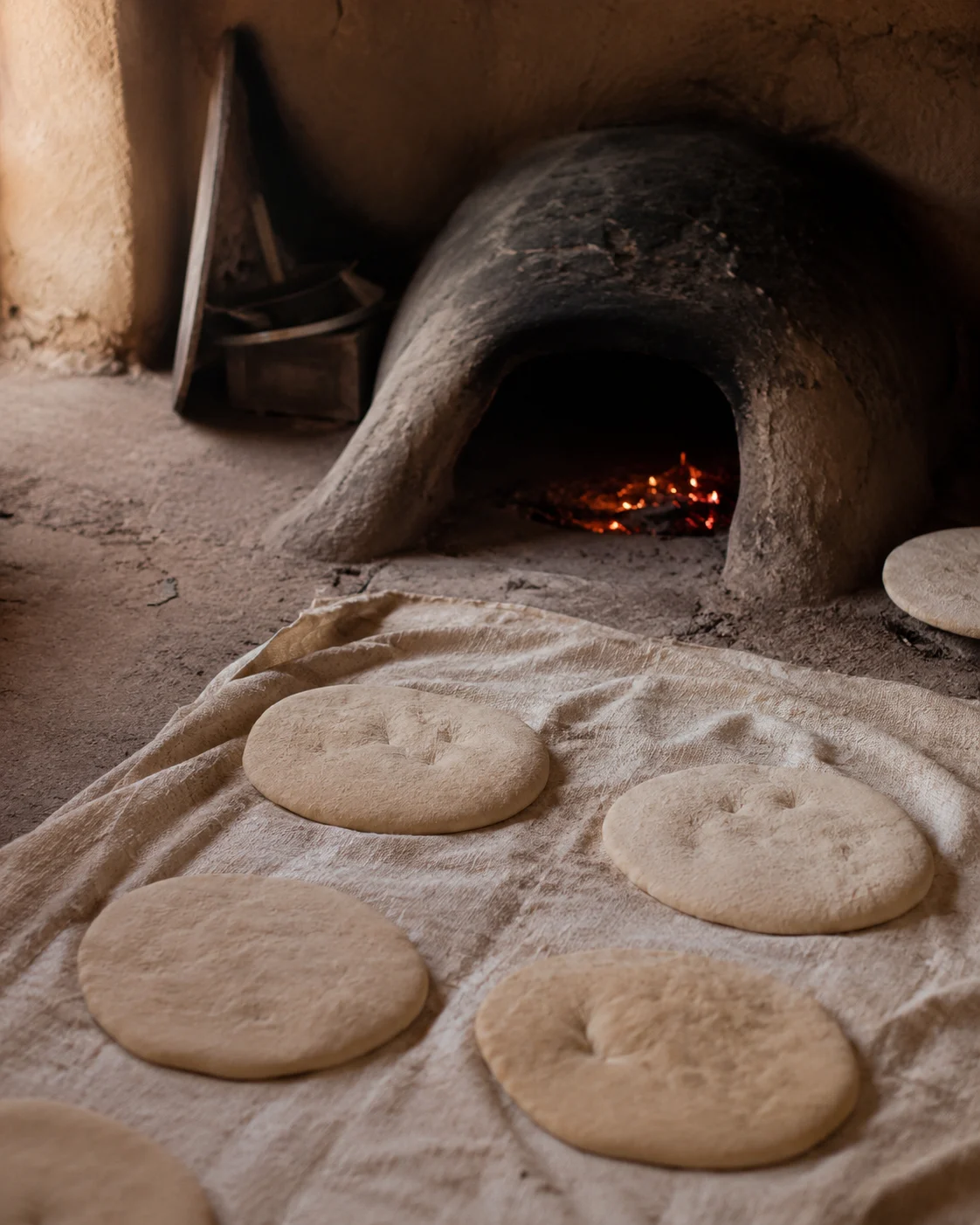
As children, we loved moving through the house. It felt enormous to us. The rooms seemed immense, and we were always running from one place to another.
But there was one place that pulled us back again and again: the kitchen, especially when the women were making bread.
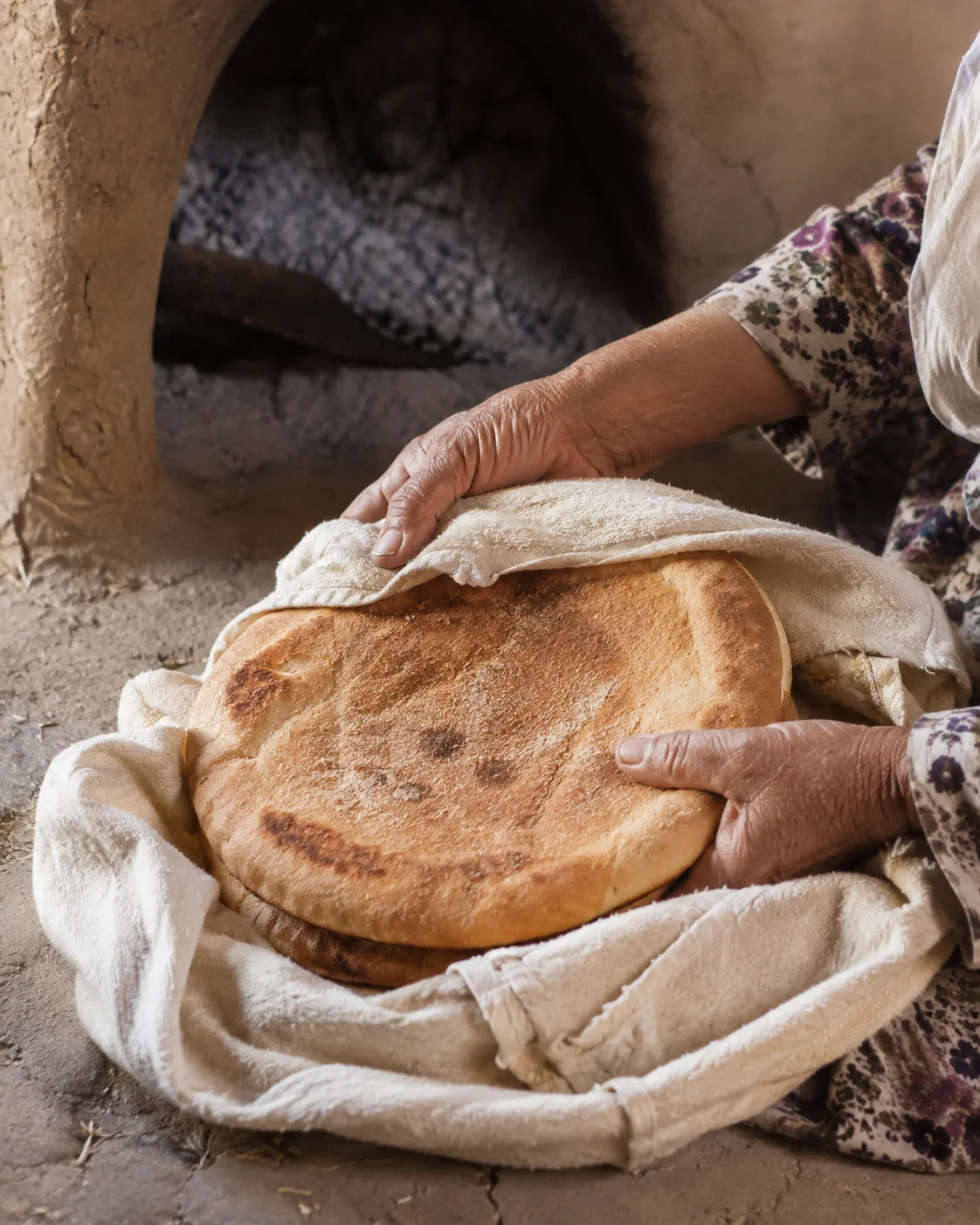
I still remember the loaves resting on cloths laid directly on the floor, waiting for their turn at the oven.
The fire
The Oven Had
Its Own Rhythm
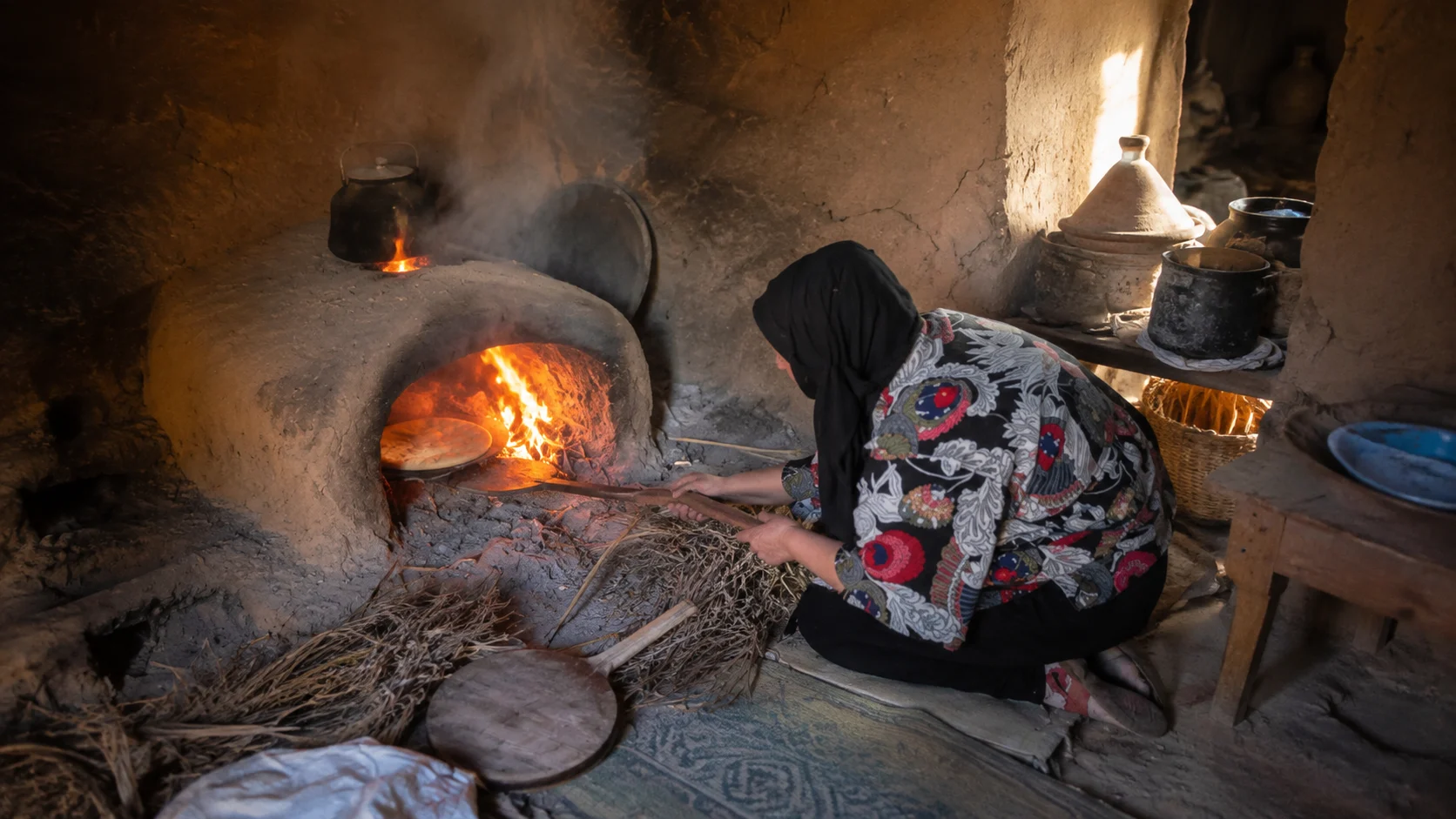
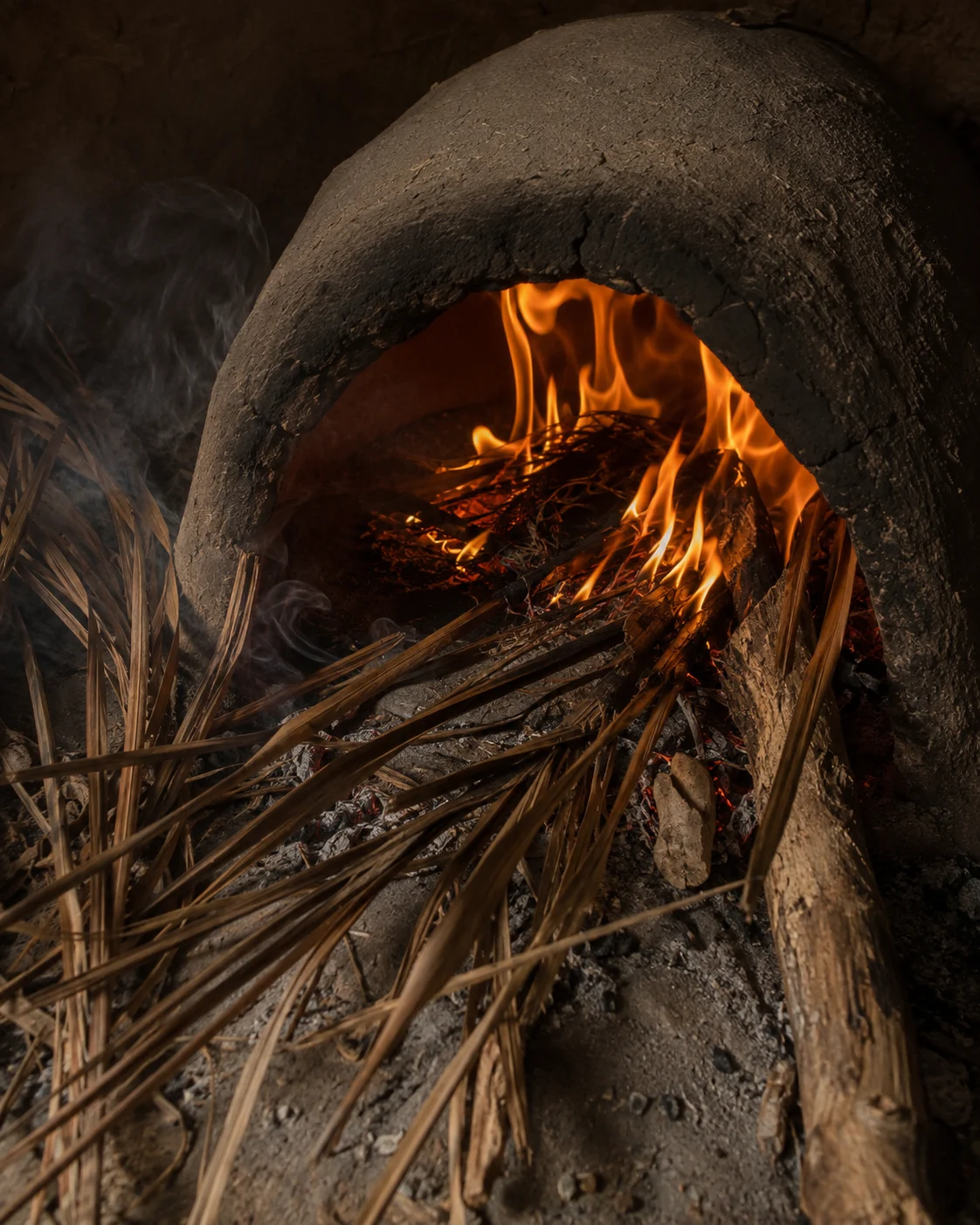
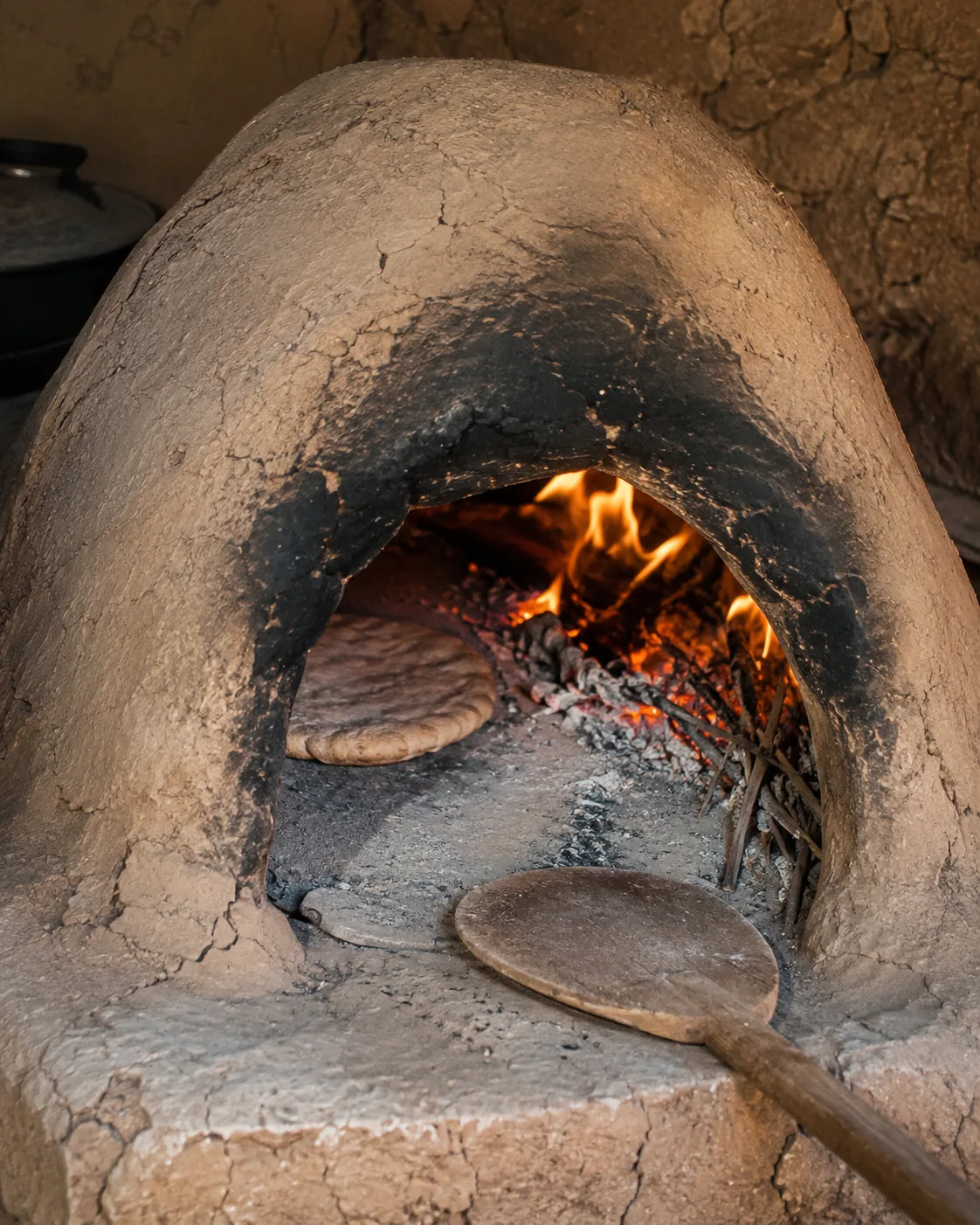
They fed the clay oven with wood and dry palm branches. Paper and matches started the fire, then came the waiting.
The oven had to become properly hot. Nothing was rushed.
When it was ready, they used a palm branch broom to clear the centre, pushing the hot wood and embers gently toward the sides.
Only then could the bread go in.
The gesture
They Stayed
Beside the Oven
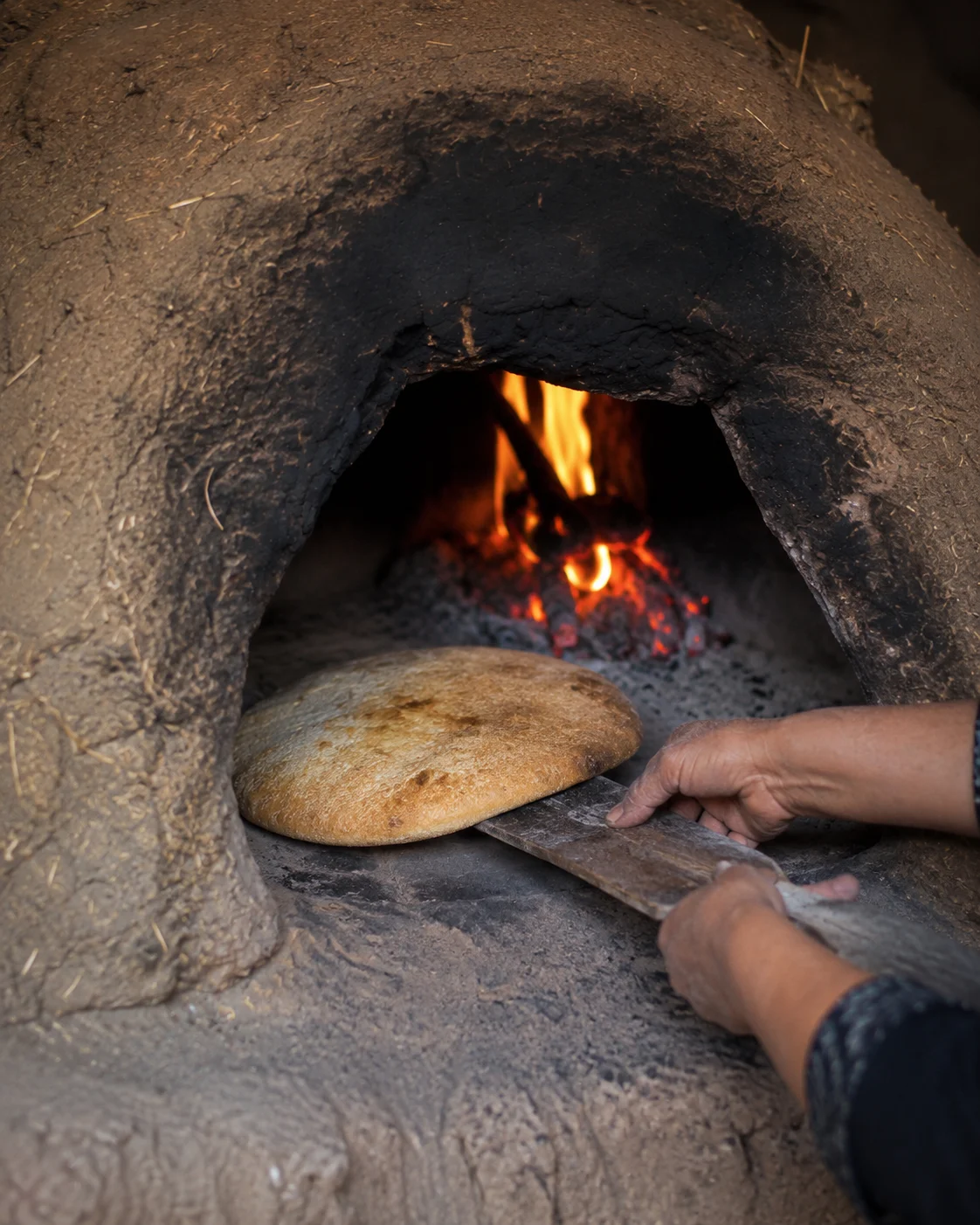
The women stayed seated in front of the oven and watched over every loaf.
They turned the bread so that it cooked evenly, took it out when it was ready, placed it inside a cloth, and moved on to the next one.
The gestures were ordinary to them. To me, they became part of the memory of the house.
Before I understood what tradition was, I already knew what it looked like.
Before I understood the meaning of a house, I knew the smell of its bread.
What I remember most
The Smell
Reached Everything
The kitchen had its own smell.
Flour. Smoke. Warm earth. Fire. Fresh bread.
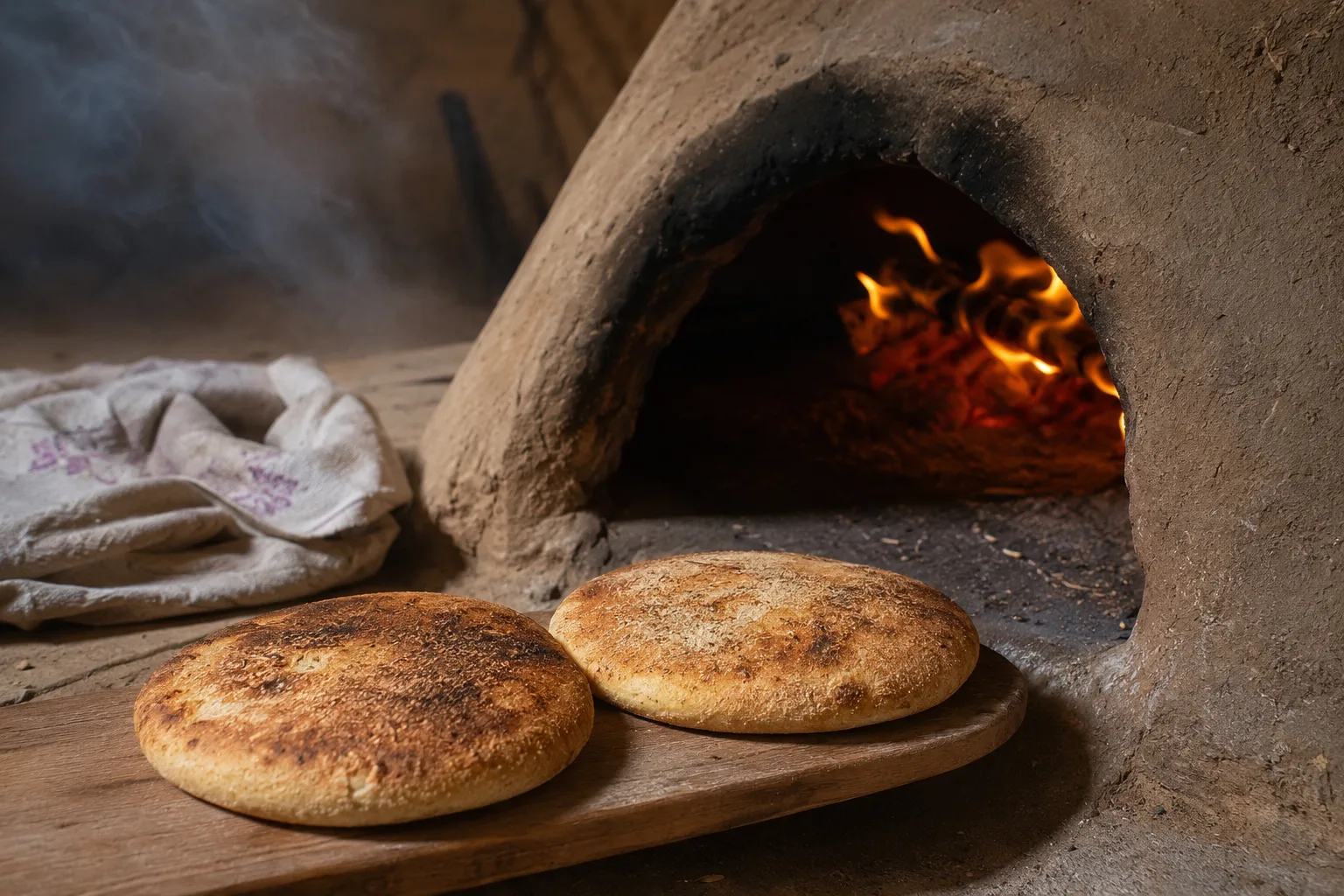
I still remember how good it felt when a loaf came out hot. We would ask for a piece before it had even had time to cool.
That taste was simple, but the moment around it was not. The whole house seemed to carry the warmth of the kitchen.
What the bread carried
More Than
Something to Eat
Nobody was trying to preserve a tradition for a photograph. They were simply making the bread the house needed.
That is what makes the memory important to me today. The knowledge lived in the hands before it lived in books.
The oven, the broom made from palm branches, the timing, the way the bread was turned, the cloth waiting beside them — all of it was practical.
The bread of the house fed more than our hunger. It fed our memory.
A quiet gratitude
Some Things
Are Given to Us
As a child, I did not think about who had prepared the dough, gathered the wood, heated the oven or watched over each loaf.
I only knew that the bread was there, that it was warm, and that I wanted a piece.
Today, I see more in that memory. Work. Care. Provision. And the blessing of being fed.
The moments around it
Cloth. Palm Wood.
Fire. Bread.
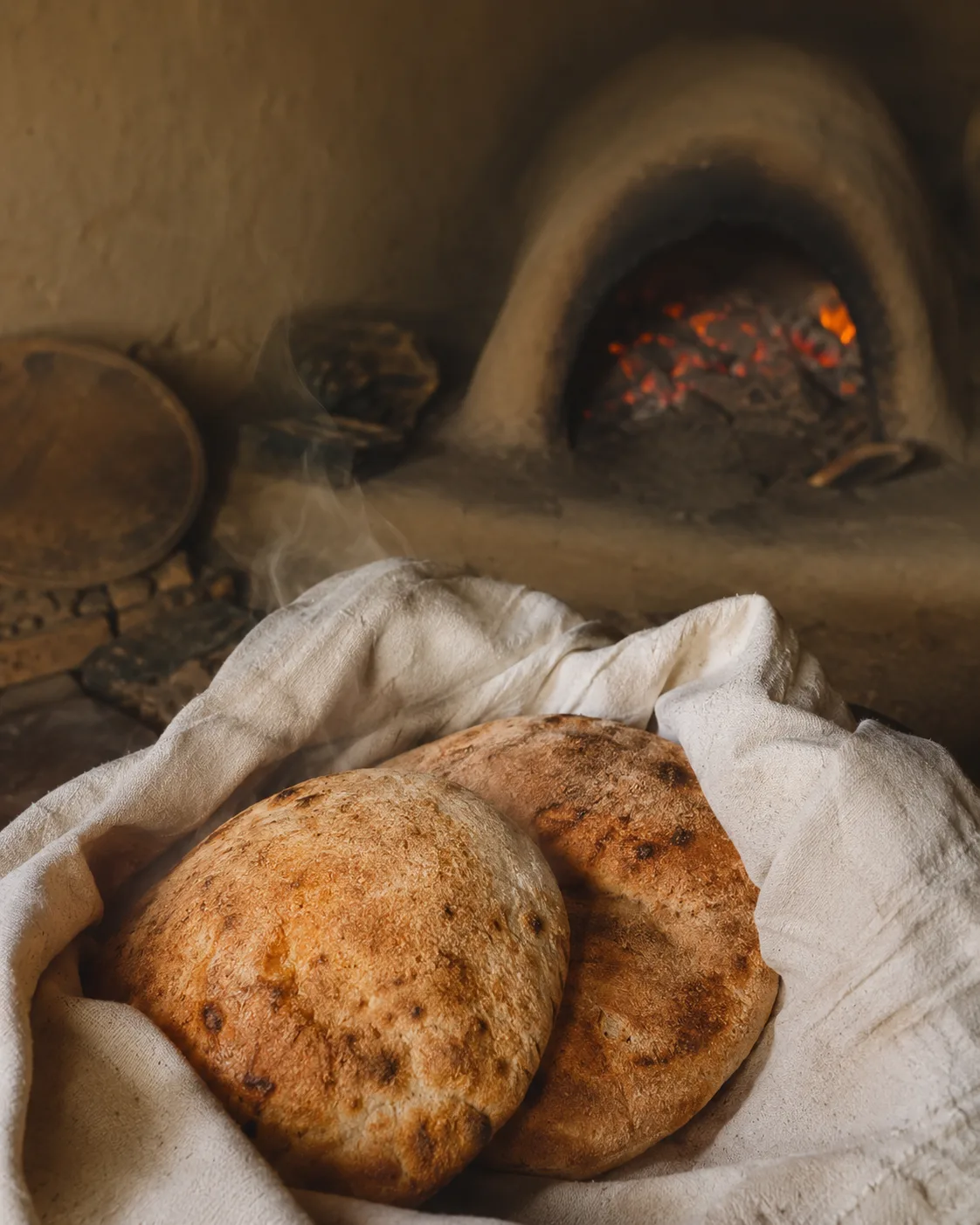
One of the first smells of home
Some homes are remembered by their walls.
Ours is also remembered by its bread.