Meski, when I was a child
I was always asking
my grandmother for zamita
At my grandmother’s house in Meski, there were foods I liked and foods I waited for. Zamita was different. I asked for it. Often.
I can still see the plate arriving. Nothing ceremonial, nothing arranged for a photograph. Just zamita, brought into the room because I had asked for it again.
Was it our sweet moment? Maybe. We did not grow up there with cupboards full of biscuits, packets of sweets and cakes waiting whenever we wanted them. A sweet taste had another value when it was not everywhere.
But I may also be trying too hard to explain something very simple. Perhaps I loved zamita because zamita was simply delicious.
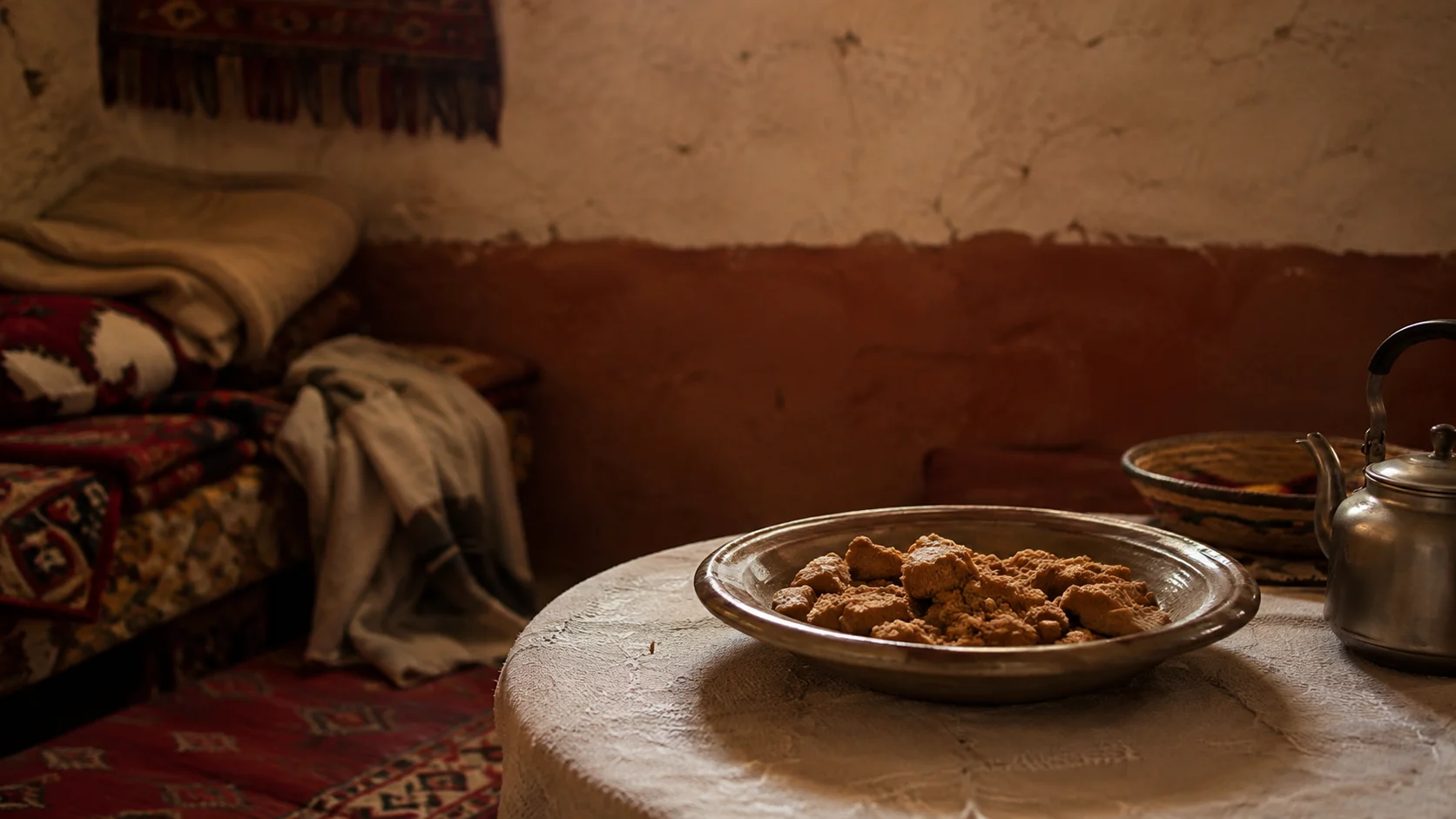
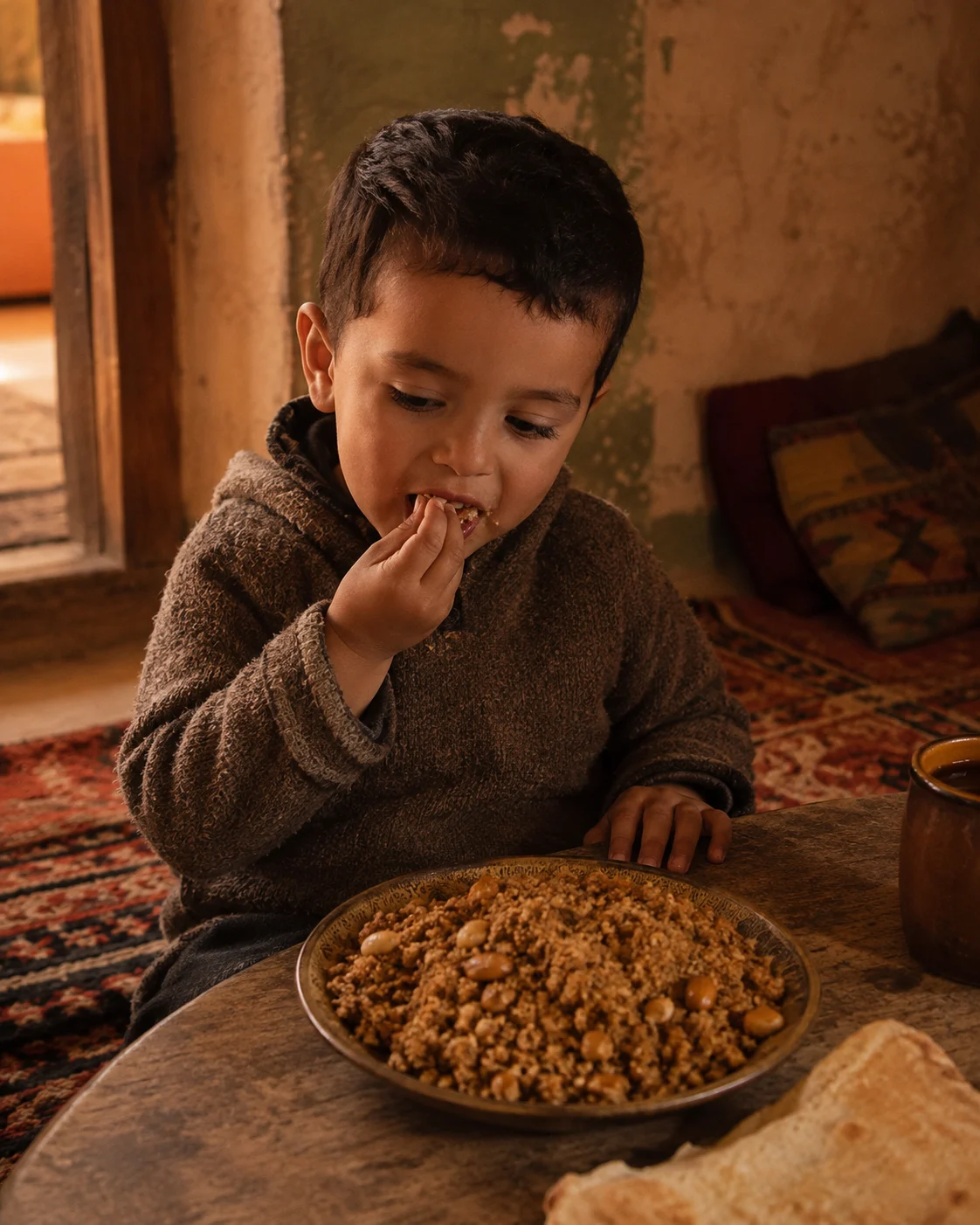
No ceremony required
A spoon.
Or my hand.
My grandmother brought the zamita. The spoon was my problem.
If the plate was only for me, I could get up and find one. Sometimes I did. Sometimes I decided that my hand worked perfectly well.
If it had been brought for everyone, then the whole thing became even less formal. You ate, you shared, you took another little handful.
I remember eating it mostly in the afternoon, like a goûter. Once in a while in the morning too, but the afternoon is where the memory lives.
The texture I still want
Dry, crumbly,
granular
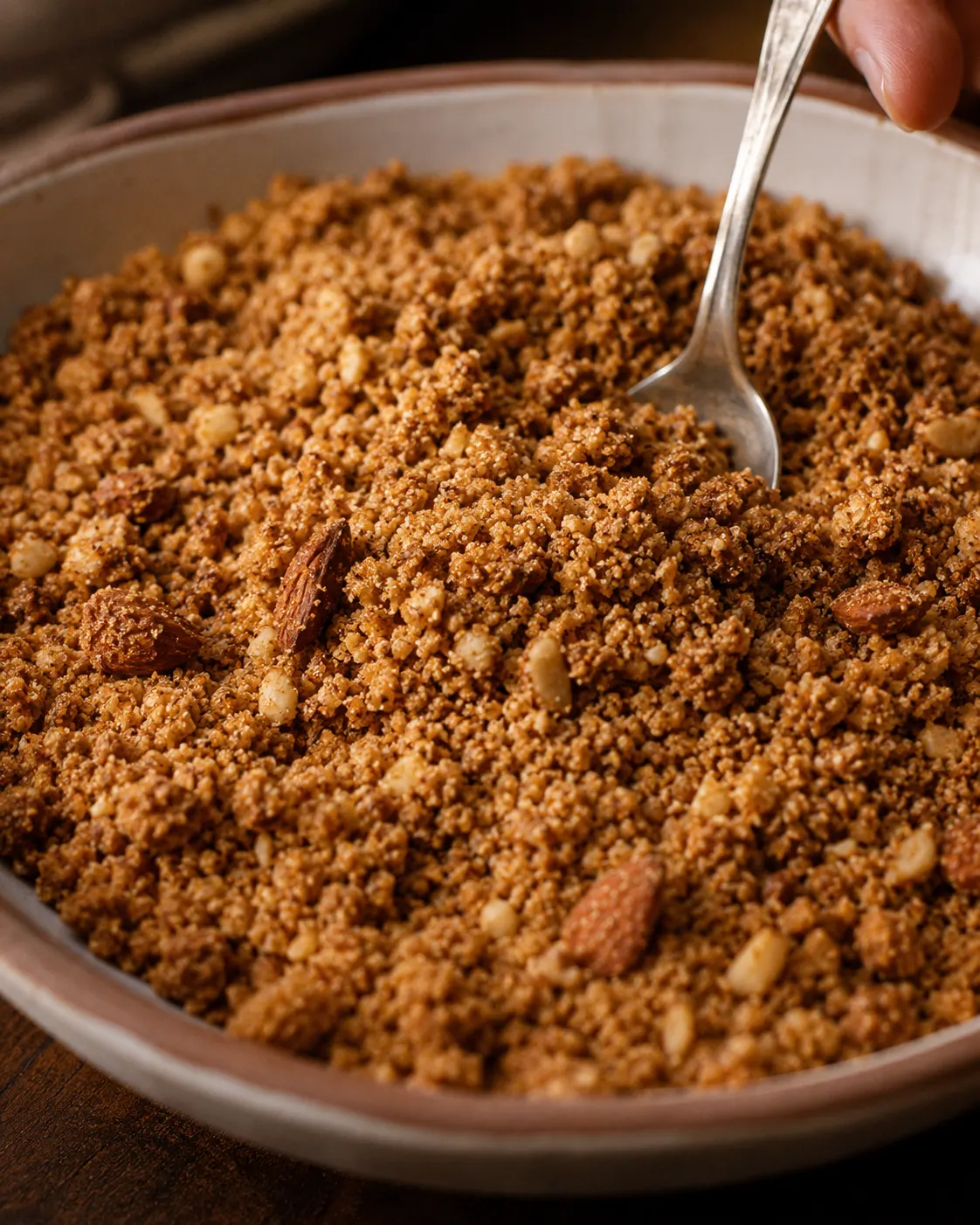
My grandmother’s zamita was dry. Not dry in the sense of lacking something. Dry in the way I now understand I actually prefer it.
It loosened under the fingers. It crumbled. You could feel the grain, the nuts, the spices. It never felt drowned in oil.
That remains one of the choices I make in my own version. Very little oil, sometimes almost none. I want the mixture to stay loose enough to fall apart when I take it.
Some people prefer a richer version with much more oil, denser and more compact. To my taste, once it moves too far in that direction, it starts to become closer to sallou. The two are relatives, of course. I just know which side of the family I prefer.
I want my zamita to crumble. That is part of the pleasure.
Maybe it was our sweet moment.
Or maybe it was simply that good.
Then something changed
I did not stop eating it.
It simply disappeared from my life.
After my grandmother passed away, I did not make some grand decision to stop eating zamita. There was no last plate. No moment when I told myself, this is over.
It just became rare.
Years passed, and one day I realised that something I had once asked for all the time was now something I hardly ever ate. The person who made it naturally part of my life was gone, and with her absence, the habit had quietly gone too.
Later I also began paying more attention to sugar. That gave me another reason not to chase after it. But the taste itself never really left.
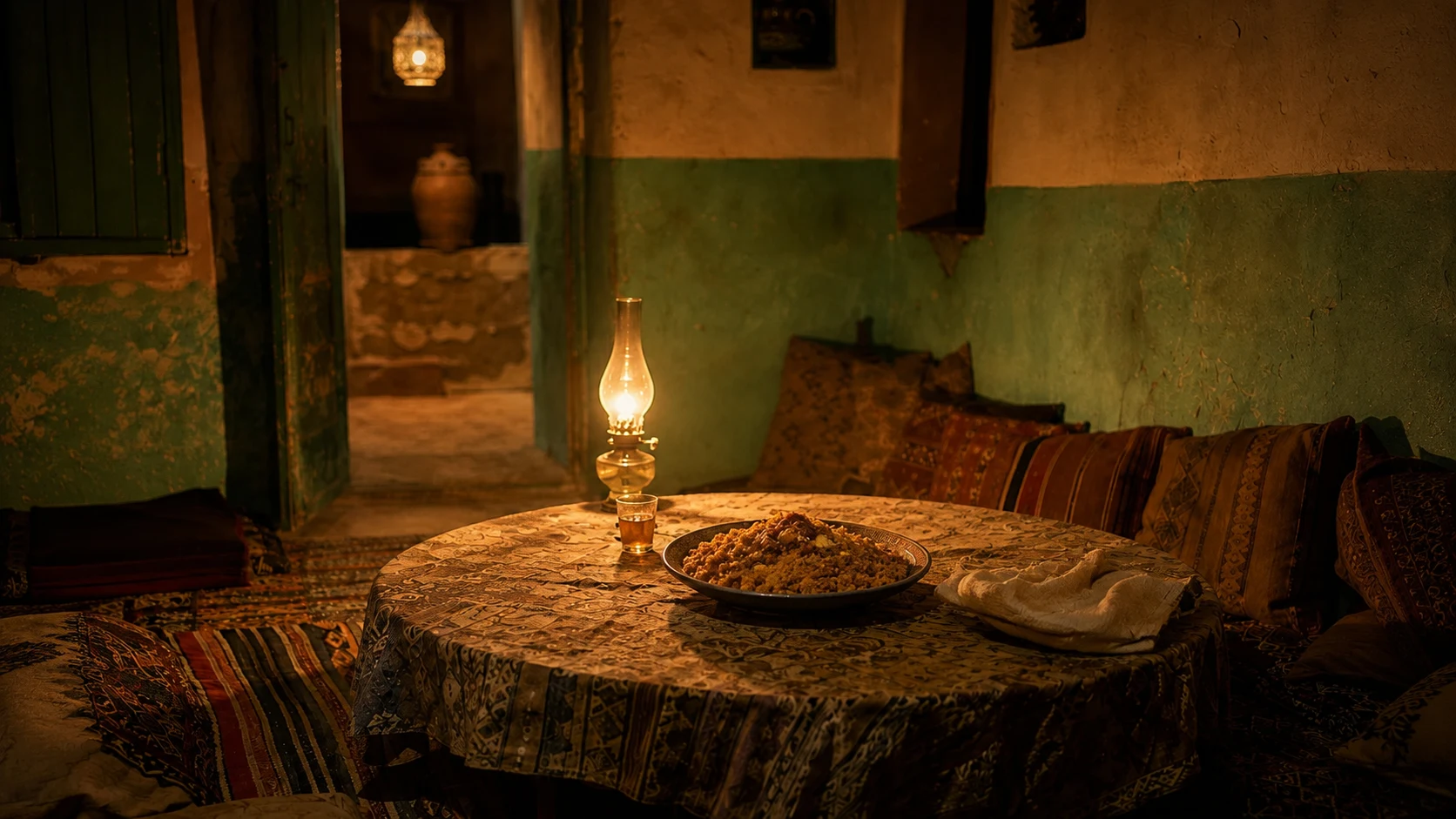
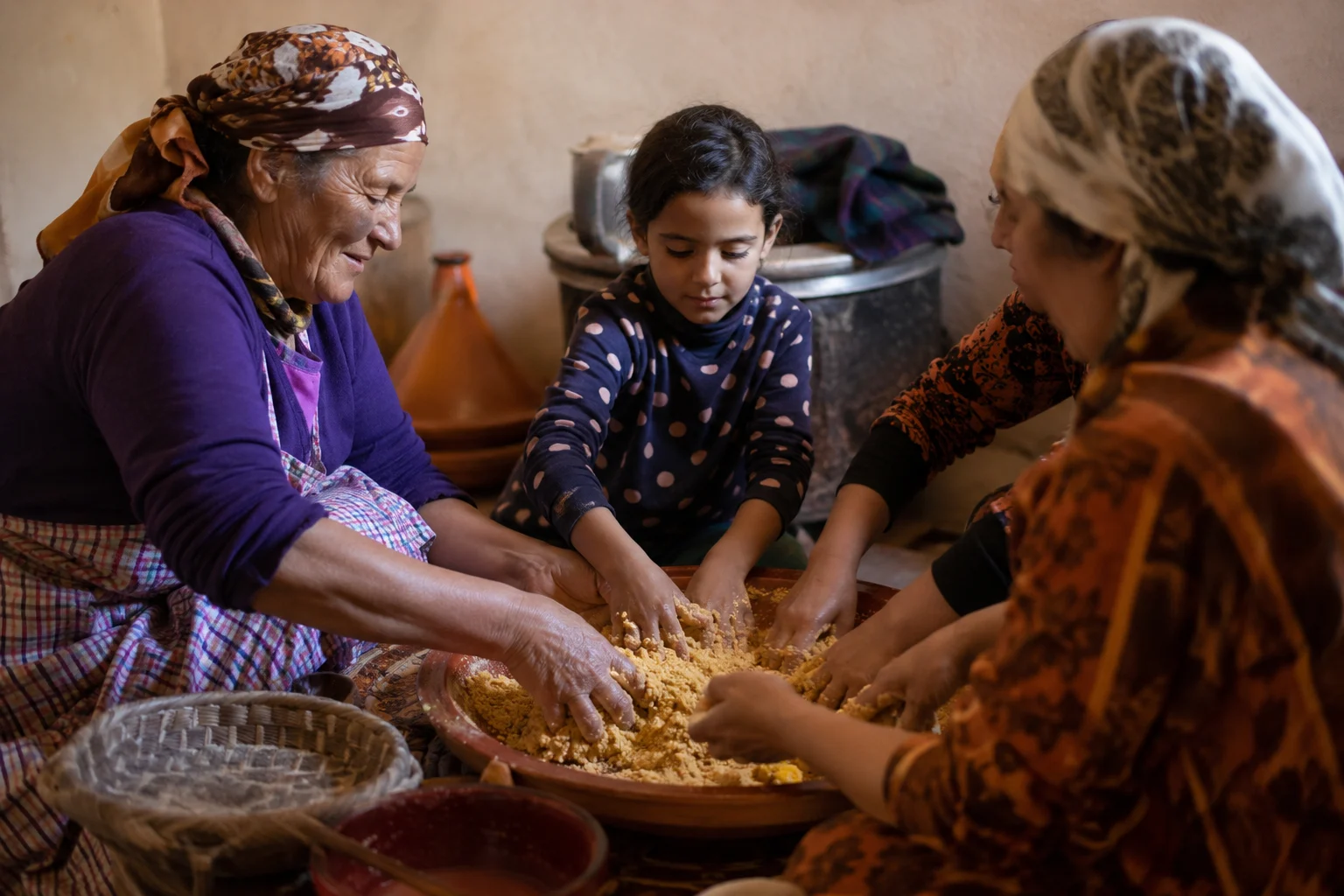
A few years ago
With my mother,
I started making it again
Not exactly hers. That would have been impossible anyway.
I wanted something close to the zamita I remembered, but made for the way I eat now. A little lighter. Less dependent on sugar. Still generous in flavour, still fragrant with spices, still dry and granular enough to eat by the spoonful — or by hand when patience runs out.
My mother helped me find my way back to it. And slowly, the food that had become rare after my grandmother died returned to the house again.
That matters to me. Not because I am trying to reproduce the past perfectly, but because sometimes a taste only needs to come close enough for the memory to recognise it.
Since you are going to ask
No, I am not giving you
the whole recipe
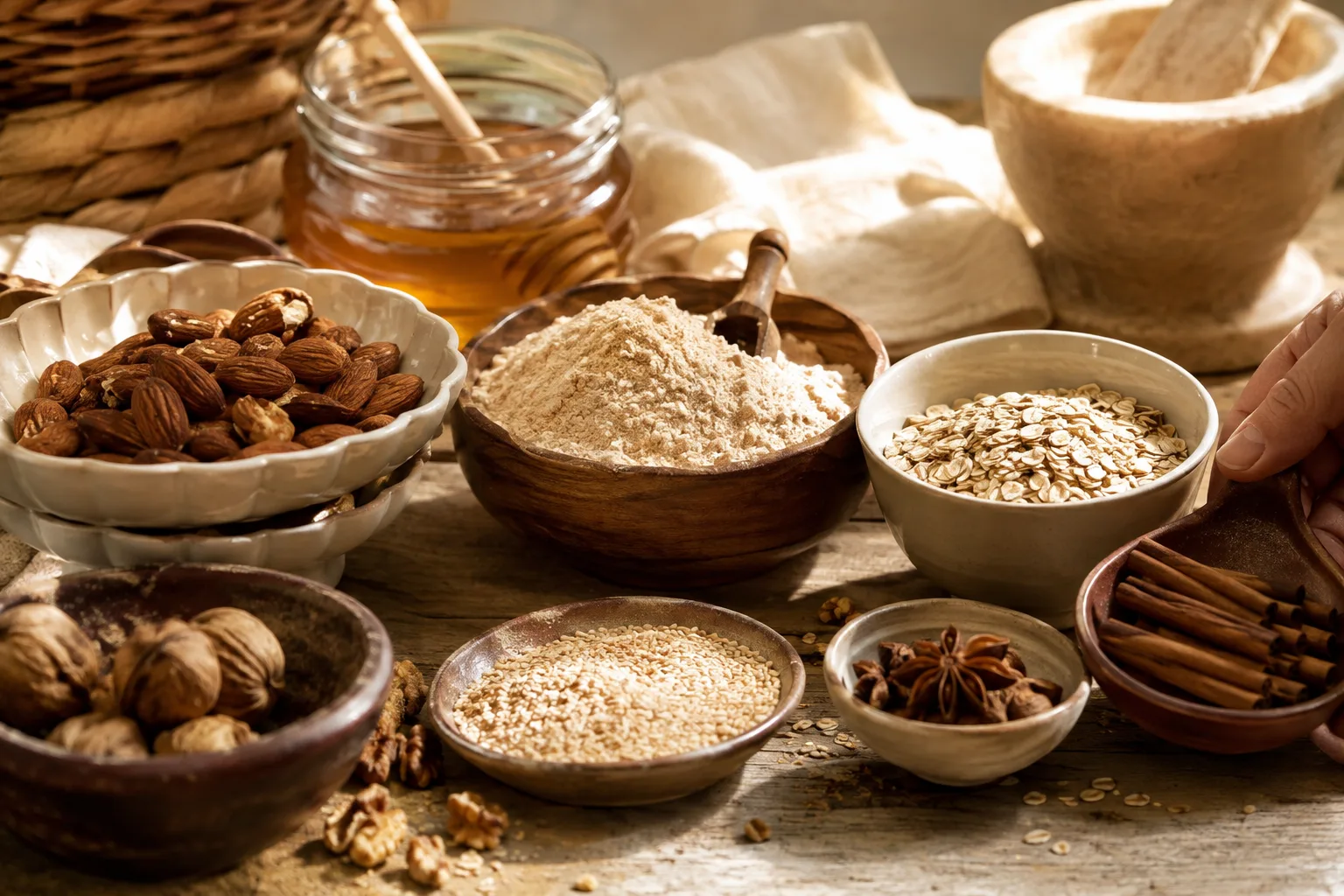
I can tell you some of what goes into mine.
Almonds. Oats. Honey. Cinnamon.
Walnuts. Anise. Sesame.
I like using good jujube honey. It gives me the sweetness I want, but also another layer of flavour — something deeper than simply adding more sugar.
There are other ingredients. There are proportions. There are little choices that make the final bowl taste the way I want it to taste.
But I cannot say more.
It is mine. Haha.
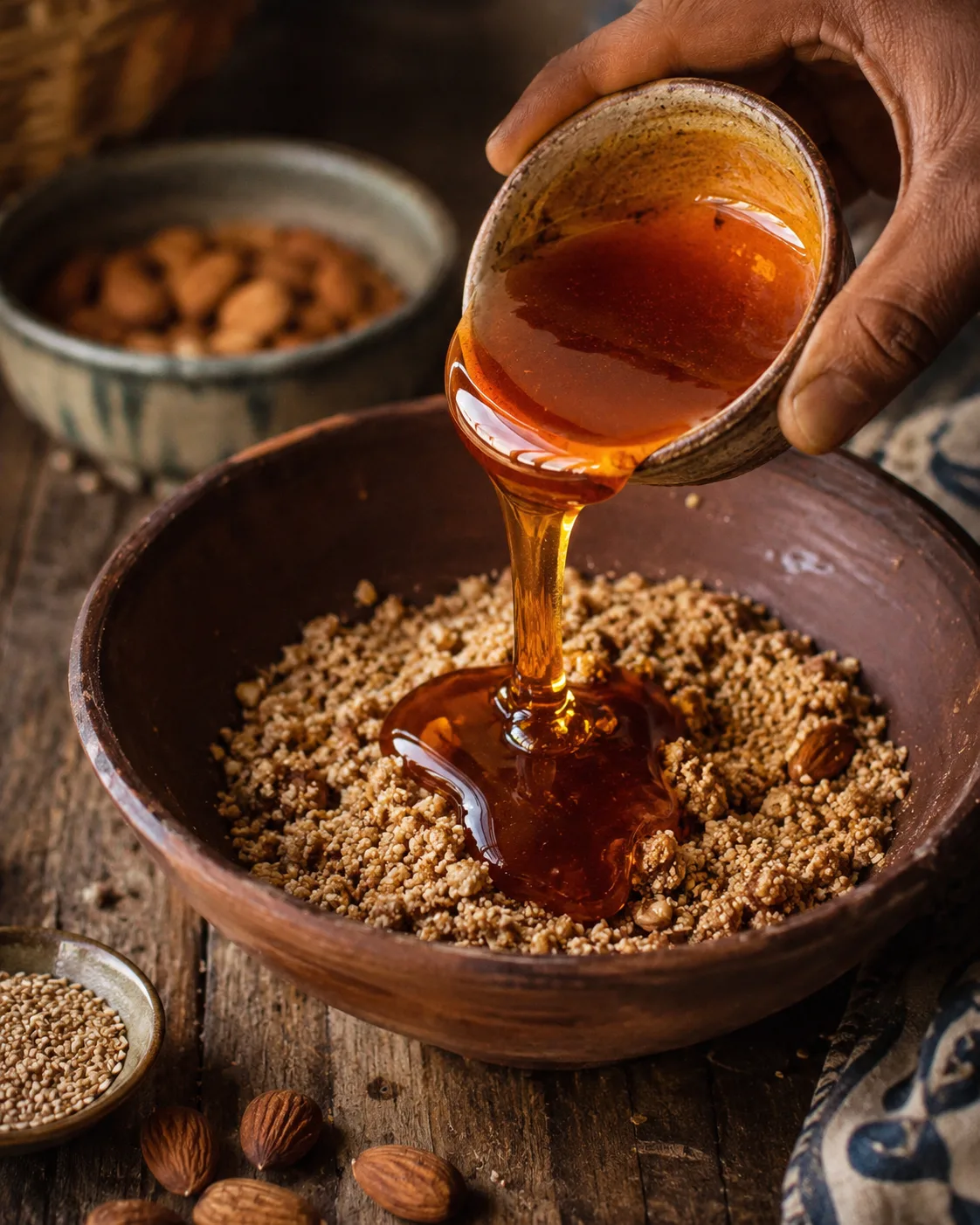
My zamita today
Close to hers.
Different enough to be mine.
My version is slightly healthier. I can admit that. It belongs to the person I am now, not to the child who would have happily eaten whatever his grandmother placed in front of him.
But I never wanted to turn zamita into some joyless “healthy version” of itself. If I am going to eat zamita, it still has to taste like zamita. It has to make me want another spoon.
And it does.
The spices come through. The nuts give it body. The honey rounds everything out. The texture breaks apart the way I like.
It is not my grandmother’s zamita. It is my way of finding the road back to it.
The last batch
Almost
two kilos
The last time I made zamita, I made almost two kilos.
Two kilos sounds like the sort of quantity a reasonable person prepares because he intends to keep some for later.
Mine did not last fifteen or twenty days.
Ah, ya zamita.
I wish I could tell you that I ate it slowly, respectfully, one carefully measured portion at a time. No. I like it too much for that story to be believable.
And yes, mine comes close. Sometimes very close. The smell, the spices, the dry texture, the spoon going back into the plate before I have even finished what is already in my mouth — it can all take me somewhere near Meski again.
But my grandmother’s zamita had something mine cannot reproduce.
Hers was harder to get.
So somehow, of course, hers was always better.
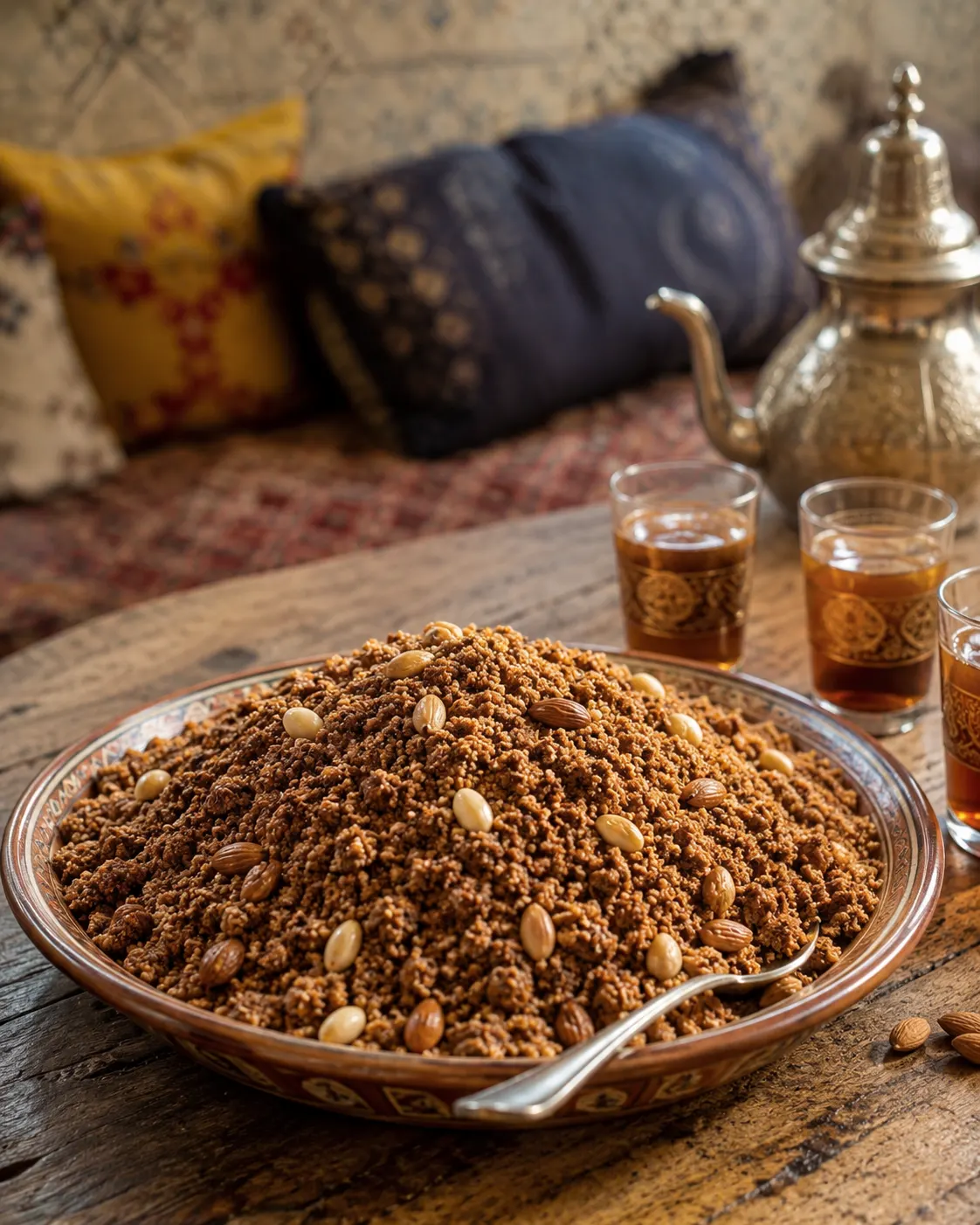
Ma Zamita à moi
I make it with my own hands now.
But the first taste still belongs to Meski.