
Culture & Traditions · Oman & Zanzibar
Sayyida Salme:
When Home Becomes a Memory
She was born into the house of the Sultan of Oman and Zanzibar. She crossed an ocean, became Emily Ruete, raised her children in Europe, and years later began writing for a simple reason: she was afraid they would never truly know where their mother came from.
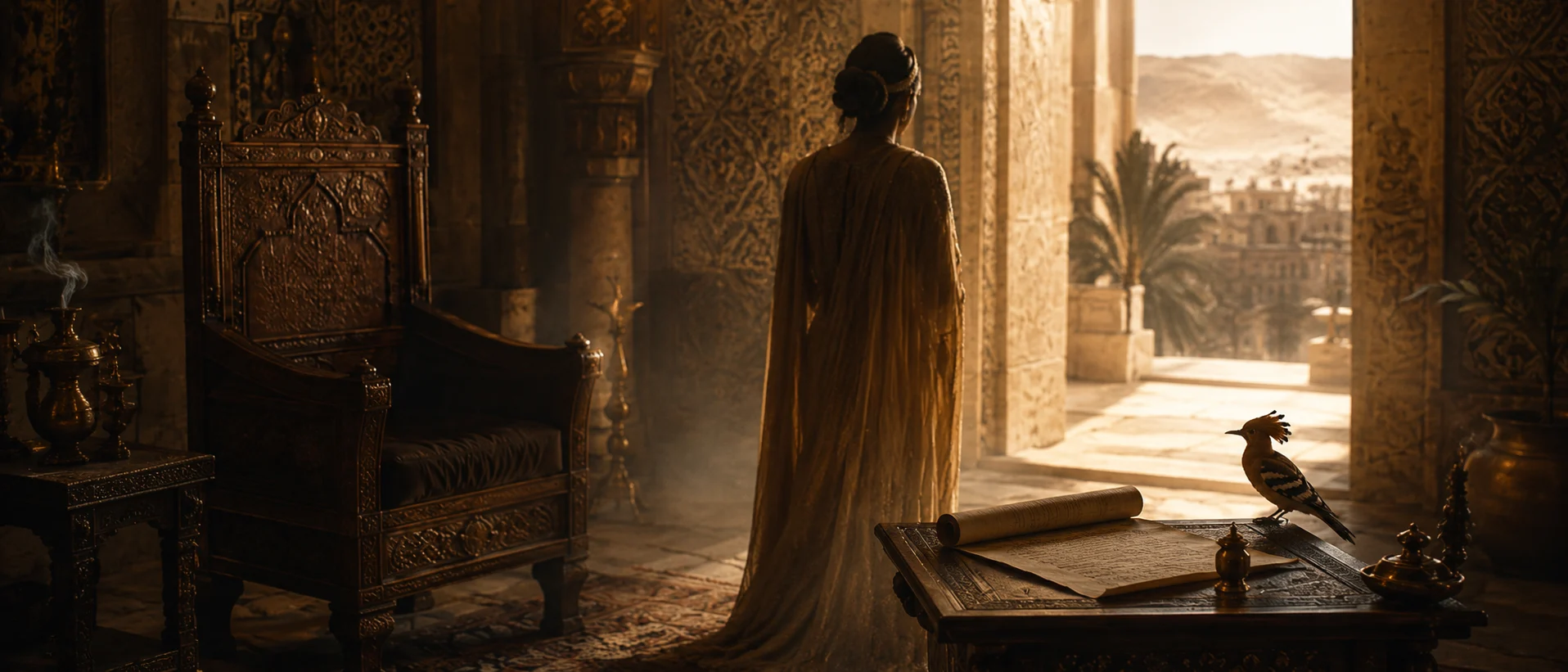
She did not begin by trying to write history.
She began because her children did not really know their mother’s world.
By the time Sayyida Salme sat down in Berlin to record her memories, she had already lived several lives.
She had been a daughter of Sultan Said bin Sultan. A princess raised in Zanzibar inside a dynasty whose world stretched between Oman and East Africa.
She had left the island. Crossed to Aden. Married a German merchant. Moved to Hamburg. Become Emily Ruete.
Then, suddenly, she was a widow with three small children in a country that had once been completely foreign to her.
Years later, she began to write.
Not for scholars.
Not for a museum.
Not even, at first, for the public.
For her children.
A Book Written Before Memory Could Be Lost
The preface to Memoirs of an Arabian Princess changes the way I read the entire book.
Salme explains that she had begun writing years earlier because her children knew little of her origin beyond the fact that she was Arabian and had come from Zanzibar. She feared she might not live long enough to tell them her story herself.
So she put it on paper.
She described the manuscript as something she first intended to leave to her children, a family inheritance made not of land or jewellery, but of memory.
Only later was she persuaded to publish it. The German edition appeared in Berlin in 1886. Scholars today often describe it as the earliest surviving autobiography by an Arab woman, or among the earliest known works of its kind.
The Library of Congress preserves a digitised English edition, while the original memoir first appeared in German.
“A place does not disappear the day we leave it. It begins to disappear when no one remembers how it felt to live there.”
Meskaoui
Before Emily Ruete, There Was Salme bint Said
She was born in Zanzibar in 1844 as Salme bint Said, daughter of Sultan Said bin Sultan Al Busaidi.
Her father’s political world connected Muscat and the Omani coast with Zanzibar and East Africa. The National Museum of Oman describes the Omani Empire of the seventeenth to nineteenth centuries as a bridge between the Arabian Peninsula, Western Asia and the East African coast.
Salme grew up inside that world.
Zanzibar was where she spent her childhood, but Oman was never an abstract country somewhere across the sea. In her memoir she writes about relatives there, ships travelling between the two coasts, her father’s journeys to Oman, Omani horses, customs, family politics and the people arriving from Muscat.
The sea did not separate the two worlds as neatly as a modern map might suggest. For her family, it connected them.
The National Museum of Oman places this relationship between Oman and East Africa at the centre of its presentation of the nineteenth-century Omani world.
A Childhood Remembered Through Small Things
What makes Salme’s memoir powerful is not only the royal names.
It is the ordinary detail.
She remembers rooms. Baths. Horses. Food. Clothes. Ramadan. Weddings. Family rivalries. Lessons. Visitors. The way people sat. The way women received one another. The movement of servants through a household.
In one childhood memory, a fire alarm breaks out at night. Her mother does not gather jewels or possessions. She takes young Salme under one arm and her Quran under the other, and runs.
It is a small scene.
Yet more than a century later, I can almost see it.
This is what personal memory can do that dates often cannot. History may tell us who ruled. A daughter tells us what her mother reached for when she thought the house was burning.
The Girl Who Learned to Write in Secret
There is another detail I keep returning to.
In her own account, Salme says that after learning part of the Quran by heart as a child, she began teaching herself to write.
She copied Arabic characters from the Quran onto a camel shoulder blade used like a slate. Later, she found someone to help her improve her handwriting.
She describes doing this secretly because writing was not considered part of the education expected of girls in her environment.
Think about the distance between those two moments.
A girl tracing letters in secret.
A woman in Berlin writing an entire book in German so her children would know who she had been.
Palaces disappear. Paper can sometimes travel farther.
Her memoir can be read in a complete public-domain transcription through the University of Pennsylvania Digital Library.
Then Her World Changed
Her father’s death in 1856 altered both the family and the political map around her.
Said bin Sultan died while returning from Oman to Zanzibar. After his death, the Omani and Zanzibari branches of the dynasty separated politically, while tensions inside the family intensified.
Salme lost her mother a few years later during a cholera epidemic. She became involved for a time in a family struggle around her brother Barghash and his attempt to challenge Sultan Majid.
Her memoir does not read like the life of someone protected from consequence simply because she was born royal.
Home had begun to change before she ever left it.
A German Neighbour Across the Roofs
In her early twenties, Salme had a house of her own in Zanzibar Town. Nearby lived Heinrich Ruete, a German merchant.
Their relationship developed across a social boundary that was difficult to cross quietly.
In her memoir, Salme recalls that his roof was slightly lower than hers. From above, she could observe gatherings in his house and glimpses of European life.
Eventually their relationship became known. In 1866, while pregnant with his child, she left Zanzibar for Aden. Cambridge scholarship on her life records that Heinrich remained behind temporarily to settle his affairs and joined her the following year.
They married in 1867. Salme took the name Emily Ruete and moved with him to Hamburg.
A life that had begun in the royal households of Zanzibar was now continuing in northern Europe.
Not in a storybook way. In a real way, with consequences.
Academic work on Ruete’s life and memoir is available through Cambridge University Press.
Europe Was Not the Simple Opposite of Home
This is one reason I do not want to reduce her life to the familiar phrase: an Arabian princess escaped to Europe for love.
It is too simple.
Salme herself was capable of criticising both worlds. She challenged European assumptions about Arab women, but she also wrote openly about restrictions and frustrations in the society she came from.
When she first arrived in Europe, she sometimes judged Western life by its outward appearance. With time, she says, experience made those comparisons more complicated.
That may be one of the most modern things about her writing.
She had lived on both sides of the comparison.
She did not need either world to be perfect in order to remain attached to it.
Three Years of Happiness, Then Another Loss
Her marriage did not last long.
A little more than three years after settling in Hamburg, Heinrich Ruete died after an accident involving a tram.
Salme was left in Germany with three very young children. Her youngest was only a few months old.
I think this is the point where her later decision to write for them becomes easier to understand.
Their father was gone. Their mother’s first world was thousands of kilometres away. The language around them was different. The streets were different. Their relatives were different.
If she did not tell them where she came from, who would?
She Did Not Write a Perfect World
There is something important to say before turning Salme into a symbol of memory.
The society she records was deeply hierarchical and included slavery. Her own memoir contains views about slavery that are troubling and unacceptable today, and the Library of Congress notes that she was often sympathetic to the institution as she had known it in Zanzibar.
We should not hide that because other parts of her story move us.
Memory is not the same as innocence.
A first-person source can be precious and still contain blind spots. In fact, reading those blind spots is part of understanding the world that produced the book.
I prefer this to polishing historical people until they become easier to admire.
Salme is interesting because she was human. Complicated. Sometimes perceptive. Sometimes limited by the world she knew.
Why Her Memoir Matters
There are official records of sultans. Treaties. Ships. Wars. Trade. Diplomatic missions.
Salme gives us something else.
The inside of a house. The education of a girl. Women’s visits. Family affection and jealousy. Meals. Clothing. Marriage customs. The feeling of homesickness. The way an Omani-Zanzibari royal household looked from the inside rather than from a consular report.
This does not make her memoir neutral. No memoir is.
It makes it irreplaceable.
A Princess Between Names
Salme bint Said.
Emily Ruete.
Princess of Oman and Zanzibar. German widow. Arab mother. Author.
We like identities to fit inside one line. Her life refuses.
Changing a country did not erase the country she had left. Changing a name did not erase Salme. Writing in German did not make her memories German.
Perhaps identity is sometimes less like choosing between two shores and more like spending a lifetime carrying both.
She Returned With Her Children
Years after leaving Zanzibar, she returned with her children.
She had once feared that they would know almost nothing about her origins. Now they were crossing the sea toward the place that had shaped her childhood.
Her memoir’s final chapter grew out of that return.
But returning to a place does not mean returning to the time you left.
Buildings change. People die. Political worlds disappear. The person who returns has changed too.
Perhaps this is the hardest part of memory: sometimes the place still exists, but the world you remember no longer does.
Why Her Story Feels Close to The House of Meski
Her life and mine have nothing to compare in scale or circumstance. I do not want to force that comparison.
But the reason she began writing feels familiar.
She was afraid that her children would not know the world that made their mother.
That question sits quietly behind The Fortress of Memories too.
What will remain of a family place when those who knew it are gone? Who will remember which room everyone gathered in? Which tree stood beside the house? Which dish was shared? Which gesture meant welcome?
Most memories do not announce that they are important while we are living them.
Their value often becomes visible later.
“Our ancestors lit the flame. I will do everything I can to keep it burning.”
Meskaoui
She Wrote, So Something Remained
Sayyida Salme died in 1924.
The political world into which she had been born had already changed beyond recognition. The Omani-Zanzibari empire of her father’s time was gone. The palaces she remembered had changed or fallen into ruin.
But the book remained.
Today we can still hear a woman from the nineteenth century remembering how she learned, how her family ate, what frightened her, what irritated her, what she admired and what she missed.
That may be her most extraordinary journey.
Not Zanzibar to Aden. Not Aden to Hamburg.
From one mother’s memory into the hands of people she would never meet.
Sayyida Salme and Emily Ruete
Sayyida Salme bint Said was born in Zanzibar in 1844, a daughter of Sultan Said bin Sultan Al Busaidi of Oman and Zanzibar. She later became known as Emily Ruete after leaving Zanzibar and marrying the German merchant Heinrich Ruete.
She was a daughter of Sultan Said bin Sultan and identified herself in her memoir as née Princess of Oman and Zanzibar. She was born and raised in Zanzibar within the Al Busaidi dynasty, whose nineteenth-century political world connected Oman and East Africa.
Her relationship with her German neighbour Heinrich Ruete had become known, and in 1866 she left Zanzibar for Aden while pregnant. Ruete joined her the following year, and they married in 1867 before settling in Hamburg.
She wrote Memoiren einer arabischen Prinzessin, published in German in 1886 and later translated as Memoirs of an Arabian Princess. It records her childhood, family life, customs and later experiences between Zanzibar, Oman and Europe.
They are widely regarded as the earliest surviving autobiography by an Arab woman or among the earliest known examples. They are also an unusually detailed first-person account of nineteenth-century Omani-Zanzibari court and domestic life.
Not at first. In her preface, Ruete explains that she began recording her life for her children because they knew little about her origins and she feared she might not live long enough to tell them everything herself.
Memory Is Also an Inheritance
Some people leave property. Others leave enough words for a lost world to remain visible.