
Discover why bees are among the most vital living creatures on Earth — and how their quiet, daily work sustains the flowers, forests, food and future that every one of us depends on.
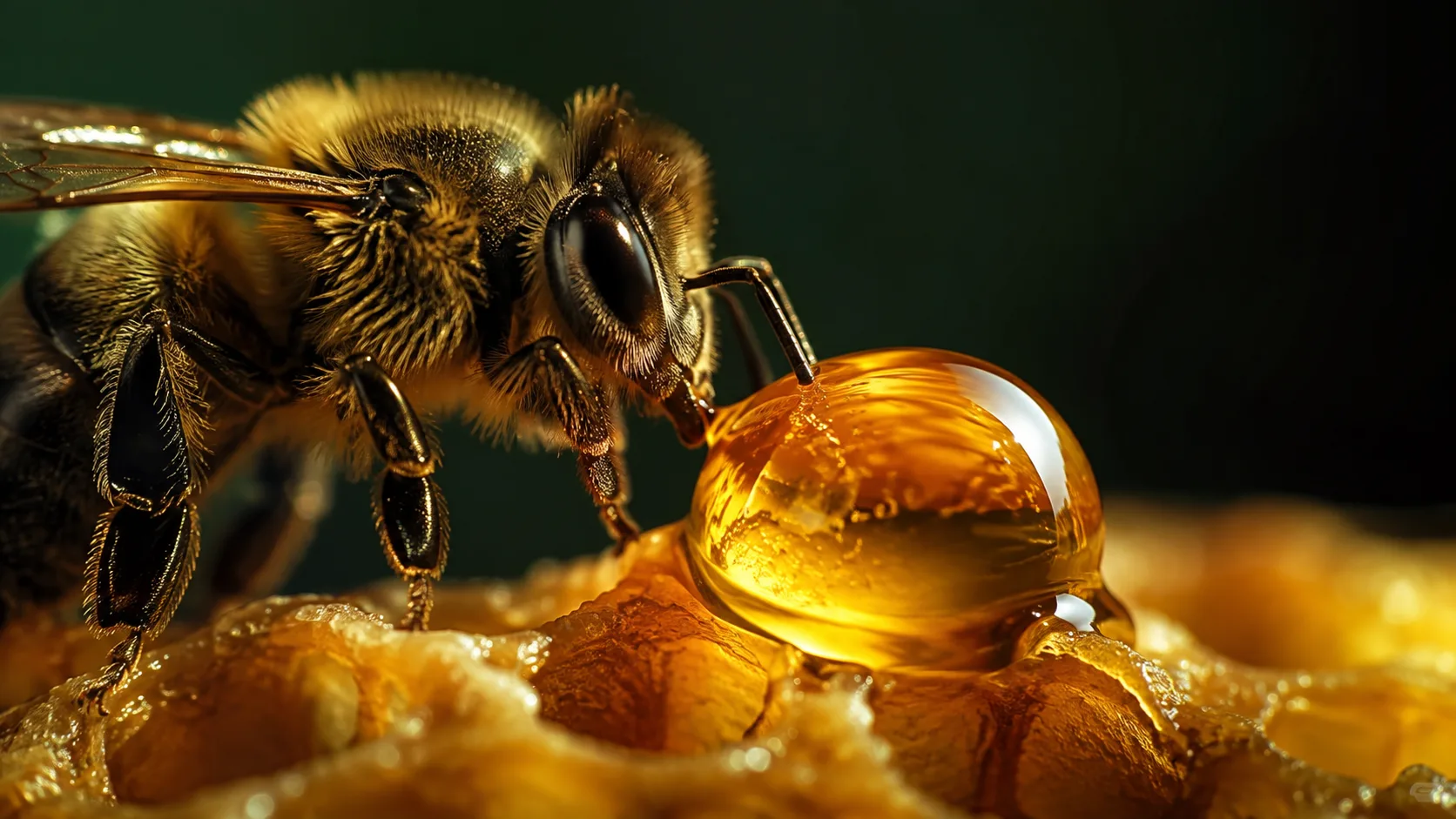
Every morning, before most of us wake, bees are already at work — sustaining the food systems, wild ecosystems and biodiversity that make life on Earth possible. Understanding what bees actually do is one of the most important pieces of knowledge any of us can carry.
Before the World Wakes
Somewhere, a field is still dark. The dew sits heavy on the petals of a thousand wildflowers. The air holds that particular stillness that belongs only to the hour before sunrise — the kind of silence so complete it feels deliberate, as though the land is gathering itself before the day begins.
Then, almost without announcement, it starts.
A low vibration, felt before it is heard. A hum that rises from the direction of a row of wooden boxes at the field’s edge. First one bee, then a dozen, then hundreds — each one lifting into the pale morning air with a certainty that looks less like instinct and more like purpose. Within minutes, they have dispersed across the landscape, each following invisible coordinates, reading the scent of flowers the way a navigator reads stars.
This happens every morning. It has been happening for roughly 100 million years. Long before our species existed, long before the first cities rose and fell, long before anyone thought to collect the amber gift these creatures leave behind, bees were already doing the quiet, relentless work that makes most of life on Earth possible.
We tend to notice them only when they sting us, or when we want their honey. Both reactions are understandable. Neither one comes close to explaining what bees actually are.
Why Bees Matter More Than We Imagine
A Keystone, Not a Convenience
Ecologists use the term “keystone species” to describe a creature whose presence holds an entire system together — not because it is the largest or the most visible, but because without it, the architecture collapses. Remove a keystone from an arch and the stones above it fall. Remove bees from an ecosystem, and the effects cascade outward in ways that take years, sometimes generations, to fully understand.
The USDA estimates that roughly three-quarters of the world’s flowering plants depend on animal pollinators to reproduce. The UN Environment Programme notes that bees are the most important among them. The Food and Agriculture Organization of the United Nations has calculated that the crops most directly affected by bee pollination — fruits, nuts, vegetables, spices, oilseeds — are precisely those that give the human diet its variety, colour and nutritional depth. Without pollinators, we would not simply lose a few luxury foods. We would lose the diversity that keeps our bodies and our ecosystems healthy.
One in every three bites of food you eat today exists, in some measure, because a bee visited a flower.
That is not poetry. That is agriculture.
Beyond the Honeybee: The Hidden World of Wild Bees
When people think of bees, they almost always picture one species: Apis mellifera, the western honey bee, the familiar inhabitant of wooden hives, the producer of the golden liquid that fills jars on kitchen shelves around the world. She deserves her fame. But she is not alone.
There are more than 20,000 known species of bees on Earth. The Xerces Society for Invertebrate Conservation, one of the world’s leading organisations dedicated to invertebrate protection, notes that around 70 percent of solitary bee species nest not in hives but underground, digging precise tunnels into bare, well-drained soil. Others nest in hollow stems, in the dry pith of dead wood, or in the abandoned burrows of beetles. They do not produce honey in quantities we can harvest. Most people will never notice them. Yet they pollinate wild plants, native grasses, forest flowers and meadow species that managed honey bees rarely reach.
Bumblebees, mason bees, leafcutter bees, mining bees — each occupies a slightly different ecological niche. Each visits a slightly different range of flowers. Together, they form a pollination network of extraordinary resilience and reach, one that no single species, however industrious, could replicate alone.
It is worth sitting with that for a moment. An entire category of living creatures most of us have never named is quietly sustaining the plant life around us.
Pollination: Nature’s Silent Miracle
The Mechanics of an Invisible Exchange
The process is simpler than it sounds and more extraordinary than it appears.
A worker bee — always female, as all foraging bees are — leaves the hive on a clear morning and navigates toward a flower using a combination of visual cues, ultraviolet light patterns invisible to the human eye, magnetic fields, and the memory of scent trails she has learned from the dances of her sisters back at the hive. She lands. She feeds.
As she drinks nectar from the flower’s base, pollen grains — tiny, dust-fine, each one a capsule of genetic information — cling to the specialised branched hairs that cover her body. She grooms herself methodically, packing much of the pollen into the concave structures on her hind legs called corbiculae, or pollen baskets. But some grains remain, caught in the fine texture of her coat, impossible to remove.
When she visits the next flower — typically the same species, because bees are remarkably faithful to a single flower type within a single foraging flight — some of that pollen transfers to the stigma of the new flower. The plant receives genetic material from another individual of its kind. Fertilisation becomes possible. Fruit forms. Seeds develop. The cycle continues.
In a single afternoon flight, one bee may visit up to a hundred flowers. A colony of healthy honey bees, working together, may pollinate twenty million flowers in a single day. The Smithsonian Institution has noted that bumblebees possess an additional ability: by gripping flower anthers and vibrating their flight muscles at a specific frequency — close to middle C on a musical scale — they shake loose pollen that other pollinators cannot reach. Tomatoes and blueberries depend on this behaviour, called buzz pollination, to reproduce effectively.
None of this requires human instruction or oversight. It has been refined across millions of years of co-evolution, the flower and the bee shaping one another through time, each becoming more fitted to the other’s needs.
What happens when the bees stop coming?
In parts of China, intensive pesticide use has decimated wild bee populations in some apple-growing regions. Farmers have been observed hand-pollinating trees with small brushes — climbing ladders and transferring pollen flower by flower, hour by hour. It is painstaking, expensive, and capable of covering only a fraction of what a healthy pollinator population accomplishes instinctively and at no cost.
What Happens When the Bees Stop Coming
The FAO has warned that if current trends continue — habitat loss, pesticide exposure, disease, climate disruption — we will see the gradual replacement of nutritionally diverse crops with a narrower range of wind-pollinated staples: rice, wheat, maize. Foods that fill stomachs but lack the micronutrients that prevent disease. The disappearance of bees is not simply an environmental concern. It is a public health concern. A nutritional concern. A civilisational one.
In the summer of 2024 and the spring of 2025, the USDA reported the loss of more than 1.7 million bee colonies in the United States alone — a die-off exceeding 60 percent of commercial beekeeping operations. Researchers described it as one of the most severe pollinator losses in recorded history.
Numbers like these can feel abstract. What they describe is not.
Honey Is Only Part of Their Story
It is the gift we have celebrated longest, the one woven deepest into human memory. Honey appears in the oldest paintings found in Spanish caves, in the medical texts of ancient Egypt, in the hospitality traditions of the Arabian Peninsula, in the wedding rituals of Morocco, in the pharmacopoeia of traditional Chinese medicine. No other food produced by a living creature has accompanied human civilisation for quite so long.
Raw honey — unheated, unfiltered, harvested with care — carries within it the botanical signature of the landscape where it was made. A honey from sidr trees in the valleys of Yemen or Oman will taste nothing like one gathered from orange blossoms in Morocco or thyme flowers in Greece. Each is a record of a place, a season, a particular community of flowers that existed at a particular moment. When you taste raw honey, you are tasting geography.
But honey is only one thing bees produce.
Beeswax, Propolis, Royal Jelly and Pollen
Beeswax is secreted by glands on the abdomen of worker bees, produced in thin scales and chewed into the precise hexagonal cells of the comb. It has been used for centuries to waterproof leather, to preserve wood, to make candles that burn with a clarity other waxes cannot match, and today to create cosmetics, lip balms and natural food wraps. It is one of nature’s most versatile materials, produced gram by gram at considerable metabolic cost to the bee.
Propolis is the hive’s defensive material — a resinous mixture collected from tree buds and bark, mixed with enzymes, and used to seal cracks, narrow entrances against predators, and coat every surface of the hive with a substance that resists bacterial growth. It is, in effect, the immune system of the colony made physical. Scientists have studied propolis for its antimicrobial and anti-inflammatory properties, though research remains ongoing and conclusions should not be overstated. What is not disputed is that propolis has been used in folk medicine across cultures for centuries, from Eastern Europe to the Middle East, respected long before anyone had the tools to explain why.
Royal jelly is a secretion produced by nurse bees to feed larvae and, exclusively, the queen throughout her life. It is rich in proteins, fatty acids and a compound called royalactin, which appears to be responsible for triggering the physiological transformation that turns an ordinary larva into a queen capable of living several years rather than the few weeks of a worker bee. It is one of the stranger facts in nature: the same genetics, an entirely different destiny, determined by what the larva is fed.
Bee pollen — collected by foragers and stored in the hive as the colony’s protein source — contains amino acids, vitamins and micronutrients. It has been used as a food supplement in many traditions. The science around its benefits remains mixed and context-dependent; enthusiasm should always be tempered by honesty.
Together, these products represent not a marketing catalogue but a biological archive — five entirely different substances produced by the same small creature, each with its own chemistry, its own history, its own relationship to human use.
A Drink of Varying Colours: Bees in Sacred Tradition
In the Quran, an entire chapter bears the name of the bee. Surah An-Nahl — سورة النحل — is the sixteenth chapter, and its 128 verses take their title from two of them, verses 68 and 69, in which God describes inspiring the bee to build its home in mountains, in trees, and in what humans construct, and then to travel the earth and return with a drink of varying colours in which there is healing for people.
The Arabic uses the feminine form for the bee throughout these verses — a detail that sits quietly in the text, centuries before anyone formally understood that all foraging and building bees are female. Whether one reads this as scientific anticipation, poetic observation, or divine precision, the fact remains that the Quran chose to give an entire chapter to this creature, and that Muslim scholars across the centuries have found in the bee a model of community, purposefulness and generosity: a creature that takes from the earth only what it needs, transforms it into something that benefits others, and causes no harm in the process.
For The House of Meski, this resonance between honey, bees and the traditions of the Muslim world is not a marketing angle. It is the reason honey has always been more than a sweetener in this part of the world. It has been medicine. It has been hospitality. It has been, in the quietest sense, a kind of reverence.
Bees, Biodiversity and Our Future
Forests, Grasslands and the Architecture of Life
It would be a mistake to think of bees solely as servants of agriculture. Their work in wild ecosystems — far from any farm, any orchard, any managed landscape — may be even more significant in the long run.
Flowering plants in forests, grasslands, wetlands, prairies and mountain meadows depend on pollinators to reproduce and maintain genetic diversity. These plants, in turn, provide food and shelter for birds, mammals, insects and reptiles. They regulate water cycles. They hold soil in place. They sequester carbon. Research published in the scientific literature and referenced by the UN’s Intergovernmental Science-Policy Platform on Biodiversity and Ecosystem Services has highlighted that bee-pollinated plants are foundational to the health of forests, which are in turn foundational to the stability of climate systems and freshwater sources.
When bees disappear from a landscape, the flowering plants they serve begin to decline. As those plants diminish, the creatures that fed on their seeds and fruit lose a food source. The soil loses the binding work of root systems. The local water cycle subtly shifts. The chain of consequence is long, and it does not announce itself dramatically. It unfolds quietly, over seasons and decades, in the gradual simplification of places that were once complex and alive.
Biodiversity is not merely a scientific concept. It is the resilience of the living world — the capacity of ecosystems to absorb disturbance, adapt to change, and continue functioning. Bees are one of the threads that hold that resilience together.
The Threats We Have Created
It would be dishonest to describe these threats without acknowledging their origins. The primary causes of bee decline are not mysterious forces beyond our understanding. They are well-documented: the widespread use of certain pesticides — particularly a class called neonicotinoids, on which the European Union imposed significant restrictions in 2018 — which impair bee navigation, memory and reproduction. The conversion of diverse landscapes into monoculture farmland, eliminating the variety of flowering plants that sustains healthy pollinator populations. The spread of the Varroa destructor mite, a parasite that attacks honey bee colonies and has become one of the most devastating threats to managed beekeeping globally. The effects of a warming climate, which is altering the timing of flower blooms in ways that can leave bees without food during critical periods, and shifting the geographic ranges of both bees and the plants they depend on.
None of these causes is inevitable. All of them are, to varying degrees, the result of choices. Which also means they are open to different choices.
Neonicotinoids
Impair bee navigation, memory and reproduction. The EU imposed significant restrictions on their outdoor use in 2018.
Monoculture Farmland
Conversion of diverse landscapes removes the variety of flowering plants that sustains healthy pollinator populations year-round.
Varroa destructor
A mite that attacks honey bee colonies and has become one of the most devastating threats to managed beekeeping globally.
Bloom Disruption
A warming climate alters the timing of flower blooms, leaving bees without food during critical periods and shifting their geographic ranges.
How Every Person Can Help Protect Bees
This is the section where it would be easy to offer a tidy list and leave it at that. But the most honest thing to say is this: the scale of the problem requires policy changes, agricultural reform, and scientific investment that go well beyond individual action. No one should be made to feel that planting a window box absolves industrial agriculture of its responsibilities.
And yet, individual choices are not meaningless. Especially when they are made by millions of people simultaneously.
Plant native wildflowers
Flowering species that bees can access — particularly native wildflowers co-evolved with local bee populations — make a genuine difference in urban and suburban environments. Choose plants that flower at different times of year to provide food from early spring through late autumn.
Reduce or eliminate garden pesticides
Many garden insects, including bees, are sensitive to compounds sold without restriction for domestic use. A garden without them is not a garden in decline — it is a garden that has agreed to share itself.
Leave patches of habitat
Bare soil, uncut stems and small dead wood create nesting habitat for solitary bee species that contribute enormously to wild plant pollination. A tidy garden, in ecological terms, is often an empty one.
Support sustainable beekeeping
Choose raw honey from a known and trusted source. Beekeepers who prioritise colony health over maximum honey yield, who do not expose their bees to unnecessary treatments, and who allow bees to overwinter on their own honey are part of a chain of care worth supporting.
Learn — and share what you learn
Understanding what bees actually do, how many species exist, what threatens them and why, and how the food system connects to their wellbeing changes how people vote, what they buy, and how they speak to those around them. The knowledge that bees matter is itself a form of protection.
Final Thoughts: What We Protect When We Protect a Bee
There is a particular kind of humility that comes from learning how dependent we are on creatures we have largely ignored. The bee does not need our admiration. It has been sustaining the living world since before our kind arrived to observe it. But we need its continued existence, and that need creates a responsibility we have been slow to honour.
When we protect bees, we are not simply protecting a charming insect or a source of honey, though both of those things are worth protecting on their own terms. We are protecting the systems that produce food in its full diversity. We are protecting the forests that stabilise our climate. We are protecting the wildflowers that no one planted, the meadows that no one tends, the seeds that no one counted but that continue, year after year, to renew the world.
We are protecting the possibility that the children who come after us will inherit a planet as varied and abundant as the one we received — not a simplified version of it, diminished by the losses of creatures we decided were too small to worry about.
Every morning, before most of us have woken, the bees are already at work. They ask nothing of us except the space and the flowers they need to do it.
That, at least, we can offer.
نسأل الله أن يبارك لكم فيما رزقكم
May God bless you in what He has provided for you.
Frequently Asked Questions About Bees
Bees are pollinators, which means they transfer pollen between flowering plants, enabling those plants to reproduce. This process supports the growth of fruits, seeds and vegetation across wild ecosystems and farmland alike. The USDA and UNEP both recognise bees as among the most critical contributors to global biodiversity and food security. Without them, the variety of plant life — and all the animals that depend on it — would be severely reduced.
The consequences would be far-reaching. Many fruit trees, nut crops, vegetables, wildflowers and forest plants depend on bee pollination. Their decline or disappearance would reduce agricultural yields, diminish dietary diversity, disrupt wild ecosystems and affect the livelihoods of millions of farmers. The FAO has warned that without pollinators, nutritious foods would gradually be replaced by wind-pollinated staple crops with lower micronutrient content.
Scientists have identified more than 20,000 species of bees worldwide. The western honey bee (Apis mellifera) is the most widely managed, but the vast majority of bee species are solitary, do not produce honey in harvestable quantities, and are rarely discussed publicly despite their important role in pollinating wild plants.
Several interconnected factors are responsible: the use of pesticides (particularly neonicotinoids), the conversion of diverse habitats into monoculture farmland, the spread of parasites such as the Varroa mite, and the effects of climate change, which disrupts the synchronisation between bee activity and flower blooming. These pressures affect both managed honey bee colonies and wild bee species.
Raw honey is honey that has not been heavily heated or filtered after extraction. It retains more of its natural pollen, enzymes, aromas and botanical character. Many people prefer it for these reasons, and traditional medicine in numerous cultures has valued raw honey for centuries. However, the scientific evidence for specific health claims varies widely, and raw honey should not be presented as a medical treatment. What is certain is that raw honey offers a more complete sensory and nutritional profile than heavily processed alternatives — and that knowing its origin is always more meaningful than trusting a generic label.
Plant flowering species — particularly native wildflowers — in whatever space you have access to, from a garden to a window box. Avoid using pesticides in domestic settings. Leave patches of bare soil and uncut stems for nesting. Support beekeepers who practise sustainable, ethical beekeeping. And learn as much as you can: informed choices, made consistently, shape the markets and policies that determine how the natural world is treated.
Yes. Surah An-Nahl — سورة النحل, meaning “The Bee” — is the sixteenth chapter of the Quran. Verses 68 and 69 describe God inspiring the bee to build its home and to travel the earth, producing from within its body a drink of varying colours in which there is healing for people. The chapter has been a source of reflection for Muslim scholars for centuries, and the bee holds a place of particular regard in Islamic tradition.
Raw Honey, Traced to Its Origin
Every jar of MESKI honey carries the botanical signature of the landscape where it was made — from the sidr valleys of Oman and the Emirates to the wild maquis of Corsica. When you know where your honey comes from, you understand what the bees were doing.