
The Truth Behind the Shine
On 23-karat gold, the honey beneath it, and why one matters far more than the other.
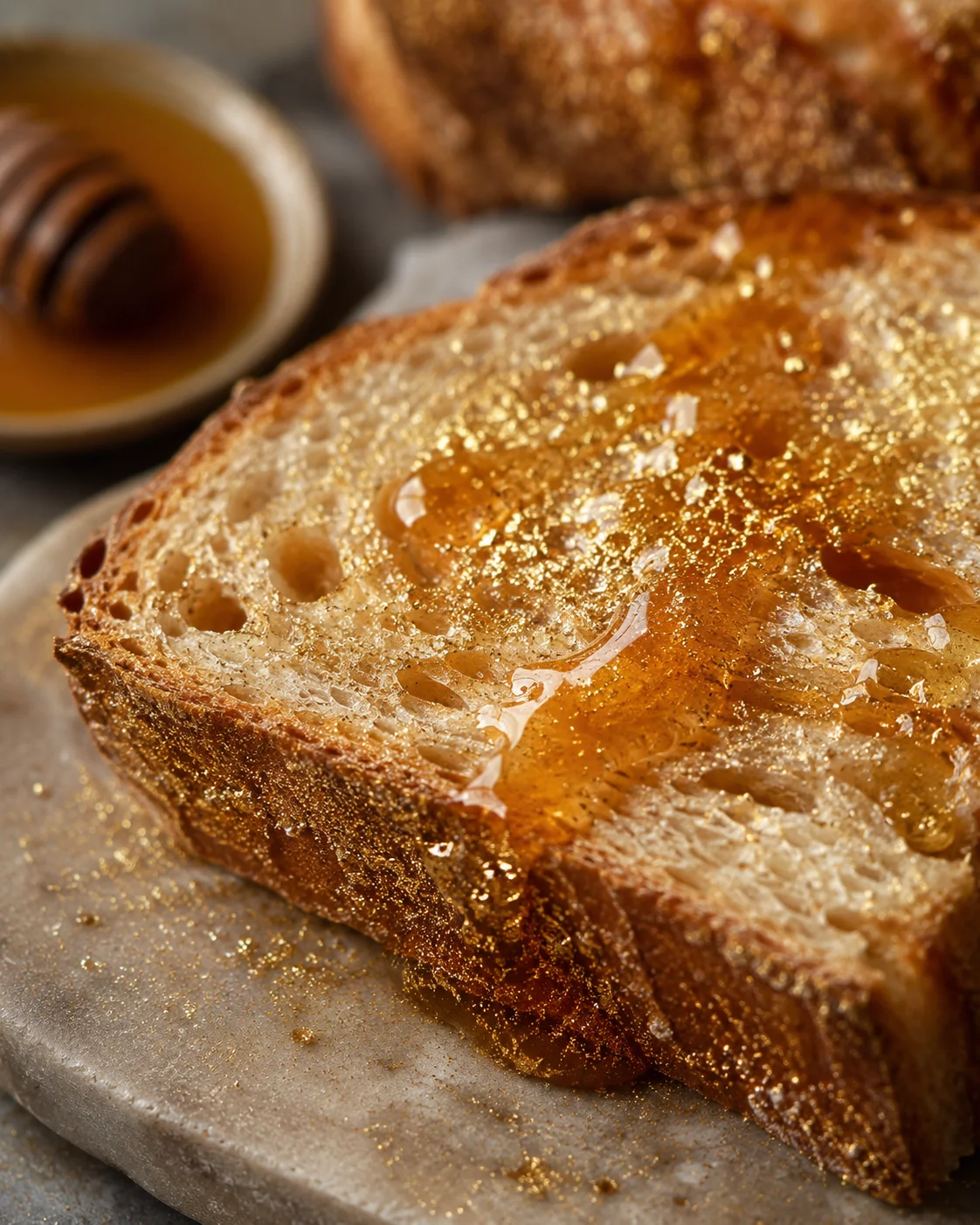
Delicious Teast of Gold/p>
You have seen it on shelves in Dubai Mall, in gift catalogues before Eid, in the windows of gourmet stores along Sheikh Zayed Road: honey suspended with tiny flakes of gold, glowing under the light. It looks like wealth in a jar. But the question worth asking — the one most sellers avoid — is simple: does the gold actually do anything, or is it pure spectacle?
The honest answer is more interesting than either extreme. Gold does not heal you. But it was never really about that.
What 23-Karat Gold Actually Is
Edible gold is real gold — typically 22 to 24 karats — hammered into sheets so thin they are almost weightless, then cut into flakes or leaf. It has been used in food and drink for centuries, from gilded sweets in Mughal courts to gold-dusted desserts in Europe today. According to Wikipedia’s overview of gold leaf, the material is chemically inert, meaning it passes through the body without being absorbed or altered. It is not a vitamin. It is not a mineral the body uses. It is, quite literally, decoration you can eat.
That inertness is also why it is considered safe in small quantities. Food-grade gold (listed under the additive code E175 in food regulation) is recognized as non-toxic by food safety authorities, including guidance referenced by the European Food Safety Authority. In the UAE, any gold-infused food product sold commercially is expected to meet the standards set by ESMA, alongside the food safety framework overseen by the UAE Ministry of Climate Change and Environment.
Why Gold Has Been Paired With Honey for Centuries
Because the pairing was never about biology. It was about meaning.
Long before modern food labelling existed, gold was humanity’s universal symbol of permanence — something that does not rust, fade, or decay. Honey, on its own, already carries that same idea: archaeologists have found pots of honey in ancient tombs still edible thousands of years later. Put the two together, and you get a single object that says, without a word: this does not spoil, this does not lose its value, this is made to last.
In Gulf culture specifically, gold is rarely just jewelry. It is a language. A gift wrapped in gold tells the receiver they are honoured, not merely thanked. That is precisely why gold-infused Emirati Sidr honey sits naturally inside our limited-edition collection — not as a gimmick, but as a continuation of a much older instinct: when something matters, you make it visible.
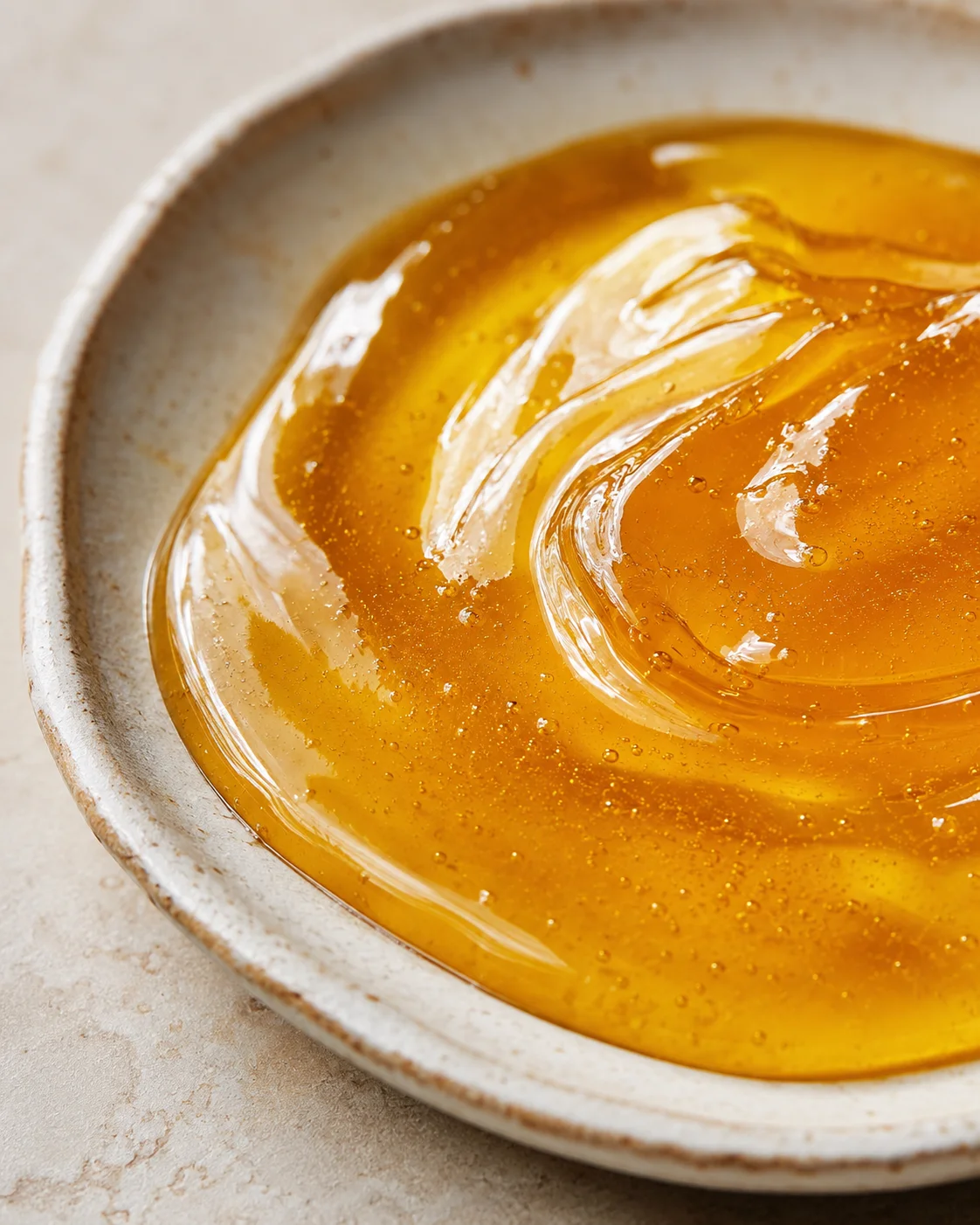
Honey plate
“The gold is the signature. The honey is the substance.”
What You’re Really Paying For
Here is the part most marketing skips: the gold flakes themselves cost very little. A jar of gold-honey is expensive mainly because of what sits underneath the gold — the honey itself.
Raw Sidr honey, the variety most often paired with gold in the Gulf, comes from the Sidr (jujube) tree, which flowers for only a few weeks a year in remote mountain regions. According to the Wikipedia entry on Ziziphus spina-christi, the tree has been documented across the Middle East for centuries and is referenced in religious and historical texts. The rarity of the harvest, not the gold on top, is what drives the price.
A jar built only on shine and not on quality is the one to be wary of — and it’s exactly why provenance matters more than glitter when you choose what to buy or gift.
How to Tell If a Gold Honey Is Worth Its Price
- Ask where the honey comes from. A trustworthy seller names the region and the flower source, not just “natural honey.”
- Check the texture, not just the sparkle. Genuine raw honey is dense, slow to pour, and rich in aroma — gold flakes cannot disguise a thin, watery base.
- Look past the marketing claims. If a brand promises medicinal miracles from the gold itself, that is a sign they are selling a story instead of a product.
- Consider the presentation as part of the gift, not a distraction from it. A well-made box should honour what’s inside, not compensate for it.
A Gift That Says What Words Sometimes Can’t
There is a reason gold-infused honey keeps appearing at weddings, Eid gatherings, and corporate gifting tables across the Emirates. It occupies a rare space: edible, but unmistakably ceremonial. Useful, but clearly symbolic. It can be given to an elder as a sign of respect, to a guest as a welcome, or to a business partner as a quiet statement of esteem — all without a single word of explanation needed.
That is the honest case for gold in honey. Not a health claim. A human one.
In Summary
Gold flakes in honey are safe, inert, and purely decorative — they will not heal you, and any brand claiming otherwise is overselling. What makes a gold-honey jar genuinely valuable is the quality of the honey beneath the gold, and the centuries-old symbolism the gold carries: permanence, respect, and celebration. Choose the honey first. Let the gold be the finishing word, not the whole sentence.
Frequently Asked Questions
Is it safe to eat gold flakes in honey?
Yes. Food-grade 22–24K gold is chemically inert and passes through the body unchanged. It is recognized as safe for consumption in small decorative quantities by international food safety frameworks, including the additive classification E175.
Does gold in honey have any health benefits?
No credible scientific evidence supports health benefits from edible gold itself. Any wellness value in a gold-honey product comes from the honey, not the gold. Be cautious of sellers who claim otherwise.
Why is gold-infused honey so expensive?
The price reflects the rarity and quality of the underlying honey — particularly monofloral varieties like Sidr honey — far more than the cost of the gold flakes themselves, which are minimal in quantity.
Is gold-infused honey halal?
Pure raw honey is halal, and edible gold is generally considered permissible as it is inert and non-toxic. As with any product, buyers in the UAE should check for relevant certification from the seller to confirm compliance.
This article is provided for general informational purposes and does not constitute medical advice. Always consult a qualified health professional regarding dietary or health decisions, and a food safety authority for product certification questions.