
Saffron, the Red Gold: Why It Changes Everything in Honey
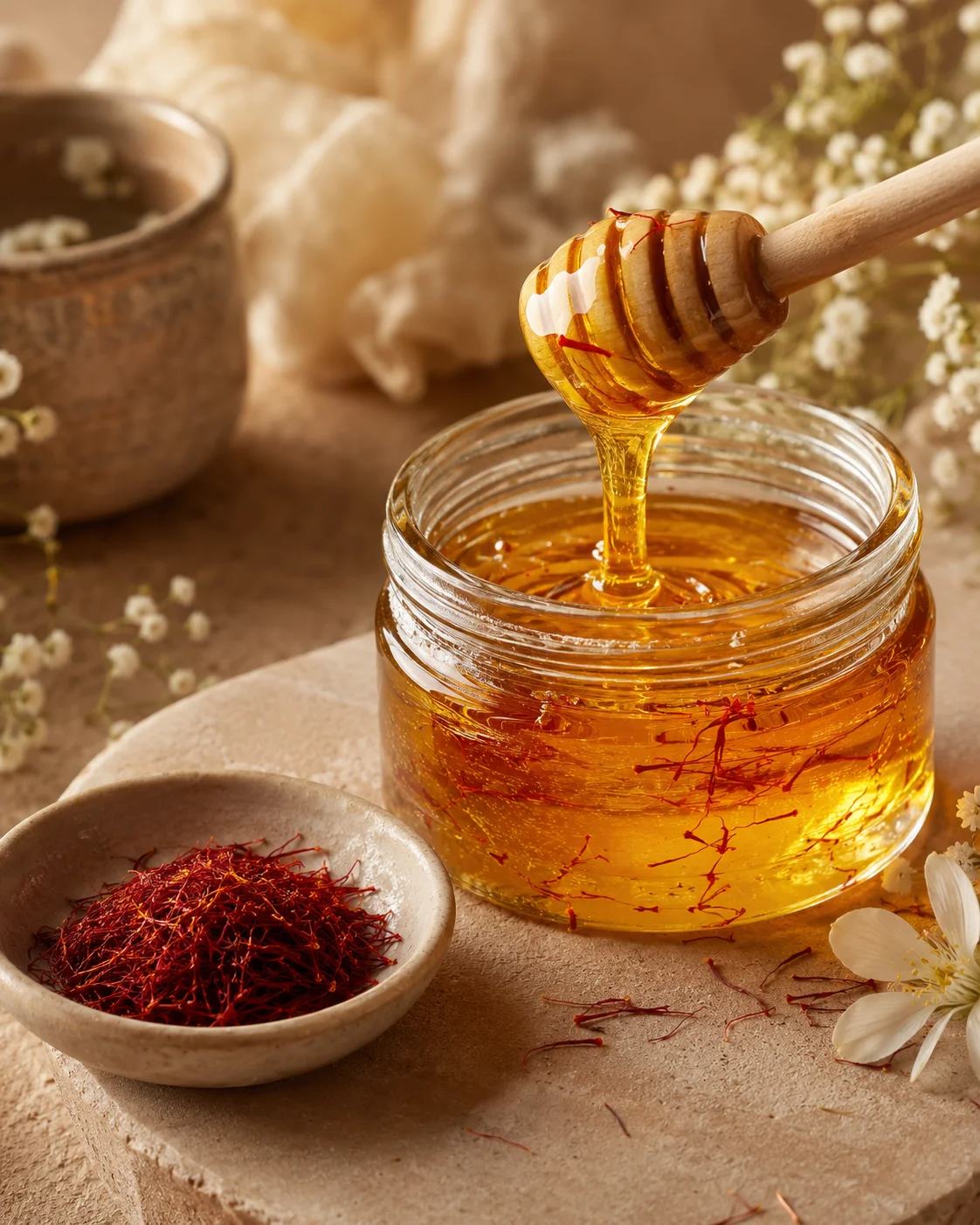
Gold has always had a rival. For thousands of years, one substance has been valuable enough to trade against it, ounce for ounce, in markets from Persia to the Mediterranean. It isn’t a metal. It isn’t a gem. It is a thread, plucked by hand from the heart of a single flower: saffron.
When saffron meets honey, something rare happens — two of nature’s most labour-intensive luxuries combine into one. Here is why that pairing matters far more than its colour alone suggests.
Why Saffron Earned the Name “Red Gold”
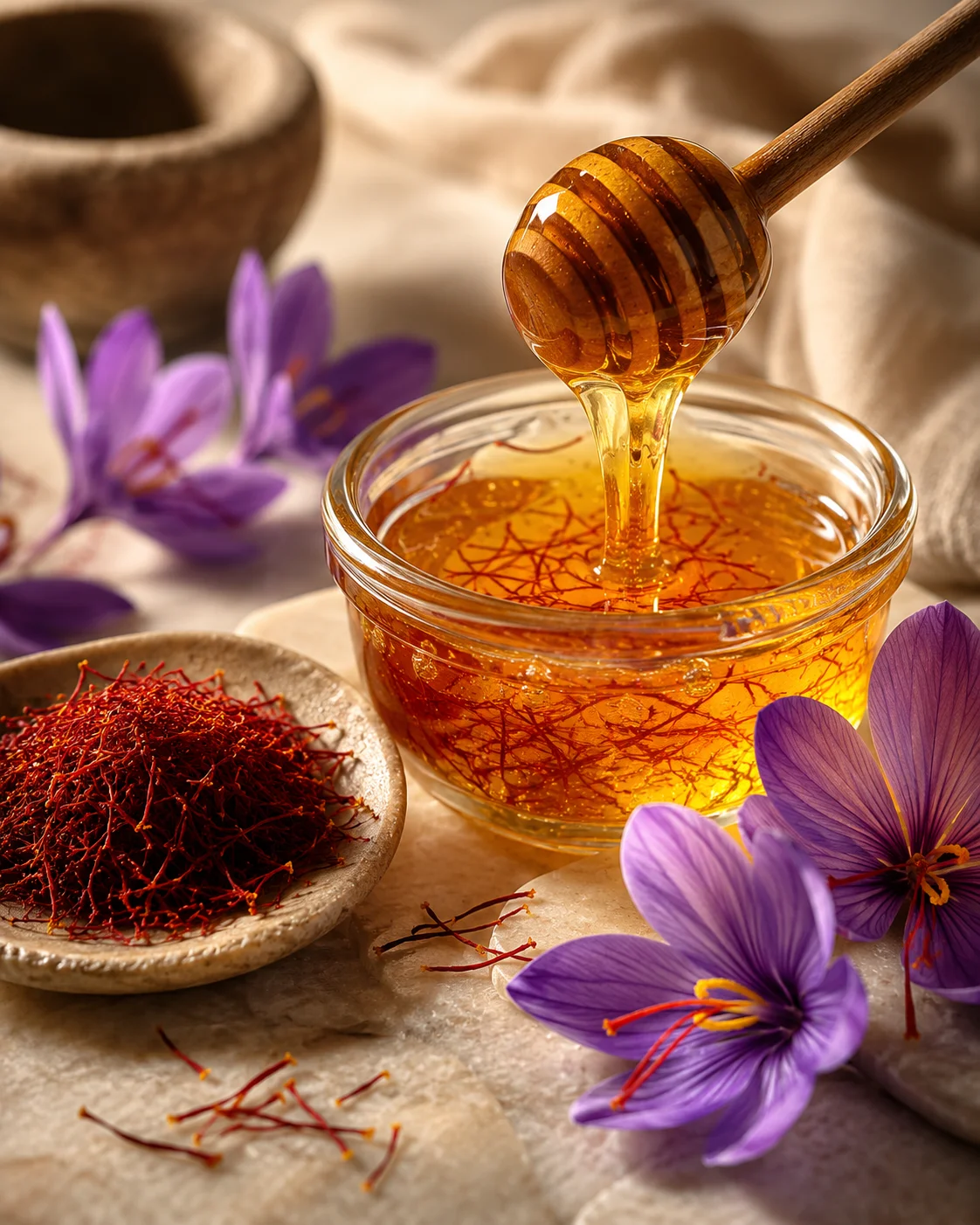
According to Wikipedia’s overview of saffron, the spice comes from the dried stigmas of Crocus sativus, a flower that blooms for only a few days each year. Each flower yields just three tiny stigmas, harvested entirely by hand, at dawn, before the heat of the sun can damage them.
No machine has ever been able to replace this process. That single fact — that saffron’s value is created entirely by human hands, flower by flower — is what separates it from almost every other ingredient in the world.
What Saffron Actually Brings to Honey
Unlike gold, which is inert, saffron is chemically active. It carries naturally occurring compounds — crocin, safranal, and picrocrocin — which are responsible for its colour, aroma, and taste. When infused into raw honey, saffron doesn’t just add visual richness; it lends a distinct golden-amber hue, a delicate floral-earthy aroma, and a flavour that lingers far longer than honey alone.
This is not folklore dressed up as science. Saffron is one of the most studied spices in the world, and ongoing research continues to explore its compounds in relation to mood and general wellbeing — though, as with any natural ingredient, individual results vary and it should never replace medical guidance or treatment.
A Pairing Written in History, Not Invented by Marketing
The relationship between saffron and honey is not a modern luxury-brand invention. Saffron’s stigmas are, quite literally, the flower’s pollen-receiving structures — the very thing bees are drawn to when they forage nearby blooms. According to historical accounts referenced in saffron’s documented history, the spice has travelled trade routes for over three thousand years, prized in royal courts from Persia to the Levant long before it reached Gulf households.
In the Arabian Peninsula, the word for saffron — za’faran — gave its name to the colour itself, a deep amber-gold still associated with celebration, generosity, and special occasions today.
Why Saffron Honey Belongs in the Same Category as Your Finest Gifts
Few ingredients combine rarity, ritual, and reputation the way saffron does. It is not simply expensive — it is recognised as expensive, the way diamonds or aged saffron-dyed silk are recognised, even by people who have never priced them. That recognition is precisely what makes a saffron-infused honey collection such a meaningful gift: the receiver does not need an explanation. They already know.
When saffron is paired with a rare monofloral base like Sidr honey, the result is not one luxury ingredient but two, each independently rare, each independently linked to centuries of tradition in the region. That layering of meaning is something a generic gift basket simply cannot replicate.
How to Recognize Genuine Saffron Honey
- Colour should deepen naturally, not look artificially dyed or unnaturally uniform.
- Aroma matters as much as taste. Real saffron carries a distinct earthy, slightly sweet fragrance — if there is no scent at all, be cautious.
- Ask about the saffron’s origin. A transparent seller will name the source of both the honey and the saffron, not just describe the final blend.
- Be wary of artificial flavouring. Imitation “saffron-style” syrups exist; they rely on food colouring rather than the genuine spice.
In Summary
Saffron earned its place beside gold not through marketing, but through three thousand years of hand-harvesting, trade, and ritual. When it meets raw honey, the result is a product that carries two independent stories of rarity in a single jar — which is exactly why it remains one of the most meaningful gifts to give, and one of the most honest luxuries to receive.
Frequently Asked Questions
Why is saffron more expensive than gold by weight, sometimes?
Because saffron cannot be mass-produced or mechanically harvested. Each stigma is hand-picked from a flower that blooms briefly once a year, making the labour cost per gram extremely high compared to mined gold.
Does saffron honey have proven health benefits?
Saffron is widely studied for its natural compounds, and many cultures have used it traditionally for general wellbeing. However, it should not be treated as a medical treatment, and anyone with health concerns should consult a qualified professional.
How can I tell real saffron honey from artificially flavoured honey?
Genuine saffron honey develops its colour and aroma naturally over an infusion period, with a distinct earthy fragrance. Artificially flavoured versions often rely on food colouring and lack genuine aroma depth.
Is saffron honey suitable as a gift in Gulf culture?
Yes. Saffron carries strong cultural associations with celebration, generosity, and hospitality across the region, making saffron-infused honey a particularly meaningful gift for weddings, Eid, and formal occasions.
This article is provided for general informational purposes and does not constitute medical advice. Always consult a qualified health professional regarding dietary or health decisions.