
Before dinner
We were already
gathered in the salon
I remember the waiting almost as clearly as the meal.
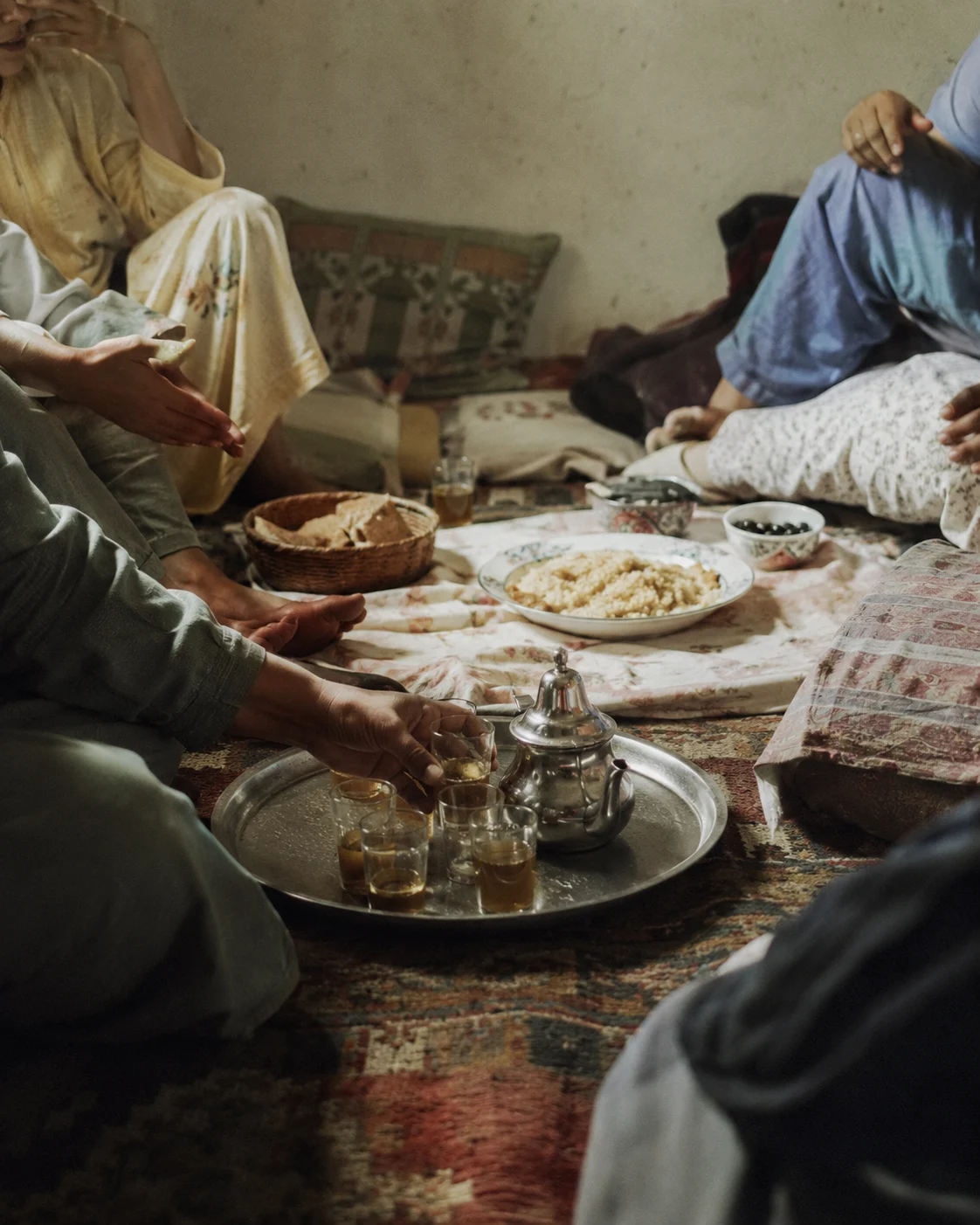
Everyone sitting together in the salon. Tea passing from hand to hand. Conversations moving in every direction. Someone laughing. Someone still talking when, somewhere else in the house, dinner was nearly ready.
Then a small change in the room. Not the food yet. First, the hands.
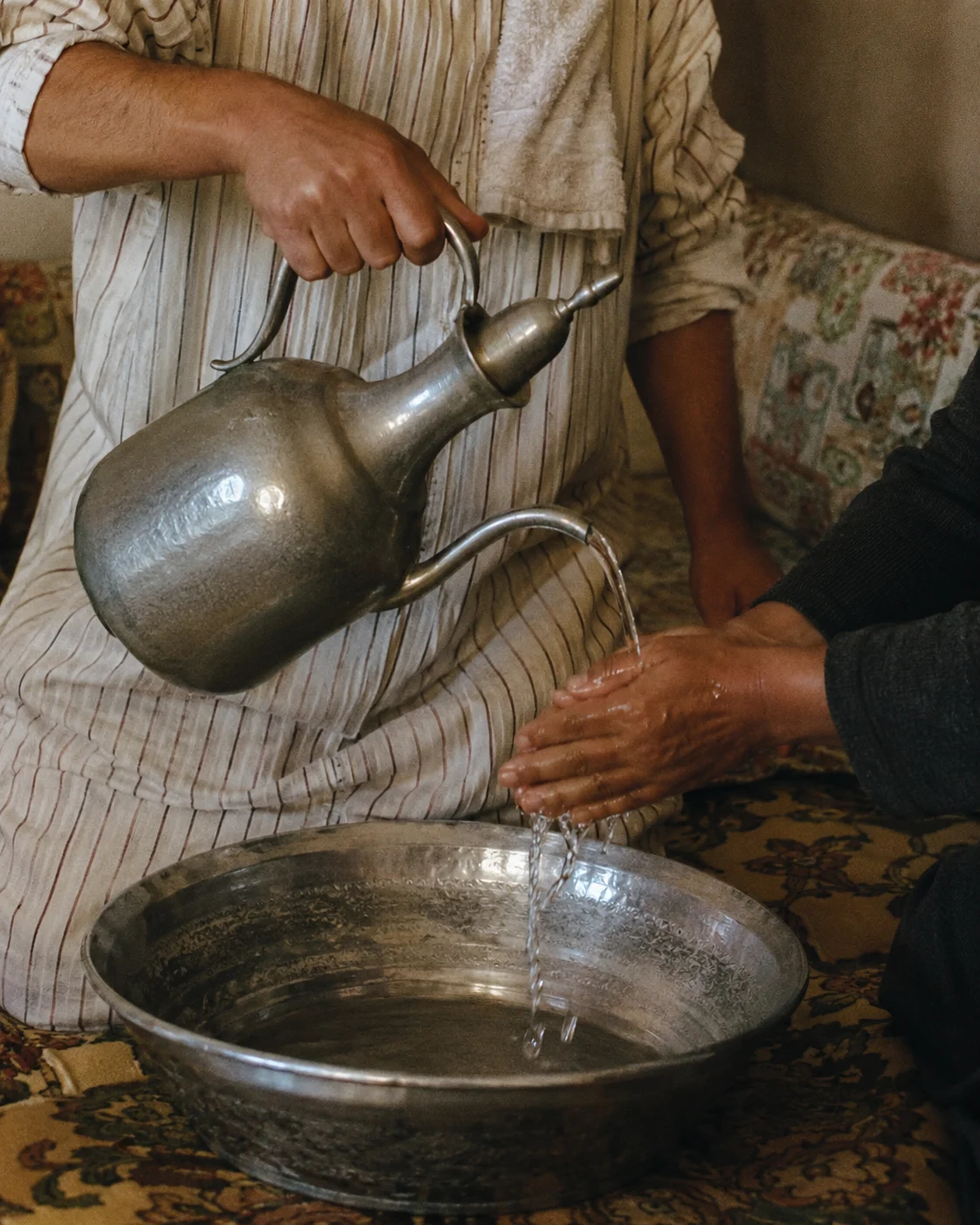
Someone would be called. The bakrach was prepared, along with its basin. Water from the well had been warmed, then mixed with cold water until the temperature felt right.
Even the water had been thought about.
First, the hands
The meal began
before the plate arrived
A towel rested over the person's shoulder. Then they went around the salon, one guest after another.
Hands over the basin. Warm water poured from the bakrach. Wash. Dry. Next person.
Simple gestures. But when I think about them now, I realise how much care was hidden inside them. The water should not be too cold. Not too hot. The basin must be there. The towel must be ready. Everyone should be comfortable.
We say “eating with the fingers” as though the story begins when the fingers touch the food. In our house, it began before that.
The hands were welcomed to the table too.
Then dinner arrived
Tear the bread.
Into the sauce.
Once the food was placed down, nobody needed instructions.
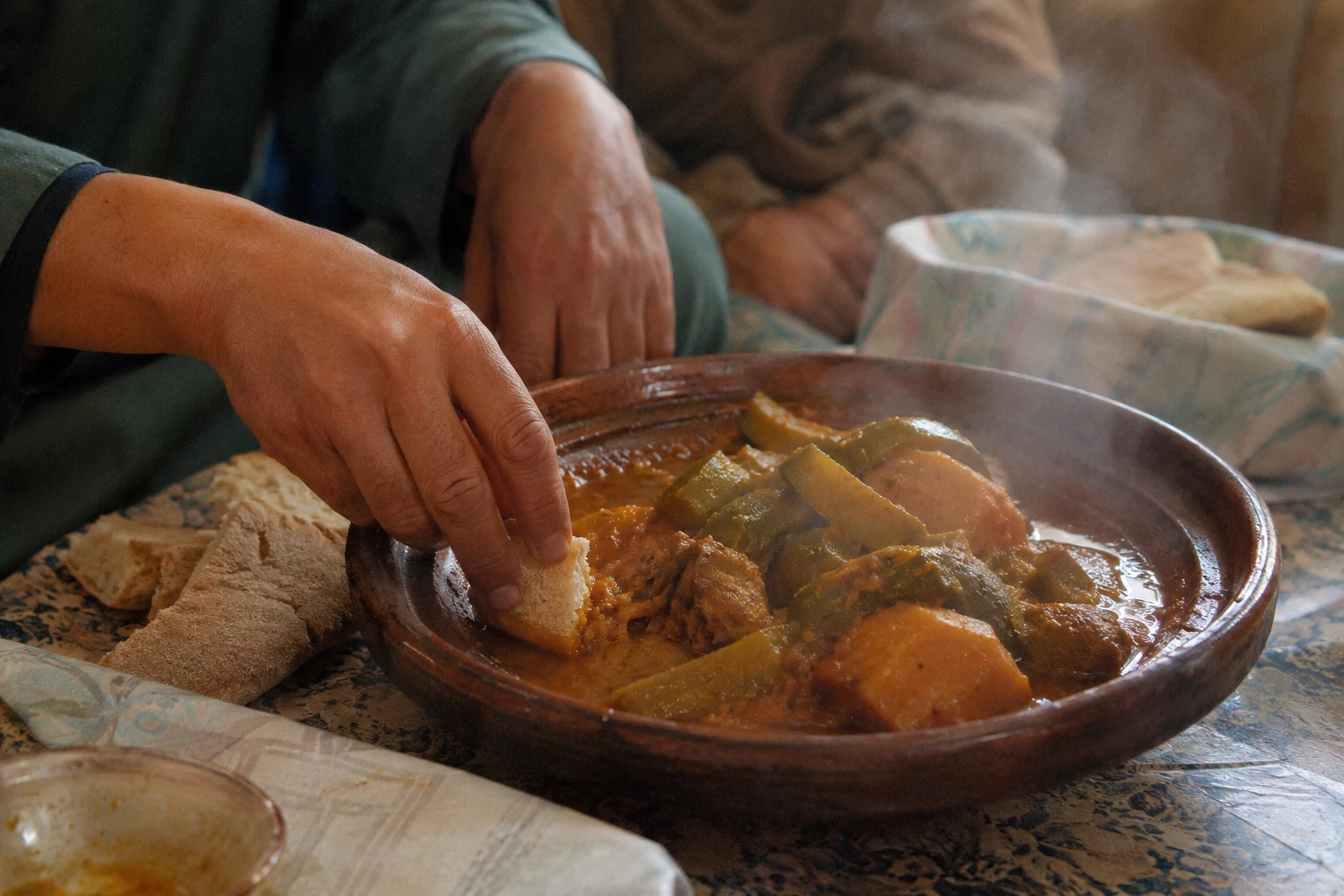
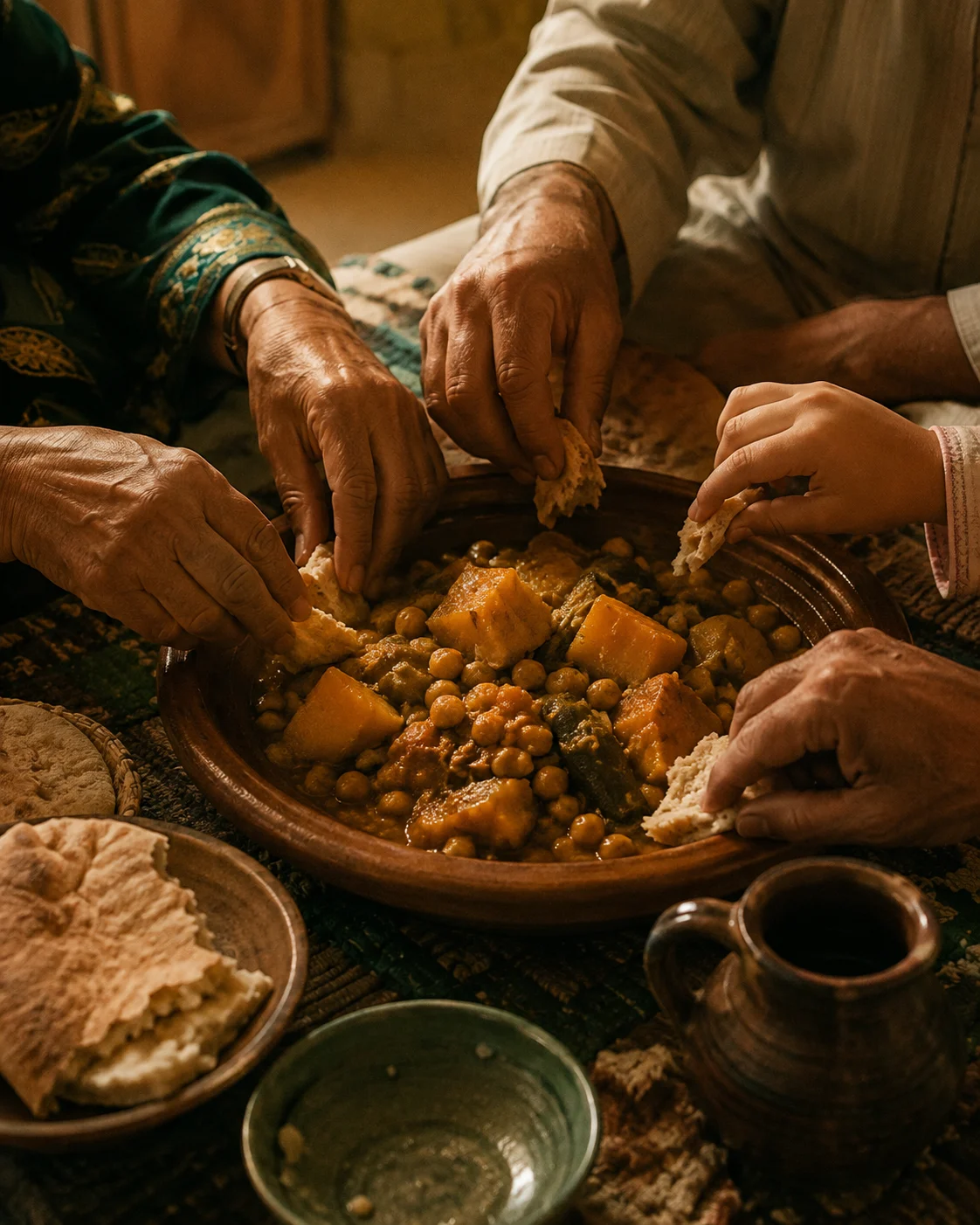
We gathered around the table. Bread was broken by hand. A piece between the fingers. Then into the sauce.
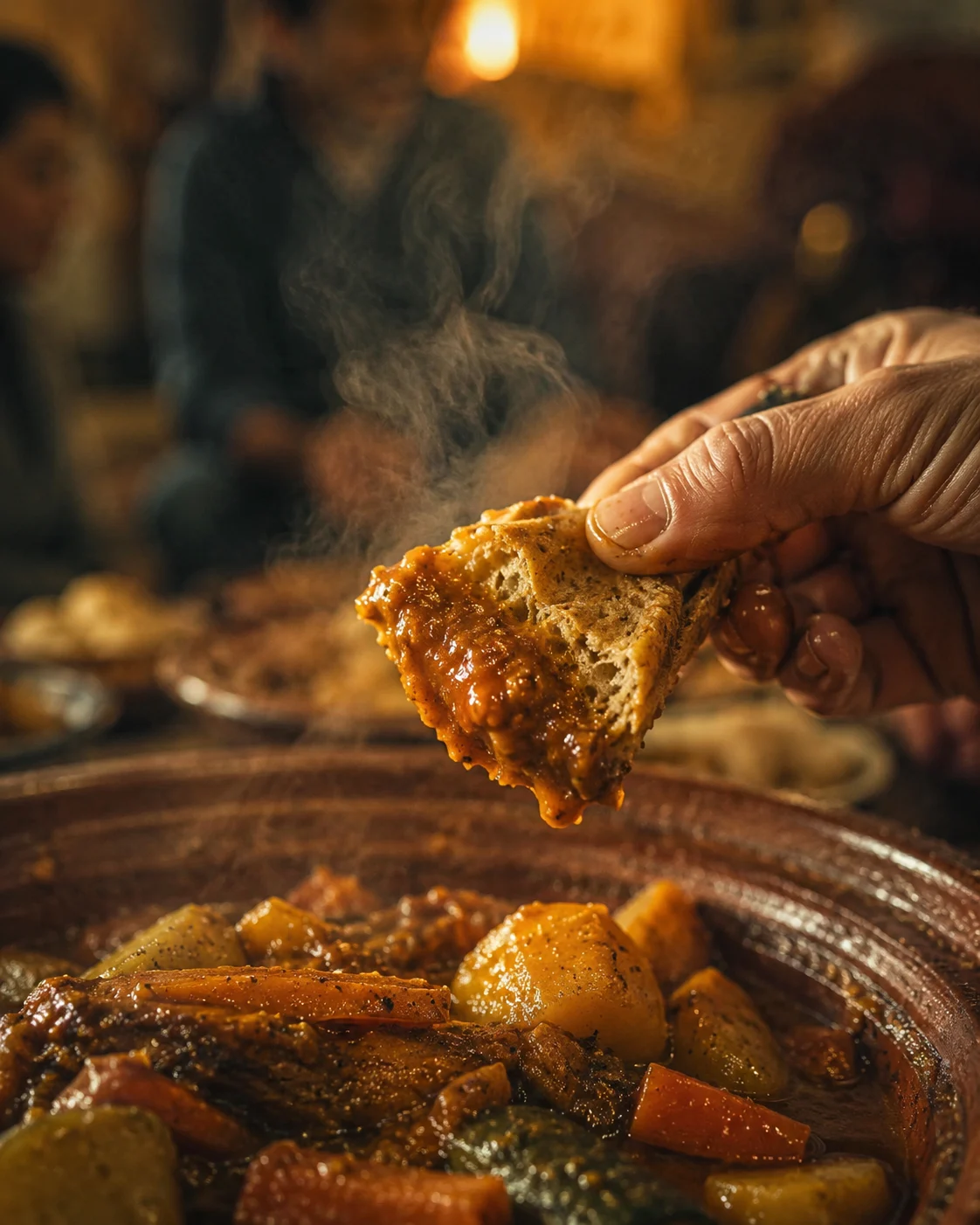
Tajine made perfect sense this way. The bread became part of the hand. It picked up the sauce, a little vegetable, perhaps a little meat, and carried the whole bite together.
You felt the bread before tasting it. You knew whether the piece was too large. You knew how much sauce it had absorbed. Your fingers were already telling you something about the bite before it reached your mouth.
Tear.
Dip.
Take.
Eat.
A fork can carry food to the mouth.
The fingers meet it first.
Couscous was another story
Those little grains
had their own rules
Tajine was easy enough. Bread helps.
Couscous? That was more complicated.
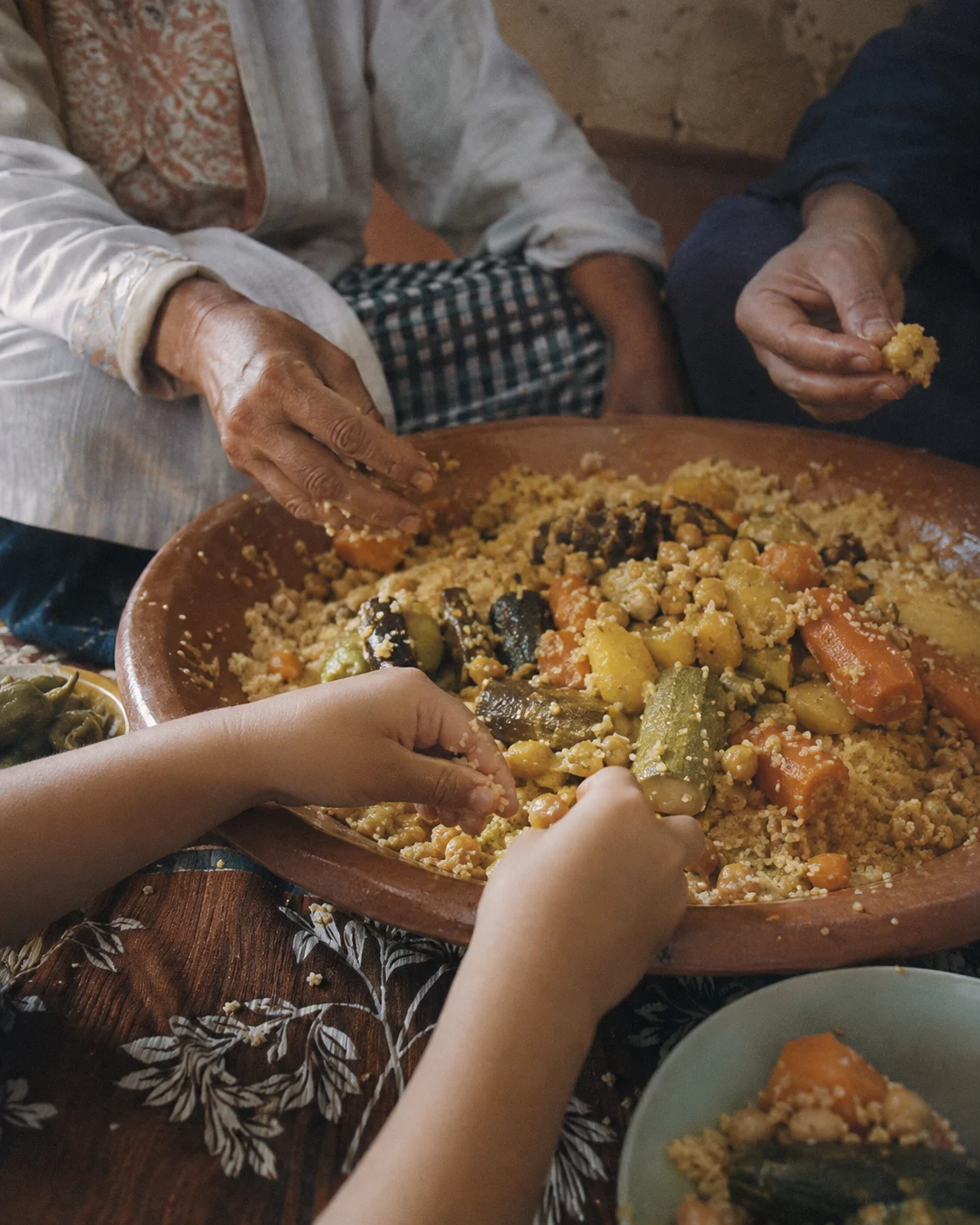
I remember being small and looking at everyone else as if they had all been taught a technique that nobody had bothered to explain to me. They gathered those tiny grains with their fingers as though there was nothing difficult about it.
I tried. The couscous had other plans.
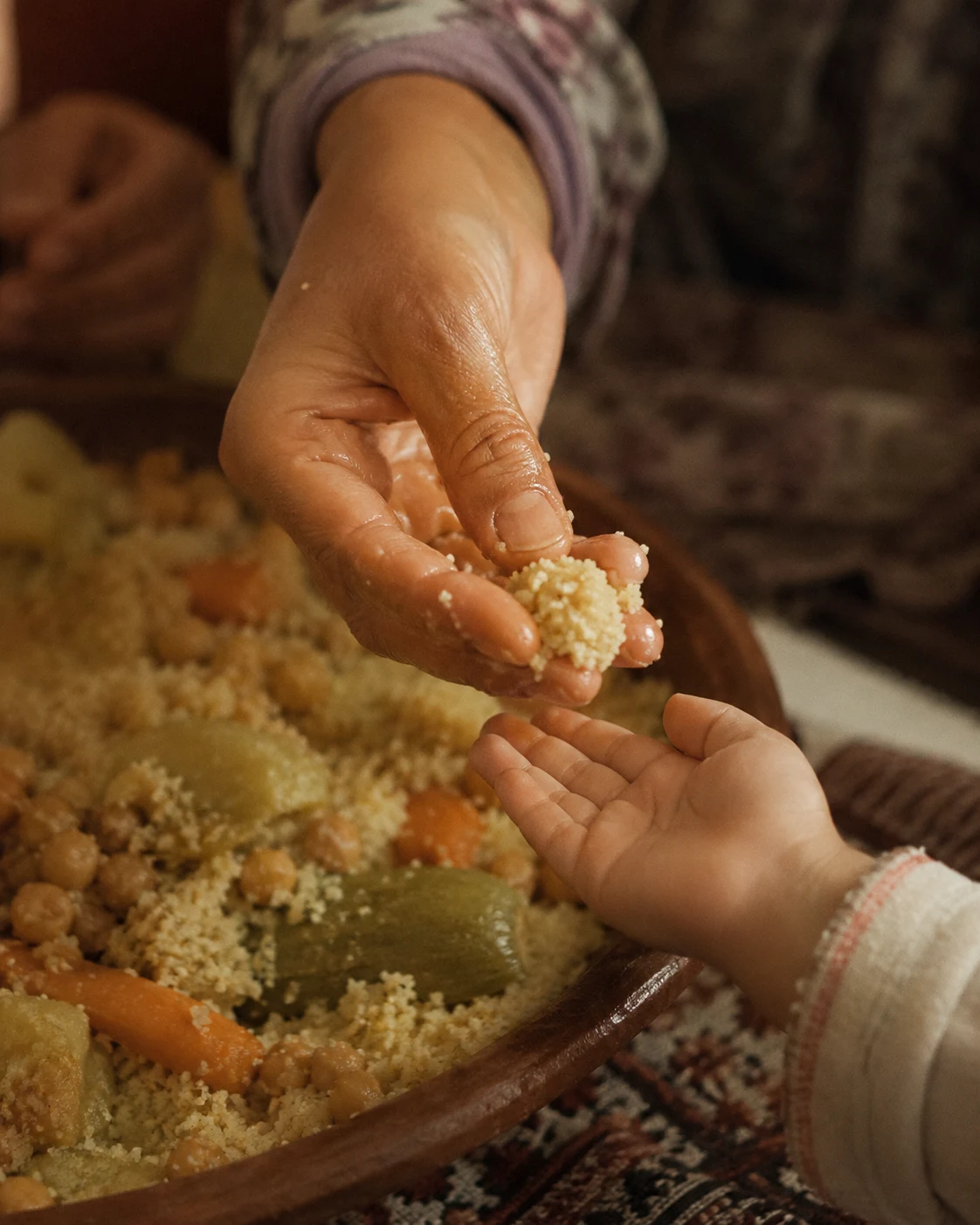
If my mother was there, the problem was solved. She knew exactly how to gather it in her hand, shape it into a little ball, and give it to us to eat.
Her hand knew what mine had not learned yet.
Nobody gave me a lesson
You watched.
You tried. You learned.
That may be what I like most when I think about these gestures today. Nobody sat the children down for a class called “How to Eat with Your Fingers.”
We watched.
We saw how the adults tore the bread. How much they took. How they stayed on their part of the shared dish. How the couscous came together in the hand.
Then we copied badly. And slowly, less badly.
Sometimes a mother's hand simply finished the lesson for us.
Dirty? Primitive?
I never experienced it that way.
I know some people can look at eating with the fingers and imagine something dirty, perhaps even something primitive.
I remember the opposite.
I remember water being heated specifically so washing would feel pleasant. I remember the bakrach. The basin. The towel on the shoulder. Someone moving around the room so that every person could wash before eating.
By the time our fingers reached the food, the hands had already been cared for.
Another sense at the table
You do not eat
with the mouth alone
There is something else I notice in myself. When I eat with my fingers, I often feel that I eat less, yet somehow leave the table more satisfied.
I do not know if that is true for anyone else. I only know the feeling.
Maybe it is because the meal becomes slower. Maybe because I am more present in it. Or maybe because more of me is involved.
The eyes see.
The fingers feel.
The nose catches the spices.
Then the mouth tastes.
Four senses already at work around a single bite.
And then, for the last one?
Joy.
The art of it
Nothing about it
felt accidental
The more I remember these meals, the less I see eating with the fingers as simply a way of avoiding cutlery.
There was preparation before it. Clean hands. Warm water. A towel. A shared dish. Bread torn to the right size. A gesture learned by watching the people around you.
Even the difficult couscous eventually gave in.
Perhaps that is why I call it an art. Not because it needs to be made complicated, but because so many small things happen naturally when a gesture has been lived for generations.
The eyes have seen.
The fingers have touched.
The nose has smelled.
The mouth has tasted.
And the rest is joy.
The Art of Eating with Your Fingers
Some foods are not only meant to be tasted.
They are meant to be touched first.