01 · Before the meal
The Table Begins
Before the Food
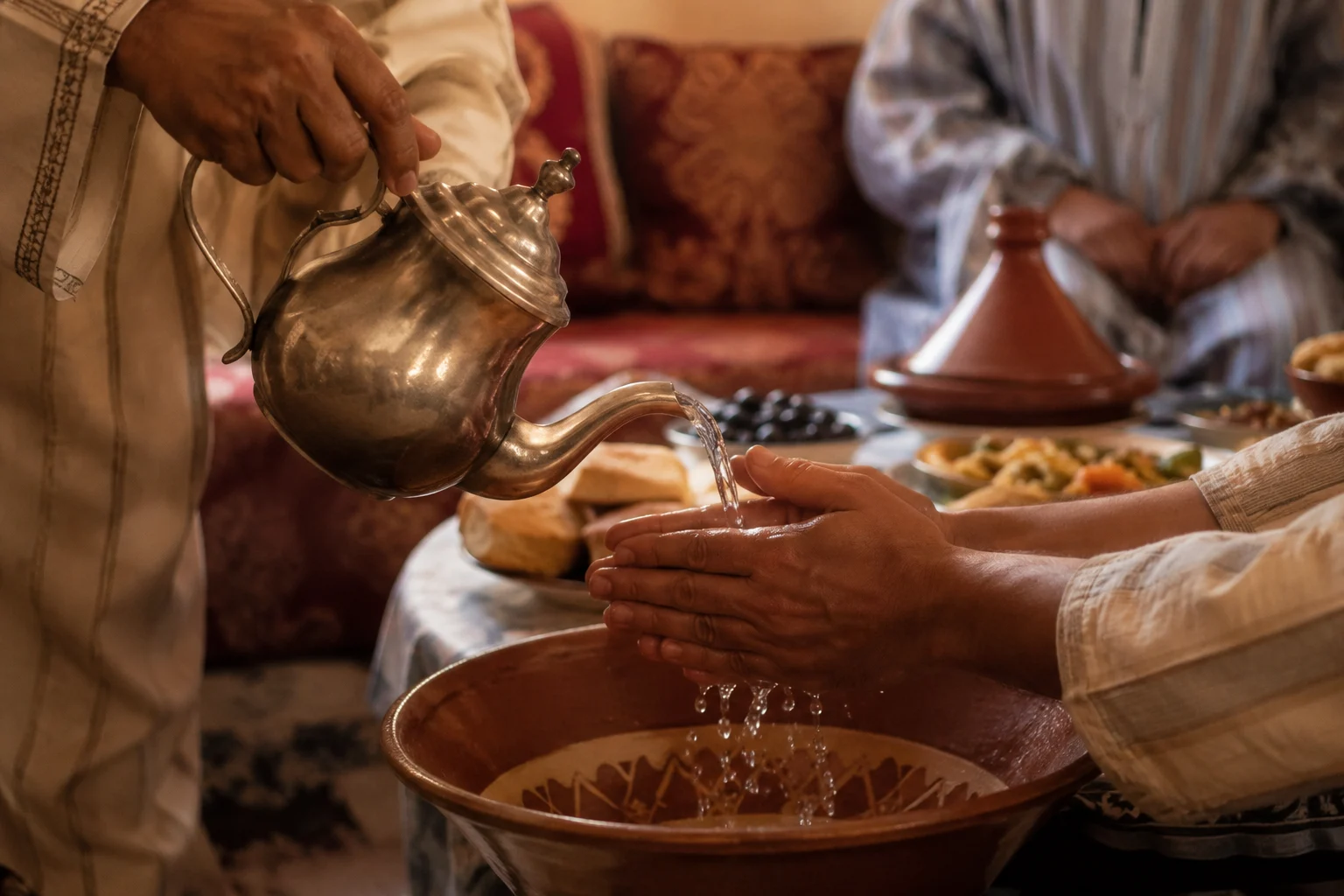
One of the gestures I remember most clearly comes before anyone eats.
Someone brings water and a basin.
Hands are washed one by one.
No announcement is needed. Everyone understands what comes next.
People move closer. The bread appears. The room changes.
The meal begins with attention to the people around it.
02 · Sharing the same dish
Eating Together
Changes the Meal
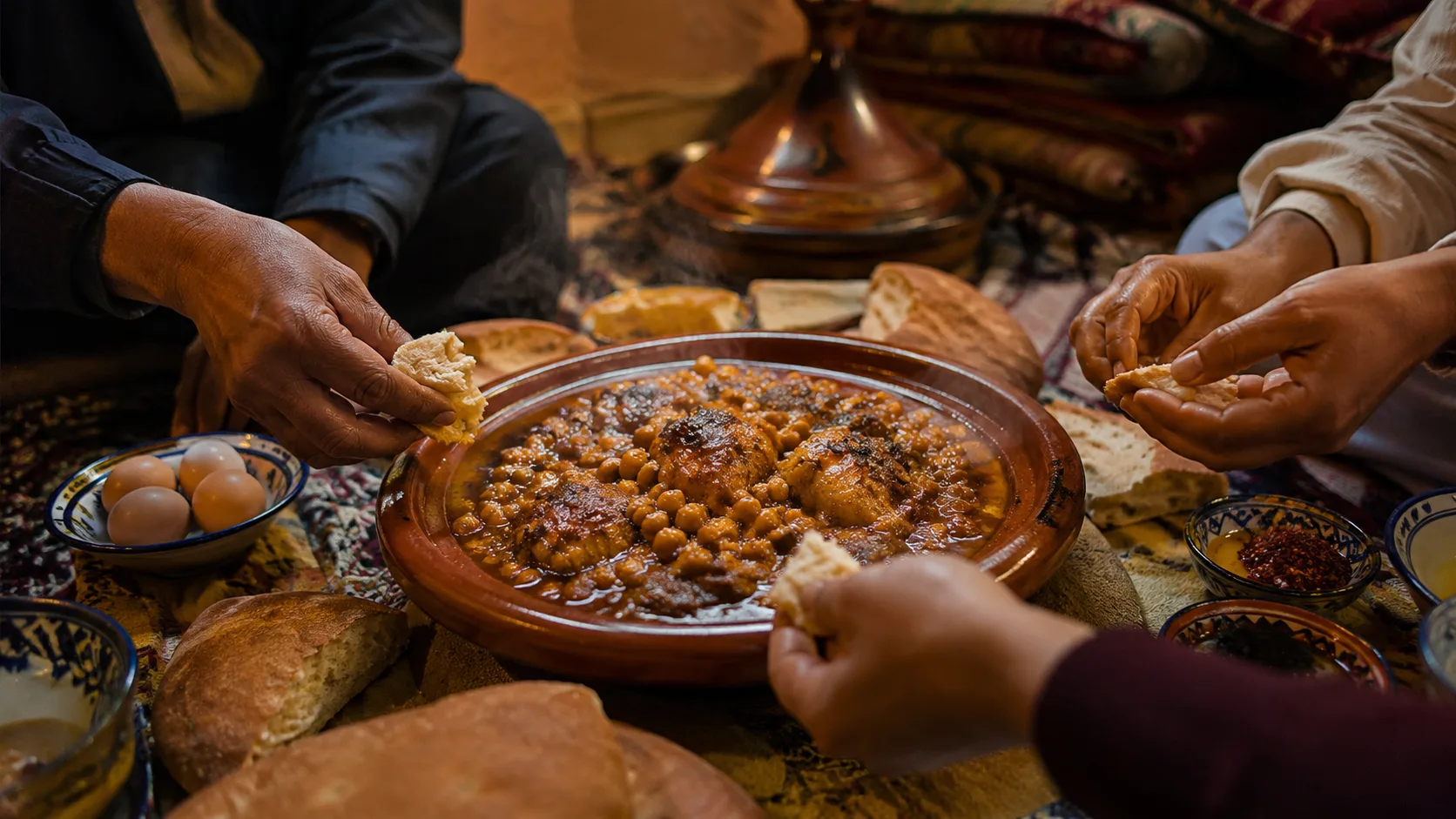
I like a shared dish.
It is not the only way to eat. It is not something I would force on anyone.
But for me it creates a different feeling.
You notice the others. You wait. You reach. Someone speaks while another tears bread.
The dish becomes lighter for everyone at the same time.
You are not simply eating beside other people. You are eating with them.
03 · Bread
Whole at First
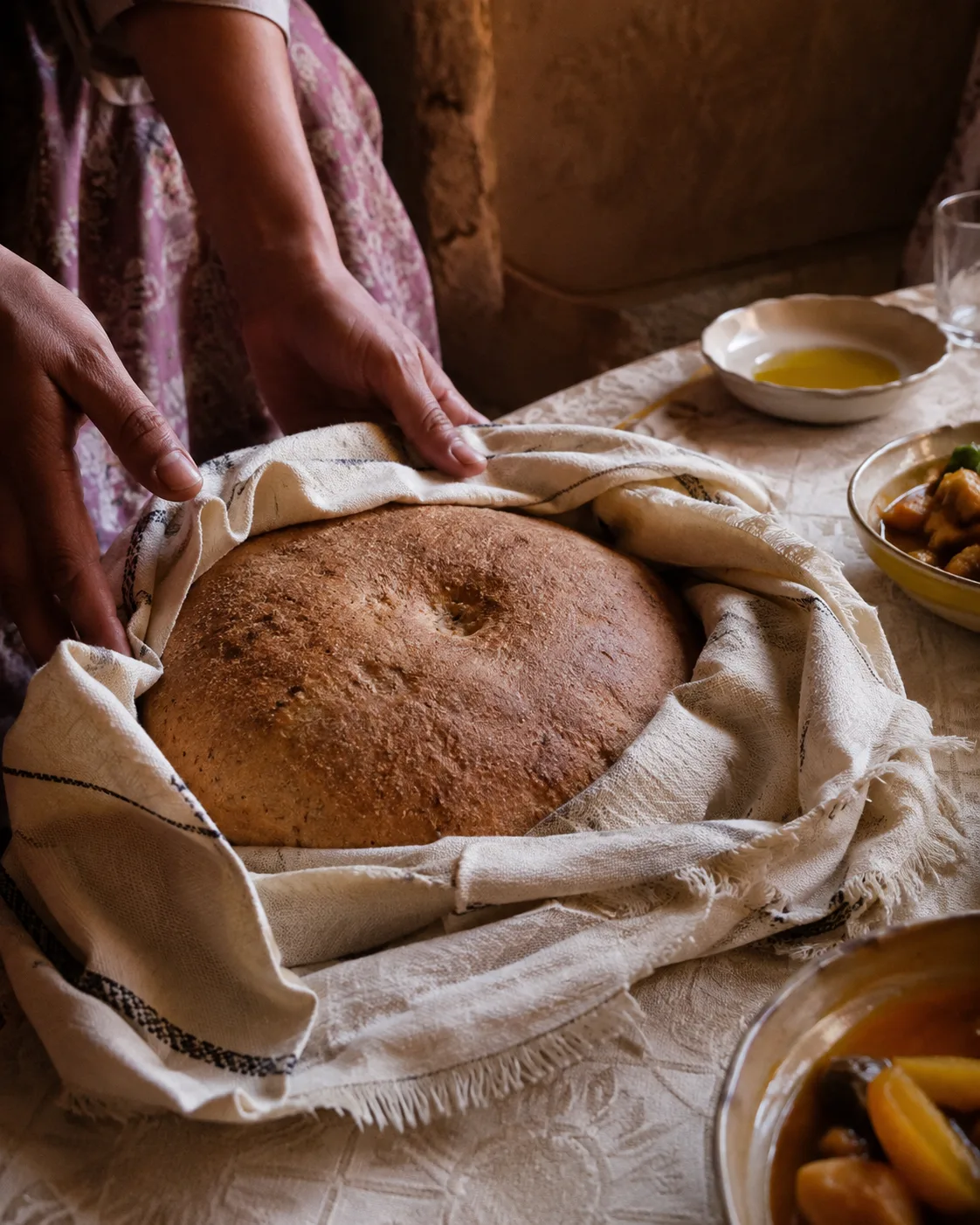
The bread is there before the dish.
Whole. Wrapped in cloth.
Then it is torn by hand and passed around.
I would like the bread at my table to be made the old way when possible.
Earth oven. Wood fire. The smell of hot bread reaching the room before someone carries it in.
Simple food can carry an entire atmosphere.
04 · Small gestures
Meaning Often Lives
in the Details
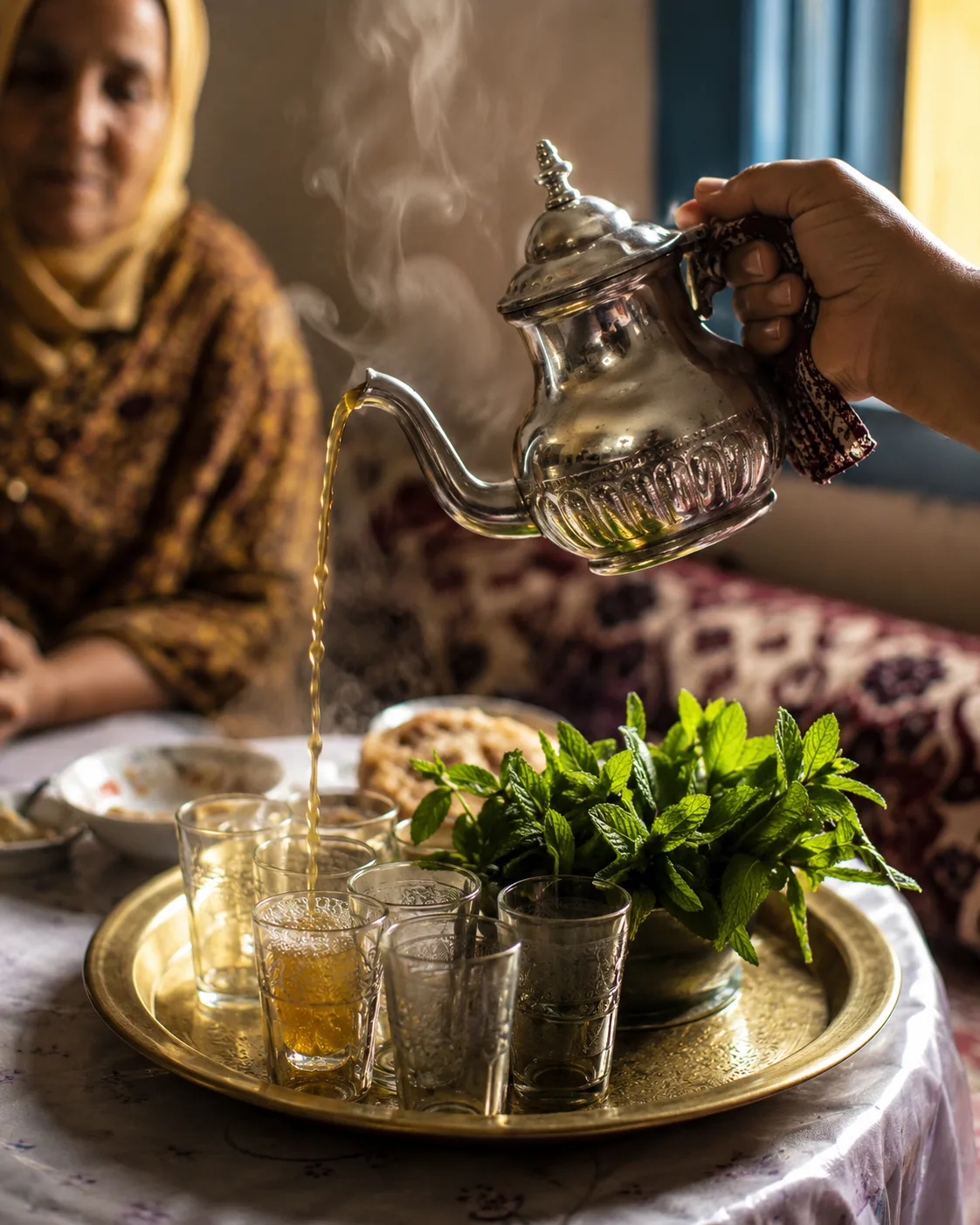
Tea usually comes before the meal.
It has its own rhythm. Pour. Return. Adjust. Add mint. Taste.
Bread is passed. Water is brought. Someone makes space.
These gestures are ordinary when you grow up with them.
05 · What I would keep
Preserve.
Adapt.
Choose.
I do not believe every old habit must be copied exactly.
Tradition can live while people adapt.
The shared dish can remain. The hand washing can remain. Tea can remain. Bread can remain.
The arrangement of the room can change. Some people may prefer a low table. Others may sit directly on the floor.
What matters to me is not reproducing a photograph of the past.
I want to preserve the feeling behind the gestures.
06 · The room
Close to the Floor
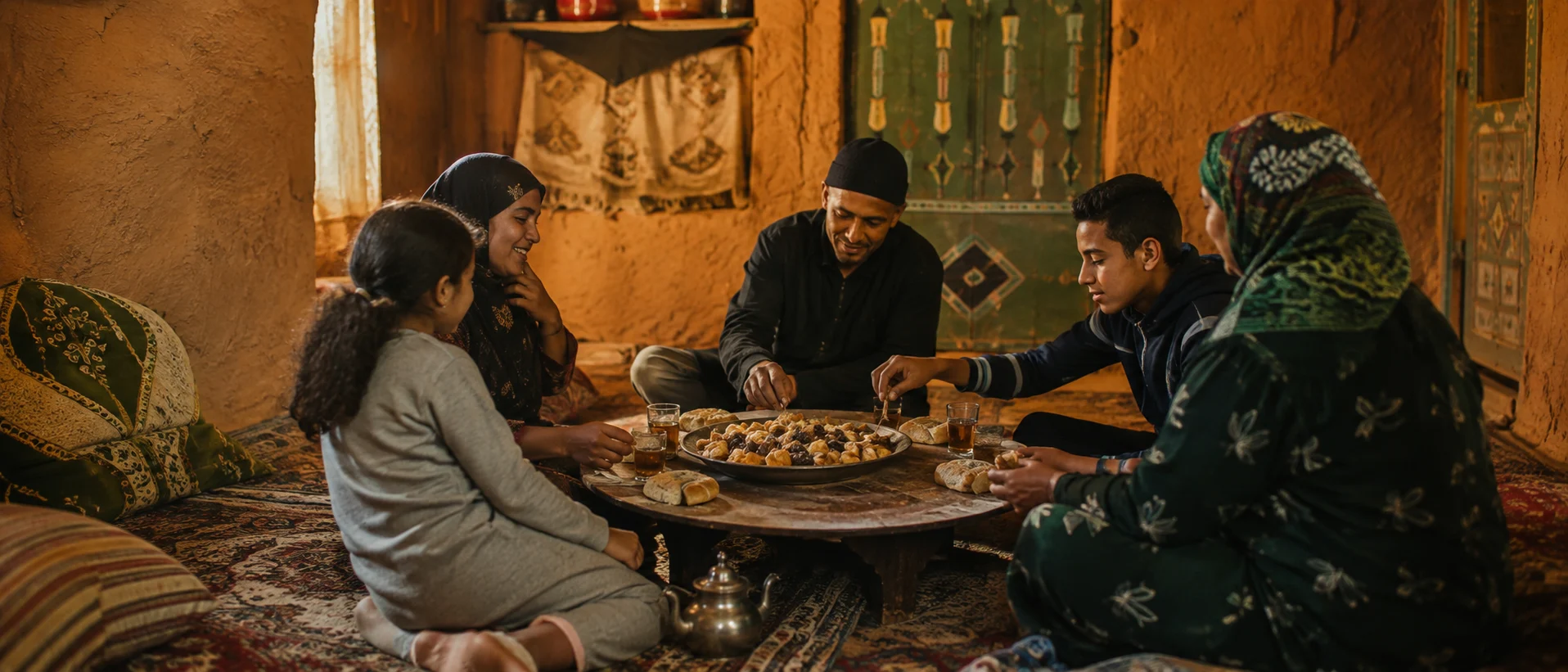
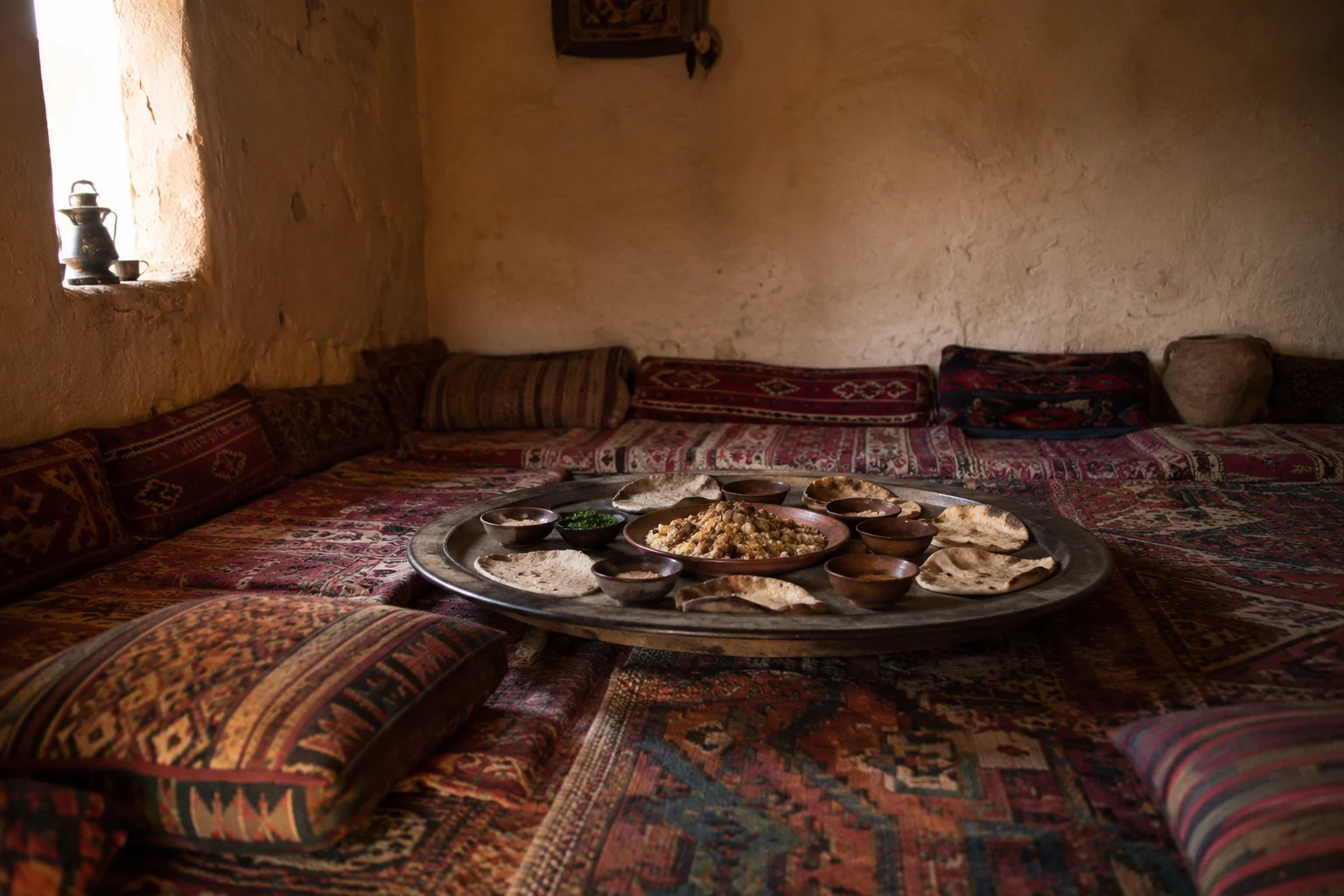
In Meski, I imagine the meal with a very low table.
In some Gulf homes, people may sit on the floor without a table at all.
The exact arrangement changes from one place to another.
What I like is the closeness.
Carpets. Cushions. Bread in reach. The dish in the middle.
Everything brings the gathering inward.
07 · Eating with the hand
Closer to the Food
I still like eating with my hand.
Not because everyone has to. People should eat however they are comfortable.
For me, the sensation is different.
You take less. You feel the food. There is nothing between your fingers and what you are eating.
Sometimes I feel I have eaten more, even when I have taken less.
08 · A sentence every guest hears
Koul, koul.
Eat. Eat.
The guest may already have eaten enough. Someone will still offer more. For me, that insistence is part of the welcome.
09 · What changed
The Modern Table
Is Not the Enemy
I do not dislike modern tables.
Individual plates are practical. Cutlery is practical. Chairs are practical.
But the feeling can be different.
Sometimes everyone has his own plate, his own space, his own rhythm.
Around a shared dish, there is more awareness of the people beside you.
Modernity does not have to erase that closeness.
10 · What makes a good table
Hospitality Is Not
the Price of the Meal
You can welcome someone beautifully with bread and tea.
A simple meal can stay in your memory because of the way people made space for you.
How they spoke. How they served. How they insisted you eat.
The expensive plate is not what I remember first.
I remember whether I felt that I belonged there.
If I welcomed you in Meski
The Majlis
Not as decoration. As the place where we sit.
The Bread
Made the old way when possible.
The Tea
Prepared before the meal, not placed there as an afterthought.
Koul, Koul
You will probably hear it more than once.
The Welcome
You are not here simply to be served. You are here to be received.
The table I want to share
More Than a Meal
If someone came to Meski tomorrow knowing nothing about this way of eating, I would not begin with a recipe.
I would sit them down.
Let the water come for the hands. Let the bread arrive. Let the tea be poured. Let the dish be placed in the middle.
Then I would let the room do the rest.
The best part of the table is not what you were given to eat. It is the feeling that, for a little while, you belonged to the family.