The threshold
The Door Was Open.
The Rules Were Understood.
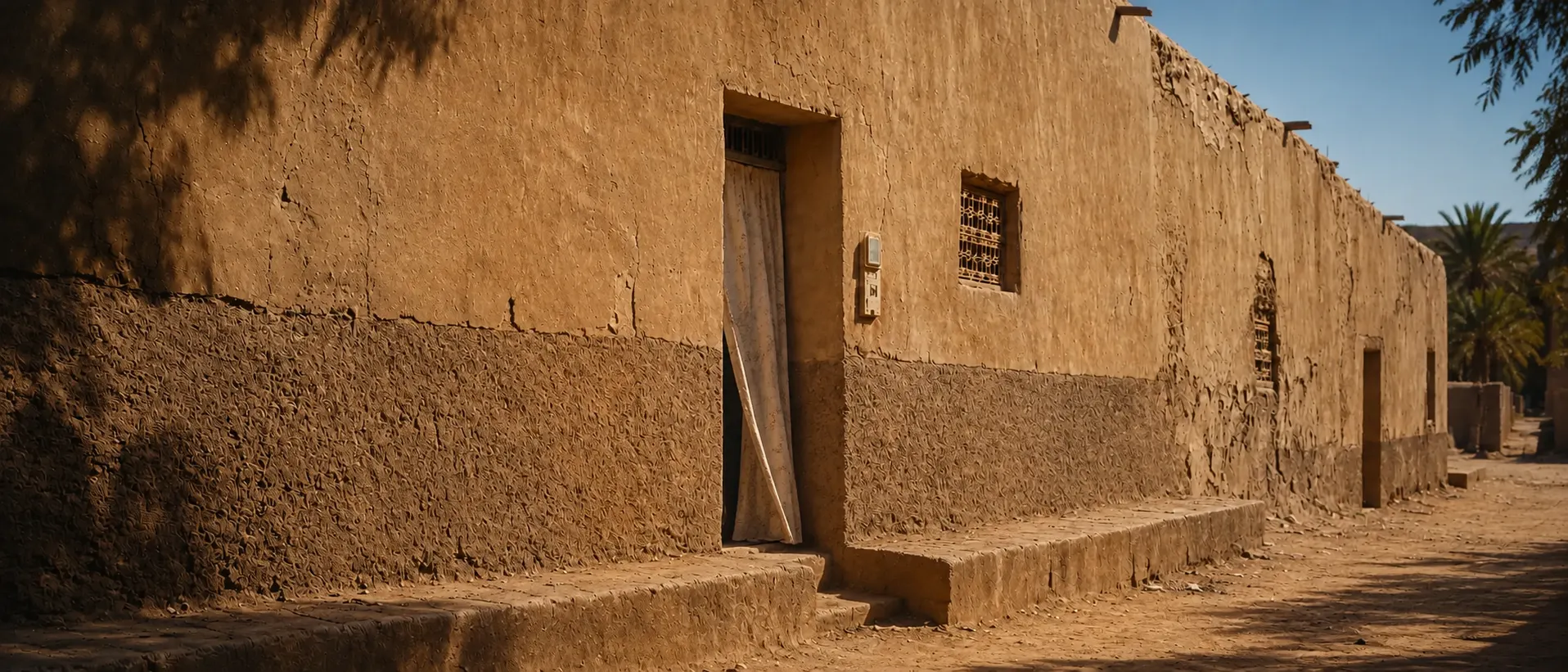
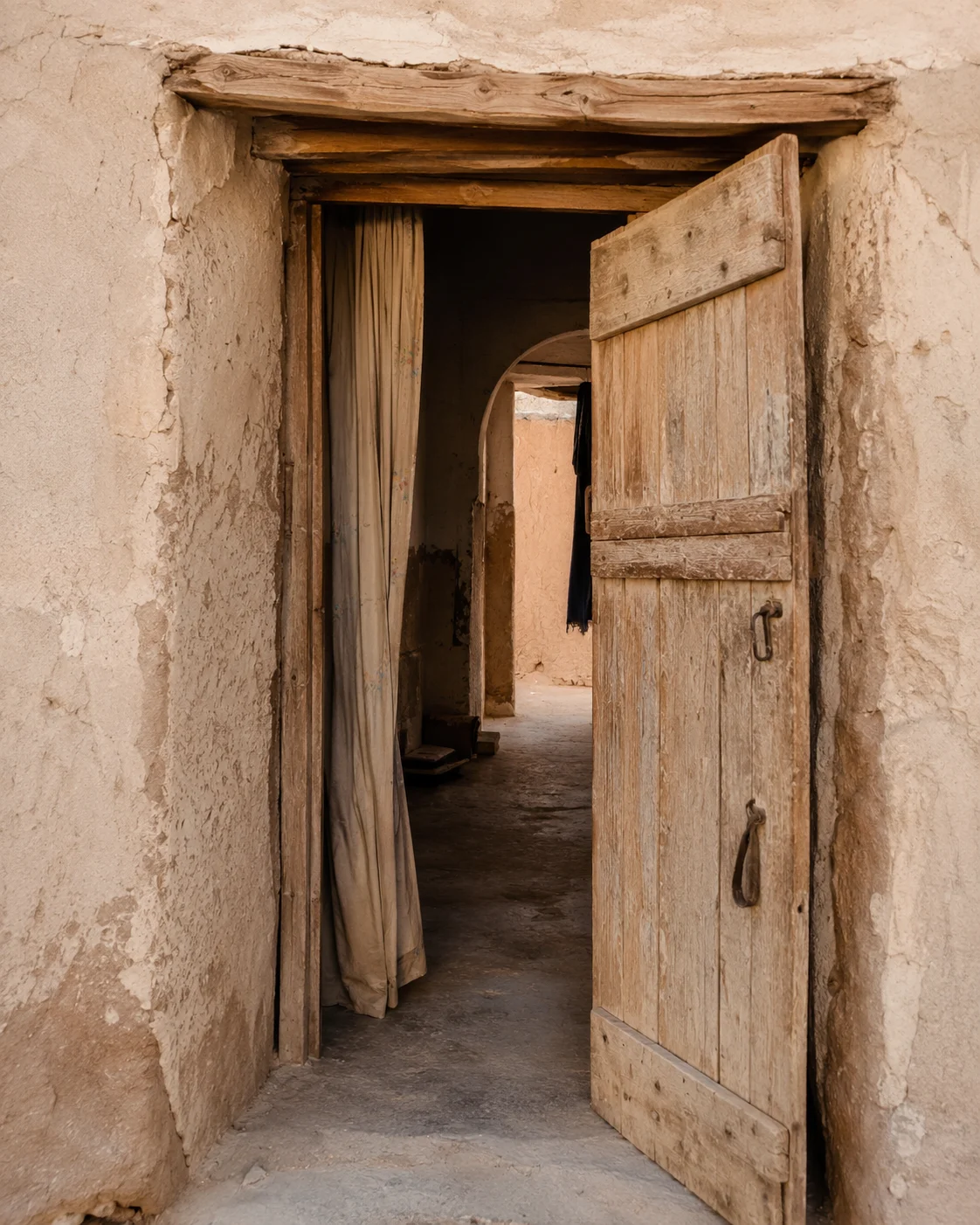
During the day, the door was usually open.
A curtain moved behind it and protected the view into the house.
People still knocked. And almost at the same time, you would hear:
Salam alaykoum.
An open door did not mean that anyone could go anywhere. A relative could enter naturally. A close neighbour might step into the entrance while calling out. But people knew where to stop.
If a voice answered, “Come in, I am in the salon,” then you went farther.
What made it possible
Freedom Had
Its Boundaries
Hospitality worked because the house, the guest and the host all understood the same unwritten rules.
Respect
Bedrooms remained private. The salons and the Sariia were the shared spaces.
Trust
People did not need every limit explained. They already knew how to enter a home.
Welcome
Once you were received, you were not made to feel as if your presence had disturbed the day.
No appointment
People Came
Because They Came
Nobody sent a message first.
In a ksar, people moved back and forth all day. Family. Neighbours. Friends.
Some friendships were old. Others were not.
That did not matter much to me.
There are friends who become family very quickly. Time alone does not decide the value of a friendship.
The house had its habits. People knew which salon to use depending on whom they had come to see.
Women who came to see my grandmother and close friends often sat in the small salon. Family moved more freely through the house.
The first thing served
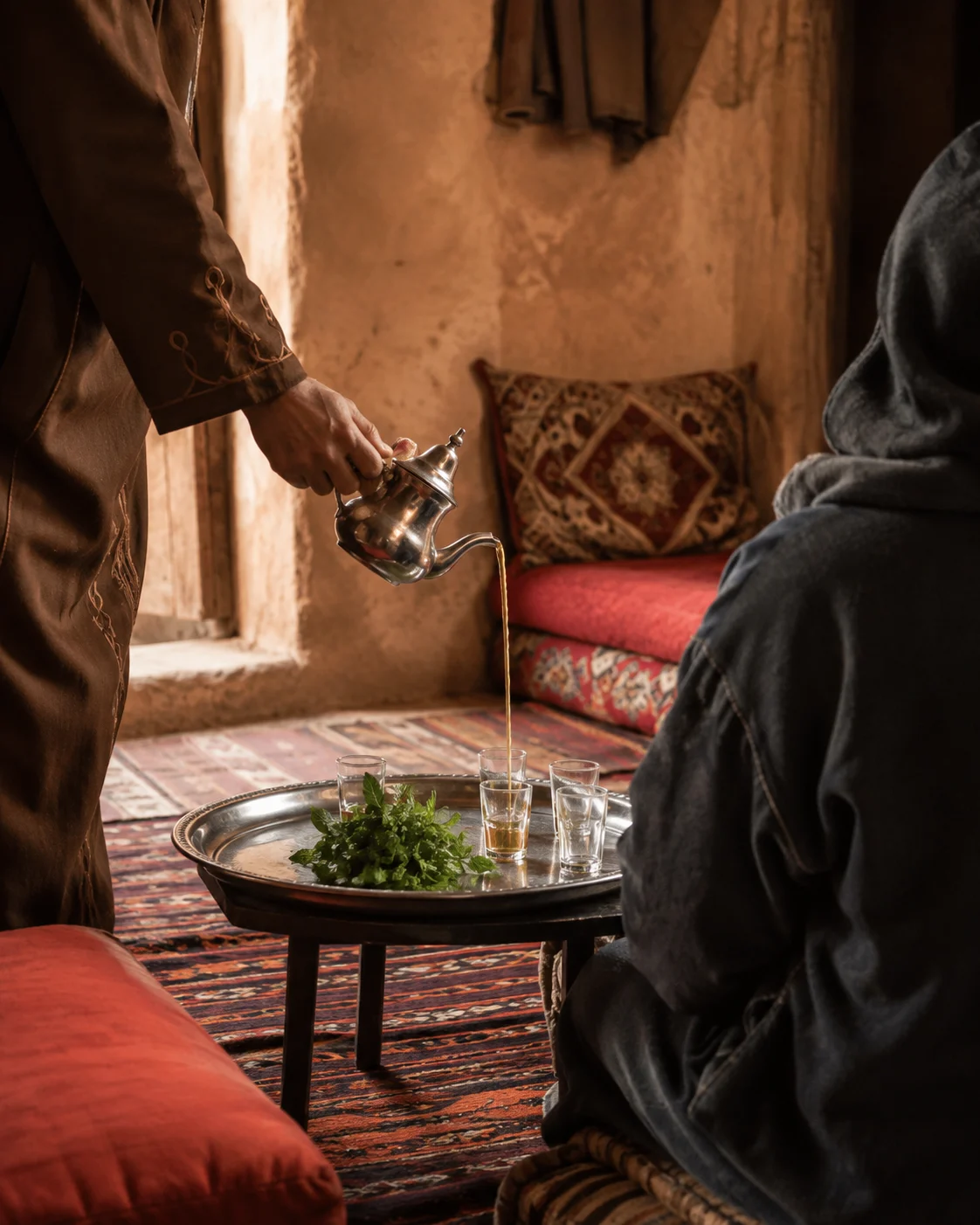
Tea.
Always Tea.
It was rare for someone to come for a real visit and leave without at least tea.
Sometimes the visit was short. Sometimes it was supposed to be short.
That was different.
Tea had a way of extending time.
My grandmother liked receiving people. She wanted the person who entered the house to feel comfortable.
You did not need an important reason to sit. A visit was already a reason.
If we were eating
You Ate Too
If someone arrived while we were eating, we did not leave that person sitting somewhere else.
We made space. The visitor ate.
If there was not enough, we shared what was there or someone could go to the hanout and bring something.
There was no complicated calculation.
The important thing was that the person did not feel outside the family.
Stay
Five Minutes
Could Become Hours
A visitor could stay.
Really stay.
If someone had come from far away, a nap was normal. Sleeping at the house was not a problem either.
We did not live with the same obsession with time. Morning. Afternoon. Night.
The sun gave the day its shape more than a clock did.
I do not remember people watching the time and wondering how to make a guest understand that it was time to leave.
The respect worked in both directions. The host knew how to receive. The guest knew how to behave.
As a child
I Loved the Movement
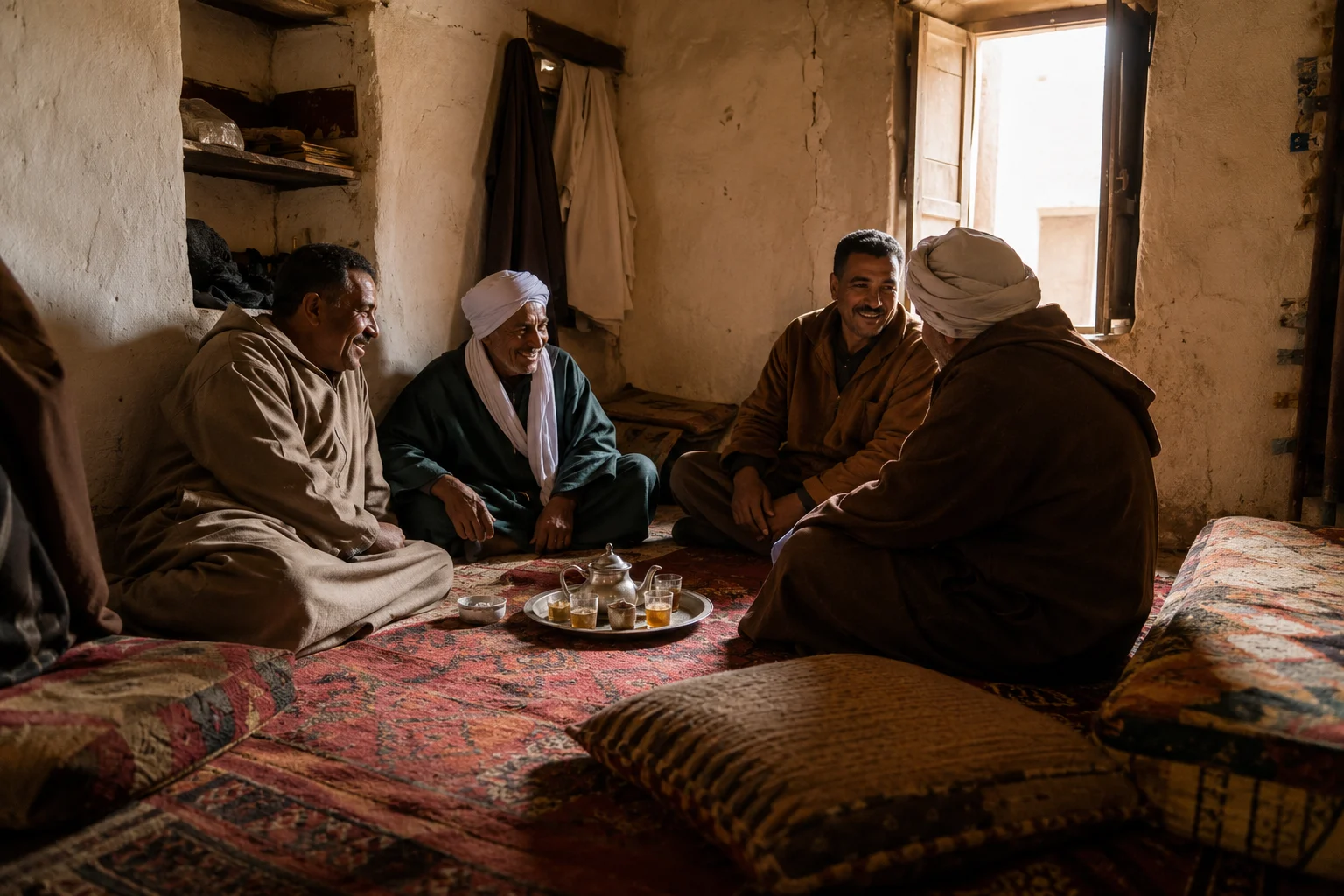
I never felt that there were too many people coming and going.
I grew up inside that movement.
Someone arriving meant another voice in the house. Another conversation. Another cup of tea.
Sometimes more food. Sometimes more laughter.
Children understood the same rules as everyone else. We did not simply walk alone into another family's house because a door happened to be open.
There was respect. That respect is what made the freedom possible.
Today
The Message
Before the Visit
Today I understand why people send a message before visiting.
Life has changed. Homes have changed. People have changed.
Even when someone replies, “Yes, come,” I can still wonder whether I am disturbing them.
Maybe they wanted to be alone. Maybe they answered out of politeness.
And once you arrive, sometimes you feel that you should not stay too long.
That feeling is very different from what I knew.
Ksar life resisted this change for longer. But even there, things are different now.
More people come and go. People can cross paths without knowing one another.
This is not only Meski. I see it almost everywhere.
What I still believe
A Visit Means
Something to Me
In Meski, I still like people to visit. I was raised that way.
To me, when someone comes to see you, it means that person cares enough to come.
Family, of course. But also dear friends.
Some friends become as close as family, even when the friendship itself is not old.
The years do not always decide the closeness. The way people behave with one another does.
What disappeared
It Was Never
Only About the Door
The old door could be replaced.
The curtain could be hung again.
Tea can still be prepared. A meal can still be shared.
Those things are possible.
What is harder to rebuild is the certainty that existed around them.
The certainty that you could arrive without an appointment.
That you would be received.
That if food was on the table, a place would be made for you.
That staying a little longer was not an inconvenience.
What disappeared was not simply the open door.
It was the certainty that you were welcome behind it.