
The Art of Living Well in the Gulf: Intention, Hospitality and the Quiet Pursuit of Elegance
From the sacred pause of a majlis gathering to the meditative ritual of gahwa, the Gulf has always known something the modern world is only beginning to rediscover: that true luxury is not measured in possessions, but in the quality of each moment deliberately chosen.
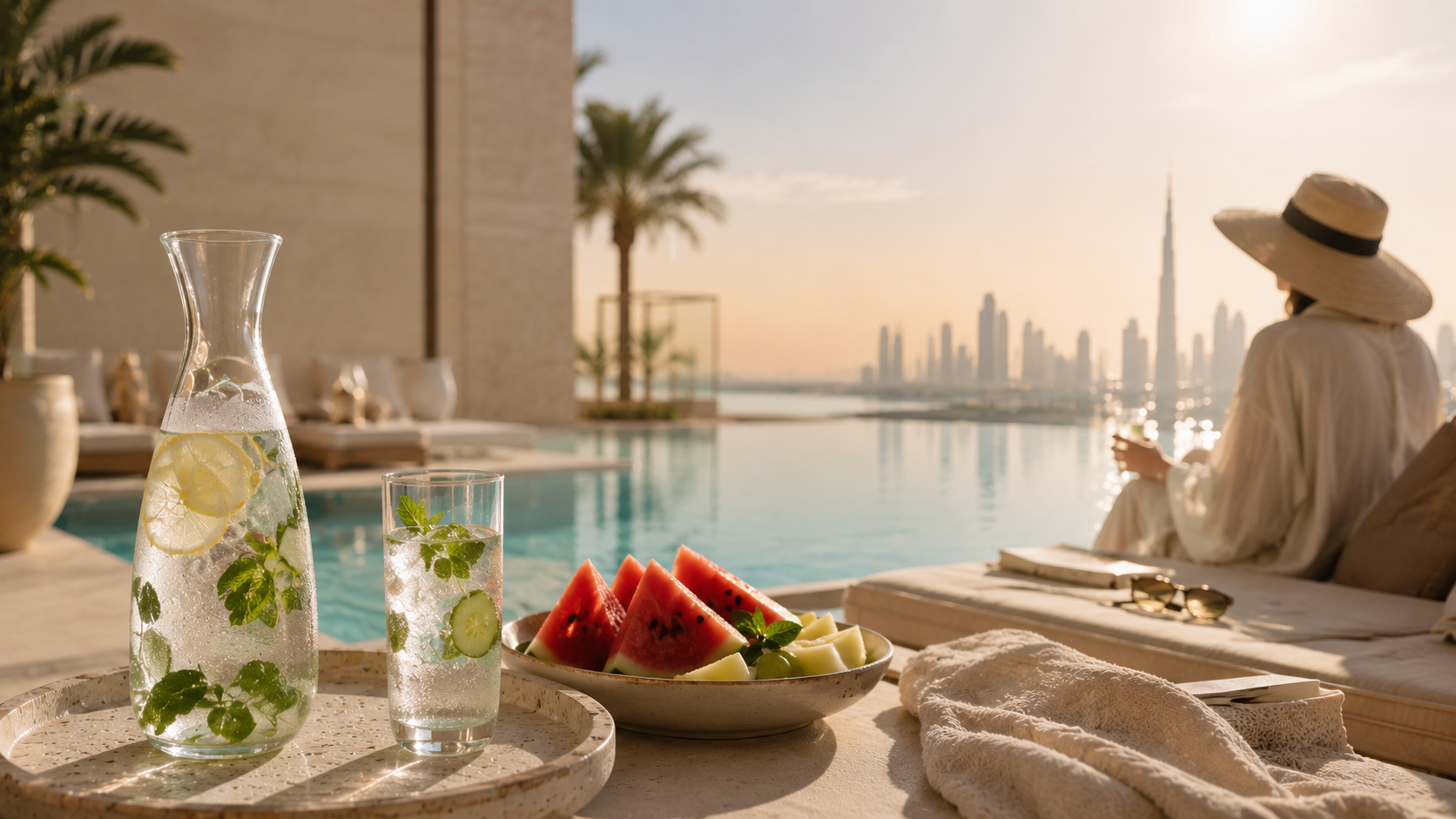
Luxury is not about owning more — it is about living with intention. Across the Gulf, from the shaded arcades of Doha’s Katara Cultural Village to the candlelit terraces overlooking Dubai’s creek, a refined way of life has been shaped not by excess, but by precision: the right ritual, at the right hour, shared with the right people. Long before wellness became a global industry, the Gulf had already written its own philosophy of living well — quietly, generously, and with extraordinary grace.
Luxury Reimagined: The Gulf’s Quiet Revolution
For decades, the Gulf’s relationship with luxury was observed from the outside through a narrow lens — towers of glass, supercars and glittering malls. That reading was always incomplete. Beneath the spectacle, an older and far more nuanced understanding of the good life has persisted, rooted in Bedouin wisdom, Islamic ethics of moderation, and a centuries-old culture of generous presence.
Today, that deeper current is rising to the surface. Across the GCC, a growing movement is redefining what it means to live well: not louder, but more deliberately. Wellness tourism in the region is expanding at a compound annual growth rate of approximately 17%, making the Gulf the fastest-growing region for wellness spending globally, according to the Global Wellness Institute. But the most meaningful shift is happening not in five-star spas alone — it is happening in homes, in family gatherings, in the quiet disciplines that structure a Gulf day from the first call to prayer to the last evening breeze.
To understand the art of living well in the Gulf is to understand a culture that has always known the difference between abundance and accumulation — and has firmly chosen the former.
The Majlis — A School of Presence
The Architecture of Listening
Perhaps no concept captures the Gulf philosophy of living well more completely than the majlis. The word, from the Arabic root meaning “a place of sitting,” describes both a physical space and a social covenant. In every home across the Emirates, Saudi Arabia, Kuwait and Qatar, the majlis is the room where time slows down — where cushions are low, voices are measured, and rank dissolves into conversation.
The majlis is, at its core, a school of presence. There are no screens demanding attention. No agendas posted on a wall. The host pours, the guest receives, and what passes between them — stories, counsel, silence — is considered a form of wealth. Elders and young professionals sit side by side; the fisherman and the merchant have always found common ground on these cushioned benches.
In a world increasingly fractured by distraction, the majlis offers a quietly radical proposition: that the most valuable thing you can offer another person is your complete, unhurried attention. This is not hospitality as performance. It is hospitality as philosophy.
The Majlis as Living Heritage
The majlis tradition has been practised continuously across the Arabian Peninsula for centuries. It remains one of the most eloquent expressions of Gulf identity — a space where social hierarchies dissolve and the art of conversation is elevated to its highest form.
The Ritual of Gahwa — Slowing Time with Every Pour
A Ceremony, Not a Caffeine Fix
If the majlis is the space of living well, then gahwa — the pale golden Arabic coffee scented with cardamom, saffron and rose water — is its most eloquent expression. To offer gahwa is to say: you matter enough for me to pause. To receive it is to accept an invitation to slow down.
The preparation of gahwa is itself a meditative act. Green coffee beans are lightly roasted — never darkened — then ground with a pestle whose rhythmic sound has echoed across Gulf households for generations. The brew is steeped gently with cardamom pods, sometimes touched with cloves or a thread of saffron. It is poured from a long-spouted dallah into small handleless cups called finjān, and refilled until the guest signals satisfaction by tilting the cup from side to side.
The UNESCO recognition of Arabic coffee as an Intangible Cultural Heritage of Humanity (2015, with an expanded multi-country recognition in 2022) was not merely an acknowledgment of a beverage — it was a recognition of a whole way of relating. Gahwa embodies the Gulf’s understanding that the finest moments in life are rarely found in the grand gesture. They live in the small, repeated, intentional ones.
Roast Lightly
Green beans are roasted to a pale gold — never dark — preserving their delicate, grassy character distinct from Western-style coffee.
Grind and Steep
Ground with a pestle, then steeped with cardamom pods, cloves and a thread of saffron for depth and warmth.
Pour from the Dallah
Served from the iconic long-spouted dallah into small finjān cups — a gesture that communicates honour and welcome.
Refill with Presence
The host continues to refill until the guest tilts the cup side to side — a silent, graceful signal that speaks volumes.
Living Spaces as a Statement of Intention
Between the Desert and the Sea
The Gulf’s geography is itself a teacher of balance. Between the silence of the Empty Quarter and the vast blue openness of the Arabian Sea, its people have always lived between extremes — and learned to find composure in that threshold space.
This sensibility is encoded in Gulf architecture, old and new. Traditional wind towers — the barjeel — were not decorative; they were sophisticated cooling systems that harnessed the desert breeze to create breathable, calm interior environments long before air conditioning existed. The inner courtyard of a Gulf home, open to sky and planted with shade trees, was a daily invitation to step outside the noise and into a protected stillness.
Contemporary Gulf design is rediscovering these principles. In Dubai, Doha and Riyadh, a new generation of architects is building homes and resorts that prioritise acoustic wellness, natural light, and spatial flow over sheer grandeur. The Global Wellness Institute’s 2025 architecture trends point toward “harmonic architecture” — and the Gulf, with its deep tradition of climate-sensitive, socially attuned built environments, is naturally fertile ground for this conversation.
Emirates: Majlis and Modernity
The UAE balances towering ambition with deeply rooted traditions of hospitality, gahwa and communal gathering — a living synthesis of heritage and vision.
Qatar: Custodian of Living Heritage
From the Katara Cultural Village to restored souqs, Qatar actively preserves and celebrates the rituals that define the Gulf art of living — for residents and visitors alike.
Oman: The Unhurried Kingdom
Oman’s gentle pace — its frankincense markets, falaj irrigation systems and mountain villages — embodies the Gulf philosophy of living deliberately and in harmony with nature.
The Culture of Gifting — Generosity as a Way of Life
In the Gulf, generosity is not an occasional act — it is a daily discipline. The Arabic concept of karam, or noble generosity, runs as a golden thread through every social interaction, from the spontaneous gift of dates pressed into a visitor’s hand to the elaborate presentation of a wedding tray bearing sweets, oud and perfume.
To give well in the Gulf is an art form in its own right. The choice of gift speaks of the giver’s knowledge, taste and regard for the recipient. What is wrapped matters. What is chosen matters. The timing, the presentation, the accompanying words — all are considered with a care that elevates the act of giving into something closer to poetry.
This culture of meaningful gifting stands in quiet counterpoint to the transactional consumption of much of the modern world. In the Gulf tradition, a gift is never merely an object — it is a statement of relationship, a token of honour, a wish for the recipient’s well-being. It asks nothing in return except to be received with the same grace with which it was offered.
Karam — Noble Generosity
The deepest expression of Gulf character: giving without calculation, with full presence and sincere regard for the other.
Intentional Selection
Every element of a gift — its wrapping, its timing, its accompanying words — is chosen with deliberate care that honours the recipient.
Heritage in Every Gesture
Gifting in the Gulf carries the weight of civilisation: a tradition stretching from Bedouin trading routes to the contemporary luxury homes of the GCC.
Movement, Rest and the Gulf’s Approach to the Body
The Bedouin ancestors of the Gulf were not sedentary people. Their lives demanded physical intelligence — reading terrain, riding, fishing, pearl diving — and they understood intuitively that the body needed both challenge and recovery. The pearl diver who plunged into the Gulf’s waters at dawn rested under a canvas shade at midday. The merchant who walked the souk for hours sat in stillness for the afternoon prayer.
This rhythm of exertion and intentional rest resonates powerfully with what modern exercise science identifies as optimal: the balance between effort and recovery, between activity and the deep repair that happens only in stillness. The Gulf’s afternoon qailula — a short midday rest observed in many households — has more in common with the Mediterranean siesta or the Japanese inemuri than it does with laziness. It is the body’s intelligent response to heat and effort, sanctioned by both tradition and physiology.
Today, wellness tourism across the UAE, Saudi Arabia and Qatar is weaving these ancient rhythms into contemporary offerings: hammam rituals, cupping therapy, walking meditations along the corniche at dawn, yoga on the rooftop as the city breathes its first morning air. The GCC is not importing wellness — it is reclaiming its own.
The Scent of a Life Well Lived — Oud and Bakhoor
No account of living well in the Gulf is complete without acknowledging the role of scent. In a culture where the invisible carries as much meaning as the visible, fragrance is not a luxury afterthought — it is a primary language.
Oud, the resinous heartwood of the aquilaria tree, has been traded across the Arabian Peninsula for over a thousand years. Its smoke, curling from a mabkhara incense burner, marks the beginning of a gathering, the welcome of a guest, the preparation of a home for celebration. To pass oud smoke through one’s garments before stepping out is not vanity — it is a statement that you have prepared yourself, mind and body, for the encounters the day will bring.
Bakhoor, wood chips soaked in precious oils and burned over charcoal, fills Gulf homes with a warmth that is at once sensory and emotional. Science is now beginning to articulate what Gulf cultures have long practised instinctively: that specific scents modulate the nervous system, that aromatic environments invite the body into calm. The Gulf did not need a study to know this. It built the knowledge into its daily architecture of living.
Finding Your Own Gulf Rhythm
The art of living well, as the Gulf has always understood it, is not a programme to be purchased or a destination to be reached. It is a rhythm to be found — and then steadily, lovingly maintained.
It begins with the decision to be present: at the table, in conversation, in the quietness of early morning before the city wakes. It deepens with the willingness to receive beauty slowly — a cup of gahwa cooling in your hands, the first scent of bakhoor rising in a room, the long amber light that falls across Gulf waters at dusk. It is sustained by generosity: of time, of attention, of the care taken to make those around you feel honoured simply by being in your presence.
These are not lessons imported from elsewhere. They are the inheritance of a civilisation that learned, in a landscape of extreme heat and breathtaking beauty, that survival required wisdom, and wisdom required stillness. The Gulf has carried that knowledge across centuries — through bedouin camps and trading ports, through the age of pearl diving and into the age of towers — and it remains, at its heart, a place that knows how to live.
Perhaps the most elegant thing the Gulf can offer the world right now is this quieter gift: the reminder that a life well lived is assembled not from grand acquisitions, but from thousands of small, deliberate, beautiful choices — made every single day.
Gulf Lifestyle & the Art of Living Well — Your Questions Answered
The majlis — from the Arabic root meaning “a place of sitting” — is both a physical room and a social philosophy found across UAE, Saudi Arabia, Qatar and Kuwait. It is a space where time slows, hierarchies dissolve and the art of genuine conversation is practised. In the majlis, the host’s complete attention is the most valued offering, making it one of the purest expressions of the Gulf’s intentional approach to living well.
Gahwa is made from lightly roasted green coffee beans — never darkened — then steeped with cardamom, sometimes cloves and saffron. It is pale golden in colour, lighter in caffeine than roasted coffees, and served in small handleless cups called finjān from a long-spouted dallah. Its value lies not in the stimulant effect but in the ritual itself: offering gahwa is a statement of welcome, respect and presence. UNESCO recognised Arabic coffee as Intangible Cultural Heritage (2015, expanded 2022).
Gulf wellness is not imported — it is indigenous. The GCC’s traditions of qailula (midday rest), hammam, cupping therapy, aromatic bakhoor environments and rhythmic daily prayer all align with modern wellness science, yet predate the global wellness industry by centuries. The Gulf’s approach is communal, sensory and rooted in a philosophy of moderation drawn from Bedouin wisdom and Islamic ethics, rather than individual performance optimisation.
Karam means noble generosity — a foundational value across Arabian Peninsula cultures. In Gulf gifting tradition, every element of a gift carries meaning: its selection reflects the giver’s knowledge of the recipient, its wrapping and presentation express care, and its timing communicates honour. A Gulf gift is never merely transactional; it is a gesture of relationship, well-being and respect that asks nothing in return except to be received with equivalent grace.