
Rooted in one of the world’s most demanding environments, the Ghaf is more than a desert tree. It is a symbol of resilience, generosity, biodiversity and the enduring relationship between the people of the United Arab Emirates and their land.
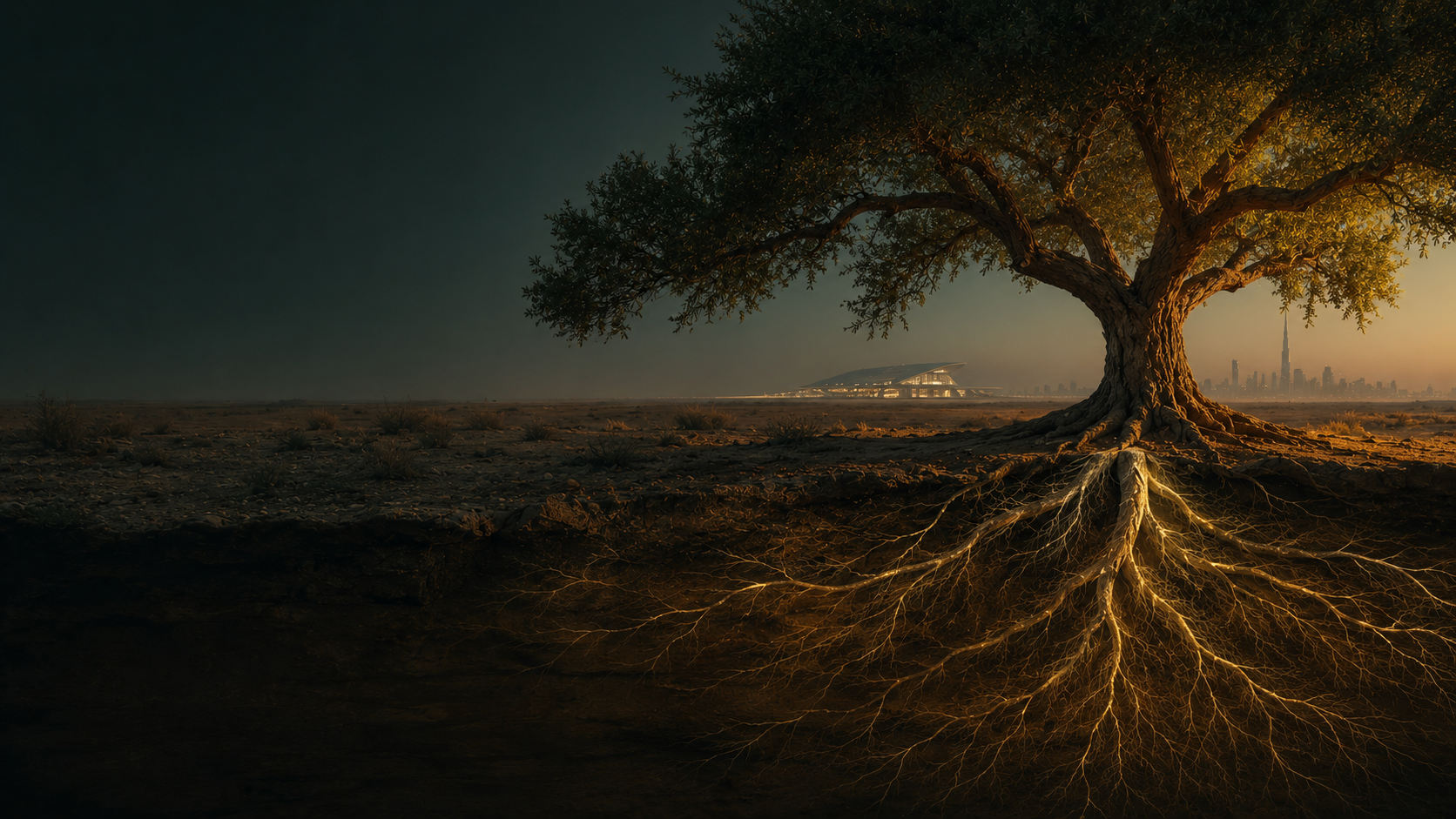
Across the deserts of the United Arab Emirates, the Ghaf tree rises from landscapes shaped by heat, wind and limited rainfall. Its restrained silhouette may appear simple from a distance, yet beneath the sand lies an extraordinary architecture of survival.
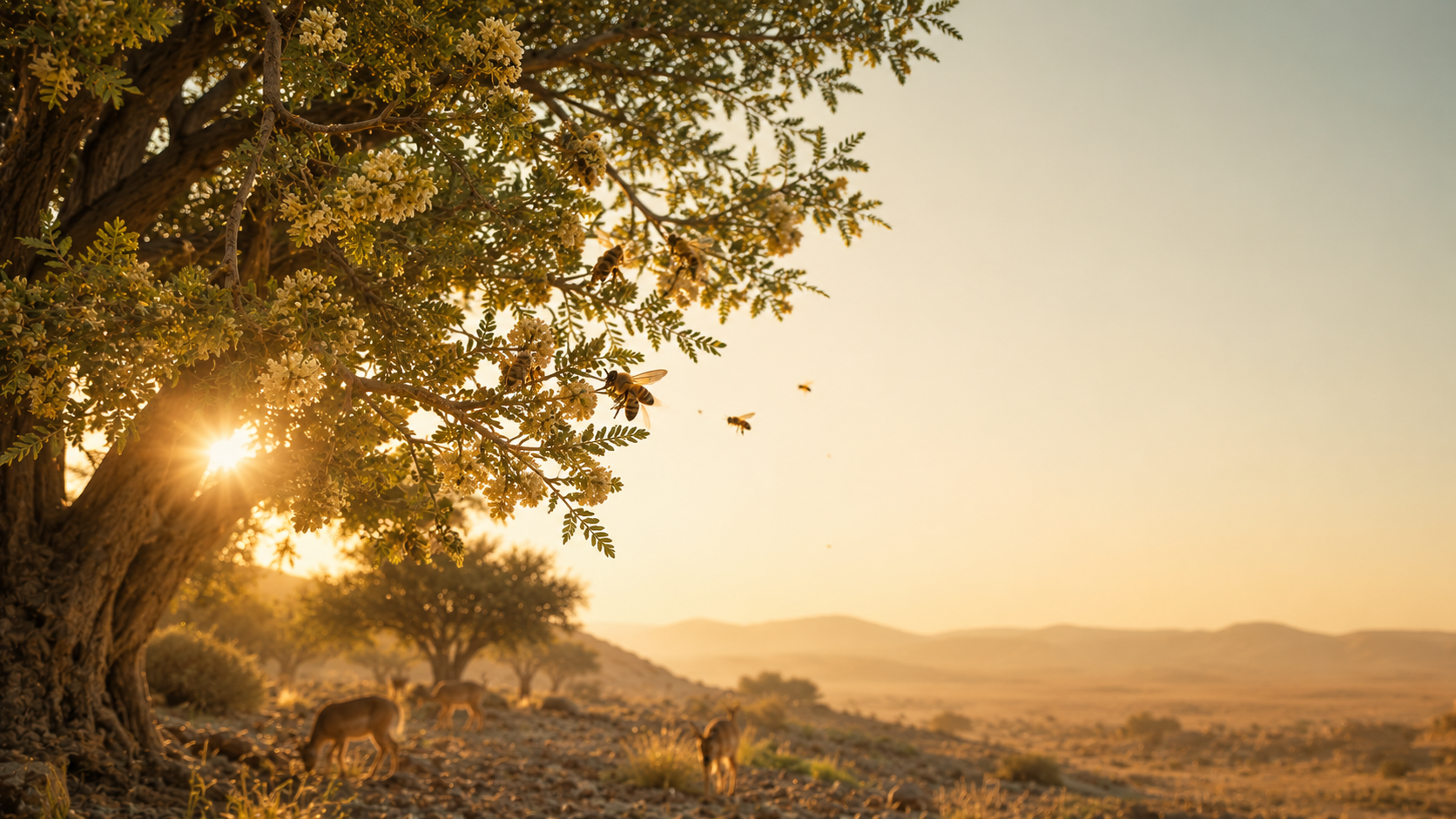
Known scientifically as Prosopis cineraria, the Ghaf has long provided shade, animal forage and a natural meeting place in the desert. It also supports birds, insects and other wildlife that depend on the rare shelter created beneath its canopy.
Today, this national symbol stands at the meeting point of heritage and modern science. Researchers are studying its drought resistance, genetic diversity and possible future uses, while conservation programmes seek to protect mature trees and preserve native desert ecosystems.
Inside this guide
- What is the Ghaf tree?
- Why it became the UAE’s national tree
- The Ghaf in Emirati and Bedouin heritage
- How it survives extreme desert conditions
- A living ecosystem in the desert
- The Ghaf and modern scientific research
- Conservation and the future of the Ghaf
- Could Ghaf honey become a signature UAE honey?
- Frequently asked questions
What Is the Ghaf Tree?
The Ghaf, Prosopis cineraria, is a drought-tolerant tree naturally associated with arid and semi-arid landscapes across parts of the Arabian Peninsula and South Asia. In the UAE, it is one of the most recognisable native trees and an essential part of the country’s natural heritage.
Depending on age, location and growing conditions, a Ghaf may develop into a broad, elegant tree with a rounded crown and fine grey-green foliage. Its small leaves help reduce exposure to intense sunlight, while its underground root system allows it to search for moisture far below the dry surface.
Botanical note:
Botanical note: The word “Ghaf” is culturally and regionally meaningful. Reliable identification should nevertheless be based on accepted botanical information rather than appearance alone.
Scientific identity
The accepted botanical name is Prosopis cineraria, a member of the legume family.
Natural environment
It is adapted to sandy plains, gravel deserts and other landscapes with low rainfall and intense heat.
Desert character
A mature Ghaf can remain green through severe conditions that many less-adapted trees could not withstand.
Why Is the Ghaf the National Tree of the UAE?
The Ghaf was selected as the national tree of the United Arab Emirates because it expresses values deeply connected with the country: endurance, stability, generosity and coexistence with the natural world.
Its symbolism does not come from appearance alone. For generations, the tree offered practical support in an unforgiving landscape. Its canopy created a natural place to rest, meet and seek relief from the sun. Its leaves and pods also contributed to traditional pastoral life by providing forage for animals.
The Ghaf represents a distinctly Emirati form of strength: not domination over the desert, but the ability to endure within it.
The Ghaf in Emirati and Bedouin Heritage
Before roads, air-conditioned buildings and modern urban infrastructure, shade could be a vital resource. A large desert tree was therefore not merely part of the scenery. It could become a place of protection, conversation, orientation and hospitality.
Ghaf trees were closely linked to pastoral life. Their foliage and pods could be used as animal forage, while their presence helped mark places where life could gather in the open desert. The tree consequently became associated with generosity: it offered shelter without asking anything in return.
Shade
Beneath the crown of a mature Ghaf, travellers and herders could escape direct desert sunlight.
Generosity
Its natural shelter reflects the Emirati ideal of welcoming and protecting the guest.
Resilience
The tree remains alive and productive despite heat, drought and nutrient-poor soils.
Heritage
The Ghaf connects contemporary Emirati identity with the ecological knowledge of earlier generations.
How Does the Ghaf Survive Extreme Desert Conditions?
The Ghaf’s most remarkable features are largely hidden. Its root system can penetrate deeply into the ground, enabling the tree to reach moisture unavailable to shallow-rooted plants. This does not mean every tree reaches the same depth; root development depends on soil, groundwater and local conditions.
Above ground, its small leaves help limit water loss. Its open crown allows air to circulate, while its overall physiology is adapted to long dry periods, saline conditions in some habitats and intense seasonal temperatures.
Searching below the surface
Deep roots allow access to moisture stored well beneath dry surface soils.
Reducing water loss
Fine foliage and desert-adapted physiology help the tree conserve water.
Living with heat
The Ghaf is adapted to prolonged exposure to high temperatures and intense sunlight.
Supporting the soil
Roots help hold loose ground together and contribute to the stability of fragile desert habitats.
A Living Ecosystem in the Desert
A mature Ghaf is not an isolated object. It creates a local microhabitat. Its branches offer nesting and resting sites for birds, while flowers attract insects and pollinators. Beneath the canopy, lower temperatures and organic matter can create conditions more favourable to small plants and animals.
This ecological role is especially important in arid landscapes, where shade and vegetation are naturally limited. The disappearance of a mature native tree can therefore affect far more than the tree itself.
| Part of the tree | Ecological contribution | Who may benefit |
|---|---|---|
| Flowers | Nectar and pollen during the flowering period | Bees and other pollinating insects |
| Canopy | Shade, shelter and nesting structure | Birds, reptiles, insects and mammals |
| Roots | Soil stabilisation and interaction with deeper soil layers | The surrounding desert habitat |
| Pods and foliage | Traditional forage value | Livestock and some wildlife |
The Ghaf Tree and Modern Scientific Research
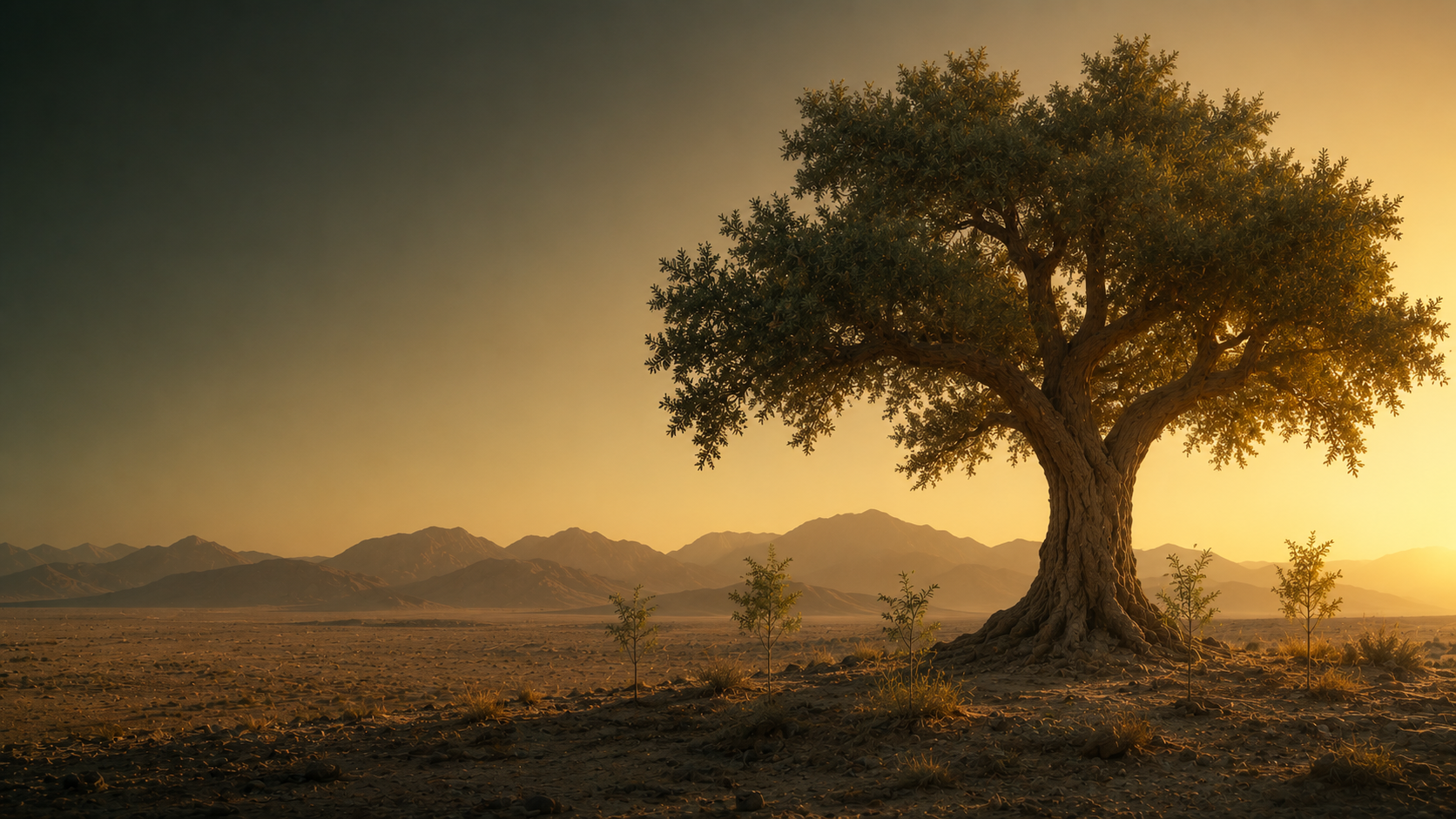
The qualities that allowed the Ghaf to survive for generations are now attracting new scientific interest. Researchers are examining its genetics, drought tolerance, natural compounds and role in climate-resilient landscapes.
Genetic studies may help conservation teams understand how Ghaf populations differ from one location to another, which trees possess valuable adaptive traits and how future planting programmes can preserve diversity rather than relying on a narrow genetic base.
Emerging skincare research
Recent research reported in the UAE has also explored the possible use of Ghaf-derived extracts in cosmetic formulations. Laboratory work reportedly examined antioxidant activity and contributed to the development of an experimental anti-ageing cream.
Important scientific caution:
Important scientific caution: Early laboratory findings do not automatically prove visible anti-ageing benefits on human skin. Controlled clinical testing, formulation stability studies and safety evaluation are required before strong cosmetic claims can be made.
This distinction matters. The value of the research lies not in turning the Ghaf into a miracle ingredient, but in showing how a culturally important native tree may inspire carefully studied, locally rooted innovation.
Protecting One of the UAE’s Greatest Natural Treasures
A tree capable of surviving drought is not automatically protected from every threat. Urban expansion, infrastructure development, soil disturbance, overgrazing, damage to root zones and the loss of mature habitat can all place pressure on native Ghaf populations.
Conservation therefore requires more than planting young trees for decoration. It involves protecting mature specimens, preserving naturally occurring populations, studying genetic diversity and restoring habitats with ecologically appropriate planting material.
Protect mature trees
Older trees provide established shade, habitat and genetic value that cannot be replaced immediately.
Preserve genetic diversity
Conservation programmes should avoid reducing native populations to a small number of cultivated lines.
Restore complete habitats
Protecting the Ghaf also means protecting the soil, wildlife and ecological relationships around it.
Could Ghaf Honey Become One of the UAE’s Signature Honeys?
Ghaf honey remains far less familiar internationally than Sidr honey, yet it offers a compelling connection to the Emirati desert. When bees forage significantly on Ghaf blossoms, the resulting honey may express the flowering season, climate and wider environment surrounding the apiary.
Its future value should not be built on exaggerated wellness promises or national symbolism alone. Quality will depend on floral composition, harvest maturity, moisture, storage, traceability, sensory character and, where appropriate, laboratory analysis.
MESKI does not currently offer a Ghaf honey. However, the house is exploring the possibility of selecting one in the future, provided it meets the same standards of authenticity, origin and quality applied to its other premium honeys.
MESKI perspective:
MESKI perspective: A future Ghaf honey should be presented first as the expression of a remarkable Emirati terroir—not as a fashionable ingredient and never as a substitute for scientific evidence.
A Tree Between Memory and the Future
The Ghaf belongs simultaneously to the natural, cultural and scientific history of the UAE. It recalls a time when survival depended on intimate knowledge of the desert, while also offering researchers valuable clues about resilience in a warming world.
Its story deserves to be told with accuracy and restraint. The Ghaf is already extraordinary without myth: a native tree capable of creating shade, supporting life and remaining rooted where the landscape appears almost impossible.
To protect it is to preserve more than a national emblem. It is to preserve a living relationship between the Emirates, their desert ecosystems and the generations that learned how to live within them.
Discover the Trees, Terroirs and Honeys of Arabia
Continue your journey through the MESKI Journal
Frequently Asked Questions About the Ghaf Tree
The Ghaf is a drought-tolerant desert tree scientifically known as Prosopis cineraria. It grows naturally across parts of the Arabian Peninsula and South Asia and is especially important to the natural and cultural heritage of the United Arab Emirates.
The Ghaf represents resilience, generosity, stability and coexistence with the desert environment. Its shade and forage value also gave it an important place in traditional Emirati and Bedouin life.
The species is associated with arid and semi-arid regions of the Arabian Peninsula and South Asia. Within the UAE, it can be found in desert and gravel-plain environments suited to its drought-resistant characteristics.
It combines a deep root system with small leaves and efficient water use. These adaptations help it reach underground moisture and reduce water loss during prolonged heat and drought.
The Ghaf is treated as an important native species and national symbol. UAE conservation initiatives include protecting trees and habitats, studying native populations, collecting genetic information and supporting restoration and planting programmes.
Yes. Ghaf trees produce small flowers that can provide nectar and pollen for bees and other insects during the flowering period. Actual bee forage depends on local bloom conditions and the surrounding flora.
Ghaf honey is produced when honeybees forage on Ghaf flowers as part of the nectar available around their apiary. Its authenticity and floral predominance should be assessed through traceability, harvest information, sensory evaluation and laboratory analysis where appropriate.
Researchers have explored Ghaf-derived extracts for cosmetic formulations and reported encouraging laboratory findings, including antioxidant activity. However, laboratory results alone do not establish proven anti-ageing effects in people. Further safety and clinical testing is necessary.