
How I Prepare My Children for Winter
A small breakfast change I made at home, years ago now — and everything I’ve learned since about raising children who genuinely love good food.
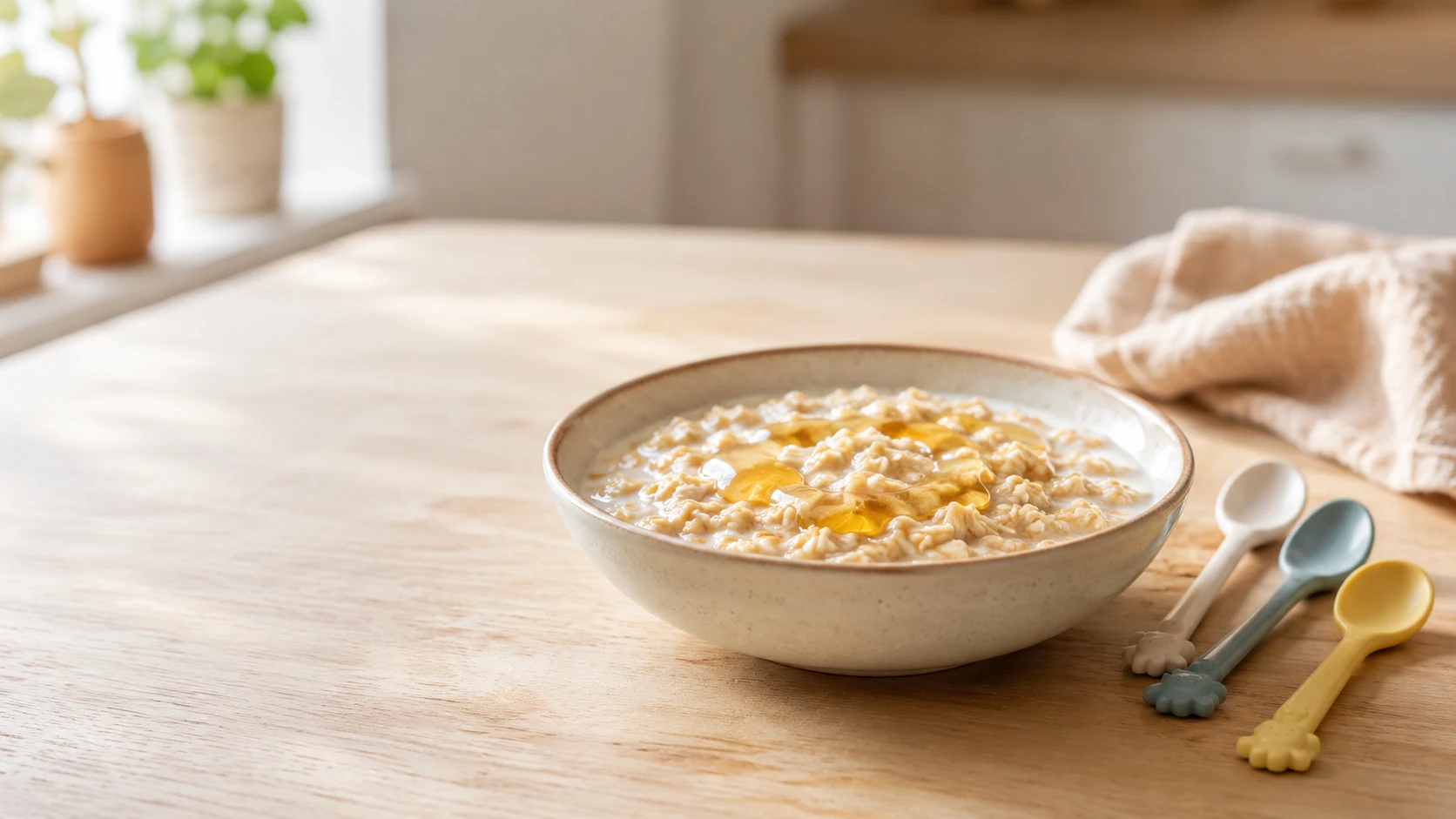
Every autumn, before the first real cold settles in, I make the same small change at home: the sugary breakfast cereals disappear from the cupboard, and oatmeal with warm milk and a spoonful of honey takes their place. I’ve done this for years now. But this article isn’t only about a bowl of oats — it’s about something I’ve come to believe matters even more: how a child’s relationship with food gets shaped in the first place, long before winter or any single ingredient enters the picture.
Taste Is Built Early — By Us, and By the World Around Them
What a child discovers and learns to enjoy early tends to stay with them. Offering a genuine variety of nourishing foods when they’re small isn’t a small parenting detail — it’s most of the work, done quietly, one meal at a time.
But comfort and familiarity matter just as much as variety. I’ve made a point, since my children were young, of taking them out to eat with us rather than always leaving them with a sitter so the adults could have a quiet evening. It’s not always the easier choice in the moment. But a child learns how to sit at a table, try something new, and enjoy a meal largely by watching the people they trust do exactly that — and no amount of talking about good habits at home replaces what they absorb simply by being present. The outside world shapes their palate too, for better or worse; I’d rather it shape them at a table with us than somewhere we have no say in at all.
The Bowl, As We Actually Make It
Rolled oats, cooked slowly in warm milk rather than water — it makes the whole bowl richer and encourages the kids to actually finish it. A generous spoonful of raw Sidr honey stirred in once it’s off the heat, never boiled directly into it, to keep as much of its natural character as possible. Sometimes a few dates, chopped, when we have them.
It takes barely longer than pouring cereal from a box. That was the whole point — a routine has to be easy enough that you actually keep it through a busy winter, or it doesn’t matter how good it is on paper.
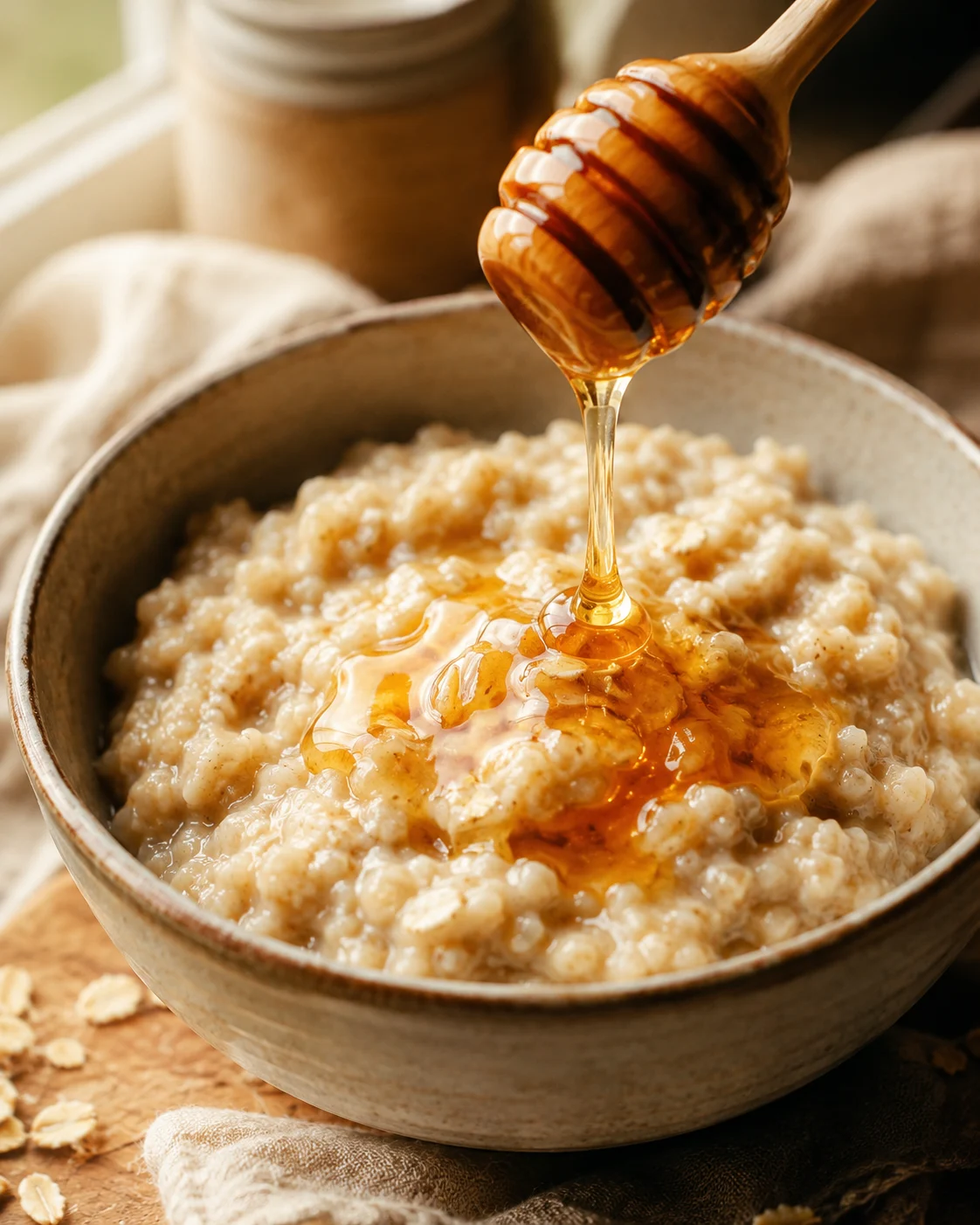
Introducing Honey Safely — What Every Parent Should Know First
Before any of this, one rule matters more than the rest: honey should never be given to a child under 12 months old, due to a real risk of infant botulism. This isn’t caution for its own sake — it’s a well-established medical guideline, and it’s the one part of this article with zero flexibility.
Past that age, introduce it gradually. Start with a small amount, and watch for any allergic reaction the way you would with any new food. From there, honey mixes easily into a child’s diet — stirred into oatmeal or plain yoghurt, blended into a smoothie, or used as a natural sweetener in home baking instead of refined sugar. It’s still sugar, and still deserves moderation — but it arrives with trace nutrients refined sugar simply doesn’t carry.
What I’d Say to Another Parent
I won’t tell you this bowl, or honey generally, will keep your children illness-free — no honest parent could promise that. What I can say is that the habit itself — real food, eaten together, built early and kept simple — has mattered more in our house than any single ingredient in it. Honey earned its place inside that habit because it’s genuinely good, genuinely evidenced for the specific thing I use it for, and genuinely loved by my kids. That combination is rare enough that I hold onto it every year.
Questions About Honey and Children
Not before 12 months, to avoid the risk of infant botulism. Past that age, introduce it gradually and in small amounts.
Its best-evidenced benefit specifically is easing cough and cold symptoms, confirmed by Cochrane review — genuinely proven, not just tradition. It also offers natural energy and trace nutrients that refined sugar lacks.
Start small from 12 months, watch for any allergic reaction, and keep quantities modest — it remains a sugar, even if a more interesting one.
It can be a more considered choice than refined sugar, carrying trace nutrients sugar doesn’t — but it isn’t a health food to use freely. Moderation still applies.
Our Honeys for This Winter
We use raw, unheated Sidr honey in this routine specifically — for the reasons this whole Journal has tried to explain honestly, batch after batch, article after article.
Shop now →