
Honey Before and After Sport
Why athletes have quietly used honey for endurance since ancient Greece — and what modern sports science actually confirms about it.
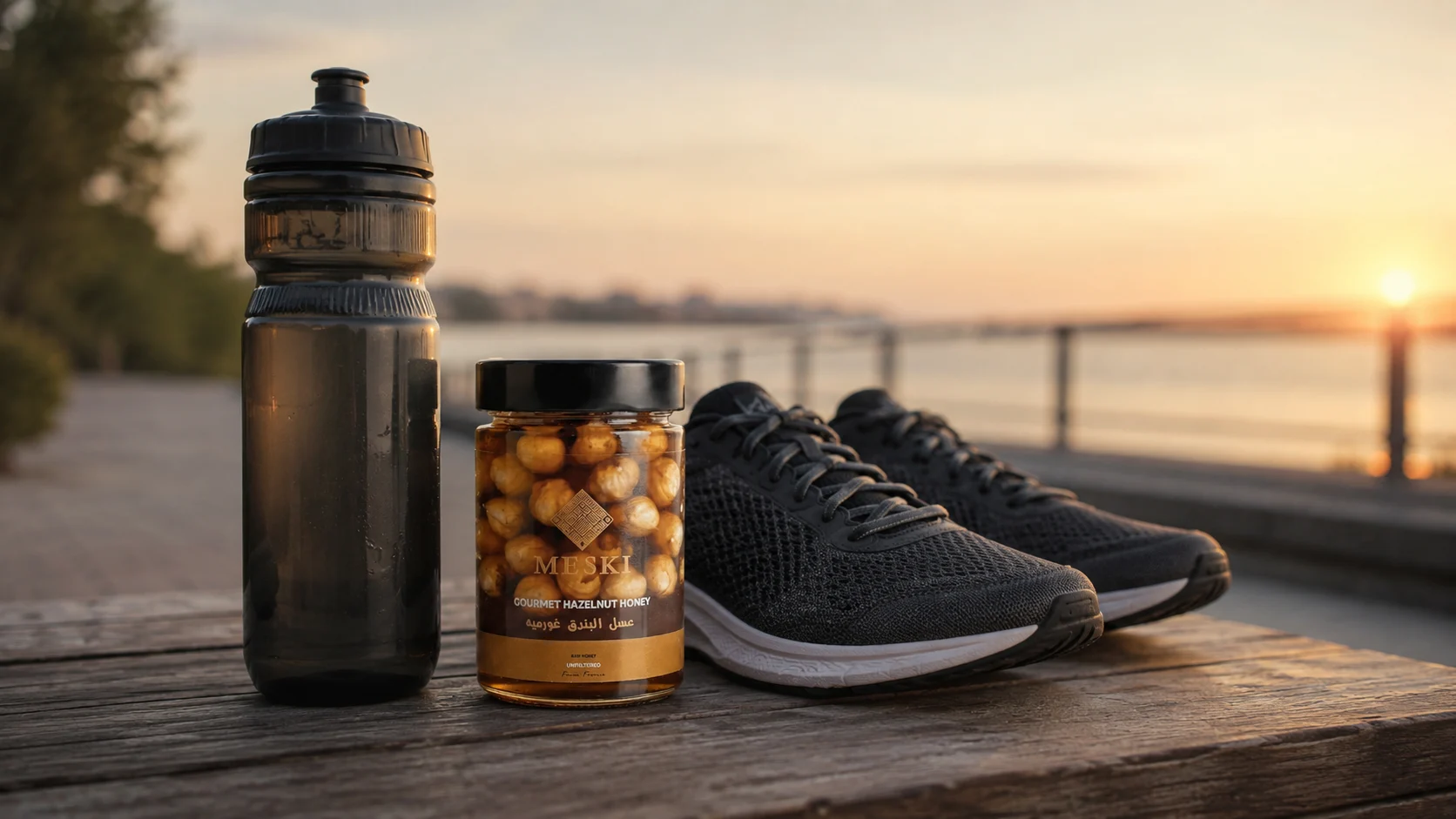
Sugar giving you energy is not a debate — it’s basic physiology. The real question worth asking is a more useful one: does honey specifically hold up against the engineered sports gels and drinks built in a lab for exactly this purpose? Sports nutrition researchers have actually tested this, and the answer is more interesting than a simple yes or no.
What the Research Confirms
Honey naturally combines glucose and fructose — two sugars absorbed through different pathways in the gut simultaneously, which means more total carbohydrate gets into the bloodstream with less digestive strain. This is the exact same principle commercial sports gels are engineered to replicate, using multiple carbohydrate sources for that reason.
Research from the University of Memphis Exercise and Sport Nutrition Laboratory found honey performed comparably to glucose-based commercial supplements during endurance exercise. In competitive cyclists given honey every 16 kilometres over a 64-kilometre time trial, power output measurably improved — matching the performance of dextrose-based products.
Where It Matters Most: Endurance, Not Every Sport
Honey’s advantage shows up most clearly in long, steady efforts — cycling, distance running, anything where the body gradually depletes its glycogen stores over an hour or more. That’s precisely the kind of exercise where topping up sugar reserves changes the outcome.
Shorter, stop-start sports are a different story. One study testing honey during intermittent football training found no measurable performance benefit — but neither did a commercial sports drink tested the same way. In football, fatigue over 75 minutes of stop-and-go sprinting isn’t purely a glycogen problem, so refuelling sugar alone doesn’t move the needle the way it does over a 64km ride. This isn’t a contradiction — it’s honey doing exactly what sugar should do, in the exercise type where that mechanism actually matters.
Clean Ingredient List
One ingredient, nothing synthetic — no artificial sweeteners, dyes or lab-engineered compounds to explain.
Dual-Sugar Absorption
Glucose and fructose together increase total carbohydrate uptake versus a single sugar source.
Individual Response
Like caffeine keeping one person up all night and letting another sleep soundly, honey’s effect on energy varies between people and between sports.
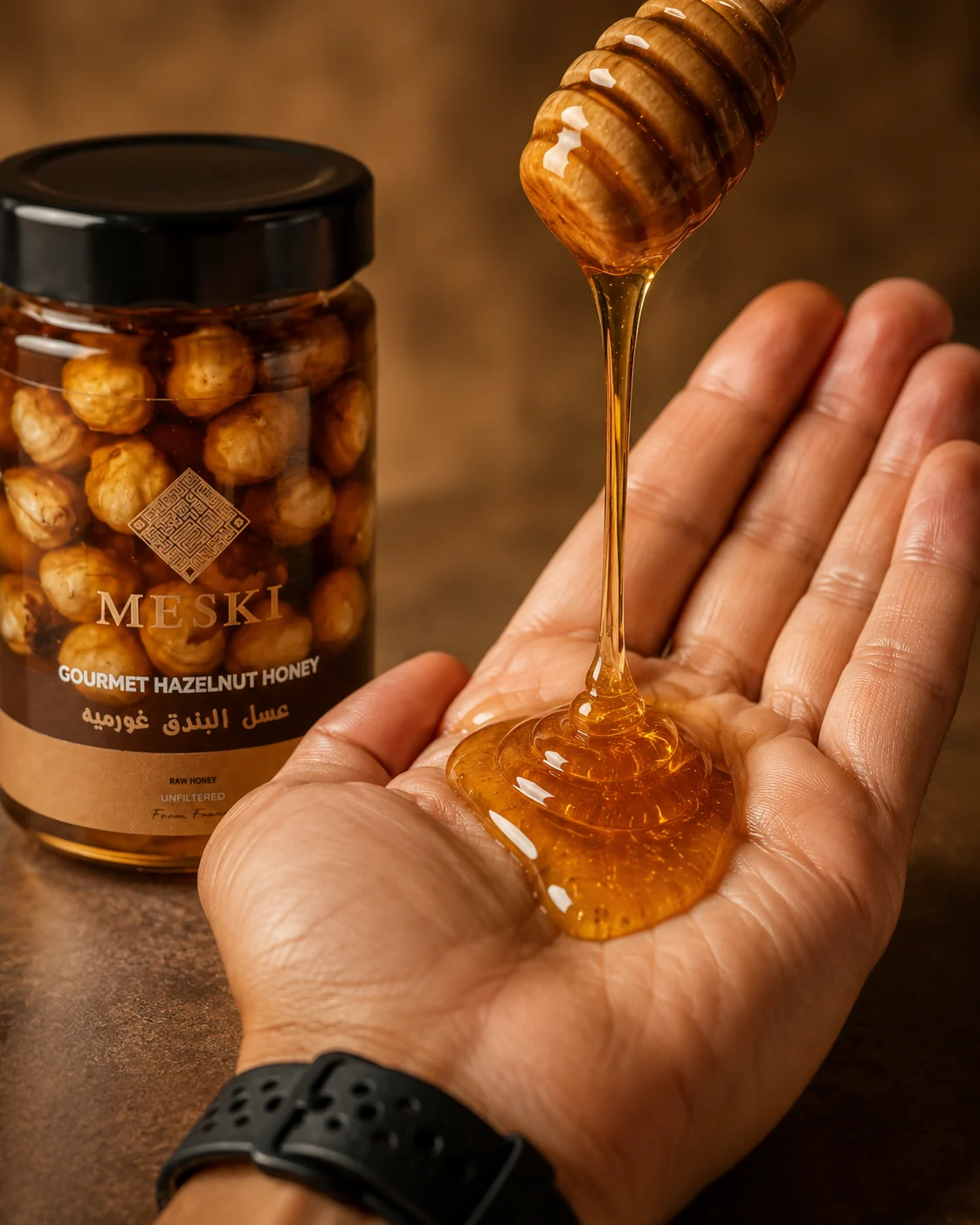
My Own Routine, If You’re Curious
I didn’t grow up playing sport seriously. As a child it was mostly the odd game of chase with friends — nothing structured, nothing that stuck. It properly entered my life much later, past thirty, and almost by accident. A group of childhood friends and I reconnected, and together we decided on a trip to Asia — and somewhere in the excitement of planning it, imagining the beach, imagining ourselves there, everyone quietly started getting into shape. That’s genuinely where it began for me.
Day after day, I pushed myself — learning how to train properly, reading into nutrition I’d never paid real attention to before, forcing a habit into existence one small session at a time. By the time the trip actually arrived, something had changed that had nothing to do with how I looked in a photograph. I felt it from the inside — physically, yes, but mentally too. A lightness. My heart felt different, in a way I hadn’t expected and still find hard to fully explain.
That feeling is the reason the habit stayed. Motivation dips, of course — some weeks I have to drag myself there — but the routine has held at a minimum of two or three sessions a week ever since. Honey every day, without fail. Fewer processed foods, though I still make room for real pleasure; deprivation was never actually the goal. The way I’d put it now: at the very beginning, cut as much as you reasonably can — that’s what breaks the old pattern. Once the habit becomes something closer to a real passion, all it needs after that is balance.
So — when do you start? If you need someone to give you the push I once needed myself, consider this it.
Questions About Honey and Exercise
Most studies used honey roughly 15–30 minutes before endurance exercise, or in small doses spaced through longer efforts — similar timing to how commercial gels are typically used.
No — and this matters. Energy drinks like Red Bull rely mainly on caffeine, a stimulant acting on the nervous system. Honey works purely through carbohydrate refuelling. They’re not competing for the same job; comparing them directly isn’t quite fair to either.
Evidence is strongest for endurance efforts — cycling, running, sustained cardio. For short, explosive or stop-start sports, the research is far less conclusive.
Our Position, Simply Stated
For endurance effort specifically, honey has real sports-science backing as a natural alternative to engineered gels — no lab-made ingredients, nothing to explain on the label. We won’t call it a performance miracle for every sport, because the evidence doesn’t say that. For the effort it’s actually proven for, it earns its place.
Shop now →