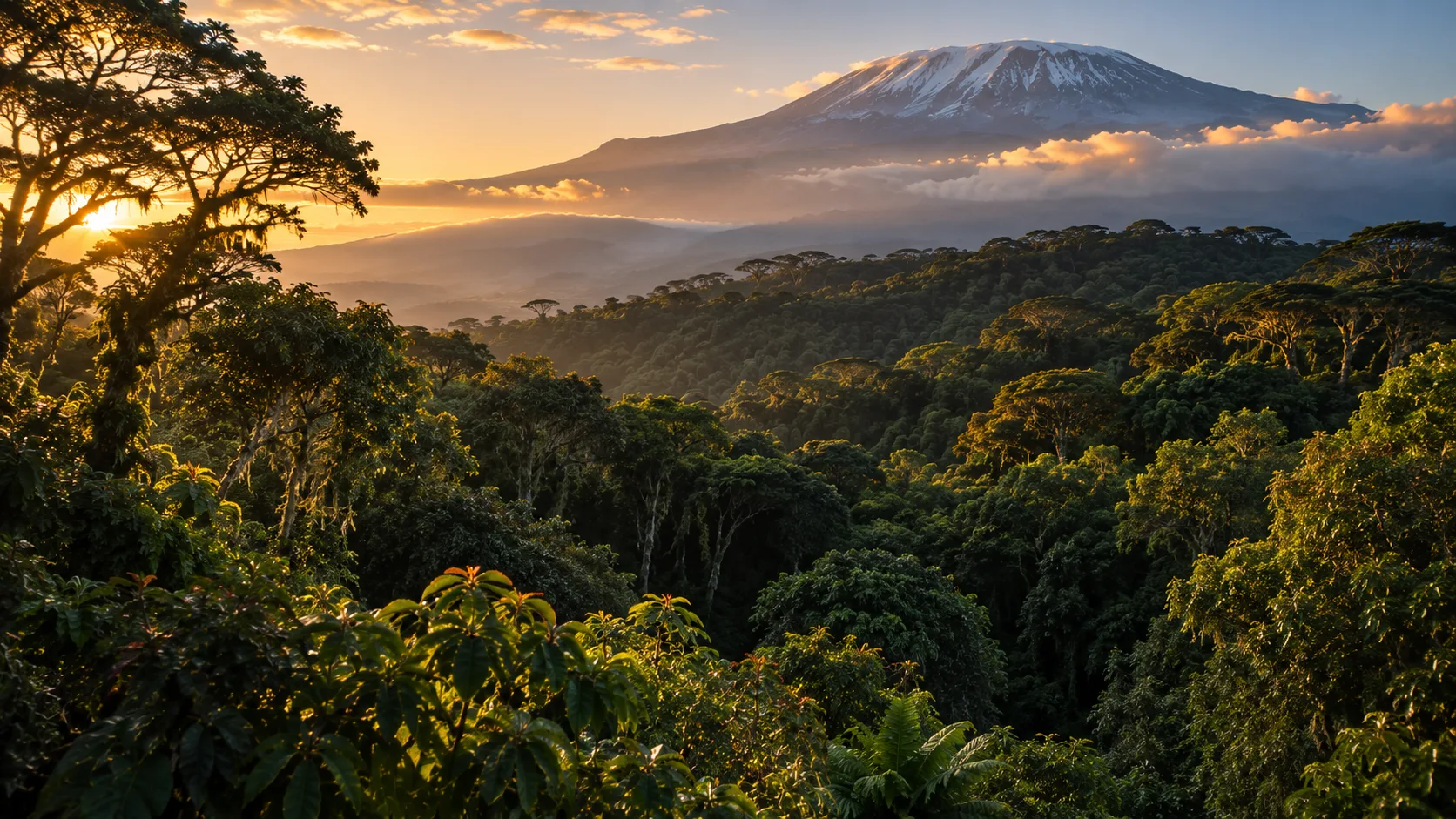
Tanzania · Kilimanjaro Region · Moshi
Kilimanjaro
Honey
عسل كليمنجارو
The only honey in this Atlas that refuses to name a single flower.
On the forested slopes around Mount Kilimanjaro, bees forage across a diversity of blossom no single-origin claim could honestly capture — and the House lets this honey be exactly what it is: many flowers, one mountain.
Terroir
Moshi’s forest reserves, on Kilimanjaro’s lower slopes
Around Moshi, Hai and Same districts, forest reserves on Kilimanjaro’s lower slopes hold a rich mix of native trees, shrubs and herbs — the kind of botanical diversity that shaped this honey’s character long before any beekeeper arrived.
Modern hives increasingly stand alongside older, traditional methods here, as regional programmes work to modernise beekeeping without erasing the forest knowledge that came before it.
| Location | Forest reserves, Moshi, Hai and Same districts, Kilimanjaro Region, Tanzania |
| Landscape | Montane forest and woodland on Kilimanjaro’s lower slopes |
| Floral source | Multi-floral — diverse native forest trees, shrubs and herbs |
| Harvest | Chiefly June to August, following the long rains |
| Secondary harvest | A smaller window in January–February, after the short rains |
“No single flower gets to claim this honey. On Kilimanjaro’s slopes, the bees simply refuse to choose just one.“
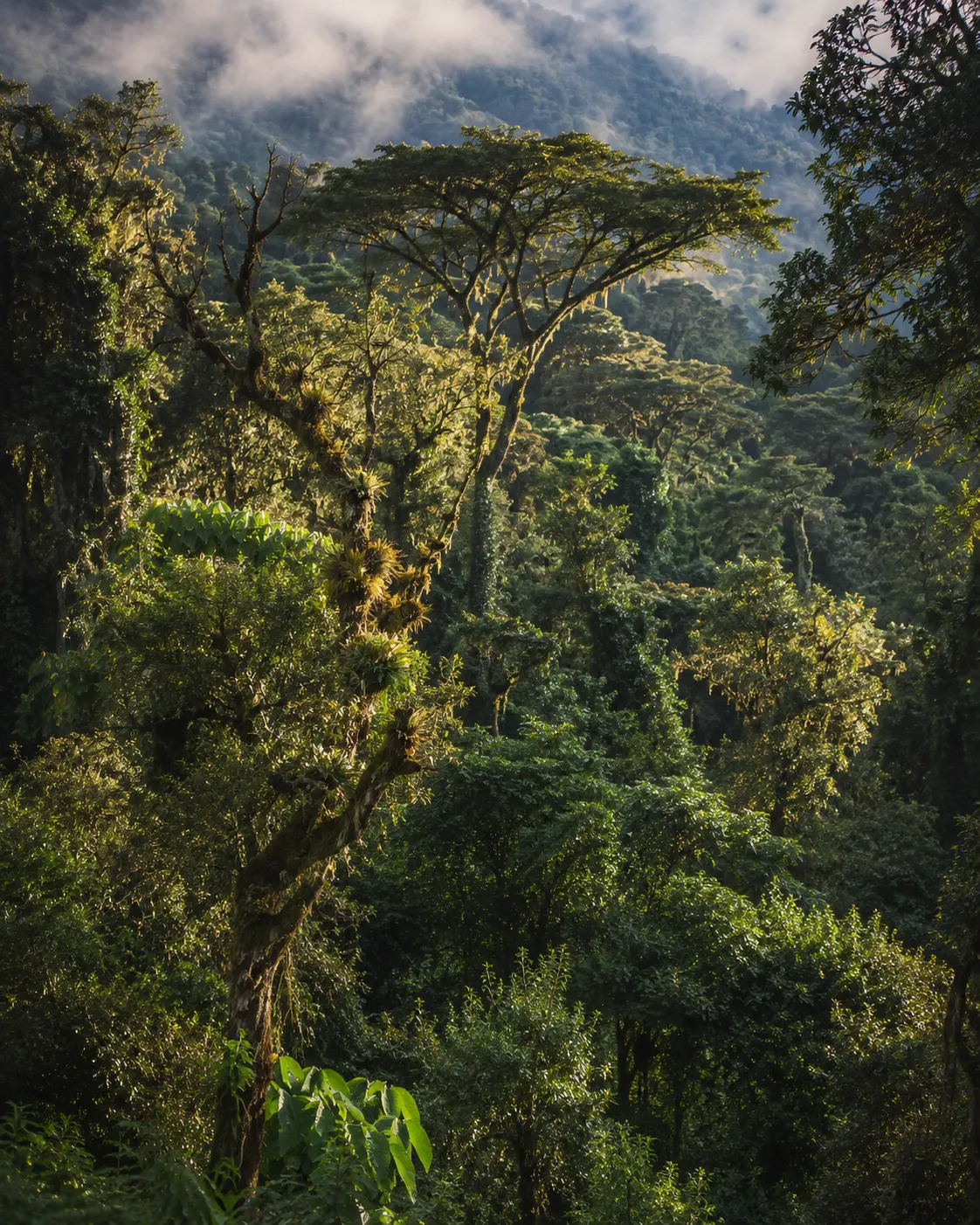 Kilimanjaro · montane forest
Different by design, not by omission
The Atlas’s only multi-floral honey
Every other honey in this collection is monofloral — one tree, one bloom, one claim. Kilimanjaro’s forest reserves hold too much floral diversity for that promise to be honest. This honey is deliberately presented as what it is: the work of bees foraging across an entire mountain’s flowering season, not a single species.
Tradition
A forest economy, old and new at once
Beekeeping around Kilimanjaro has long supplemented farming and herding income for smallholder families — honey as one part of a diversified rural livelihood, not a single dedicated industry.
Traditional hives are still common, but regional programmes now train beekeepers in modern methods, aiming for more frequent, less disruptive harvests without abandoning the forest’s own rhythm.
Generations
A supplement, not a sole trade
Beekeeping around Kilimanjaro has long been one part of smallholder livelihoods, alongside farming and livestock, rather than a dedicated industry on its own.
Traditional practice
Hollowed trunks, hung high
Traditional hives — hollow log sections hung from trees or roof eaves — have supplied households and local markets for generations.
Recent years
A modernising sector
Regional training programmes now introduce modern hive designs, aiming to raise yields while keeping the harvest sustainable for the forest itself.
Today
Two harvests, one mountain
The rhythm still follows the rains — a fuller harvest after the long rains, a smaller one after the short — exactly as it always has.
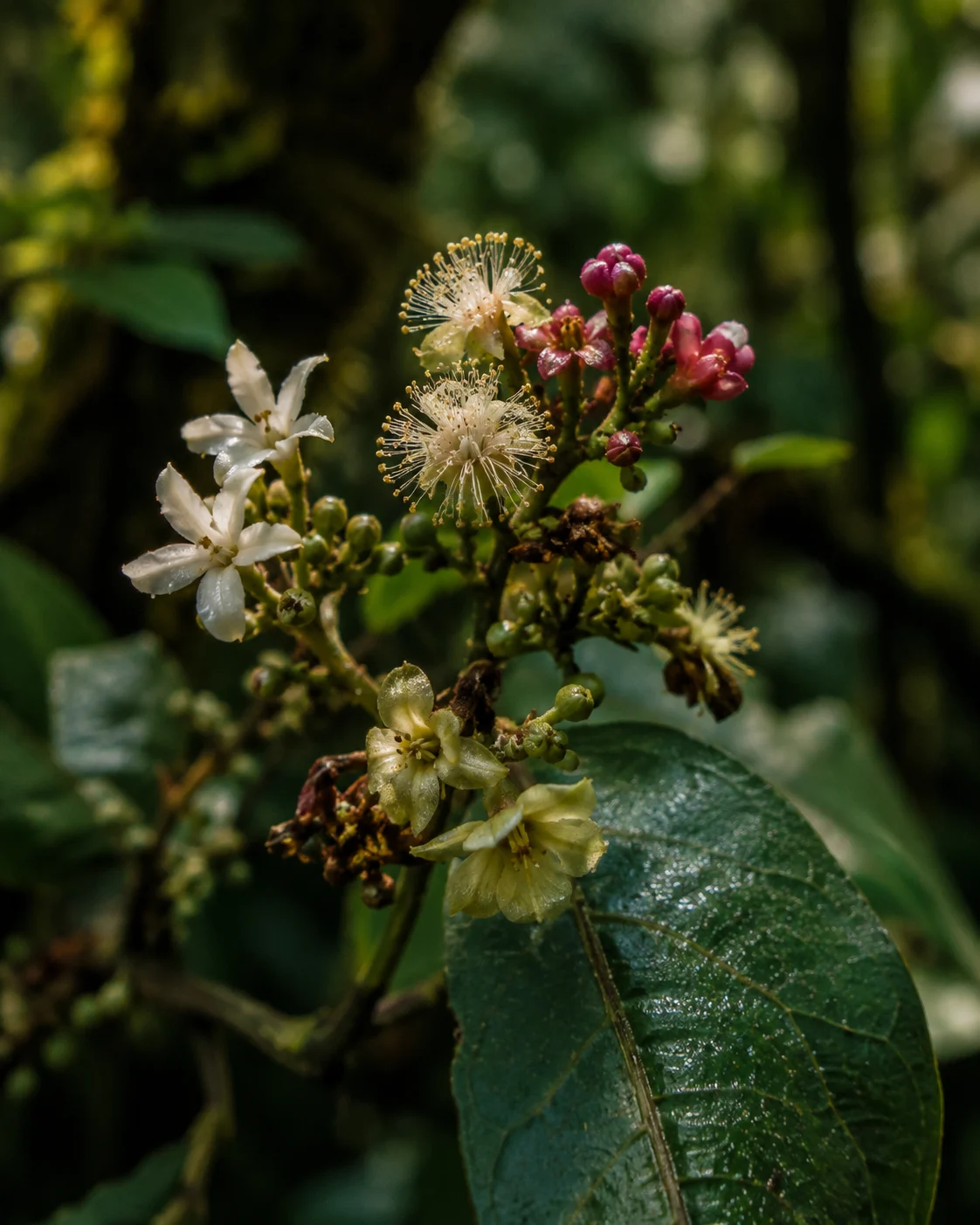 Forest blossom · Kilimanjaro slopes
“The mountain gives twice a year, once after each rain — and asks the beekeeper to be ready both times.”
— The House of Meski
Rarity
A harvest written by two rainy seasons
Kilimanjaro’s bimodal rainfall shapes everything here: a long, generous flow after the March–May rains, and a second, smaller one after the shorter November–December rains — with the forest’s own weather deciding how much either season gives.
Why it cannot scale
A drought year on Kilimanjaro is not just bad weather. It is measurably less honey, in both harvest windows at once.
Beekeeping
Old hives, new training, the same forest
Many beekeepers here still use traditional hollow-log hives, hung high from branches or under roof eaves, alongside a growing number of modern box hives introduced through regional training programmes.
The practice
Extraction, whichever hive style it comes from, follows standard modern practice for export honey — smoker, uncapping knife, extractor — raw and unheated throughout.
Sensory reading
A different story with every lot
Texture
Medium-bodied and liquid — a honey whose interest lies entirely in flavour complexity, not unusual texture.
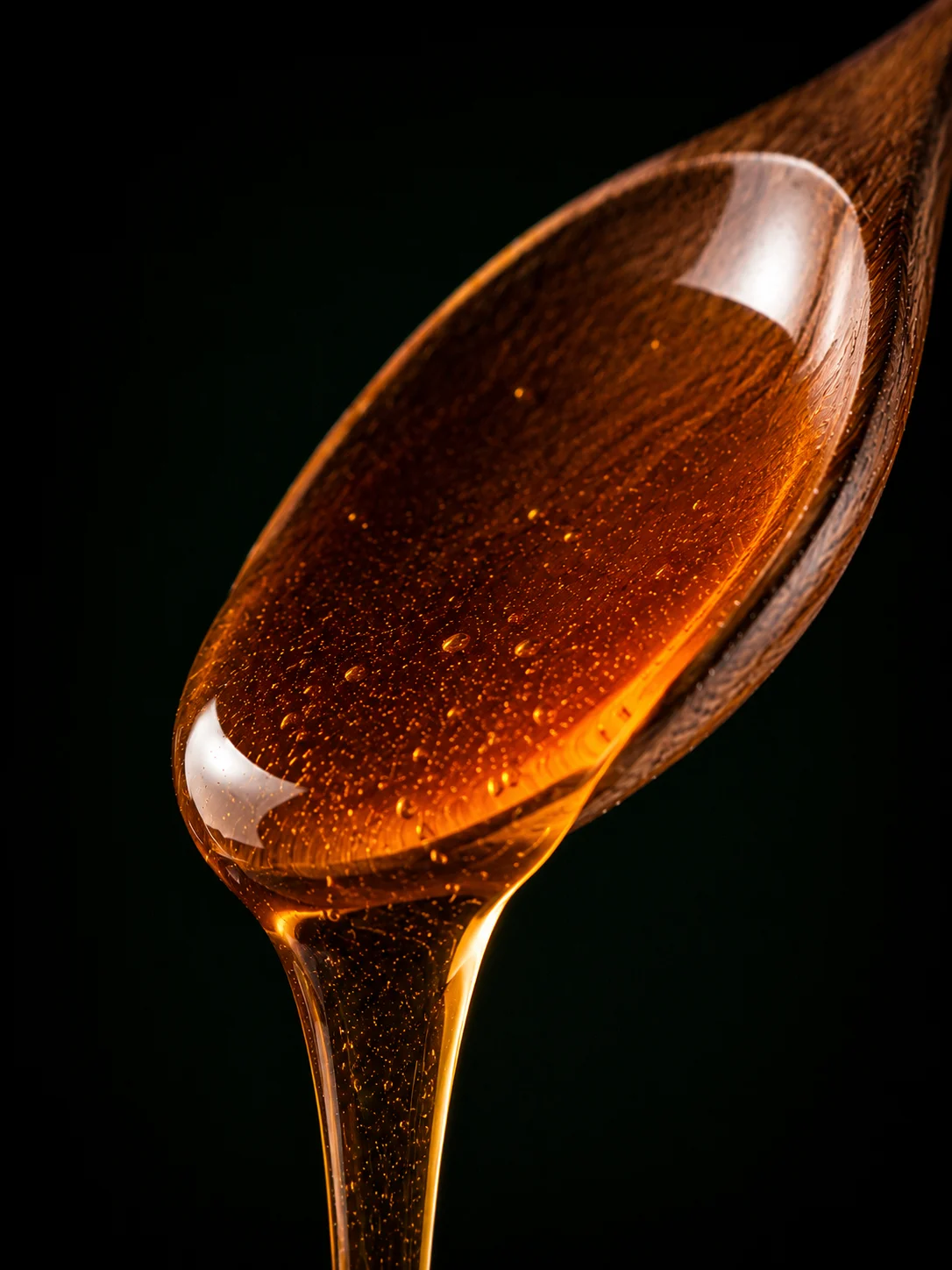
Harvest notebook
From the field — a mountain that never repeats itself
No two harvests from Kilimanjaro’s forest reserves taste quite the same, and that is simply the nature of a multi-floral honey: this year’s rains favoured one set of blossoms, last year’s favoured another.
Beekeepers here read the forest rather than a single tree — moving between traditional and modern hives as training and resources allow, but always following the same two-rains rhythm.
What arrives in the jar is honest about what it is: not a single flower’s story, but an entire mountain’s, told a little differently each season.
Pairings
How to serve it
Balanced and complex — flexible enough for both sweet and savoury company.
Meski rating
An editorial reading, not a certification
Six criteria of the House, judged in tasting. This rating describes the appellation, is revised for each lot presented, and replaces no analysis or certificate.
Provenance
The Meski Confidence Chain
Rare honey is one of the most counterfeited foods in the world, and Sidr is no exception. Confidence does not come from a single certificate — it comes from a chain that stays continuous, from bloom to jar.
Read: How to read a rare honeyAnalysis describes the sample received by the laboratory. It does not automatically prove that every jar sold under the same name comes from that sample. A continuous chain does.
Continue the Atlas
An origin is never an island
Compare not to name a winner, but to understand what place, season and craft shift in the cup.