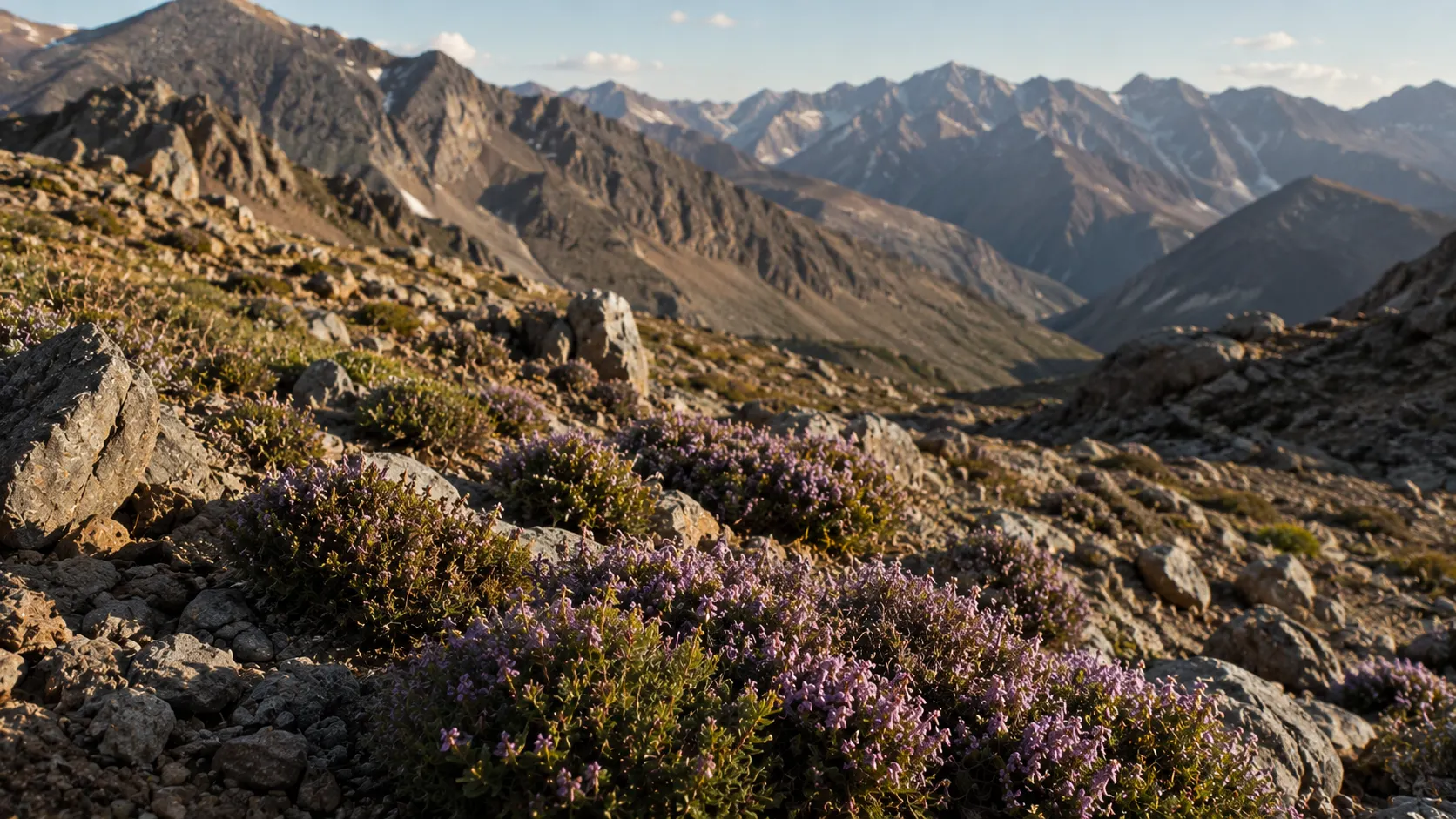
Morocco · High Atlas · Errachidia
Moroccan
Thyme Honey
عسل الزعتر المغربي
Assal Zaatar — a breakfast-table name that needs no translation.
High in the Atlas, where the air is dry and the soil rocky, wild thyme gives a honey Moroccan households have long called simply by the plant’s own name — Assal Zaatar.
Terroir
The High Atlas, where thyme needs no encouragement
Across the highland garrigues of the High Atlas, and around Errachidia further east, wild thyme grows spontaneously on rocky, arid terrain — no irrigation, no cultivation, only altitude and sun.
The resulting honey is known locally as Assal Zaatar — عسل الزعتر — a name that describes exactly what it is rather than dressing it up: honey, from thyme, nothing more implied.
| Location | High Atlas highlands, and around Errachidia, Morocco |
| Landscape | Rocky, arid mountain terrain, high altitude |
| Plant | Wild thyme — Thymus vulgaris, locally ‘Zaatar’ |
| Local name | Assal Zaatar — عسل الزعتر |
| Harvest | Late spring into summer |
“Assal Zaatar needs no translation at a Moroccan breakfast table — everyone already knows which jar to reach for.“
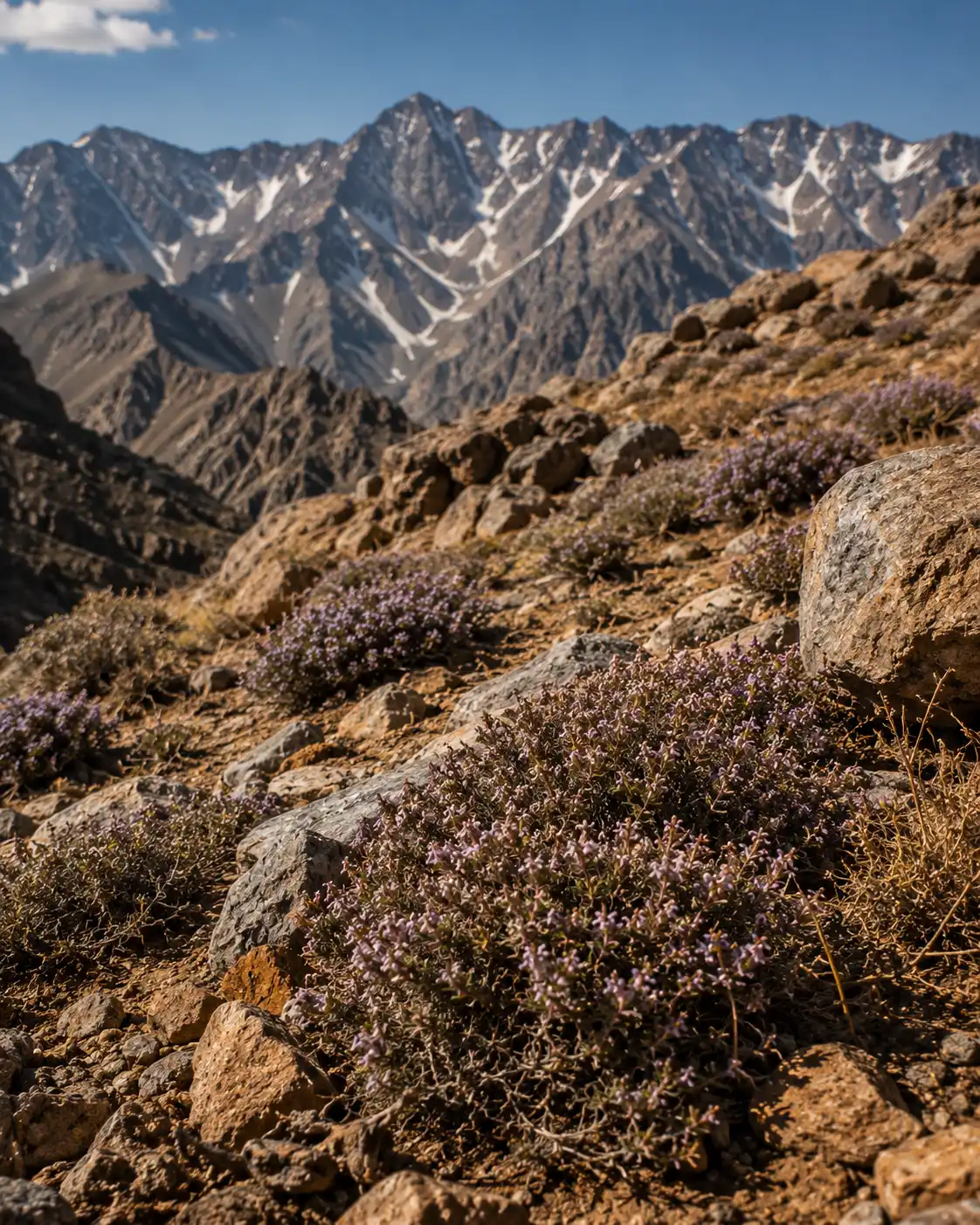 High Atlas · thyme country
Tradition
A remedy before it was a breakfast
In Errachidia and across the Atlas, beekeeping traditionally used hives woven from reed — a technique passed down for generations, older than any export market for the honey it produced.
Assal Zaatar has long held a place in the household medicine cabinet as much as the breakfast table — offered for coughs and colds long before it was ever sold as a specialty honey.
Generations
Hives woven from reed
Traditional beekeeping in Errachidia used reed hives, a technique carried down through generations of mountain households.
Long-standing
A remedy, not a delicacy
Assal Zaatar was reached for at the first sign of a cough or cold long before anyone thought to market it as a specialty.
Recent decades
A named regional product
As Morocco’s beekeeping sector modernised, thyme honey from the Atlas gained recognition as one of the kingdom’s most distinctive terroir honeys.
Today
Still poured at the same table
The same rocky highlands, the same plant, the same jar reached for at breakfast as much as in illness.
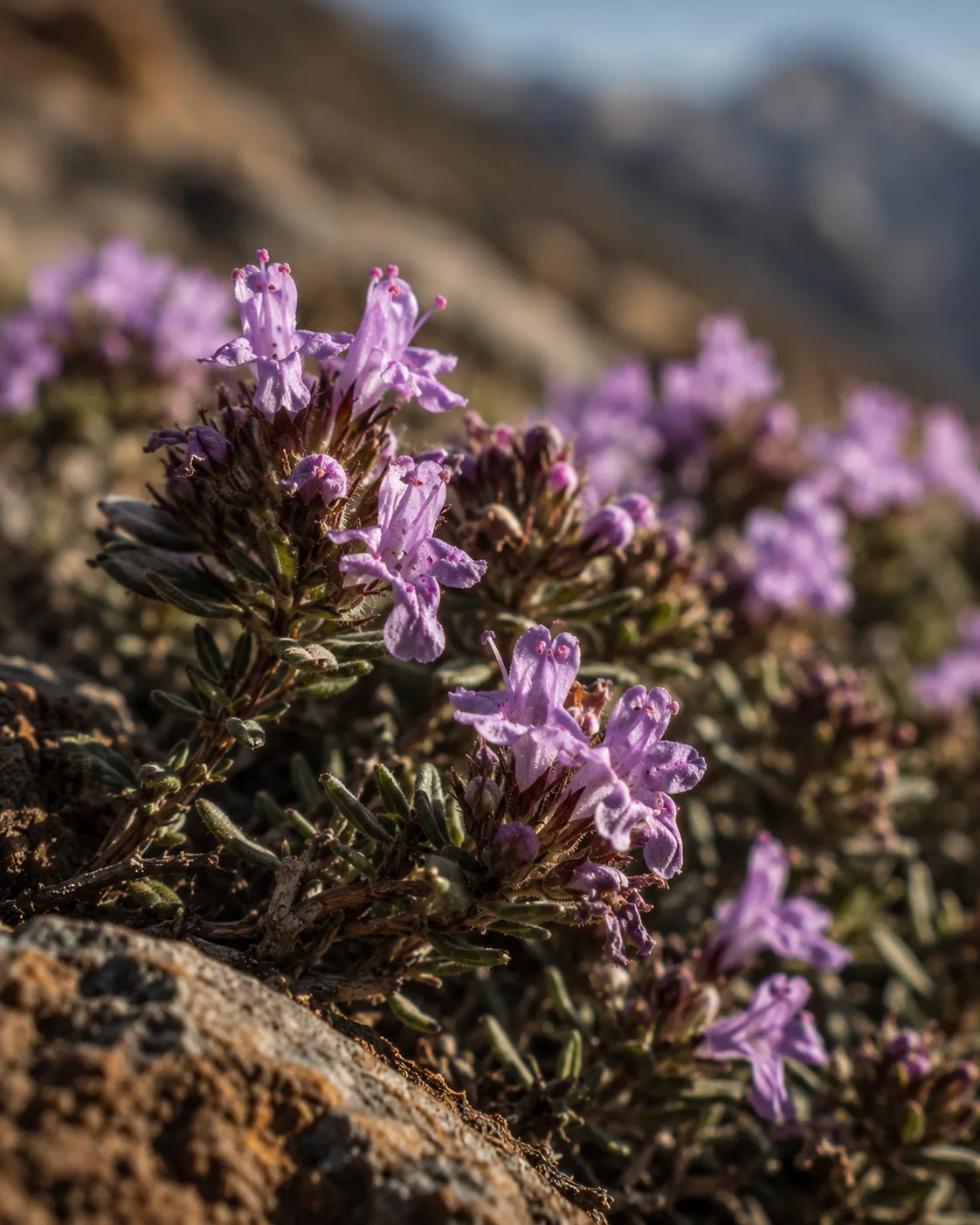 Thyme blossom · High Atlas
“A hive woven from reed remembers the wind long after the bees have gone quiet for the night.”
— The House of Meski
Rarity
A brief highland flowering, gathered by hand
Wild thyme at this altitude flowers on its own schedule, shaped by a mountain climate far less forgiving than lowland Mediterranean scrubland — a short, unirrigated bloom that asks nothing of the land and gives back exactly as much as the season allows.
Why it cannot scale
No one plants thyme in the High Atlas. What grows wild on rocky, unwatered slopes sets its own modest limits.
Beekeeping
A mountain craft, reed hive to jar
Beekeeping families in the region have long worked with hives woven from reed, positioned close to wild thyme stands across the rocky highland terrain.
The practice
Modern extraction — smoker, uncapping knife, extractor — has since joined the older reed-hive tradition; the honey today moves from hive to jar without heat or forcing, whichever style of hive it began in.
Sensory reading
Resin, pepper, and mountain air
Texture
Dense yet quick to melt — a honey that announces itself immediately, then fades cleanly.
Harvest notebook
From the field — a highland breakfast tradition
In the High Atlas, thyme asks for nothing — no water beyond what the mountain gives it, no tending beyond a beekeeper’s patience to find where it grows thickest.
The harvest itself is modest and manual, hives checked and lifted by hand across terrain no machinery could easily reach.
What returns to the household table is Assal Zaatar in the truest sense: a honey that never needed a fancier name to earn its place beside the morning bread.
Pairings
How to serve it
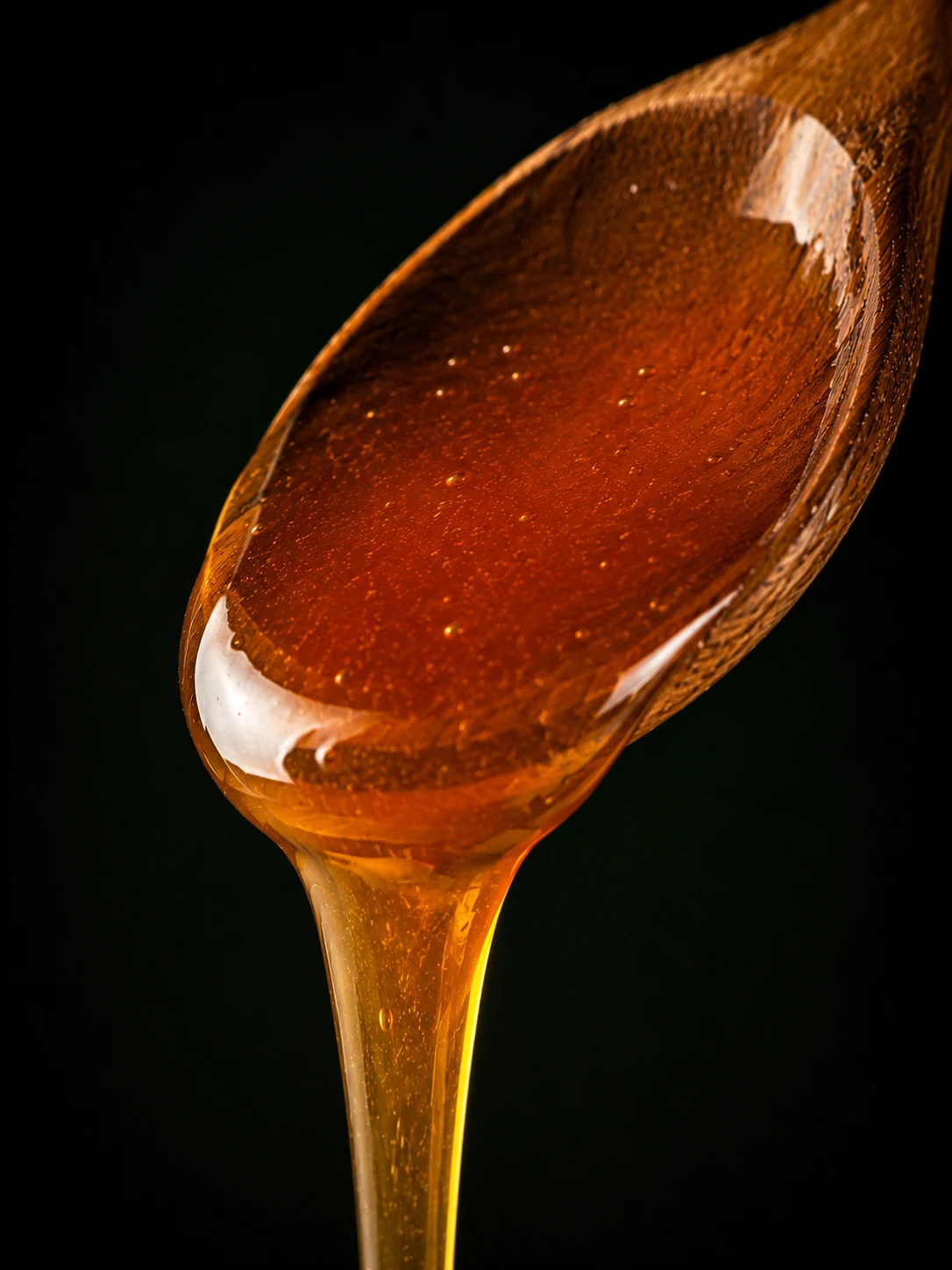
Resinous and warm — a honey built for mountain mornings.
Meski rating
An editorial reading, not a certification
Six criteria of the House, judged in tasting. This rating describes the appellation, is revised for each lot presented, and replaces no analysis or certificate.
Provenance
The Meski Confidence Chain
Rare honey is one of the most counterfeited foods in the world, and Sidr is no exception. Confidence does not come from a single certificate — it comes from a chain that stays continuous, from bloom to jar.
Read: How to read a rare honeyAnalysis describes the sample received by the laboratory. It does not automatically prove that every jar sold under the same name comes from that sample. A continuous chain does.
Continue the Atlas
An origin is never an island
Compare not to name a winner, but to understand what place, season and craft shift in the cup.