
Morocco · Anti-Atlas · Daghmous zones
Moroccan Euphorbia
Honey
عسل الدغموس المغربي
One of Morocco’s most recognisable strong honeys: warm in the throat, bitter-edged and impossible to confuse with gentler floral styles.
In the arid and mountainous south of Morocco, euphorbia — often called daghmous — gives a honey famous for its intensity. It is a honey people remember less for sweetness than for heat, bitterness and a striking after-sensation in the throat.
Terroir
A honey of thorn, heat and stone
Euphorbia honey belongs to southern Morocco’s harsher ecologies: Anti-Atlas slopes, arid mountain corridors and spurge-dotted lands where vegetation looks more defensive than generous.
The plant itself is cactoid, resinous and thorny. That severity is part of the honey’s personality, which is why euphorbia honey feels so unmistakably tied to place.
| Location | Southern Morocco, especially Anti-Atlas and arid mountain zones |
| Landscape | Dry mountain terrain with resinous euphorbia growth |
| Floral source | Euphorbia blossom, often called daghmous |
| Harvest | Spring to early summer |
| Volume | Limited, with strong year-to-year variation |
“Some honeys finish with sweetness. Euphorbia finishes with conviction.“
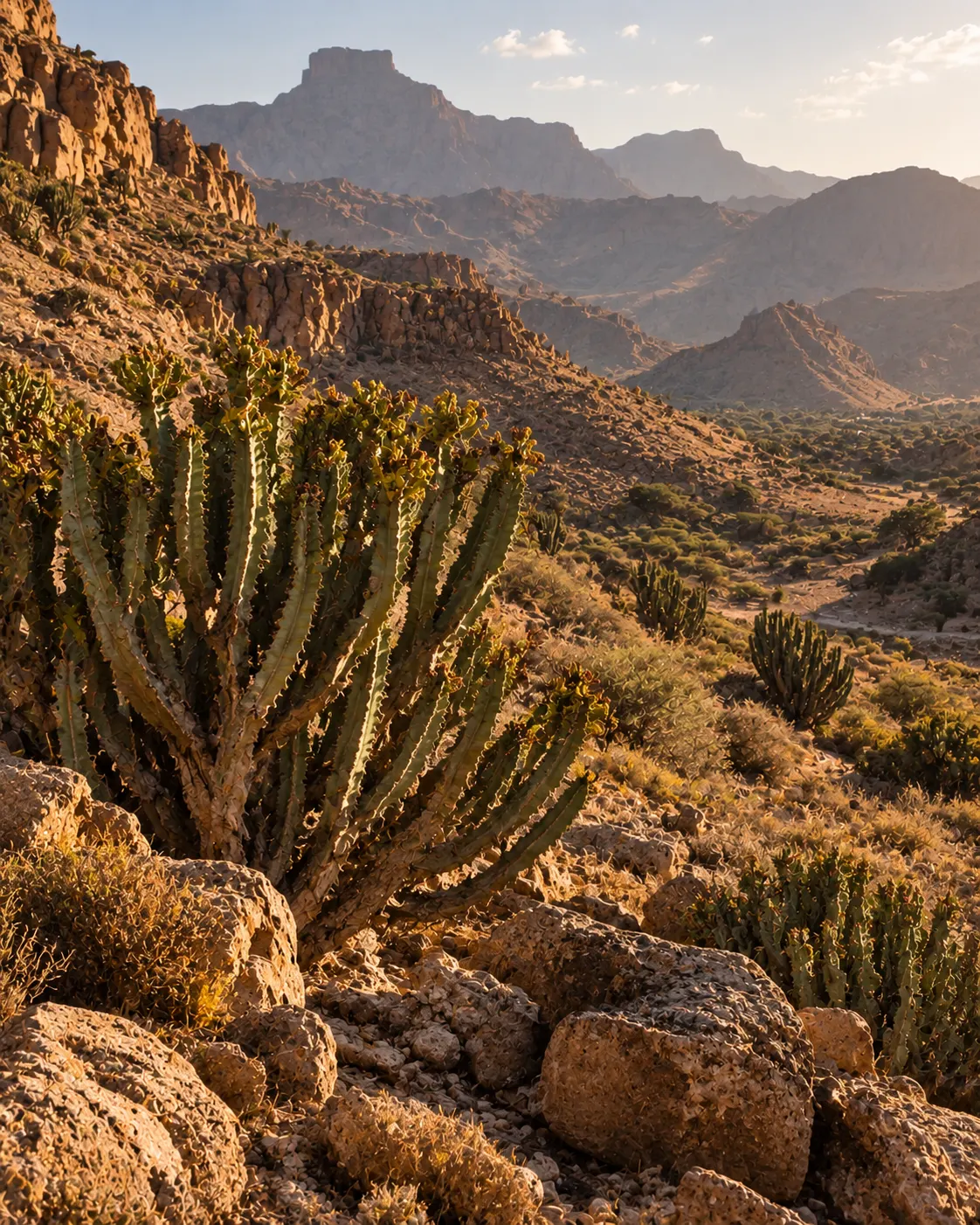 Anti-Atlas · Southern mountain spurge zones
Why people seek it
Intensity is its signature
Euphorbia honey is valued precisely because it does not behave like ordinary floral honey. Its peppery warmth and bitter register are not flaws but the very markers by which it is recognised.
Tradition
A Moroccan classic with a cult following
Among Moroccan honeys, euphorbia occupies a special place. It is simultaneously rustic and prestigious: deeply local, yet so distinctive that it is often the first strong Moroccan honey people learn to name.
The Atlas is interested in that exact balance — a honey tied to ordinary regional landscapes, yet singular enough to become almost emblematic.
Spurge landscapes
Spurge landscapes
Euphorbia thrives in Morocco’s hot, stony southern terrains.
Regional identity
Regional identity
Daghmous honey becomes one of the country’s most recognisable strong styles.
Traditional harvest
Traditional harvest
Beekeepers gather small seasonal lots by hand.
Modern market
Modern market
Its intense reputation now travels far beyond the region itself.
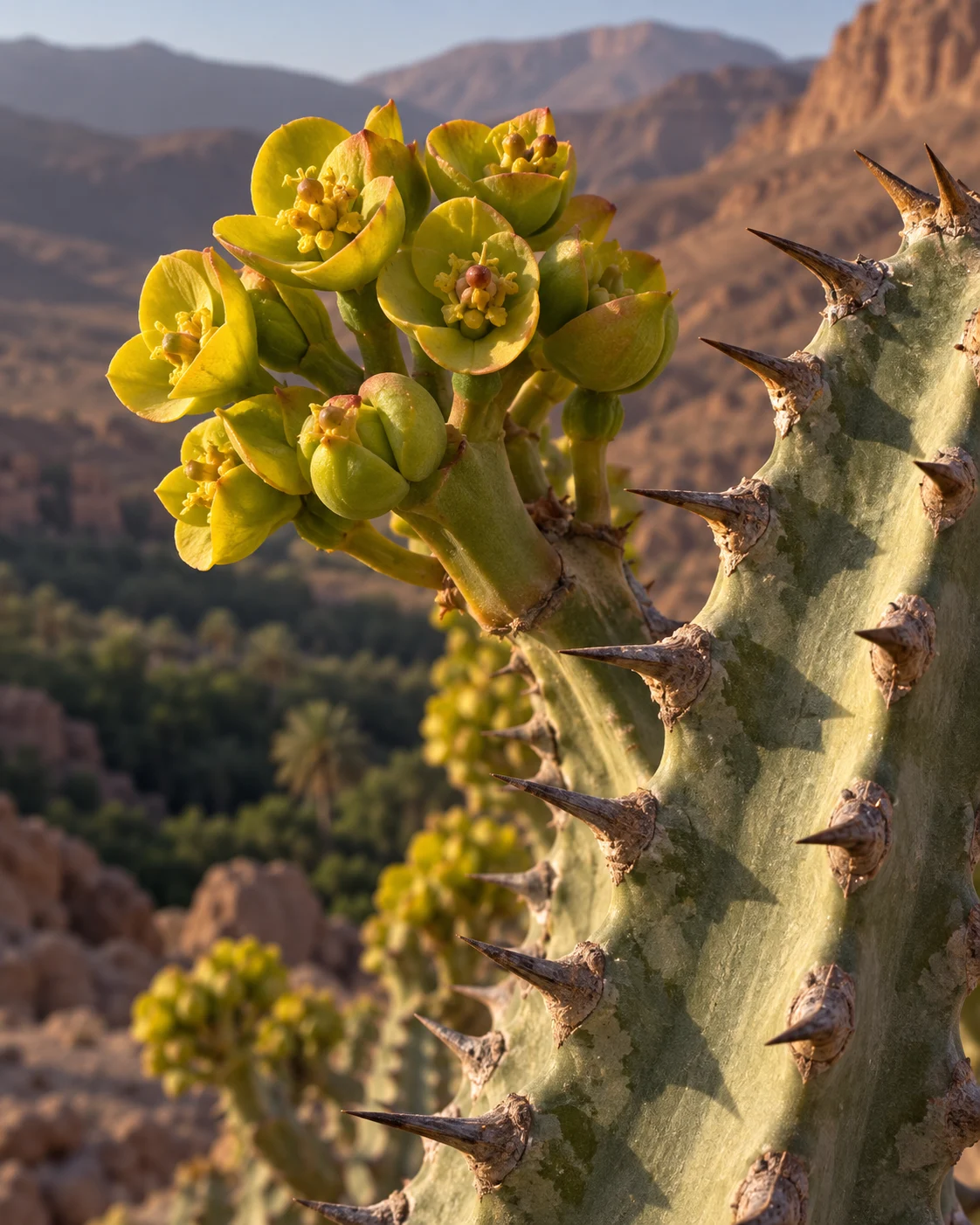 Botanical detail · Morocco
“Euphorbia leaves warmth in the throat and memory on the palate.”
— The House of Meski
Rarity
Rare in the way forceful honeys always are
It is not rare only because volumes are limited. It is rare because few floral origins create such a distinctive sensory signature while remaining recognisably natural and place-bound.
Why it matters
A honey for conviction rather than universal agreement.
Beekeeping
Harvesting an uncompromising blossom
Euphorbia lots require careful separation because their profile is easy to recognise and easy to dilute if surrounding forage dominates. Beekeepers treat them as a style to preserve, not simply a yield to increase.
The practice
That preservation matters, because the honey’s identity lives in a particular combination of bitterness, spice and throat-warming power.
Sensory reading
The Moroccan pepper line
Texture
Thick and concentrated, often tending toward faster crystallisation than more fluid honeys.
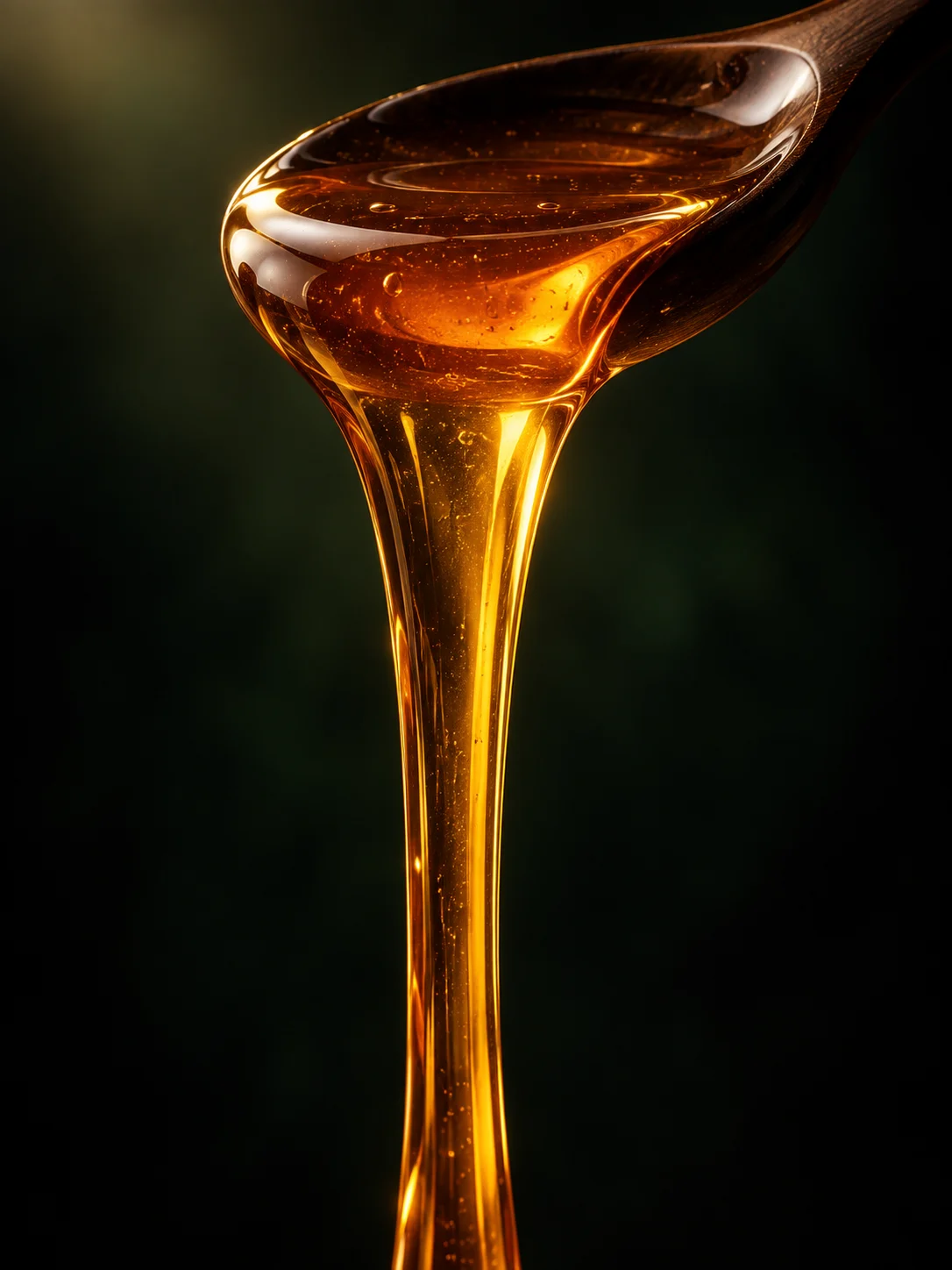
Notebook
Tasting notebook
Euphorbia is the honey you offer when you want to test whether someone likes honey only for sugar or for character. It is severe in the best sense: local, vegetal, warming and deeply itself.
Pairings
Ways to serve it
Meski rating
An editorial reading, not a certification
Six criteria of the House, judged in tasting. This rating describes the appellation, is revised for each lot presented, and replaces no analysis or certificate.
Provenance
The Meski Confidence Chain
Rare honey is one of the most counterfeited foods in the world, and named origins are no exception. Confidence does not come from a single certificate — it comes from a chain that stays continuous, from bloom to jar.
Read: How to read a rare honeyAnalysis describes the sample received by the laboratory. It does not automatically prove that every jar sold under the same name comes from that sample. A continuous chain does.
Continue the Atlas
An origin is never alone
Compare not to name a winner, but to understand what place, season and craft shift in the cup.