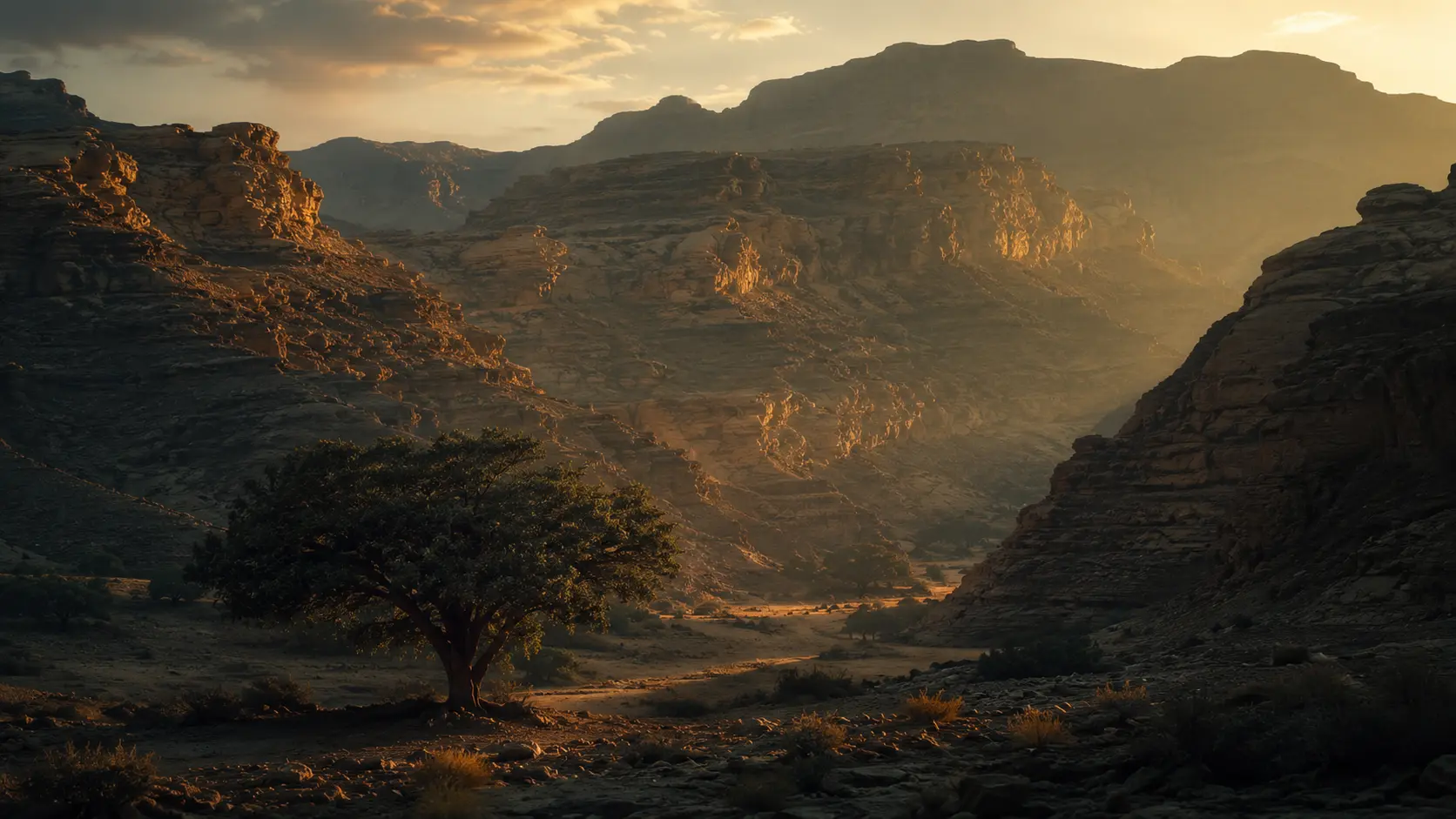
Yemen · Wadi Do’an · Hadhramaut
Do’ani
Sidr Honey
عسل السدر الدوعني
A single winter harvest in a canyon of stone — never repeated twice.
In the heart of Hadhramaut, hives follow a valley that yields nothing on command. Each November, when the Sidr flowers and little else does, the year’s one prized harvest begins.
Terroir
Wadi Do’an, a land of silence and stone
In eastern Yemen, Wadi Do’an unfolds as a corridor of cliffs, earthen villages and seasonal riverbeds. The Sidr does not grow here as a plantation: it holds where ravines and residual moisture allow it — a scattered presence, never a field.
The character of the honey therefore depends on more than a country’s name. The placement of the hives, the vigour of the bloom, the season’s rain and the moment of extraction shift each year’s balance.
| Location | Wadi Do’an, Hadhramaut Governorate, Yemen — 15°15’51″N 48°20’27″E |
| Altitude | Roughly 800–1,500 m between valley floor and plateau rim |
| Landscape | Enclosed canyon, limestone cliffs, mineral soils |
| Tree | Sidr — Ziziphus spina-christi, wild and unplanted |
| Bloom | A brief autumn flowering, October to November |
| Harvest | November — the single prized winter harvest of the year |
“A great honey does not begin in the jar. It begins in a landscape few still know how to read.“
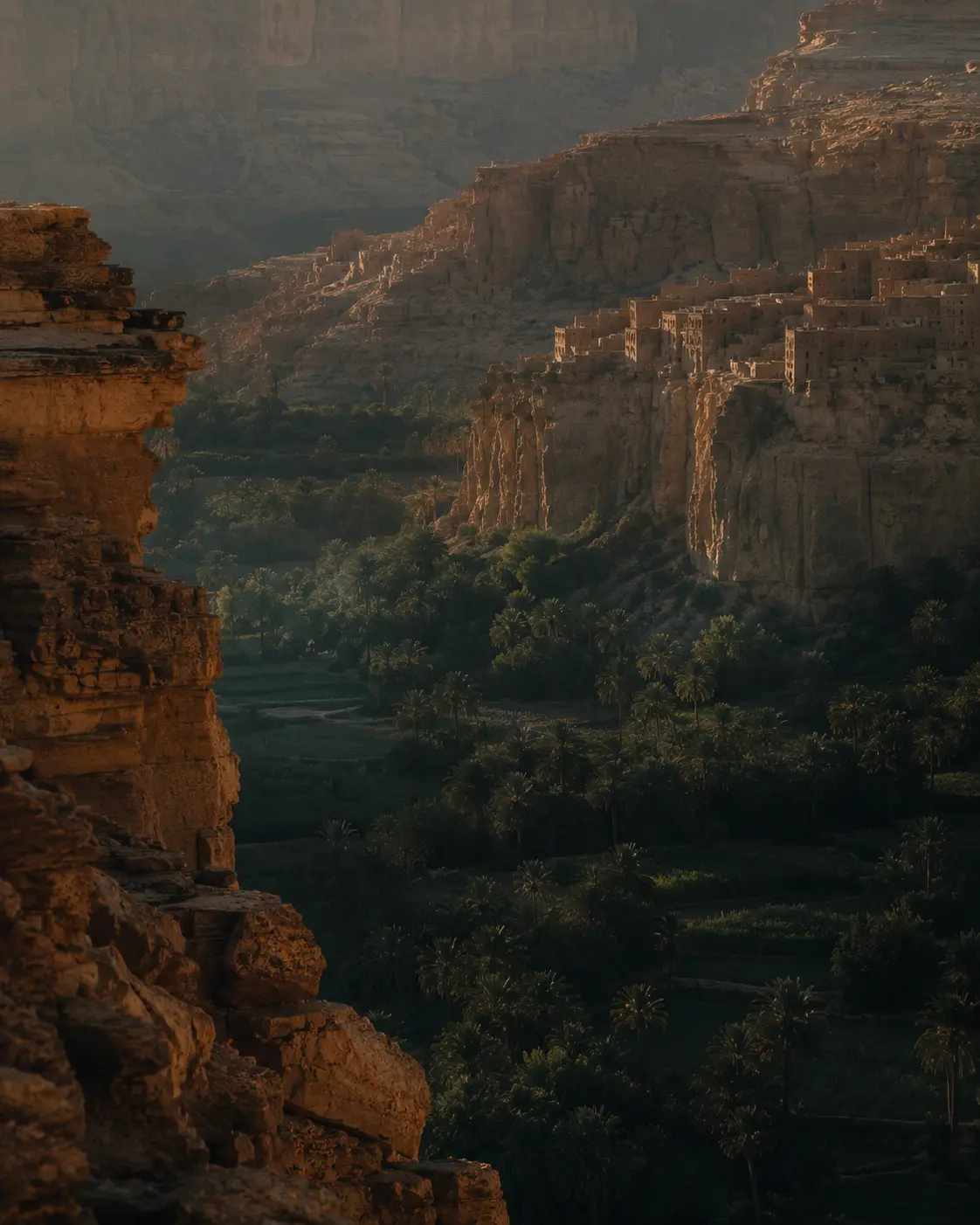 Wadi Do’an · Hadhramaut
Tradition
Older than the caravans
Beekeeping in Hadhramaut is not an invention of the modern market: the craft is attested in this region for close to three thousand years.
And the tree itself carries a rare distinction — the Sidr is named four times in the Qur’an, including as Sidrat al-Muntahā, the Lote Tree of the Utmost Boundary.
From the 10th c. BC
An ancient craft
Beekeeping is attested in Hadhramaut for close to three thousand years — hives kept in these valleys long before any written record of them.
7th century
The Qur’anic Sidr
The tree is named four times in the Qur’an — among them Sidrat al-Muntahā, the Lote Tree of the Utmost Boundary (53:14–16).
Caravan centuries
Renown across Arabia
Hadhrami honey earns its name far beyond the valley, carried by the same routes as incense and pilgrims.
Today
A living continuity
The same trees, the same valley, the same rhythm of a bloom that will not be hurried.
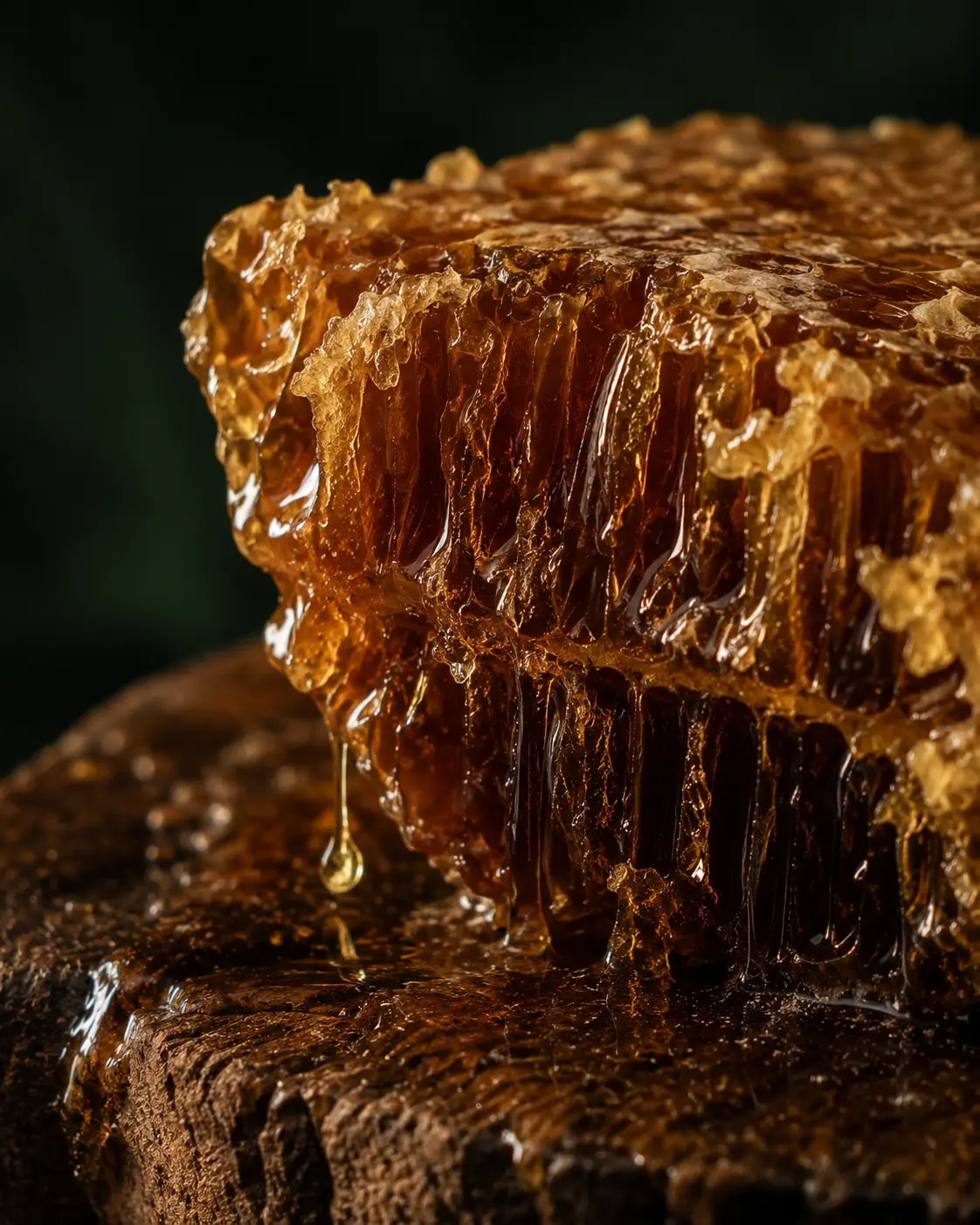 Sidr comb · winter harvest
“Honey is the memory of the earth.”
— The House of Meski
Rarity
A season no one commands
The Sidr flowers briefly in autumn, when almost nothing else in the wadi does. What the rain and the heat decide in those few weeks defines the entire prized production of the year.
Why it cannot scale
The trees are wild, the valley is one, and the bloom obeys the rain. No planting programme reproduces a canyon.
Beekeeping
Nomads of the bloom
The Do’ani harvest is the work of nomadic beekeepers, moving their hives from pasture to pasture as the flowering shifts — a transhumance guided by the valley, not by calendar. The Atlas names no families here: the craft belongs to a community, not a brand.
The practice
Bees descended from local colonies, never hybridised. No chemicals, no artificial feeding. Extraction uses the same standard equipment as any modern apiary — smoker, uncapping knife, extractor — nothing more romantic than that; what matters is that nothing is heated or forced ahead of the season.
Sensory reading
A landscape in four movements
Texture
Dense and velvety, slow to crystallise. This reading describes the appellation; it is adjusted after tasting the actual lot presented.
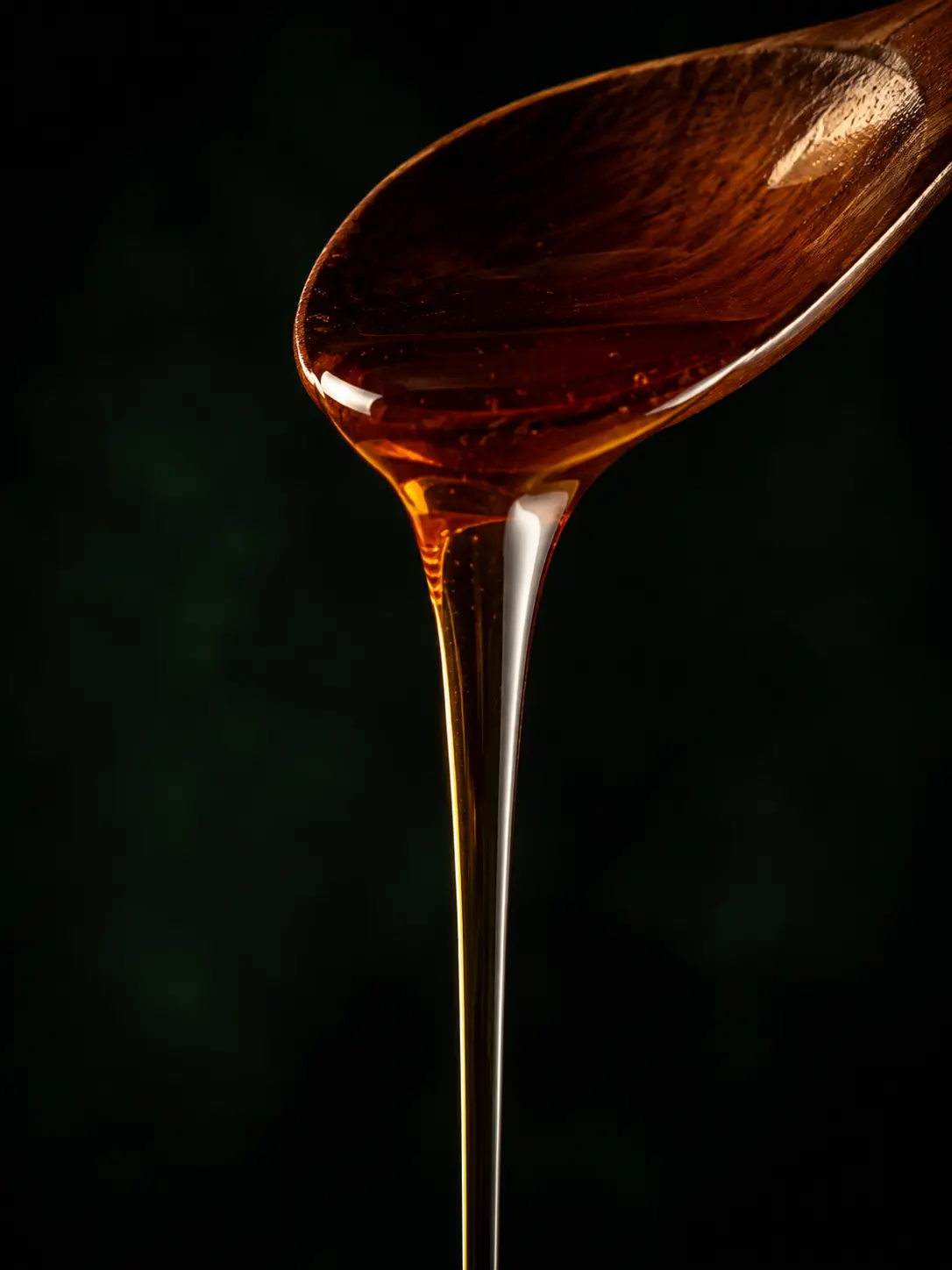
Harvest notebook
From the field — the winter harvest
The descent into the wadi begins before the sun. From the plateau, the villages appear as folded stone; below, the hives have been waiting near the ravines where the last rain still lingers — where the flowering holds a few days longer.
The extraction happens in the coolest hour, with the same equipment used across the valley: smoker, uncapping knife, standard extractor. Nothing about the tools is unusual — what is deliberate is the timing, and the choice never to heat or force the honey out ahead of the season.
By December the valley closes its season. Whatever was gathered in those few November weeks is the year’s entire winter crop — there is no returning for more.
Pairings
How to serve it
Dense enough to hold its own against strong flavours, delicate enough to be lost by heat. Never above 40 °C.
Meski rating
An editorial reading, not a certification
Six criteria of the House, judged in tasting. This rating describes the appellation, is revised for each lot presented, and replaces no analysis or certificate.
Provenance
The Meski Confidence Chain
Confidence in a rare honey does not come from a single certificate. It comes from a chain that stays continuous — from bloom to jar.
Read: How to read a rare honeyAnalysis describes the sample received by the laboratory. It does not automatically prove that every jar sold under the same name comes from that sample. A continuous chain does.
Continue the Atlas
An origin is never an island
Compare not to name a winner, but to understand what place, season and craft shift in the cup.