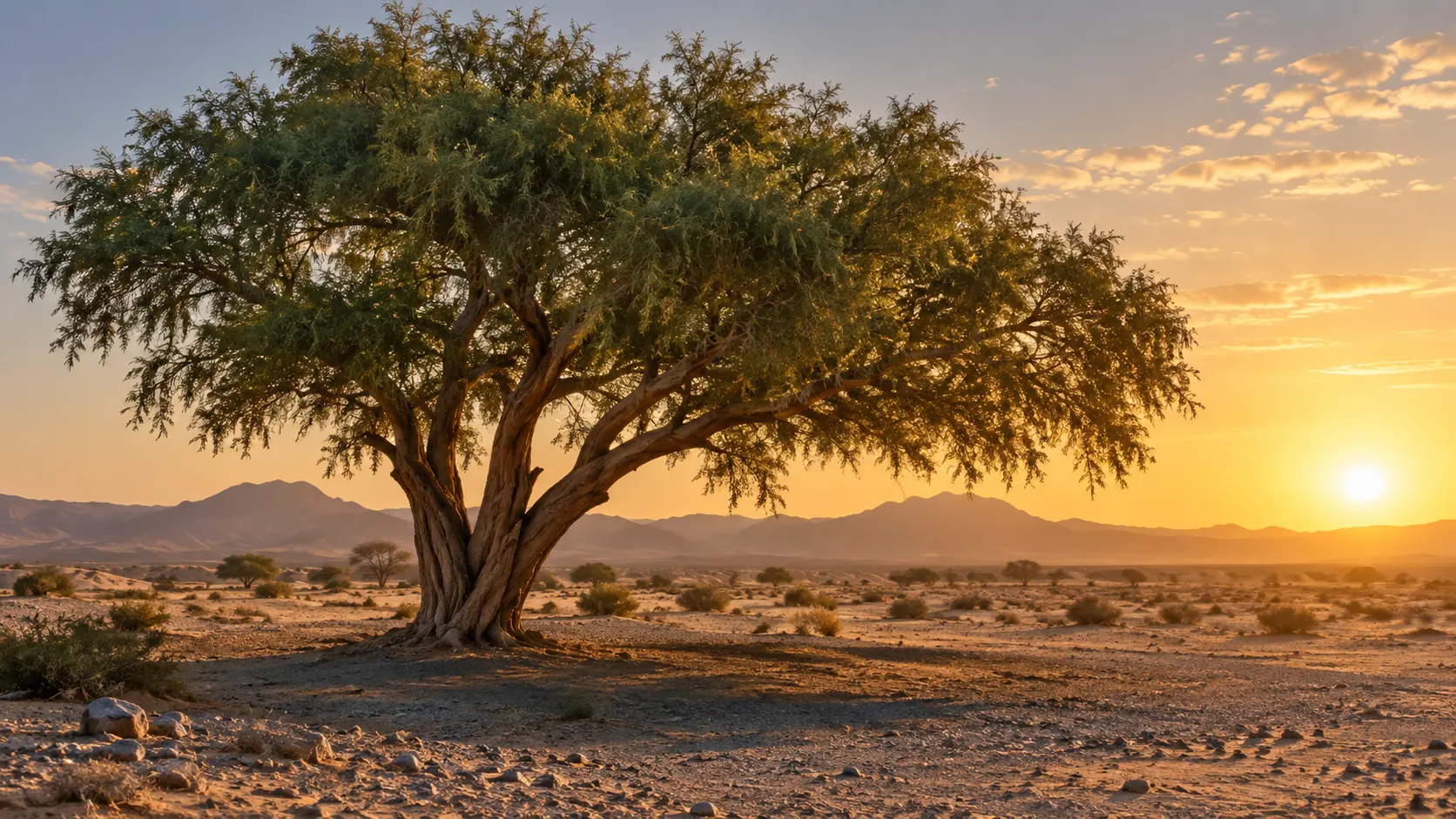
United Arab Emirates · Desert interior · Ghaf groves
Emirati Ghaf
Honey
عسل الغاف الإماراتي
A honey from the UAE’s national tree — desert-born, gently caramelled and more elegant than its austere landscape first suggests.
The ghaf is one of the emblem trees of the Emirates: hardy, deep-rooted and culturally symbolic. Its blossom gives a honey that feels true to the landscape yet unexpectedly smooth, with a flavour profile gentler than many desert honeys.
Terroir
Honey from the shade-giver of the desert
Ghaf grows in the UAE’s dry interior and sandy or gravelly desert zones. Its importance exceeds apiculture: it is a marker of endurance, shade and Emirati ecological memory.
When bees take its nectar, the result is a honey that remains rooted in desert flora without becoming severe. It is one of the friendlier introductions to Gulf monofloral honey.
| Location | United Arab Emirates desert regions and ghaf-growing zones |
| Landscape | Arid desert interior with scattered ghaf trees |
| Floral source | Ghaf tree blossom |
| Harvest | June to July |
| Volume | Seasonal and regionally limited |
“A national tree is interesting. A national tree that gives fine honey is better.“
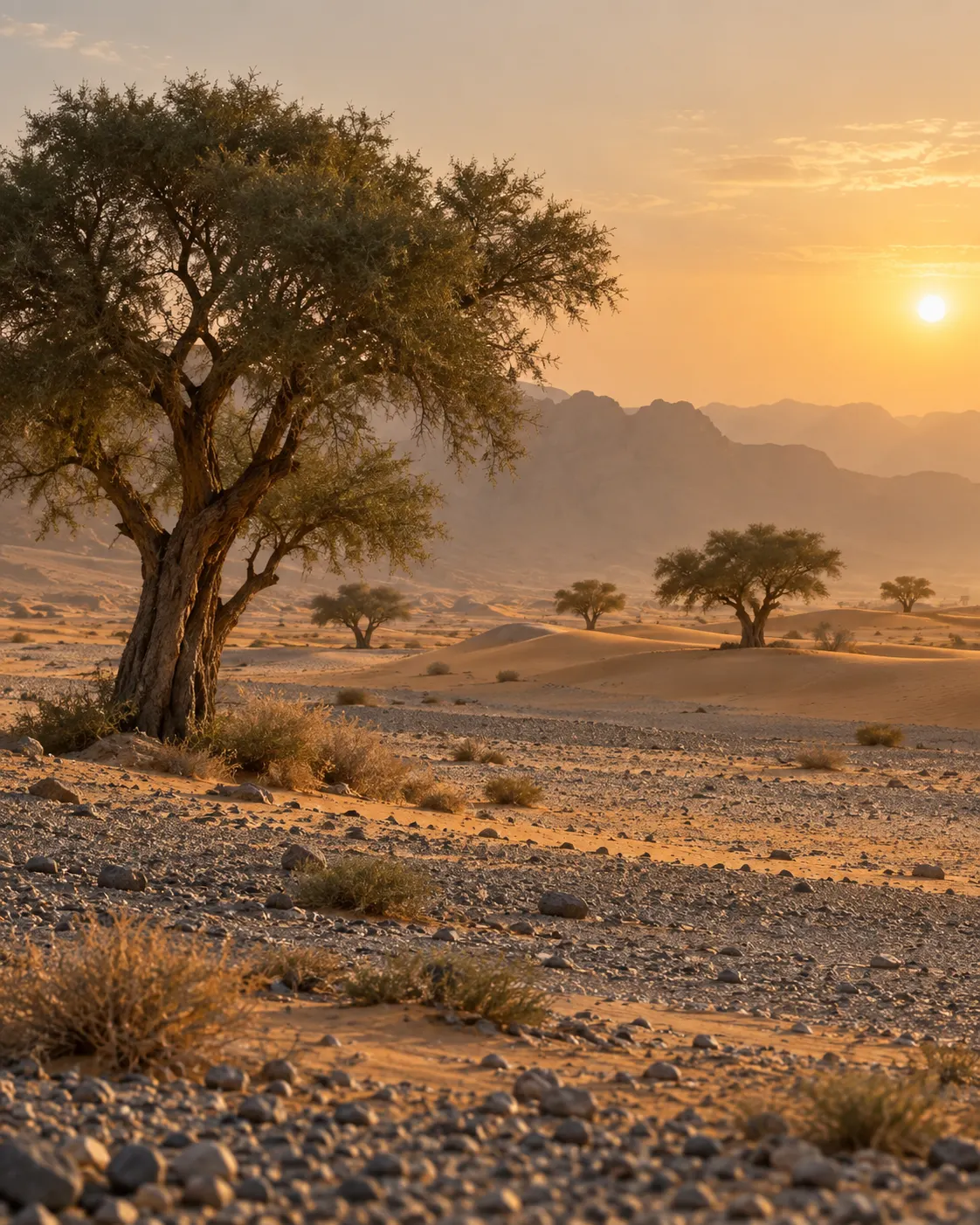 Desert interior · Ghaf groves
Character
Desert, but not austere
Ghaf honey proves that desert honey need not always be dark and stern. It can carry real richness while staying approachable and rounded.
Tradition
A heritage tree turned table honey
Because the ghaf is so symbolically tied to the Emirates, its honey feels like more than a food product. It is one of the clearest ways to taste an iconic tree rather than merely admire it in the landscape.
This gives it a strong Atlas appeal: the tree is culturally loaded, ecologically adapted and organoleptically distinctive without becoming extreme.
Native tree
Native tree
Ghaf anchors desert ecologies and cultural memory in the UAE.
Seasonal bloom
Seasonal bloom
Bees work the flowers in early summer.
Monofloral reading
Monofloral reading
Producers increasingly present ghaf as a named honey origin.
Modern appreciation
Modern appreciation
The honey gains status as a locally rooted Gulf specialty.
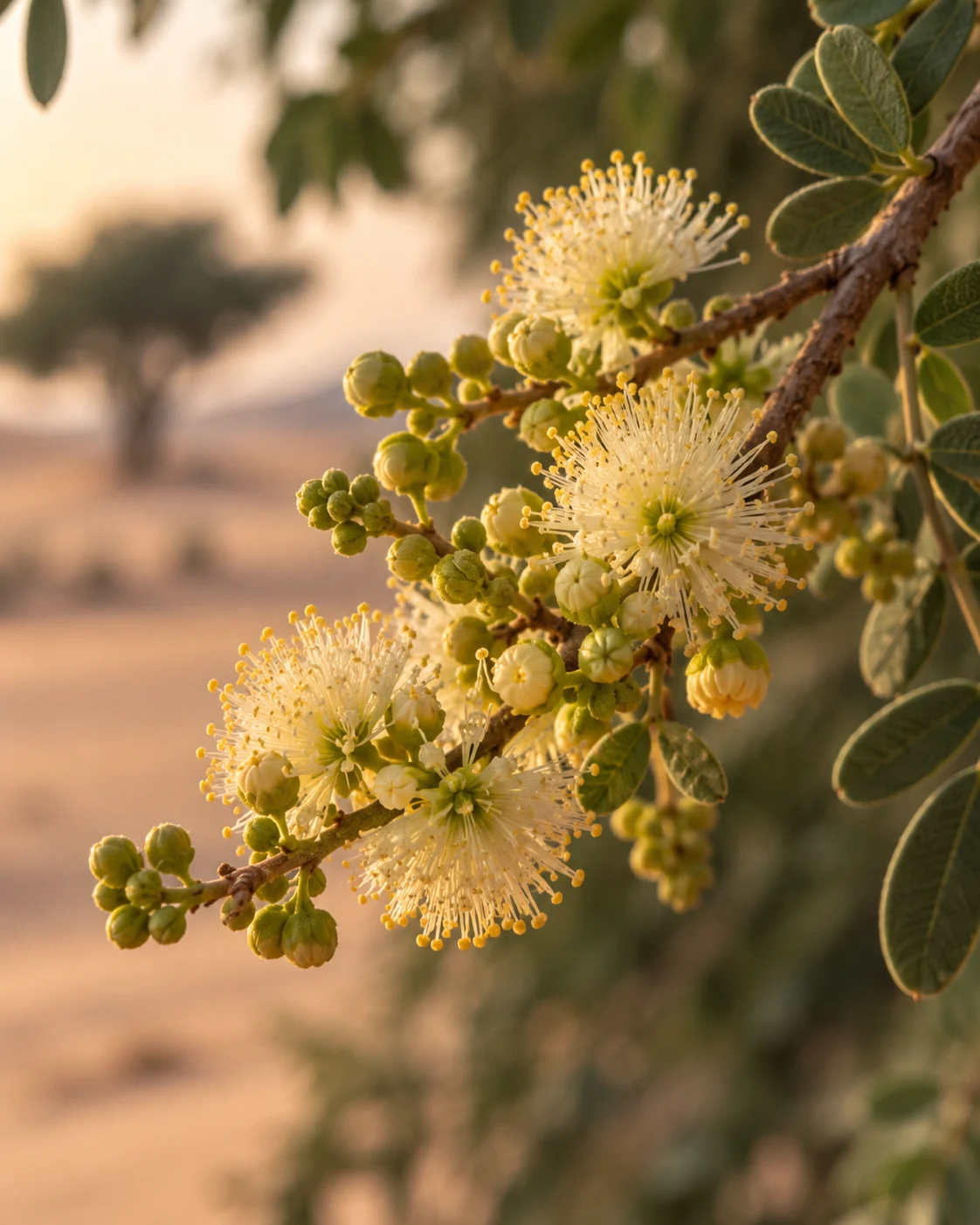 Botanical detail · United Arab Emirates
“The ghaf gives shade in the desert and sweetness at the table.”
— The House of Meski
Rarity
Rare because native trees do not bloom on demand
Ghaf honey remains tied to native tree distribution, hot-climate seasonality and relatively modest production. Its charm lies in authenticity rather than in claims of absolute rarity.
Why it matters
Its cultural resonance amplifies its sensory appeal.
Beekeeping
Reading bloom in the hottest months
To work ghaf is to work with heat. Colonies must be managed carefully through the early summer period, when blossom and temperature coexist under demanding conditions.
The practice
Handled well, the reward is a honey that captures something distinctly Emirati without needing exaggeration.
Sensory reading
A smooth Gulf desert honey
Texture
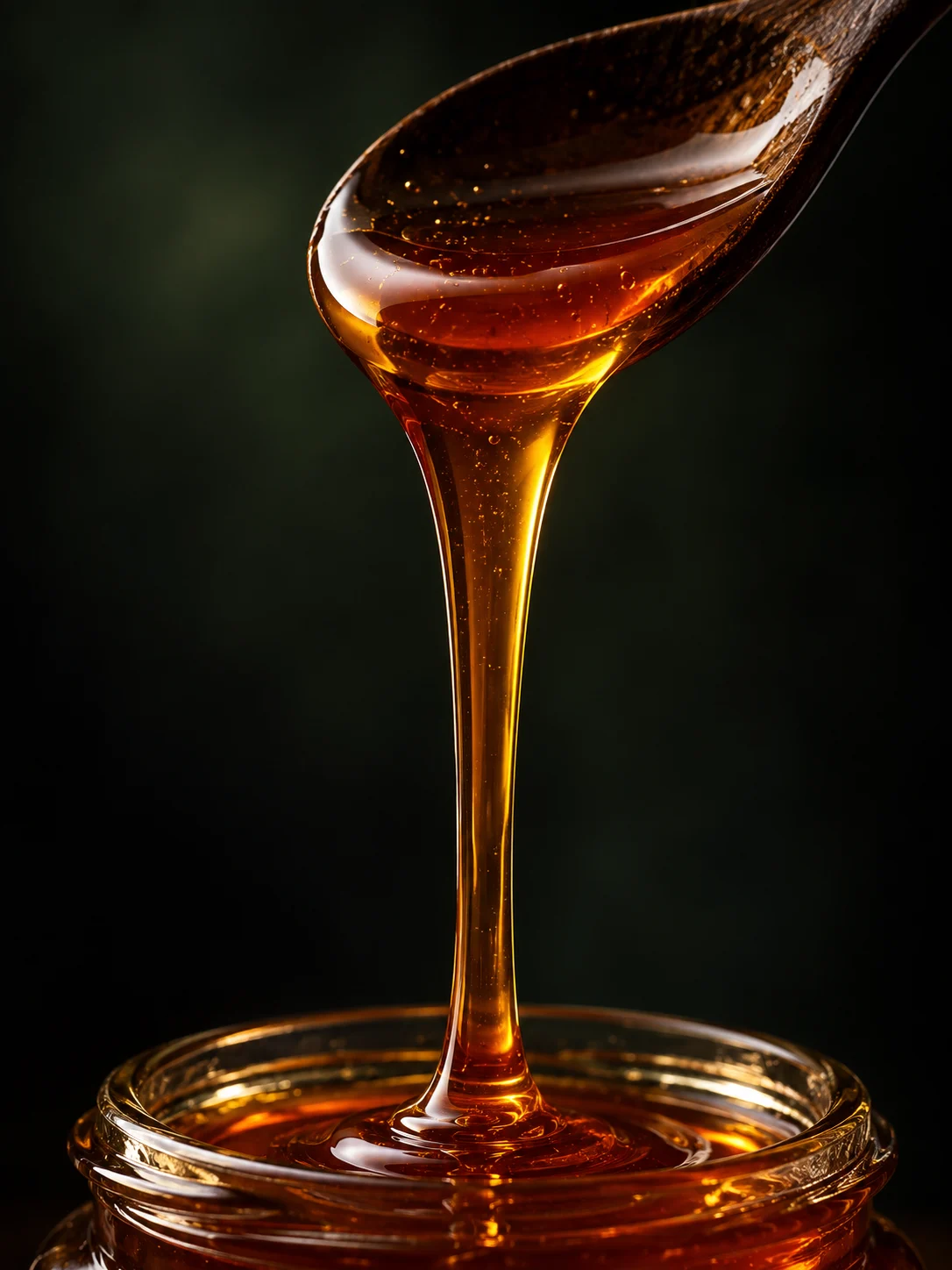
Dense and viscous, yet smoother and friendlier than many darker desert honeys.
Notebook
Tasting notebook
Ghaf honey has heritage in its favour, but it does not need symbolism to succeed. In the cup or on the spoon, it reads as a balanced honey: desert-born, yes, but calm, polished and easy to return to.
Pairings
Ways to serve it
Meski rating
An editorial reading, not a certification
Six criteria of the House, judged in tasting. This rating describes the appellation, is revised for each lot presented, and replaces no analysis or certificate.
Provenance
The Meski Confidence Chain
Rare honey is one of the most counterfeited foods in the world, and named origins are no exception. Confidence does not come from a single certificate — it comes from a chain that stays continuous, from bloom to jar.
Read: How to read a rare honeyAnalysis describes the sample received by the laboratory. It does not automatically prove that every jar sold under the same name comes from that sample. A continuous chain does.
Continue the Atlas
An origin is never alone
Compare not to name a winner, but to understand what place, season and craft shift in the cup.