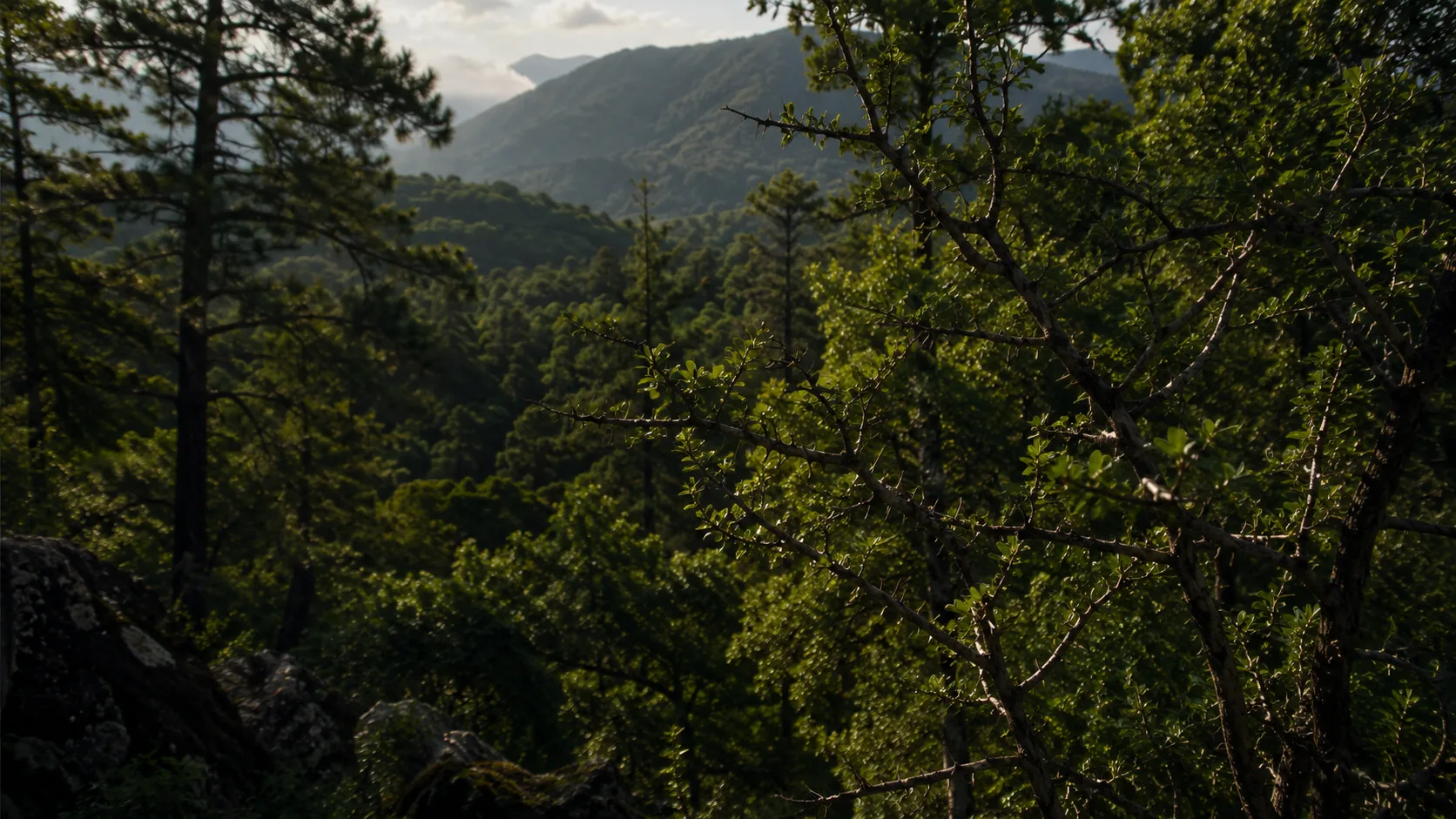
Greece · Macedonia · Mount Belles
Greek
Sidr Honey
عسل السدر اليوناني
The same tree as Yemen’s Sidr — blooming in spring instead of autumn.
In the forests of Mount Belles, in Greece’s far north-east, wild Ziziphus spina-christi grows in a corner of Europe most people would never think to look — and flowers in spring, exactly opposite the season Arabia knows it by.
Terroir
Mount Belles, an unlikely corner of Europe for Sidr
In the forested mountains of Greek Macedonia, near the borders with Bulgaria and Turkey, wild Ziziphus spina-christi grows in isolated forest pockets around Mount Belles and the Polykastro area — the same species that gives Yemen its Sidr, found nowhere else in Europe at this scale.
The bloom here follows Europe’s calendar, not Arabia’s: late spring rather than autumn, a reminder that a tree’s flowering season belongs to its climate, not to the reputation built around it elsewhere.
| Location | Mount Belles and Polykastro area, Macedonia, north-eastern Greece |
| Landscape | Dense forest, protected and biodiverse mountain terrain |
| Tree | Sidr — Ziziphus spina-christi |
| Bloom | Late spring — opposite Arabia’s autumn Sidr season |
| Harvest | Late spring, once a year, tied to a short flowering window |
“The same tree Yemen calls sacred in autumn, Greece simply calls Sidr in May.“
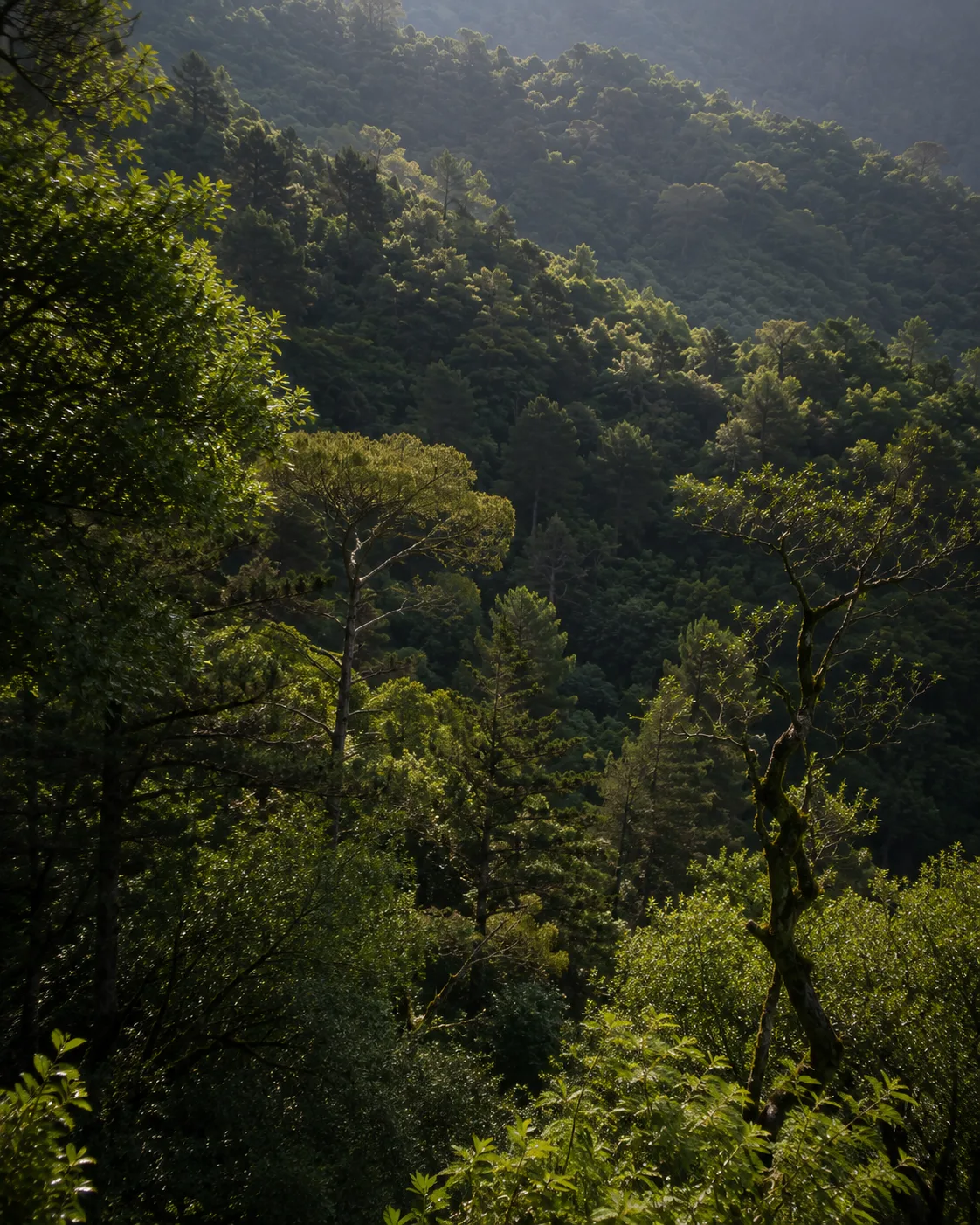 Mount Belles · northeastern Greece
Why this one gets tested twice
Among Europe’s most counterfeited honeys
Sidr’s reputation and price have made it one of the most faked honeys on the European market — jars sold as Sidr that contain little or no Sidr pollen at all. Reputable Greek sources now lab-test every batch for authenticity before it ever reaches a shelf. The Confidence Chain exists because of exactly this kind of risk.
Tradition
A reputation that travelled further than the tree
Sidr’s standing as a prized, near-sacred honey was built in Arabia and the Levant, carried by trade and scripture long before anyone documented the same tree growing wild in the Balkans.
Greek beekeepers who work these forests inherited a market already shaped by that reputation — and with it, the burden of proving a honey grown an ocean of culture away from Yemen is exactly as genuine as its name claims.
Elsewhere first
A reputation built far away
Sidr’s sacred, prized reputation formed in Arabia and the Levant long before its presence in the Balkans was ever documented or harvested.
Long-standing
Wild, and mostly unnoticed
Ziziphus spina-christi grew wild in pockets of Macedonian forest for generations before any beekeeper thought to harvest it specifically.
Recent decades
A market catches up
As Sidr honey’s international reputation and price grew, Greek beekeepers began marketing their own wild harvest under the same name — inheriting both its prestige and its counterfeiting problem.
Today
Verified, batch by batch
Reputable Greek producers now lab-test their Sidr honey as standard practice, a direct answer to a market flooded with imitations.
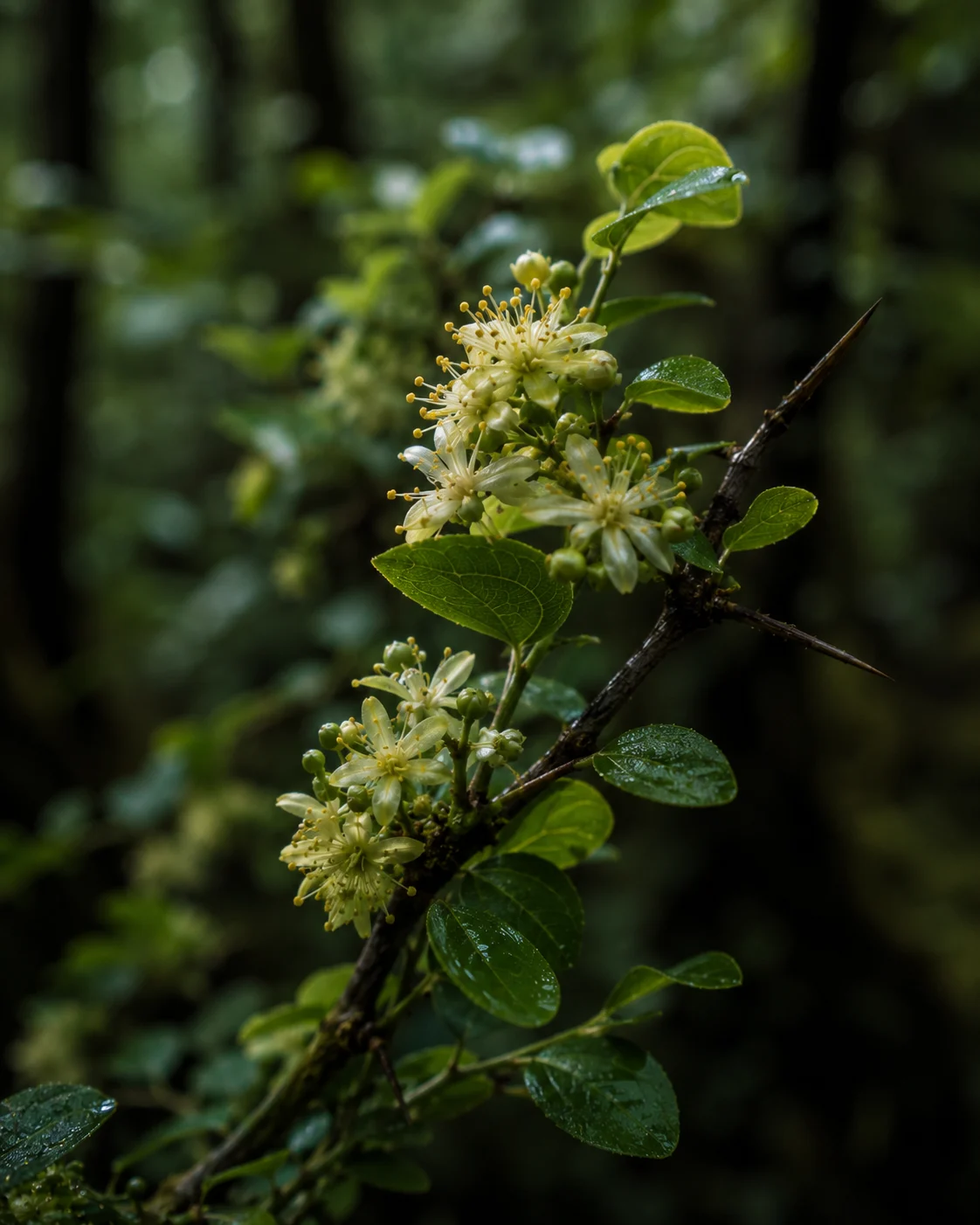 Sidr blossom · Mount Belles
“Plant a flag on a map for Sidr, and this tree quietly ignores it — it never agreed to grow only where Arabia expected it to.”
— The House of Meski
Rarity
Rare for reasons Arabia’s Sidr never had to face
Beyond the usual limits of a brief bloom, Greek Sidr carries an additional scarcity: genuine harvests are small, isolated to a handful of forest pockets, and now compete against a market saturated with honey falsely sold under the same name.
Why it cannot scale
Scarcity here is doubled: a genuinely small wild harvest, competing against an oversupply of honey that only claims to be it.
Beekeeping
Forest apiaries, far from Arabia’s deserts
Beekeepers working Mount Belles and the surrounding forest place hives directly among the wild Sidr stands, in terrain more associated with oak and pine than with the deserts this tree is usually pictured in.
The practice
Extraction uses the same standard modern equipment as anywhere — smoker, uncapping knife, extractor — followed, increasingly, by independent laboratory testing before the honey is ever sold as Sidr.
Sensory reading
Familiar, with a European accent
Texture
Thick and creamy once crystallised, burnt-orange and fluid when fresh — noticeably different in texture progression from its Arabian relatives.
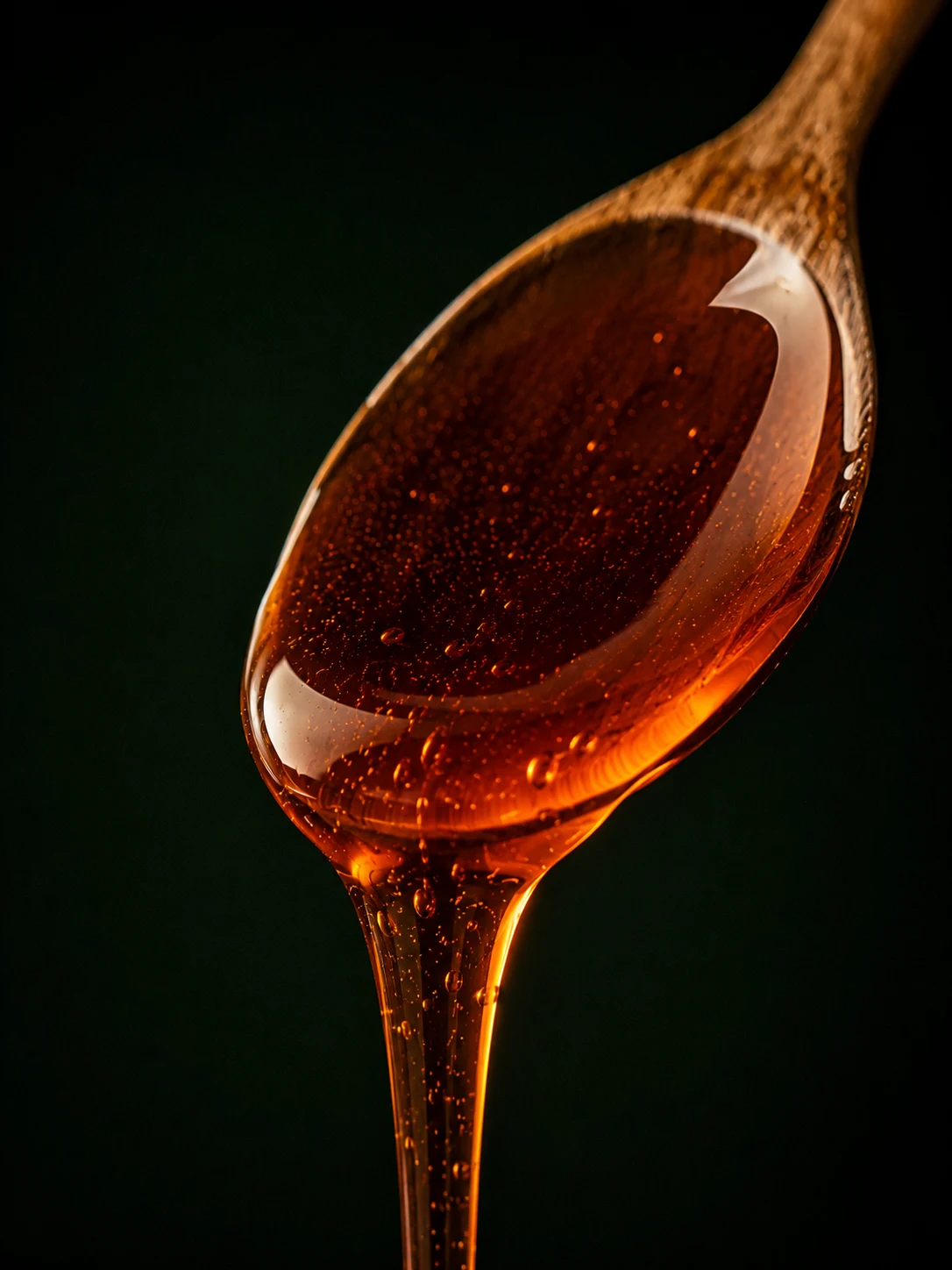
Harvest notebook
From the field — a forest that keeps its own calendar
Most people picture Sidr honey coming from heat and sand. Mount Belles offers neither — dense European forest, cool spring air, a bloom that has nothing to do with Arabia’s autumn rhythm.
Beekeepers here have learned to defend the honey’s authenticity as much as to harvest it, in a market where far more “Sidr” is sold than the wild forests of Macedonia could ever actually produce.
What survives the lab test and reaches a jar honestly is still, unmistakably, the same tree the Qur’an and centuries of Arabian trade made famous — just answering to a different sky.
Pairings
How to serve it
Rich and herbal — treat it with the same respect as its Arabian relatives.
Meski rating
An editorial reading, not a certification
Six criteria of the House, judged in tasting. This rating describes the appellation, is revised for each lot presented, and replaces no analysis or certificate.
Provenance
The Meski Confidence Chain
Rare honey is one of the most counterfeited foods in the world, and Sidr is no exception. Confidence does not come from a single certificate — it comes from a chain that stays continuous, from bloom to jar.
Read: How to read a rare honeyAnalysis describes the sample received by the laboratory. It does not automatically prove that every jar sold under the same name comes from that sample. A continuous chain does.
Continue the Atlas
An origin is never an island
Compare not to name a winner, but to understand what place, season and craft shift in the cup.