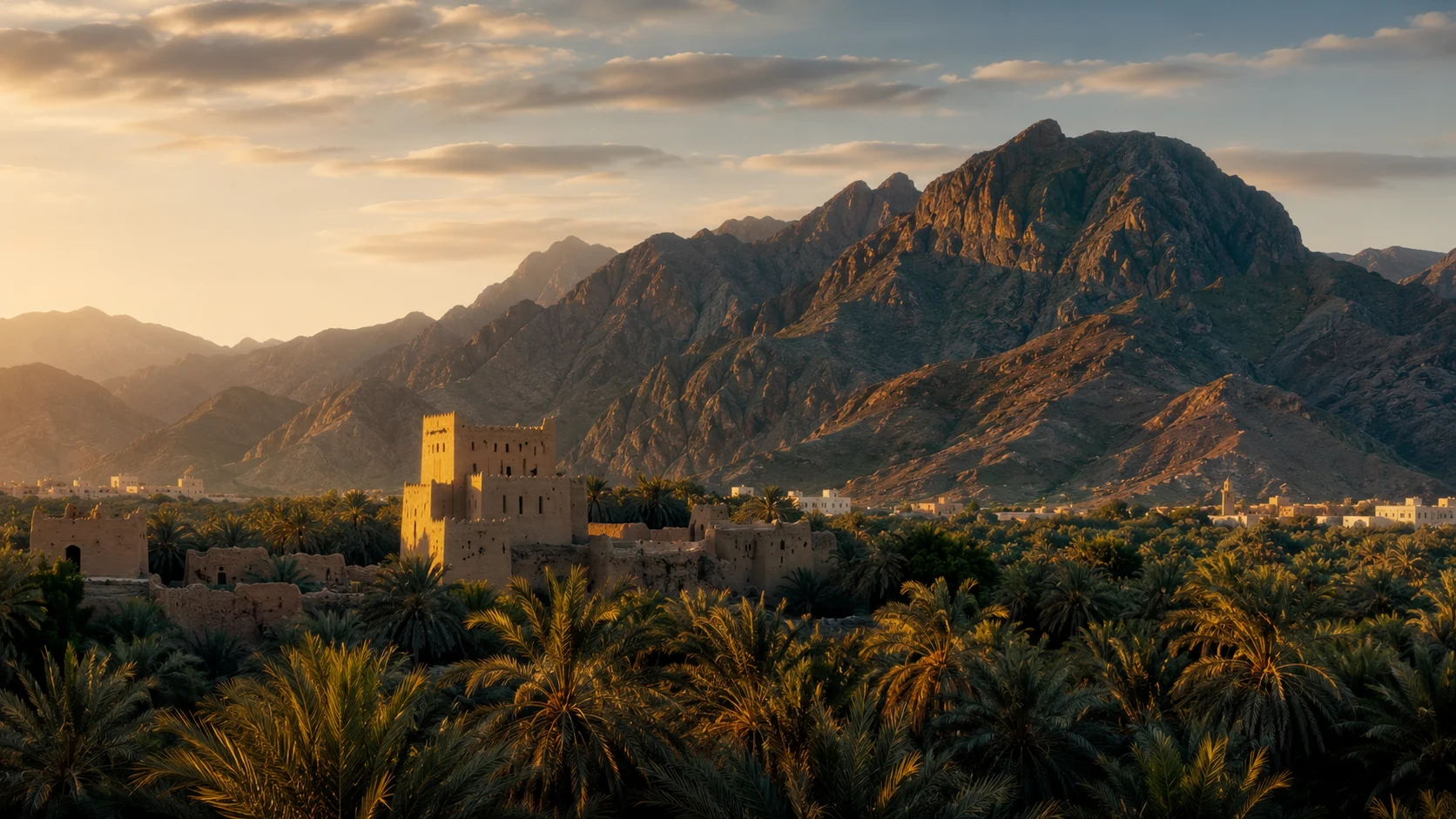
Oman · Nizwa · Al Hajar Mountains
Omani
Sidr Honey
عسل السدر العماني
An oasis city’s honey, gathered hand in hand with the beekeeper who keeps it.
Around Nizwa, where the Al Hajar Mountains meet a centuries-old oasis, Meski works directly with a partner beekeeper — visiting the apiary and, some seasons, taking part in the harvest itself.
Terroir
Nizwa, an oasis built on patience
Nizwa stands among Oman’s most historic cities, its fort and souq built on trade, agriculture and the patience of an oasis economy. Beyond the cultivated palms, wild Sidr trees hold the surrounding mountain and desert terrain.
This honey is sourced through a direct, standing relationship with one beekeeper in Nizwa, not an anonymous market lot — a partnership the House returns to each season rather than re-sourcing from whoever is selling that year.
| Location | Nizwa, Al Hajar Mountains, Oman |
| Landscape | Mountain and desert valleys surrounding a historic oasis |
| Tree | Sidr — Ziziphus spina-christi |
| Bloom | Autumn, following the region’s seasonal rains |
| Harvest | Autumn, typically October to November |
“A relationship kept with one beekeeper is worth more than a market kept open to all of them.“
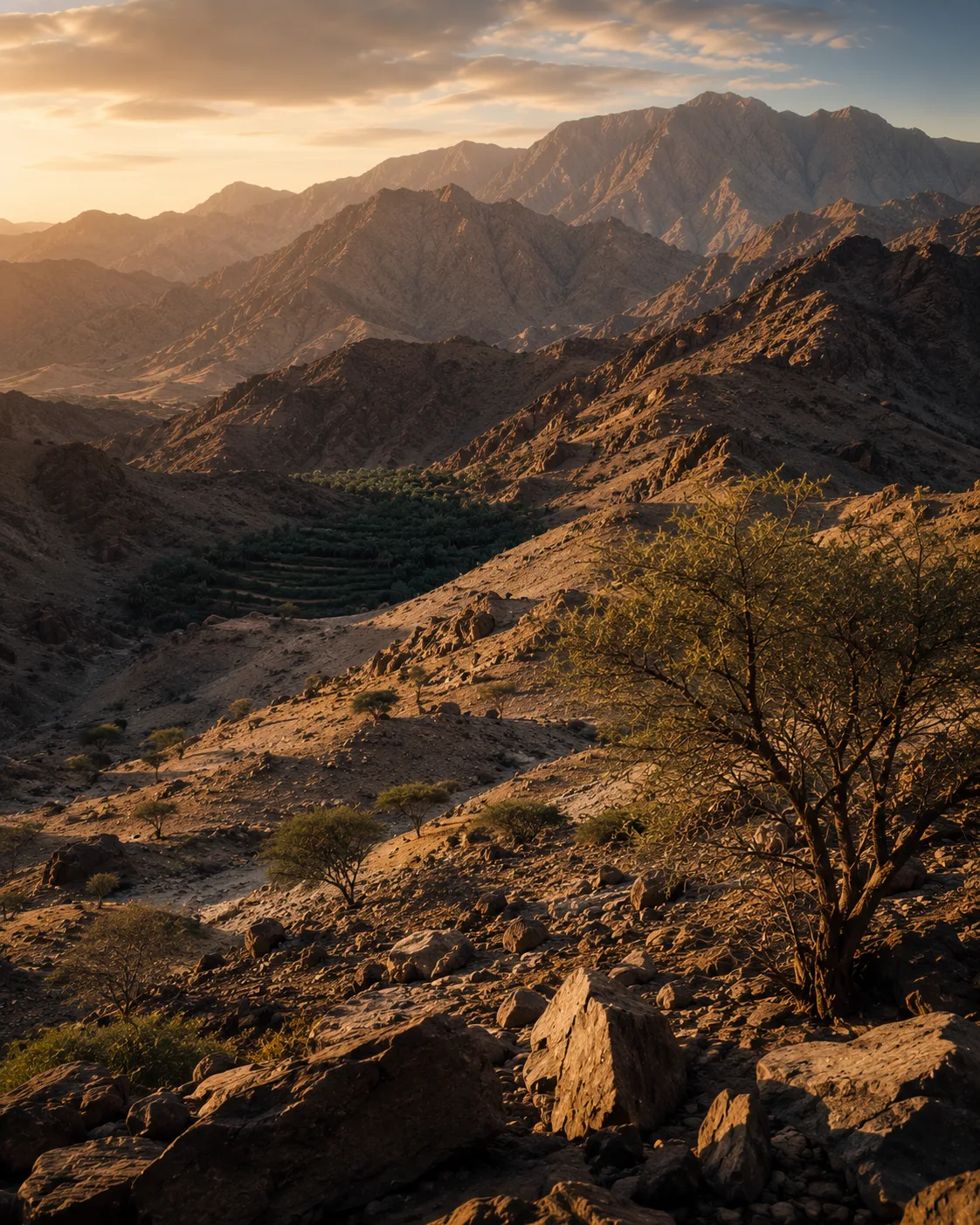 Nizwa · Al Hajar Mountains
Not a market purchase
This Sidr has a relationship behind it, not just a region
Meski does not buy this honey from whoever is selling that season. It comes from one beekeeper in Nizwa, returned to year after year — and when the season allows, visited in person: suit on, hive opened, the comb tasted before a single jar is filled.
Tradition
A city built on continuity
Nizwa’s identity was built on continuity — a fort, a souq and an oasis economy that has run for centuries on patience rather than speed. The honey gathered around it keeps the same rhythm.
Sidr here grows apart from the cultivated oasis, in ground that answers to rainfall long before it answers to anyone’s patience — part of why Meski’s relationship with its beekeeper stays direct rather than mediated.
Centuries
An oasis of continuity
Nizwa’s fort, souq and irrigated groves needed no honey to matter — they had already anchored the region for centuries before any of it travelled beyond the valley.
Beyond the oasis
Wild ground, mountain Sidr
Beyond the cultivated palms, Sidr trees took hold in terrain too harsh for cultivation — the origin of the honey’s depth and concentration.
Ongoing
A direct relationship
Rather than buying anonymously, Meski built a standing partnership with a Nizwa beekeeper, visiting the apiary and, some seasons, taking part in the harvest.
Today
One steady harvest
The same mountains, the same beekeeper, the same autumn rhythm — a Sidr honey the House can trace to a relationship, not just a region.
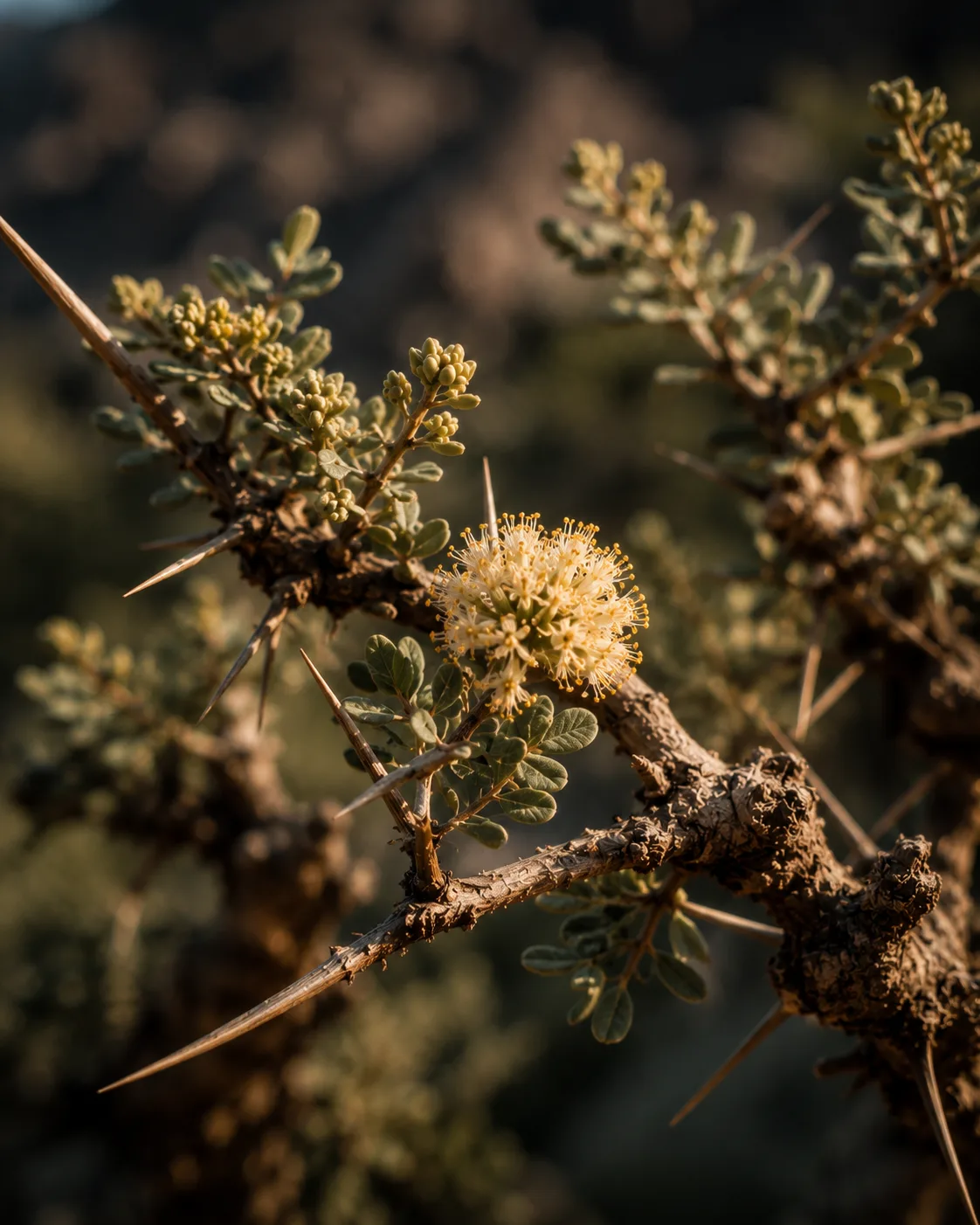 Wild Sidr · Al Hajar Mountains
“Nizwa keeps its treasures underground and in its trees alike.”
— The House of Meski
Rarity
A season decided by one apiary
Sidr blooms once a year around Nizwa, in ground the oasis itself cannot reach. What the beekeeper judges ready is what the House receives — nothing is forced ahead of the season.
Why it cannot scale
The relationship is direct and personal — the House will not trade the beekeeper it knows for a larger, anonymous supply.
Beekeeping
A partnership, not a purchase
This is not honey bought at a distance. When the season allows, the House visits the apiary itself: suit on, hive opened, a comb lifted out and tasted right there, before a single jar has been filled.
The practice
The beekeeper’s own methods decide the process here, not a House standard — raw, unpasteurised, shaped by mountain air rather than coastal humidity.
Sensory reading
Depth built by distance from the coast
Texture
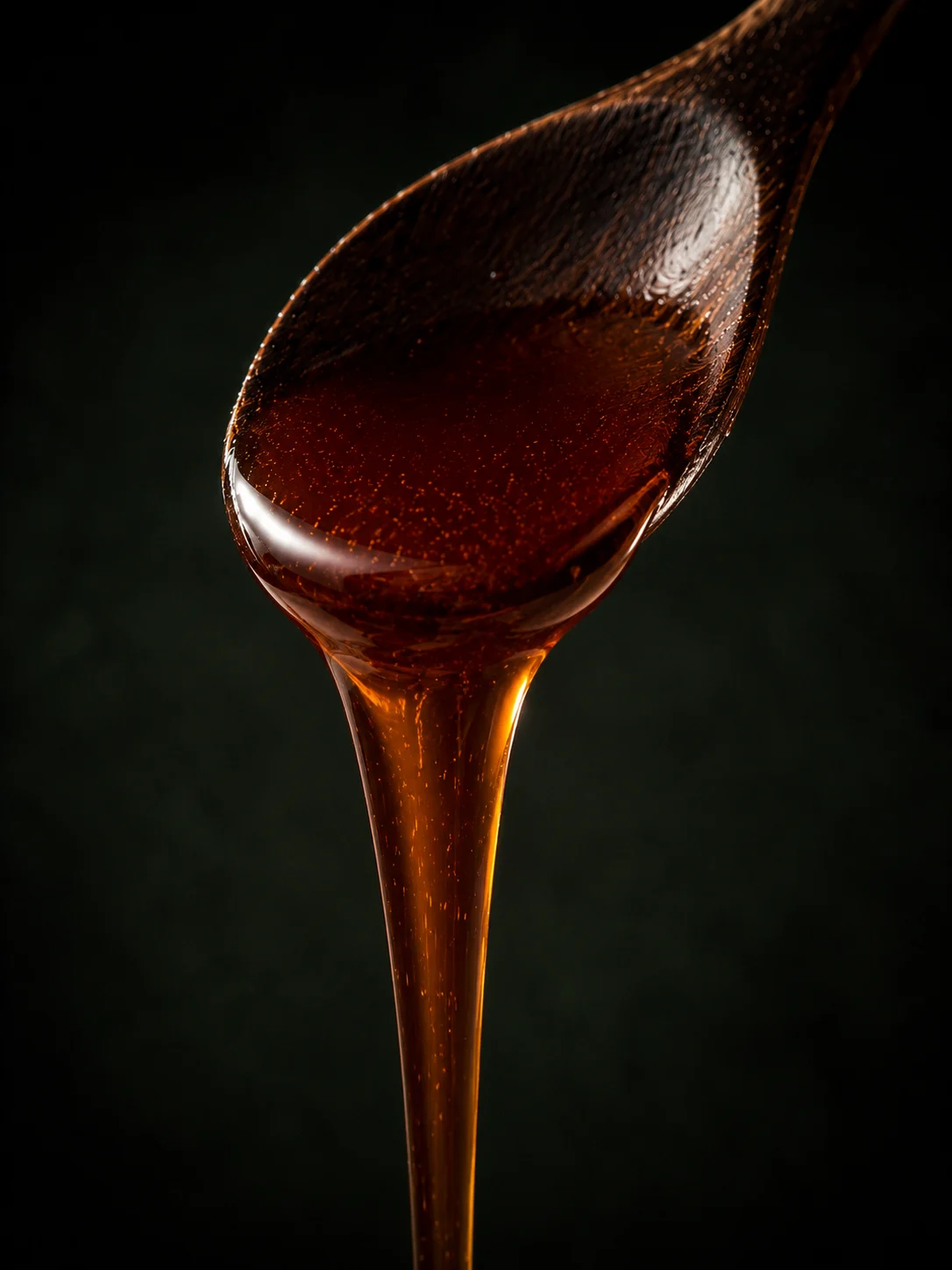
Velvety and slow-moving on the spoon — a honey built for lingering, not rushing.
Harvest notebook
From the field — a season shared with the beekeeper
Some years, the visit to Nizwa is more than a formality. Meski has stood at the apiary as the combs come out, taking part in a harvest it could just as easily have received by courier.
Some years the lot is generous, some years it is thin — the mountain doesn’t negotiate, and neither does the beekeeper, who alone decides when the bloom has truly finished.
What travels back is a honey inseparable from the hands that made it: not anonymous, not interchangeable, and not available at just any scale.
Pairings
How to serve it
Bold enough to lead a plate, not merely finish one.
Meski rating
An editorial reading, not a certification
Six criteria of the House, judged in tasting. This rating describes the appellation, is revised for each lot presented, and replaces no analysis or certificate.
Provenance
The Meski Confidence Chain
Confidence in a rare honey does not come from a single certificate. It comes from a chain that stays continuous — from bloom to jar.
Read: How to read a rare honeyAnalysis describes the sample received by the laboratory. It does not automatically prove that every jar sold under the same name comes from that sample. A continuous chain does.
Continue the Atlas
An origin is never an island
Compare not to name a winner, but to understand what place, season and craft shift in the cup.