
A definitive editorial guide that reframes the age-old debate — not as a competition, but as an invitation to understand the language of flowers, terroir, and the stories that live inside every jar of raw honey.
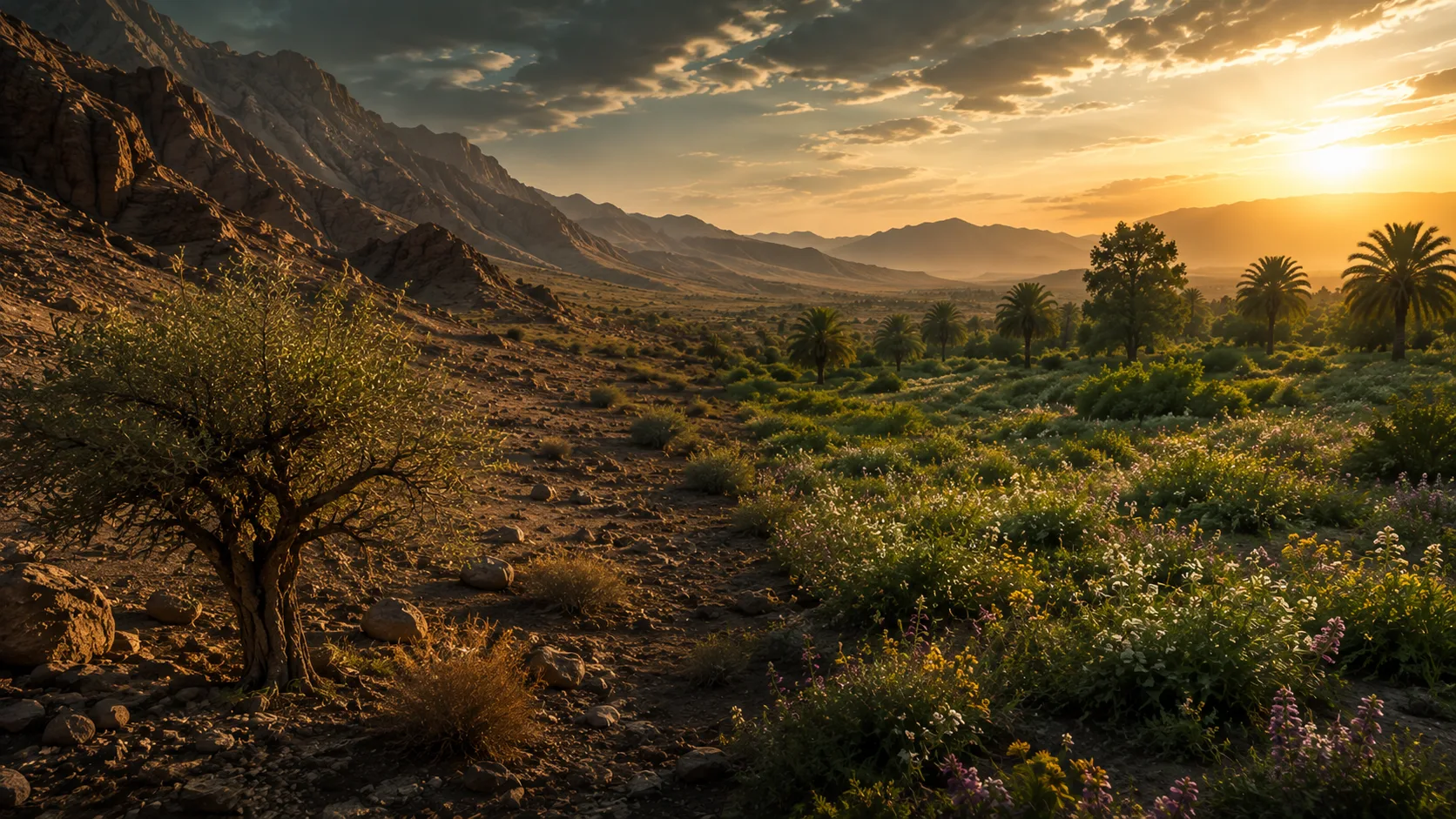
Monofloral vs multifloral honey — the question surfaces endlessly among thoughtful honey lovers. But framing it as a competition misses the point entirely. At its finest, honey is a record of a landscape, a season, a tree in bloom. Whether the flowers behind your jar belong to a single ancient species or to a chorus of wild plants, each tells a fundamentally different story. This guide gives you the clarity, context and vocabulary to choose with confidence.
What Is Monofloral Honey?
Monofloral honey — sometimes called single-origin honey — is produced when honeybees forage predominantly from the blossoms of a single plant species. The word predominantly matters: bees are not botanists bound by rules, and a truly exclusive single-source harvest is exceedingly rare. In practice, a honey earns its monofloral designation when one nectar source makes up the dominant proportion of its pollen signature — typically verified through melissopalynology, the microscopic analysis of pollen grains.
The Science of Single-Source Nectar
What makes monofloral honey distinctive is not merely its origin story — it is its chemistry. The nectar of each plant species carries its own ratio of fructose to glucose, its own suite of phenolic acids and flavonoids, its own volatile aromatic compounds. When bees return almost exclusively to one flower, the resulting honey reflects that botanical signature with unusual precision. A higher fructose-to-glucose ratio tends to produce a honey that remains liquid longer and carries a slightly fruitier, more complex sweetness. A glucose-dominant honey, by contrast, crystallises more readily — a characteristic that, far from being a flaw, is among the clearest signs of raw, unprocessed authenticity.
Notable Monofloral Varieties
The world of monofloral honey is vast, but some varieties have earned near-legendary status among connoisseurs:
Sidr — Ziziphus spina-christi
Harvested from the ancient lote tree across Yemen, Oman and the Emirates, Sidr honey is arguably the most prized monofloral in the Arab world. Its flavour profile is rich and velvety — warm notes of caramel, dried fruit and a smooth, lingering finish — the product of bees foraging in remote mountain valleys during a brief and closely guarded blooming season.
Manuka — Leptospermum scoparium
Originating in New Zealand, Manuka honey has achieved global recognition for its concentrated phytochemical profile and its intensely earthy, herbaceous taste.
Acacia — Robinia pseudoacacia
Pale, almost crystalline in its clarity, acacia honey is among the most delicate of monoflorals — prized for its light floral sweetness and its tendency to remain liquid for extended periods.
Corsican AOC Honey
Protected by French appellation law, Corsican honey reflects the island’s extraordinary botanical diversity — a category that includes both monofloral and highly specific multifloral expressions tied to protected territory.
What Is Multifloral Honey?
Multifloral honey — also called polyfloral or wildflower honey — is the natural result of bees foraging freely across a diverse landscape. Rather than returning predominantly to a single species, the colony visits dozens of flowering plants across a season, producing a honey whose botanical composition changes with the terrain, the altitude, the rainfall and the time of year.
The Beauty of Botanical Diversity
Where monofloral honey is an aria — one clear, sustained voice — multifloral honey is a choir. Its phytochemical profile is broader by definition: bees visiting many species accumulate a wider range of phenolic acids, flavonoids and aromatic compounds. A 2022 systematic review published in Nutrition Reviews noted that the multi-source botanical origin of wildflower honey gives it a particularly broad spectrum of polyphenolic compounds — a richness that follows directly from its diversity of origin. Flavonoids such as quercetin, kaempferol, pinocembrin and chrysin — compounds with well-documented antioxidant properties in peer-reviewed research — have been identified in significant quantities in multifloral raw honeys.
A note on antioxidant claims
The flavonoids mentioned above are naturally occurring plant compounds documented in independent scientific literature. No curative or therapeutic properties are implied. Always consult a qualified healthcare professional for medical advice.
Why No Two Batches Are Ever the Same
This is, perhaps, multifloral honey’s most poetic quality: it is never exactly replicated. A jar harvested in the foothills of the Hajar Mountains in spring will taste nothing like one gathered from the same region in autumn. The colour shifts — from pale amber to dark molasses — with the seasonal rhythm of bloom. This variability is not inconsistency. It is the honest record of a living landscape. For the collector, the food lover, the host preparing a table, multifloral honey is a source of perpetual discovery.
Different Flowers, Different Experiences
At the heart of the monofloral vs multifloral honey question lies a deeper truth about the nature of taste: it is always contextual. The flowers that produced your honey did not simply provide sugar. They gave it character, a palette, a sense of place.
Raw Sidr from Hadramawt
Arrives thick and amber-dark, its warmth already perceptible before it reaches the tongue — a slow, enveloping sweetness threaded with something almost resinous. The signature of the ancient lote tree.
Yemeni Mountain Multifloral
May begin bright and floral, evolve through layers of wild thyme and mountain sage, and close with a clean, dry finish that speaks directly of high altitude and open sky.
Omani Sidr
Shares lineage with its Yemeni counterpart but carries subtly distinct mineral notes — the difference that terroir makes. Same flower. Different story. Discover our Omani Sidr Honey.
Taste, Aroma and Texture: A Practical Comparison
For the practical buyer, the sensory differences between monofloral and multifloral honey are the most immediate point of reference.
| Characteristic | Monofloral Honey | Multifloral Honey |
|---|---|---|
| Flavour | Focused, bold, with a clear botanical signature | Multi-layered, evolving, rarely reducible to a single note |
| Aroma | Distinctive and recognisable — one learns to associate it with a specific tree and region | Complex, less predictable; different batches offer different olfactory stories |
| Texture | Often greater viscosity (Sidr); deliberately slow-flowing, almost creamy | Generally lighter in body; may crystallise readily — a reliable marker of raw authenticity |
| Terroir expression | Precise — one species, one location, one season | Broad — a landscape portrait rather than a botanical close-up |
| Batch consistency | High within a single harvest | Varies by season — a feature, not a flaw |
| Typical price point | Higher for rare varieties (Sidr, Manuka) | Variable — premium small-batch can rival monofloral pricing |
Which Honey Should You Choose?
The answer depends on the occasion — and on what you are seeking from your jar.
Choose monofloral when…
You are presenting a gift that must speak of rarity and intention. A jar of raw Do’ani Sidr Honey or our Emirati Sidr Honey Infused with Gold carries the weight of ancient tradition and genuine scarcity. Choose monofloral also when you wish to taste a specific place with as little interference as possible between the blossom and your spoon — or when you are building a pantry of exceptional single-origin ingredients, in the same spirit as a rare olive oil or a single-estate cacao.
Choose multifloral when…
You value complexity and the pleasure of seasonal variation. Choose multifloral also when you are looking for an everyday table honey with genuine character — something worthy of the morning bread, the late-night herbal tea, the cheese plate that deserves more than a generic drizzle. Or when you wish to support a broader spectrum of plant diversity and traditional apiculture tied to a specific ecosystem. Our Corsican Honeydew Honey AOP is a compelling example of multifloral expression at its most refined.
What Really Separates Exceptional Honey from Ordinary Sweetener
There is no hierarchy in nature’s pantry. The Sidr tree that blooms for only a few weeks each year and the mountain meadow that bursts open in a hundred colours at once are both, in their own way, miraculous. The honey they give us carries that miracle forward.
What matters most is not whether your honey is monofloral or multifloral. What matters is whether it is raw, unfiltered, honestly sourced, and made by bees working in landscapes that have not been compromised. Those criteria separate exceptional honey from ordinary sweetener — regardless of the category on the label.
The next time you open a jar, take a moment before you reach for your spoon. Hold it to the light. Notice the colour. Open the lid and let the aroma come to you first. Ask yourself: what flowers made this? Whatever the answer, you are holding something that cannot be replicated by any factory, at any price.
Explore the Meski Honey Collection
From single-origin Sidr sourced across Yemen, Oman and the Emirates to AOP-protected Corsican expressions — every jar in our collection is raw, traceable and chosen with uncompromising care for provenance.
Frequently Asked Questions about Monofloral and Multifloral Honey
Not as a rule, but rare monofloral varieties — particularly Sidr from Yemen or high-grade Manuka — command a premium because of the short harvest window, the specificity of sourcing and the difficulty of verification. Premium multifloral honeys from protected or biodiverse landscapes can also be expensive, especially when raw and small-batch.
Through melissopalynology — the laboratory analysis of pollen grains suspended in the honey. A qualified botanist examines the pollen composition under a microscope to determine which plant species are dominant. Reputable producers of monofloral honey, including Meski Dates Factory, provide traceability documentation based on this analysis.
Not exactly. Two Sidr honeys — one from Yemen, one from Oman — may share the same botanical source, but the altitude, microclimate, soil and beekeeping practices of each region leave a distinct mark on the final product. This is the concept of terroir applied to honey: the same flower, but a different story.
Crystallisation is a natural and desirable process in raw honey. It occurs when glucose molecules gradually form crystals — a process accelerated by lower temperatures and a higher glucose-to-fructose ratio, both common in raw wildflower honey. Far from indicating impurity, crystallisation is one of the most reliable indicators that a honey has not been heated or heavily processed. Gently warm the jar in a water bath to return it to a liquid state without compromising its integrity.