
Qatar’s food market gives access to the world’s finest honeys — but only if you know what to look for.
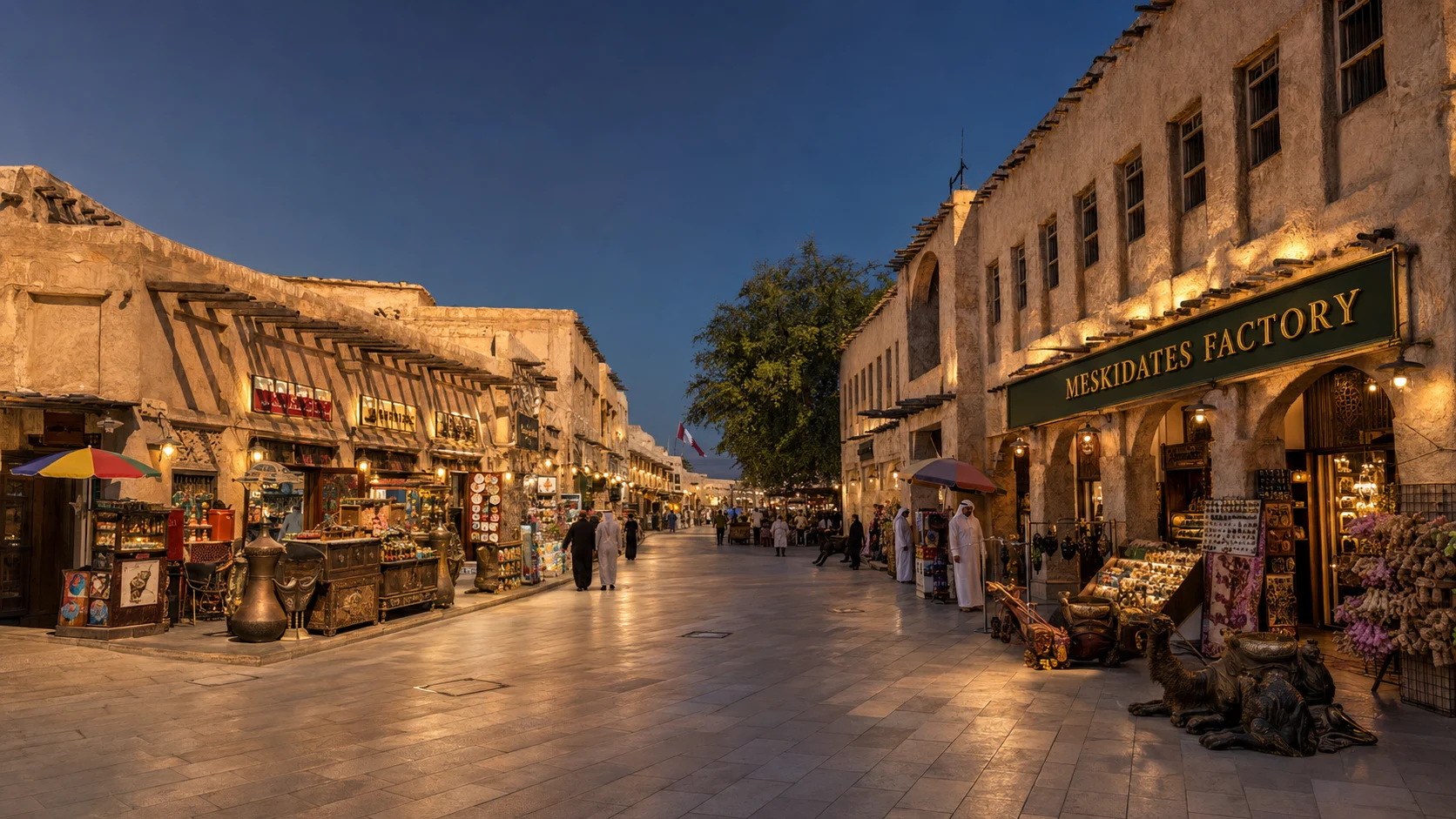
Qatar has become one of the Gulf’s most discerning markets for premium raw honey. Whether you are searching for Sidr honey in Doha, a meaningful Ramadan gift, or simply the most authentic honey available in Qatar, this guide gives you the knowledge to choose with confidence — and to avoid the pitfalls that catch most buyers.
Why Qatar Has Become a Premium Honey Market
Doha’s role as a global crossroads has shaped its food market in ways that few cities can match. With a cosmopolitan resident population, a culture of generous hospitality, and a deep-rooted tradition of offering fine food as an expression of respect, Qatar has developed a genuine appetite for premium ingredients — and honey sits squarely within that appetite.
The Qatari majlis — the formal receiving space where guests are welcomed, tea is served, and conversation flows across generations — is not a setting where an ordinary jar of supermarket honey would feel appropriate. Families who take their hospitality seriously look for products that carry provenance, character, and story. Honey given as a gift during Ramadan, offered to a guest on a date with a cup of qahwa, or chosen as part of a ceremonial basket, carries meaning beyond its ingredient value.
Qatar’s international food retail infrastructure has responded accordingly. In January 2026, the seventh edition of the Souq Waqif International Honey Exhibition drew over 150 companies specialising in honey and honey products, representing participants from more than 37 countries. That a honey-specific exhibition of that scale can sustain seven annual editions in Doha is itself an indicator of where this market stands.
How to Choose Authentic Honey in Qatar
The single most useful piece of advice for any honey buyer is to shift your attention away from packaging and toward provenance. A beautifully designed jar with gold lettering tells you nothing about what is inside it. A producer who can tell you which valley, which beekeeper, and which season produced their honey is telling you everything.
Start with the source, not the shelf
Look for suppliers who work with named, consistent sources. Reputable honey producers in the Gulf region will typically be able to identify the country of origin, the plant species from which the nectar was gathered — what specialists call the floral source — and the approximate harvest period. The further a supplier is from that information, the further you probably are from genuine quality.
Direct relationships matter. A house that sources its Omani Sidr honey from a single beekeeper in the Al Hajar Mountains — visiting the apiary, participating in the harvest — has something fundamentally different to offer than a distributor assembling bulk honey from multiple unnamed origins and relabelling it under a premium aesthetic.
The Souq Waqif Honey Exhibition — what it tells us
The Souq Waqif International Honey Exhibition is worth attending, not simply for purchasing, but for education. Walking through an exhibition where over a hundred producers have gathered their products side by side makes visible something that is easy to overlook when buying online or from a single shop: the extraordinary diversity of what honey actually is. Amber Sidr honeys so thick they barely move; lighter acacia honeys from Central Asia; dark, mineral European forest honeys; fresh-smelling Manuka with its distinctive depth.
That diversity is also a reminder that no single honey is best in absolute terms. The question is always: best for what purpose, at what moment, for whom?
Understanding Honey Labels
Labels are designed by marketing departments. The front of a honey jar is built to appeal to your instinct about naturalness and quality. The back of the jar — the ingredients list, the country of origin, the producer name — is where the real information lives. Most buyers never flip the jar.
What ‘raw’ actually means
The word raw on a honey label means the honey has not been heated above the natural temperature of a hive — roughly 35 to 40 degrees Celsius — and has been minimally processed, typically strained only to remove wax and hive debris rather than finely filtered. This matters because heat destroys the enzymes, pollen particles, and aromatic compounds that give genuine honey its complexity and much of its nutritional character.
Raw honey will often appear slightly cloudy, may crystallise over time (a sign of quality, not spoilage), and will vary in colour from one harvest to the next. A honey that is perfectly clear, uniformly smooth, and looks identical jar after jar has almost certainly been pasteurised and fine-filtered — standard industrial processing that produces a visually consistent product but significantly diminishes what makes honey worth paying for.
Important nuance on the word “raw”
The term raw is not universally regulated. It depends on the honesty of the producer. This is why sourcing matters as much as labelling.
Words that sound meaningful but are not regulated
Natural, pure, organic, and premium are marketing terms. In most markets — including Qatar — they carry no specific legal definition for honey unless accompanied by a recognised certification. Pure simply means no other ingredients have been added, which is a baseline standard, not a mark of distinction. Organic certification for honey is technically complex and should be treated with scepticism unless the certifying body is named and verifiable.
Monofloral is a more precise and meaningful term. It indicates that the honey was gathered predominantly from a single plant species — Sidr, acacia, thyme, or another — giving it a distinct flavour profile. However, even monofloral claims require trust in the producer’s traceability, since a pollen analysis conducted by an independent laboratory is the only certain verification.
The one label check that always matters
Check the ingredients
The list should contain exactly one ingredient: honey. If you see glucose syrup, sugar, or any other addition, the product is not pure honey.
Check the country of origin
A single named country — Yemen, Oman, New Zealand — is a better sign than a generic label reading “product of more than one country.”
Check the producer’s name
“Produced and bottled by” is a significantly stronger indicator of traceability than “packed by” or “distributed by,” which tell you only about the final step in a chain you cannot see.
What Makes a Premium Honey — and How to Recognise It
Sidr honey from Yemen and Oman
Within the Gulf’s honey culture, Sidr honey occupies a position of particular reverence. The Sidr tree — Ziziphus spina-christi — grows across Yemen, Oman, and parts of the UAE and Saudi Arabia. Its flowering is seasonal and brief, typically in autumn, and the nectar it produces is extraordinarily rich. The honey gathered from Sidr blossoms has a density and aromatic depth that set it apart from most commercially available varieties.
Do’ani Sidr Honey
Regarded among specialists as one of the most exceptional raw honeys in the world. Dark amber colour, very thick consistency, complex aroma with notes of caramel, warm wood, and dried fruit — with an aftertaste that lingers for several minutes. The harvest is annual, the quantities are finite, and the price reflects this.
Omani Sidr Honey
Bold and caramel-rich, with a slightly resinous warmth and a long, generous finish. Gathered once a year from hives kept by beekeepers who have inherited both their knowledge and their locations from generations before them.
Colour, texture and aroma as honest indicators
Premium single-origin honey is inherently variable. Its colour will shift between harvests depending on season, rainfall, and the precise timing of flowering. A Sidr honey from one autumn will not look identical to the same beekeeper’s honey from the following year. This variation is not a defect — it is proof of genuine origin.
Texture is one of the most reliable sensory indicators. Raw Sidr honey is noticeably viscous; when you tilt a jar slowly, the honey should move with deliberate slowness, then drape rather than drip. Aroma should be immediate and complex when you open the jar — not simply sweet, but layered, with floral, woody or earthy notes depending on the variety.
Price as a signal of reality
Honey production is labour-intensive. A beekeeper who harvests once a year from mountain hives, who extracts by hand and never heats his product, has a cost structure that simply cannot support the prices of industrial honey. Genuine Yemeni Sidr from a documented source has a wholesale cost — before shipping, import duties, packaging, and retail margin — that puts it well beyond the price range of ordinary supermarket honey.
This does not mean that the most expensive honey is always the best. But it does mean that a price that seems too good should be questioned, not celebrated.
| Indicator | Genuine Raw Honey | Processed Honey |
|---|---|---|
| Appearance | Slightly cloudy, variable colour | Perfectly clear, uniform |
| Texture | Viscous, drapes slowly | Runny, pours easily |
| Crystallisation | Natural over time | Rarely crystallises |
| Aroma | Complex, layered, floral/woody | Mild, one-dimensional |
| Label | Single country, one ingredient | “Multi-country” blend |
| Price | Reflects genuine cost of production | Suspiciously affordable |
Meski’s Approach: Provenance Over Promise
At The House of Meski, we have built direct relationships with individual beekeepers — not suppliers, but beekeepers. Our Omani Sidr honey comes from a single partner in Nizwa, a region we visit. Our Do’ani Sidr honey is sourced from Wadi Dawan, where the conditions are as uncompromising as the honey they produce. Every jar carries provenance you can trace.
Single-origin sourcing
Every honey in our collection is traceable to a named region and a known beekeeper relationship — not an anonymous supply chain.
Never heated, never filtered
We preserve the full aromatic and enzymatic complexity of each harvest. What the beekeeper produces is what reaches your table.
Gulf-wide delivery
Our collection ships across Qatar and the wider Gulf. We are also available to advise on gift selections for Ramadan, Eid, or a majlis.
Explore the Meski Sidr Honey Collection
From the mountain highlands of Nizwa to the valleys of Hadhramout — single-origin Sidr honeys chosen with the attention we would give to our own family’s table.
Final Thoughts: Choosing Honey the Right Way in Qatar
Qatar’s position as a premium food market is not accidental. It reflects a culture that has always taken the gesture of offering seriously — where what you serve a guest says something about who you are, not simply what you can afford. In that context, the question of which honey to choose becomes, in a small but genuine way, a question of values: transparency over packaging, provenance over promise, relationships over transactions.
The best honey available in Qatar is real, traceable, and not particularly difficult to find — provided you know what questions to ask. Ask where it comes from. Ask who kept the hives. Ask what happened between the hive and the jar. The answers will tell you everything.
Frequently Asked Questions About Honey in Qatar
The most highly regarded honeys available in Qatar’s premium market are raw Sidr honeys from Yemen and Oman, particularly those sourced from named beekeepers with documented origins. Yemeni Sidr from Wadi Dawan and Omani Sidr from the Nizwa highlands are considered among the finest in the world. The most important factor is not the variety alone, but traceability: knowing who produced it, where, and how.
Authentic raw honey in Doha can be found at the Souq Waqif International Honey Exhibition (held annually in January), through specialist online retailers who deliver across the Gulf, and via premium food retailers in Doha’s main commercial areas. Look for sellers who can provide clear information about the floral source, country of origin, and beekeeper. Avoid any supplier who cannot — or will not — answer these questions.
Check the label carefully: ingredients should list honey and nothing else, the country of origin should be a single named country, and the producer should be identifiable. Raw honey is typically cloudy or slightly crystallised, never perfectly clear. Price is also a signal — genuine premium honey has a cost of production that cannot support very low retail prices. When in doubt, buy from a supplier whose sourcing and relationships you can verify.
Yes, Sidr honey is widely available in Qatar through specialist retailers and online suppliers who deliver across the Gulf. Whether it is worth the price depends entirely on the quality of the specific product. Genuine Sidr honey — particularly from Wadi Dawan in Yemen or from Nizwa in Oman — has a density, aromatic depth, and complexity that is genuinely unusual. If the price seems low compared to other sources, that is a reason for caution rather than enthusiasm.