
Arabian Lifestyle · Modern Gulf
Why Gulf Malls Are
About More Than Shopping
Sometimes the mall is a shop. Sometimes it is a walk, a family evening, an architectural spectacle, a coffee and a change of atmosphere.
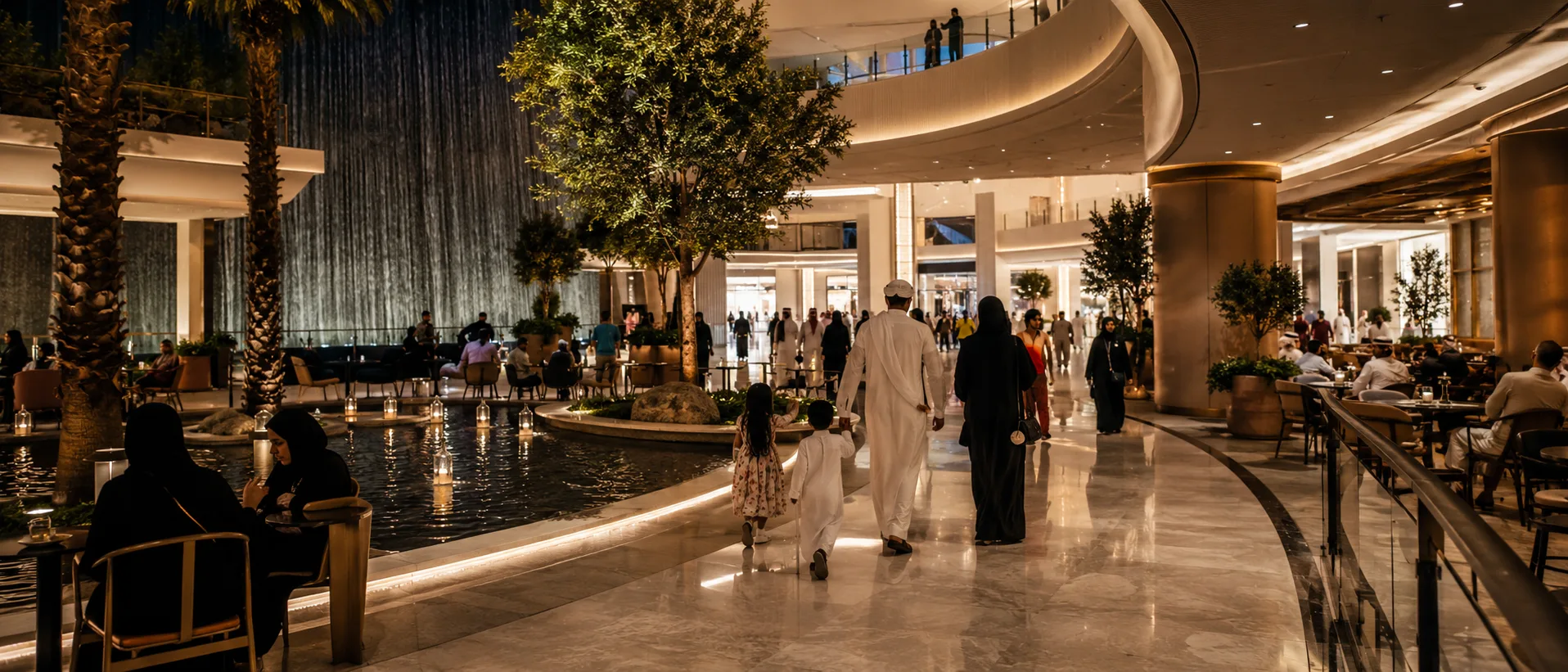
Sometimes I go to a mall with no intention of buying anything.
I still enjoy going.
That may sound strange if a shopping mall is understood only as a machine for selling things.
But in Dubai, Doha, Muscat and other Gulf cities, malls can be places of walking, family time, food, architecture, air-conditioning, coffee and simple curiosity.
You can spend hours there and leave with exactly what you arrived with.
Except perhaps a better mood.
The Mall Is a Public Interior
Climate explains part of the appeal, but not all of it.
A large indoor space allows families to walk comfortably, children to play, friends to meet and people to spend time together without every minute needing a separate destination.
Visit Qatar openly describes its malls as places for all ages, combining restaurants, cafés, cinemas, arcades, indoor play areas and entertainment. Dubai Mall is promoted not only as retail but as a major leisure and entertainment destination.
That reflects what I see when I visit them.
Shopping is only one of the activities happening.
Some People Buy. Others Look
I like watching that difference.
One person arrives with a list. Another comes to see what is new. A family walks after dinner. Children want one attraction. Someone sits in a café for an hour. Tourists photograph an interior as if it were a monument.
None of them is using the building incorrectly.
A mall becomes socially interesting when it allows people to be present without requiring the same purpose.
Beauty Is Part of the Attraction
Some Gulf malls are designed with a level of theatricality that makes looking part of the experience.
High atriums, fountains, planted interiors, art, elaborate ceilings, dramatic lighting and large public spaces turn circulation into spectacle.
Mall of Qatar, for example, centres part of its identity around an indoor Oasis and live entertainment. Dubai Mall surrounds retail with attractions large enough to become destinations themselves.
You may dislike that kind of scale. You may love it.
But it would be strange to pretend people go only because they need shoes.
A Family Can Spend an Evening Without a Luxury Budget
The word mall in the Gulf is often associated from outside with luxury.
Luxury exists. So does ordinary life.
People use malls for inexpensive meals, supermarket runs, children’s play areas, coffee, cinema, walking and meeting relatives. In Qatar, official tourism pages specifically describe several malls as family and community hubs with options at different price levels.
A place can contain luxury boutiques and still function as an everyday meeting point.
Sometimes I Want a Basic Coffee
This may be the least dramatic cultural observation in the article, but I like it.
I can spend a day around Arabic coffee, dates, incense and traditional food, then enter a mall and want a completely ordinary international-style coffee.
For an hour, I change the theme.
That does not make me less interested in Arab culture. Modern life is allowed to contain contrast.
Tradition becomes fragile when we demand that people perform it every minute.
“Tradition does not disappear because we sometimes choose something modern. It disappears when we no longer know the difference.”
Meskaoui
Muscat Shows the Old and New Shopping Worlds Side by Side
Oman makes this contrast particularly easy to see.
Experience Oman presents traditional markets such as Muttrah, Nizwa and Ibra alongside modern shopping complexes in Muscat, Nizwa, Sohar and Salalah.
I like that coexistence.
I can walk through Muttrah Souq for frankincense and old commercial atmosphere, then spend another evening inside a modern mall without feeling that one experience cancels the other.
The Mall Is Also a Place Where Cultures Meet
The Gulf’s population is international, and malls make that visible.
Food courts move across continents in a few metres. Fashion, languages and café habits mix. Families from different backgrounds share the same corridors.
That is part of contemporary Gulf identity too.
Not every cultural story has to come from something centuries old.
What the Mall Cannot Replace
I enjoy malls, but I do not ask them to replace the souq.
A mall can reproduce visual motifs from traditional architecture. It cannot reproduce generations of a merchant’s specialised knowledge simply by decorating a corridor.
The old market and the new mall answer different needs.
The mistake is not enjoying one more than the other.
The mistake is believing a country must choose.
Sometimes Joy Is Enough
There are days when I want to study history.
There are days when I want to smell spices in a souq.
And there are days when I want to walk in a beautiful air-conditioned space, look at things I will not buy, drink coffee and watch families enjoy their evening.
That is also travel.
Not every meaningful observation has to be serious.
Questions People Ask
They combine shopping with dining, entertainment, family activities and comfortable indoor public space. Climate is one factor, but social and leisure functions are equally visible.
No. Luxury retail is prominent in some malls, but malls also contain supermarkets, affordable food, cinemas, children’s entertainment, cafés and everyday services.
Dubai Mall is a major retail and leisure destination, while Qatar promotes malls such as Mall of Qatar and Doha Festival City as shopping, dining and family-entertainment spaces. Oman also has modern shopping complexes alongside traditional souqs.
A mall does not automatically erase tradition. The more useful question is whether older practices, markets and knowledge remain understood and supported alongside modern spaces.