
I kept seeing the same word on jars from Yemen, Oman, Saudi Arabia, the UAE and Pakistan. Then the trees began to disagree with the label.
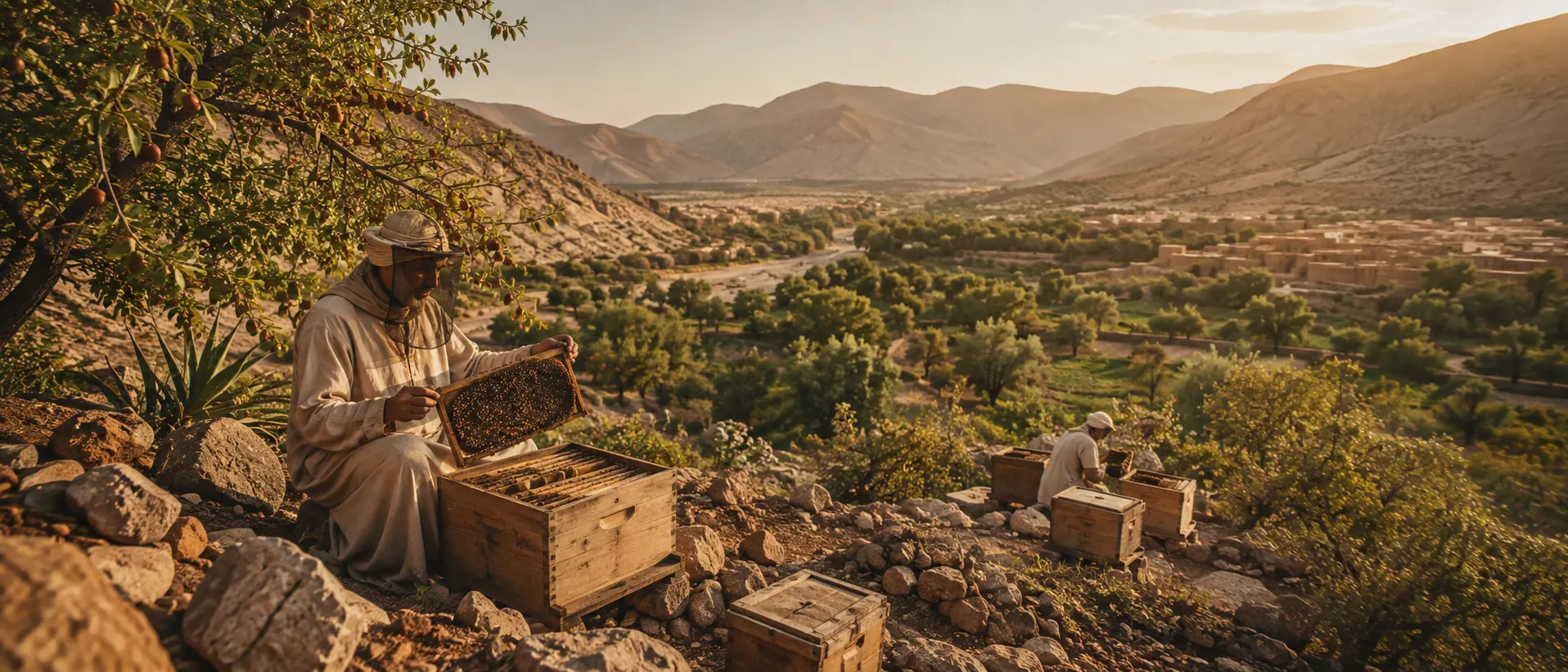
For a long time, Sidr felt like one of those honey words I already understood. Yemen had Sidr. Oman had Sidr. The Gulf had Sidr. Pakistan sold Sidr too. Then I started asking a question that should have come earlier: which tree? The answer took me from Ziziphus spina-christi to ber, Ziziphus mauritiana, and eventually Chinese Ziziphus jujuba. The farther the word travelled, the more I realised that a familiar name can make very different landscapes look deceptively similar.
Part 1 follows Sidr and jujube honey through Arabia and Asia. Part 2 moves into Africa. Part 3 looks at Europe and the Mediterranean, where the terminology becomes even more complicated.
I Thought Sidr Was One Tree
That assumption is easy to make. In the Gulf, the word is familiar. Honey sellers use it. Beekeepers use it. People recognise the tree. In Yemen, Sidr honey has an international reputation of its own. In Oman, Sidr appears beside Samar as one of the country’s best-known honey origins. Saudi Arabia has regional Sidr honeys. The UAE has its own harvests. Move farther east and the word still appears on jars from Pakistan.
So the first instinct is to imagine one botanical species spreading across this enormous belt of land and producing a slightly different version of the same honey wherever it grows.
Part of that picture is true. Part of it is not.
Ziziphus spina-christi, often called Christ’s thorn jujube in English, has a remarkably wide native range. Kew’s Plants of the World Online records it from Mauritania through northeastern Africa, the Arabian Peninsula and as far east as Pakistan. Yemen, Oman, the Gulf States, Saudi Arabia and Pakistan all fall inside that native range.
But Ziziphus is a genus, not a single tree. Other species enter the story as we move east, west and north. Ziziphus mauritiana, commonly associated with the name ber in South Asia, occupies another vast dry-country range. Ziziphus jujuba, the cultivated jujube familiar in East Asia, is native much farther east, from northern and eastern China to South Korea.
This is where the jar begins to become more interesting than the word printed on it.
“The further I followed the word Sidr, the more I wanted one extra line under the name: which tree, which place, which harvest?”
Meskaoui
Before Comparing Honey, Compare the Tree
Honey names are rarely written by botanists. They come from beekeepers, markets, languages, family habits and trade. That is normal. We do not ask every jar of orange blossom honey to carry a Latin plant name on the front.
Sidr becomes more difficult because the name is culturally strong and commercially valuable. Once a familiar name moves between languages and countries, it can start covering more than one local reality.
In Arabic-speaking regions, Sidr can refer to lote or jujube trees of the genus Ziziphus, but the species present in one region may not be the species dominating another. In South Asia, ber is a common name attached especially to Ziziphus mauritiana. In China, jujube generally leads us toward Ziziphus jujuba, a species deeply connected with fruit cultivation.
The overlap is real enough to create a family resemblance. These plants belong to the same genus, or at least to the same wider botanical family when the terminology becomes looser. They often tolerate heat and seasonal dryness well. Their flowers can provide nectar and pollen to bees. Their fruits have been eaten by people for generations.
But family resemblance is not identity.
If two honeys come from different Ziziphus species, under different rainfall patterns, soils, temperatures and beekeeping systems, we should expect differences. Even two honeys from the same species can differ because the season was different, nearby flowers changed, rainfall arrived late, or the beekeeper moved the colonies.
Yemen: Where a Tree Became a Reputation
It is difficult to discuss Sidr honey without beginning with Yemen.
I have not visited Yemen, so I do not want to borrow the confidence of someone who has walked Wadi Do’an or sat with its beekeepers. Here I rely on the botanical and ethnobotanical record, and on the reputation that Yemeni Sidr has built far beyond the country.
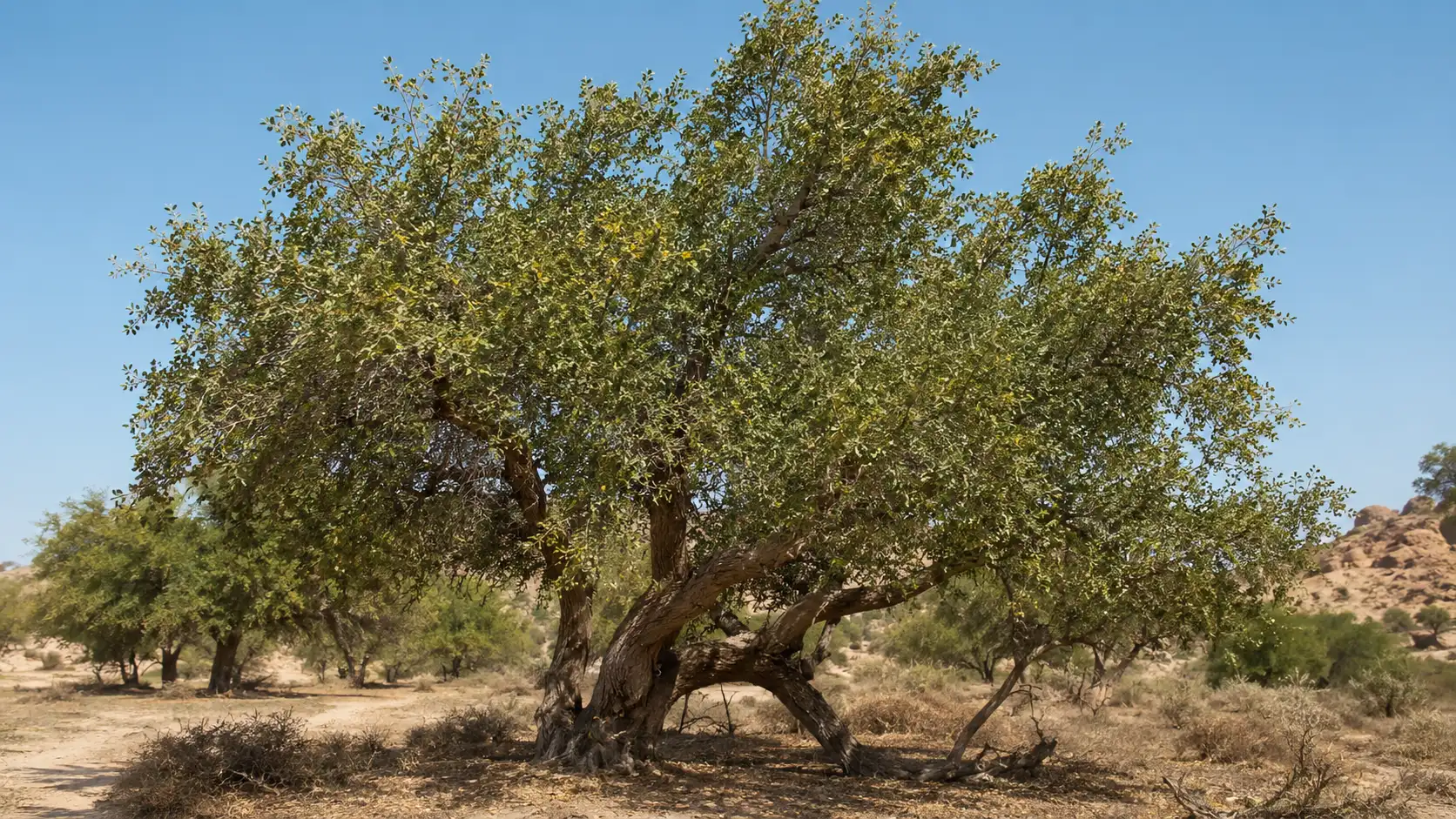
In southern Yemen, especially Hadhramout, Sidr honey is not simply one floral name among many. Scientific and ethnobotanical literature repeatedly connects the honey with Ziziphus spina-christi, and records the importance of honey from areas including Hadhramout, Shabwa and Abyan.
Do’ani honey, associated with Wadi Do’an, is one of the names that travelled furthest. Fame creates demand, higher prices and, inevitably, a reason to ask harder questions about origin.
I would never turn that reputation into “Yemeni Sidr is the best Sidr in the world.” Taste is personal, quality depends on the actual harvest and storage, and a famous country name is not a laboratory result. What Yemen gives us is something more useful: one of the clearest places where the cultural word Sidr and the botanical story of Ziziphus spina-christi strongly meet.
Oman: The Same Species, but Not the Same Honey
Oman made the question personal for me.
Near Nizwa, I went to meet a beekeeper. I knew Sidr and Samar as honey names, but sitting with someone who waits for the flowering season changes the way you read a label. A country disappears. A valley, a tree and a particular harvest take its place.
Published research on Omani honey identifies Ziziphus spina-christi, locally associated with Sidr, alongside Vachellia tortilis, traditionally called Sumer or Samar, as major floral sources. That already explains why “Omani honey” is too broad to describe one taste.
Even “Omani Sidr honey” still leaves questions. Where were the colonies? How strong was the bloom? What else was flowering? Had rain changed the surrounding forage? Was floral origin supported by pollen or other analysis, or primarily by the beekeeper’s knowledge of the landscape?
I do not see traditional knowledge and laboratory analysis as rivals. The beekeeper tells me what happened around the hive. Analysis can test parts of that story. I want both when they are available.
Saudi Arabia: One Country Is Already Too Large for One Sidr Profile
Saudi Arabia complicates the idea of a standard Sidr honey for another reason: scale.
I have only been to Saudi Arabia twice, and both visits were primarily religious. I saw date gardens around Medina and mountain landscapes in the western Hijaz, but I did not travel the country as a honey researcher. That limitation matters.
The scientific and agricultural record is much broader than my personal experience. Sidr is important enough that Saudi programmes mention Ziziphus in regions including Madinah, Al-Baha and Asir, while studies from Asir have examined Sidr honey identified with Ziziphus spina-christi.
A harvest from the southwest should not be expected to taste identical to one from another Saudi region. Elevation, rainfall, valleys, flowering calendars and neighbouring forage all change. A country this large makes the phrase “Saudi Sidr” useful as a beginning, but weak as an ending.
The UAE: Hatta Made the Country Name Feel Too Large
The Emirates gave me another version of the same lesson.
I have been returning to the UAE for more than ten years, and Hatta is one of the places where the honey story became real for me. I still meet a beekeeper there. In the mountains, Sidr is not an abstract Gulf product. It is a tree flowering in a particular dry landscape while a beekeeper watches the season.
Ziziphus spina-christi is part of the UAE flora, and apicultural research discusses Sidr alongside other arid-adapted forage. But Hatta is not every Emirati landscape. Mountain country, irrigated farms, desert margins and coastal habitats do not offer bees the same forage.
So when someone searches for UAE Sidr honey or Emirati Sidr honey, the interesting information begins after the country name. Hatta? Another mountain area? A farmed environment? Which bloom? Which beekeeper? Which year?
The jar becomes more interesting when the map gets smaller.
Pakistan: This Is Where Sidr Meets Ber and the Vocabulary Starts Moving
Pakistan is where this research became especially useful.
Search for Pakistan Sidr honey and the word Sidr appears everywhere. Search the botanical literature and several names enter the room.
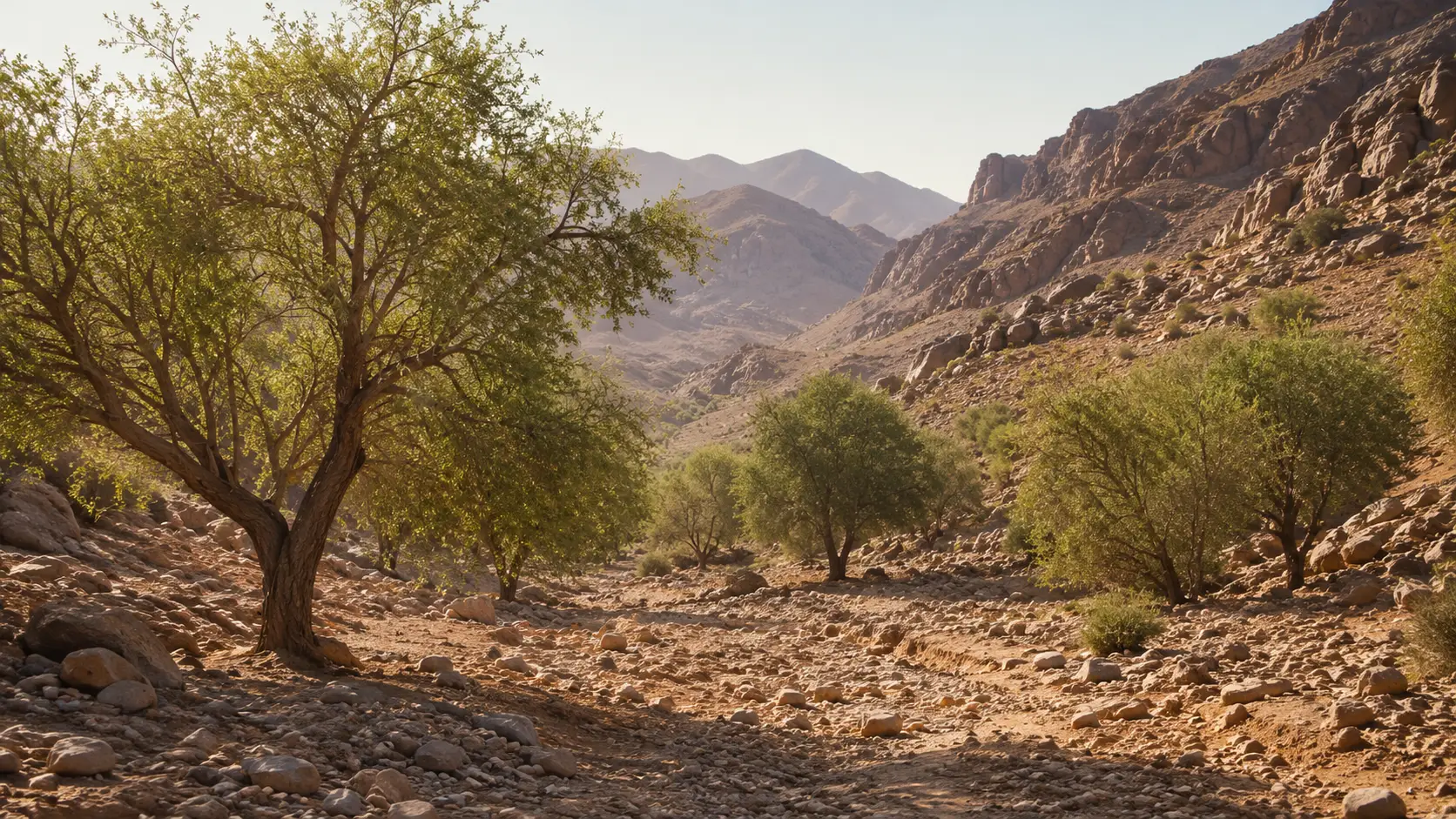
Ziziphus spina-christi reaches Pakistan according to Kew’s distribution data. Ziziphus mauritiana and its wild forms are also native across Pakistan and India, and the word ber is widely associated with this species in South Asia. Some apicultural studies use older or broader plant naming conventions, including references to Ziziphus jujuba in pollen profiles.
This is exactly the sort of place where copying a seller’s description can create trouble.
A jar marketed internationally as Pakistani Sidr honey may come from a landscape where local people speak about ber. Another producer may identify the plant as Ziziphus mauritiana. A scientific paper may use a different taxonomic label. The common name can move faster than taxonomy is updated.
That does not make Pakistani jujube honey less authentic. It simply means that Sidr, ber honey and jujube honey Pakistan should not be treated as perfect synonyms without checking the producer and the botanical identification.
This is one of the reasons pollen analysis matters. Melissopalynology does not answer every question, and pollen representation differs among plants, but it gives us evidence beyond the label. Newer chemical fingerprinting methods are adding another layer to honey authentication as well.
India: Sometimes Jujube Is More Honest Than Sidr
Cross the border into India and the Arabic commercial vocabulary becomes less necessary.
Ziziphus mauritiana is a major South Asian jujube species. It tolerates seasonally dry tropical conditions and is cultivated for its fruit as well as occurring in wild and semi-wild forms. For bees, flowering trees can become valuable forage. For people, the fruit is already culturally familiar as ber.
This raises a useful question for the whole dossier: should every honey from a Ziziphus species be called Sidr in English?
I do not think we need to force that.
Jujube honey is often the clearer international term when the local culture does not use Sidr. If a producer calls it ber honey, there is value in preserving that name too. The purpose of a global guide should not be to flatten every country into the vocabulary most familiar to Gulf consumers.
The tree family connects these places. The language should still be allowed to change.
China: By Here, the Word Sidr Is No Longer the Best Guide
By the time we reach China, the story has moved far from the Arabian meaning of Sidr.
Ziziphus jujuba is native to northern and eastern China through South Korea and has an enormous history as a cultivated fruit tree. Modern research is now looking closely at Ziziphus jujuba honey, including pollen authentication and chemical profiles that may help distinguish jujube honey from other monofloral honeys.
Calling this “Chinese Sidr honey” might make the product immediately understandable to someone who already buys Sidr. Botanically, however, the phrase can hide the most interesting part of the story.
This is Ziziphus jujuba.
The fruit culture is different. The climate is different. The agricultural setting can be different. The flowering landscape around a large jujube-growing area has little reason to resemble a Hadhrami valley.
And yet the two honeys belong in the same dossier because they show how far the jujube story travels.
The Flowering Calendar Is Part of the Origin
There is another detail hidden behind every floral name: timing.
A Sidr tree can be present beside an apiary all year and matter intensely to the bees for only a short part of it. The beekeeper is not harvesting the tree. The beekeeper is harvesting a moment when enough trees flower, enough nectar is available and the colony is strong enough to collect it.
That moment does not arrive with the same precision every year.
Heat can accelerate or weaken flowering. Rain before the bloom can change vegetation. A dry year can reduce what the bees find. Another plant flowering at the same time can become part of the honey even when the hives were placed for Sidr.
This is also why two honest beekeepers in the same country can produce different honeys.
One harvest may come from a valley where Sidr dominates the forage. Another may come from a mixed landscape. One beekeeper may remove supers immediately after the main bloom. Another may allow the colonies to continue working into the next flowering period.
Neither story can be understood from the country name alone.
When people ask me which Sidr is “the strongest” or “the best”, I increasingly want to know the harvest before I answer the country.
The Word Sidr Travels Better Than the Details
There is a practical reason the same name appears from Arabia into South Asia.
People buy words they recognise.
A customer in Dubai may immediately understand Sidr. The word ber may mean nothing to him. A customer in Pakistan may know ber perfectly and have no reason to use the Arabic name in daily life. An exporter selling the same honey internationally has to choose which vocabulary reaches the buyer fastest.
That is where common names begin to stretch.
I do not see that as automatically dishonest. Translation always simplifies something. The problem begins when the simplified name replaces all the useful information behind it.
If “Sidr” is used as the international front label, the region and botanical source can still be explained underneath. If “jujube honey” is used, the local name can still be preserved. If a beekeeper calls the tree ber, that word should not disappear just because another market term is more famous.
A global honey culture becomes more interesting when the names connect us without making every place identical.
Can Two Sidr Honeys Taste Completely Different?
Yes, and the species is only the beginning.
Honey is the result of a season. Temperature affects flowering. Rain affects vegetation. Soil and water availability affect the plant. Nearby flowers can enter the nectar and pollen mix. Colonies differ in strength. Beekeepers choose where to place hives and when to harvest. Storage after harvest can change aroma and colour.
This is why I am cautious with universal tasting notes.
People often describe Sidr honey as dark, rich, caramel-like, medicinal, malty or intensely aromatic. Some samples do fit parts of that description. Others do not. A lighter harvest is not automatically fake. A dark harvest is not automatically better. Colour alone cannot authenticate botanical or geographical origin.
If we want to compare Yemeni Sidr, Omani Sidr, Saudi Sidr, Emirati Sidr and Pakistani jujube honey intelligently, we need more than adjectives.
We need the tree, the place and the season.
A note about the word “monofloral”
Monofloral honey does not mean that a bee visited only one plant species. It means one floral source is sufficiently dominant for the honey to be identified with that origin using accepted sensory, pollen, physicochemical or other authentication criteria. The exact evidence available differs between studies, countries and honey types.
What I Would Look for on a Sidr Honey Label
After following the name across Arabia and Asia, I would rather have five useful pieces of information than a long list of health claims.
Country and region. Yemen is useful. Hadhramout is better. Oman is useful. A known harvesting area is better.
Botanical identification when available. Is the producer referring to Ziziphus spina-christi, Ziziphus mauritiana, Ziziphus jujuba or simply using a local common name?
Harvest season. Honey is agricultural. A year matters.
Traceability. Who harvested it, packed it and moved it?
Analysis when a strong botanical claim is being made. Pollen analysis, physicochemical testing and newer authentication tools can support the story told by the producer.
None of this removes the human side of honey. It protects it.
If an Omani beekeeper tells me where his colonies were placed and what was flowering, I want that knowledge. If a laboratory can test the honey, I want that too. One does not need to erase the other.
By China, I Had Stopped Asking Which Country Makes the Best Sidr
I began this part with a word I thought I understood.
Sidr.
Yemen gave the word a powerful reputation. Oman made me think about the beekeeper and the season. Saudi Arabia made scale impossible to ignore. Hatta made the UAE country label feel too large. Pakistan brought Sidr into contact with ber. India showed that the Arabic word is not always necessary. China took the story to Ziziphus jujuba and another agricultural history entirely.
By then, “which country makes the best Sidr?” felt like the least interesting question in the room.
I wanted to know which Ziziphus, which valley, which flowering period, who kept the bees and how confidently the floral origin could be supported.
That is not a rejection of the word Sidr. It is a way of giving the word its details back.
Part 2 turns west into Africa, where Morocco makes the story personal for another reason. There, I knew the Nbeg before I knew the Latin name of the shrub.
نسأل الله أن يبارك في الأرض ومائها وزهرها، وأن يرزق أهلها من خيرها.
Frequently Asked Questions About Sidr Honey in Arabia and Asia
No. In much of Arabia, Sidr honey is strongly associated with Ziziphus spina-christi, but the word can travel commercially into regions where other Ziziphus species are important. The botanical source should be checked rather than inferred from the word alone.
Yemeni Sidr honey generally refers to honey associated with the flowering of Ziziphus spina-christi. Hadhramout, including Wadi Do’an, is particularly well known for Sidr honey. The reputation of the region does not remove the need for traceability because quality and authenticity still depend on the individual harvest and supply chain.
It can be. The same or closely related botanical source does not produce an identical honey in every region. Climate, soils, flowering intensity, neighbouring plants, hive location, harvest timing and storage can all influence the final honey. Country of origin is therefore only one part of the comparison.
Ask the producer for the botanical source and local name. Pakistan lies within the range of Ziziphus spina-christi, while Ziziphus mauritiana and ber terminology are also important in South Asia. A country name and the word Sidr are not enough to resolve the species.
Chinese jujube honey is commonly associated with Ziziphus jujuba, a species native to northern and eastern China through South Korea and widely cultivated for its fruit. It belongs to the wider jujube honey story, but calling it Sidr can obscure the botanical and cultural difference from Arabian Ziziphus spina-christi honey.
No. Colour varies naturally and can also change with storage and processing. Authenticity should be assessed through traceability and, when necessary, analytical methods such as pollen analysis, physicochemical testing and botanical or chemical profiling. Colour alone is not proof of origin.
The useful details are the botanical source when known, harvest region, beekeeper or apiary, harvest year, flowering season and any pollen or physicochemical analysis supporting a strong floral claim. Those details make country-to-country comparisons much more meaningful.
Sources & Further Reading
Royal Botanic Gardens, Kew, Plants of the World Online: Ziziphus spina-christi
Royal Botanic Gardens, Kew, Plants of the World Online: Ziziphus mauritiana
Royal Botanic Gardens, Kew, Plants of the World Online: Ziziphus jujuba
Al-Fatimi et al., traditional knowledge of wild plants in Yemen, including Yemeni Ziziphus honey
Al-Farsi et al., Color, flavonoids, phenolics and antioxidants of Omani honey
Ghramh et al., quality evaluation of Saudi honey harvested from the Asir region
Begum et al., pollen profile of honey bees in arid and semi-arid Pakistan
Zhu et al., phytochemical and authentication study of Ziziphus jujuba honey
Continue to Part 2: Africa
The next part follows jujube honey into Morocco, Algeria, Tunisia and the wider African range of Ziziphus, where another species becomes central to the story.