
Never say you don’t like honey. Say instead: you haven’t found the honey you love yet.
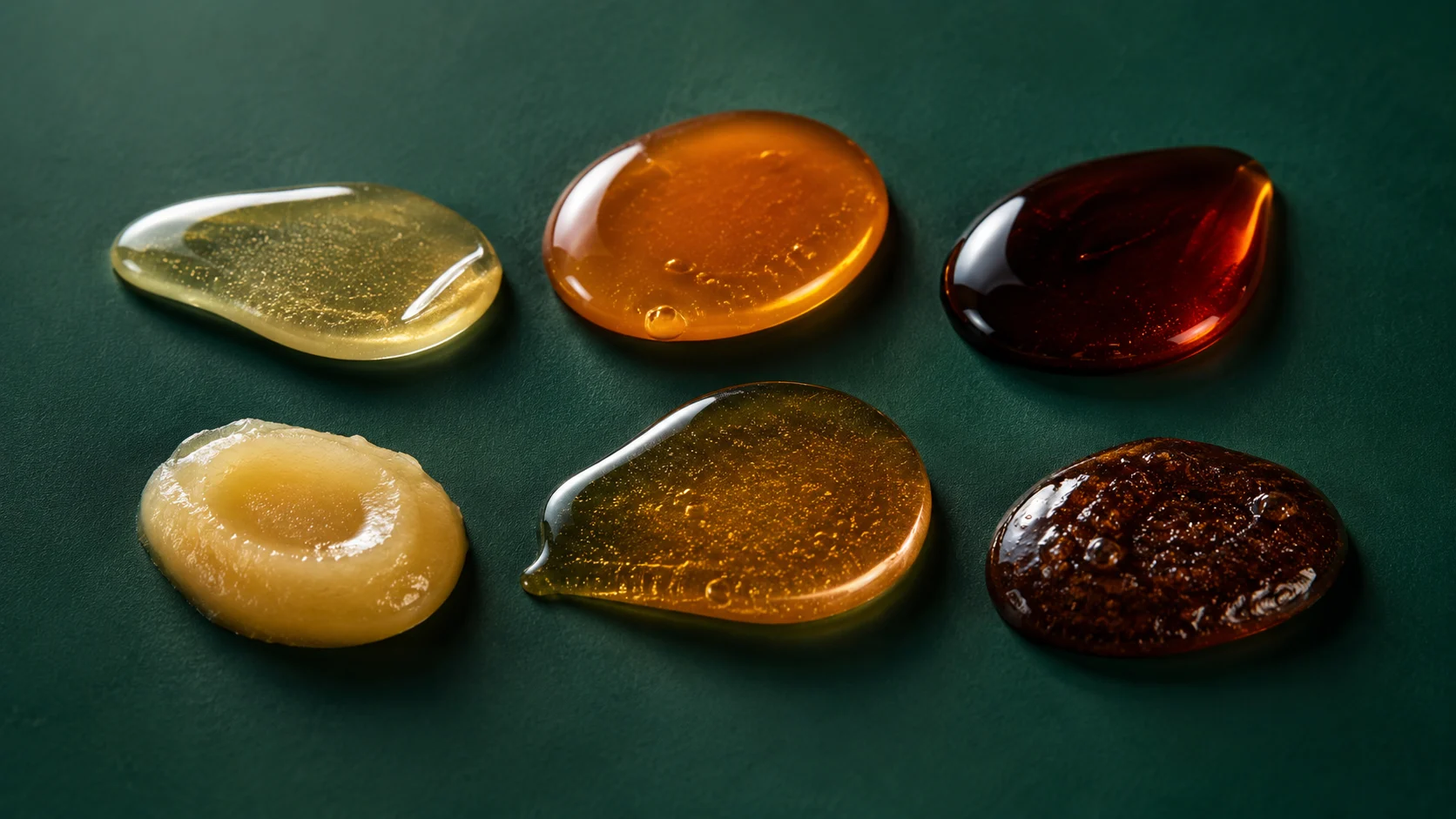
There is a phrase we hear from time to time that always makes us pause. “I don’t like honey.” What is almost always meant is something more honest and more hopeful: “I haven’t found the honey I love yet.” Because honey is not one flavour — it is thousands of landscapes, waiting to be discovered.
Never Say: “I Don’t Like Honey”
It is said with such quiet certainty. A door, closed. A chapter, finished before it began.
That single shift in language changes everything. It transforms a conclusion into a beginning. It opens the door rather than shutting it.
Here is what those who have spent time around honey know with absolute certainty: honey is not one flavour. It is not one texture, one colour or one experience. It is not the pale, forgettable sweetness that sits forgotten at the back of a kitchen cupboard. That is one honey. One variety. One flower. One moment in one season.
There are thousands of others waiting.
Discovering honey is not unlike discovering wine, coffee or tea. The first cup of coffee you ever tasted may not have been the one that made you fall in love with coffee. The first wine may have been too sharp, too tannic, too unfamiliar. The same is true for tea: someone who tastes only a bitter, stewed cup and concludes they dislike tea has simply not yet sat with a first-flush Darjeeling, a delicate white peony or a slow-steeped Moroccan pot of mint.
Honey asks the same patience. The same curiosity. The same willingness to try again.
Honey Is Never Just One Taste
Walk into any serious honey collection — whether a small Moroccan market stall perfumed with spice and beeswax, a French apiarian’s cellar, or a Yemeni valley where hives have rested in cliffsides for generations — and you will find something remarkable.
You will find pale honeys, almost translucent, that taste of spring mornings and rain-washed blossoms. You will find amber honeys with the warmth of an afternoon sun through old glass. You will find dark, almost mahogany honeys with a depth that unfolds slowly on the palate, layer after layer, like turning the pages of something very old.
Each one came from a bee. Each one came from a flower. But that is where the similarity ends.
The flavour of honey is determined by the nectar the bees collect — and every flower produces a chemically distinct nectar. Scientists have identified more than 600 volatile organic compounds in different honey varieties. These compounds — the same families of molecules responsible for the aromas of fruit, flowers, herbs and spices — are carried from the flower into the nectar, transformed further by the bee during collection and processing, and concentrated over days as the honey matures inside the comb.
What this means in practice is simple: a delicate Acacia honey has almost nothing in common with a powerful Chestnut honey. A sun-warmed Thyme honey from a Greek hillside is a completely different experience from a floral Orange Blossom honey or the ancient, complex richness of a Sidr honey from the valleys of Yemen. A dark Buckwheat honey smells of earth and molasses and would be unrecognisable to anyone who only knew clover.
These are not small differences. They are the differences between a lemon and a fig. Between a mountain stream and an old oak barrel.
The Story of Two Children Who “Didn’t Like Honey”
A friend of mine once told me, with the casual confidence of a father who knows his children well:
“My children don’t like honey.”
I smiled. I reached for two jars — very different from each other — and handed them across the table without a word of explanation.
“Let them taste these first,” I said.
He laughed. The kind of polite laugh that means: I appreciate the gesture, but I already know the answer.
He took the jars home anyway. The following day he came back with a question, asked in the slightly sheepish tone of a man who has just learned something he perhaps should have known: “Where can I buy more of this?”
The lesson, in the end, was simple. His children had not liked the honey they had tasted before. They had tasted one variety — probably a blended, mass-produced honey, heated and filtered until most of its character had been removed, uniform and forgettable. And they had drawn a conclusion about all honey from that single experience.
It would be like tasting a cheap instant coffee and concluding that you disliked coffee. Or eating an unripe peach and deciding that fruit held no pleasure for you.
Honey is not one flavour. It never was.
What Actually Gives Honey Its Flavour?
Before exploring the great varieties, it is worth pausing to understand why honeys differ so dramatically. The answer lies in four connected elements, each of which shapes the jar you hold.
The Flower
This is the beginning of everything. Each flowering plant produces nectar with a distinct chemical composition: its own combination of sugars, volatile aromatic compounds, minerals and trace elements. An acacia blossom produces a nectar high in fructose, delicate and almost vanilla-like. A chestnut flower produces something entirely different — richer in tannins, more bitter, more mineral. A Sidr tree growing in an arid Yemeni valley produces a nectar so dense and complex that no other flower on earth replicates it.
The bee collects this nectar and carries it in a specialised honey stomach, called the crop, back to the hive. During this journey, and during the process of passing the nectar between bees inside the hive, enzymes are added that begin transforming the nectar into something new. The resulting honey retains the aromatic signature of the original flower — but it is no longer simply flower juice. It is something the flower and the bee created together.
The Landscape
A thyme plant growing on a rocky Greek hillside — wind-battered, sun-scorched, drawing minerals from ancient limestone — produces a nectar with a different intensity than the same plant grown in a sheltered garden. The soil, the altitude, the proximity to the sea, the slope of the hillside, the quality of the light: all of these shape the flower, which shapes the nectar, which shapes the honey.
This is what wine lovers call terroir. Honey has it too. Perhaps more visibly than any other food, because a bee forages within a radius of several kilometres and gathers the exact botanical and geographical character of one specific place into one specific jar.
A jar of honey is, in this sense, a portrait of a landscape.
The Season
Flowers bloom at different times. Spring brings lighter, more floral nectars. Late summer and autumn tend toward darker, more concentrated honeys with greater mineral depth. Even within the same garden, the same hive, the honey of March will taste different from the honey of August. Beekeepers who harvest throughout the year speak of their hives the way winemakers speak of vintages: each season has its own character, its own surprises.
The Bee
The species of bee matters too, though this is a detail rarely mentioned. Apis mellifera jemenitica — the Yemeni bee, adapted over millennia to the heat and aridity of the Arabian Peninsula — produces honey with characteristics that even the same flowers would not yield under the care of a different species. In the high valleys of Hadhramaut, bees have been kept in the same cliffsides for generations, and this continuity, this accumulation of knowledge and adaptation, is part of what makes the honey irreplaceable.
A Journey Through Six Very Different Honeys
Rather than listing dozens of varieties — which can overwhelm as much as it illuminates — we offer here six honeys that together demonstrate the full range of what honey can be. They are not presented as a ranking. There is no best. There is only what suits your palate, your moment, your table.
The Quiet One
Colour: Pale gold, almost water-clear. Texture: Fluid, very slow to crystallise. Flavour: Delicate, gently sweet, with a faint suggestion of vanilla and soft blossom. Almost no aftertaste.
Acacia honey — produced from the blossoms of Robinia pseudoacacia, a tree native to North America but now widespread across Eastern Europe — is often the first honey to convert those who believed they disliked honey. Its sweetness is clean and transparent. It does not crowd the palate. It is the honey that disappears into tea without changing it, that works on bread without competing with anything else on the table. Its restraint is not a weakness. It is a kind of elegance.
The Cheerful One
Colour: Light amber to white. Texture: Smooth, light. Flavour: Floral, gently citrusy, with a brightness that recalls warm evenings and flowering orchards.
Orange blossom honey has an immediate charm. It does not ask questions of the palate. It simply arrives — cheerful, fragrant, uncomplicated in the best possible sense. Produced wherever citrus trees flower abundantly — Spain, Italy, Morocco, Florida, California — it carries the particular warmth of those landscapes in every spoonful. Children who have rejected other honeys often find their way to this one.
The Bold Mediterranean
Colour: Amber, deepening with age. Texture: Medium viscosity, crystallises over time. Flavour: Aromatic, herbal, slightly resinous, with warmth that lingers long after the spoon is set down.
Thyme honey is the most prized honey of Greece, where wild thyme grows in abundance across the islands and hillsides of the Aegean. It is a honey that demands attention. Not aggressive — but present. The kind of honey that improves yoghurt, transforms a simple cheese and pairs with almost anything from the Mediterranean table. Those who taste it for the first time and expected sweetness alone are often surprised by its complexity.
The Intellectual
Colour: Very dark amber, almost brown. Texture: Slow and dense. Flavour: Bitter, tannic, earthy, with a mineral depth that is quite unlike conventional sweetness.
Chestnut honey is the honey most likely to divide a room. Many tasters encounter it expecting sweetness and find instead something that recalls dark espresso or aged wood — not unpleasant, but entirely unexpected. Its bitterness is not a flaw. It is a characteristic. Italian and French cheesemakers have long paired chestnut honey with aged pecorino and strong blue cheeses, because its assertiveness can match flavours that would overwhelm a gentler honey. It is the honey of those who prefer depth to sweetness.
The Wild Card
Colour: Very dark, near black. Texture: Dense, almost molasses-like. Flavour: Rich, malty, earthy, with a complexity that researchers have consistently associated with very high levels of antioxidant compounds.
Buckwheat honey is the one that surprises people most. It looks nothing like honey as most people imagine it. It smells of earth and grain and something faintly fermented. It is the kind of honey that beekeepers and serious food lovers reach for when they want something uncompromising. It has been used for centuries in Eastern Europe and North America — in marinades, in bread, in winter preparations — precisely because of its power. It is not for the faint-hearted. But for those who love it, nothing else will do.
The Ancient One
Colour: Deep mahogany-amber, warm reddish-brown. Texture: Exceptionally thick, almost taffy-like, holding its shape briefly on a spoon. Flavour: Round, full and warmly sweet — with notes of dried fig, date molasses, warm caramel, subtle resin and a long mineral finish that persists quietly long after the first taste.
Sidr honey is produced from the nectar of the Sidr tree — Ziziphus spina-christi — which grows in the arid, mineral-rich valleys of Yemen, particularly in the legendary Wadi Doan in Hadhramaut. It is harvested by bees that have been kept in those cliffsides for generations: Apis mellifera jemenitica, a subspecies adapted to the heat and isolation of the Arabian Peninsula.
The result is a honey unlike any other. Its sweetness does not arrive bluntly. It builds. It unfolds. The aroma carries the warmth of the desert, the dryness of ancient stone, the quiet intensity of a tree that flowers briefly in an unforgiving landscape and gives everything it has to that short season.
In the Gulf and across the Arab world, Sidr honey carries a meaning that goes beyond flavour. It is given at births and weddings. It is offered to guests as a gesture of the highest respect. The Sidr tree itself is mentioned in Islamic tradition as a tree of profound significance, and this connection to something sacred has only deepened the reverence with which it is regarded. It is, by almost any measure, one of the most complex and storied honeys on earth.
How to Discover the Honey You Love
The discovery of honey is not a complicated project. It requires only a small willingness to try, and perhaps a small adjustment of expectation.
Start with light, delicate varieties
Acacia or Orange Blossom are the easiest entry points for those who have previously found honey too strong or too sweet. Their restraint is a feature, not a limitation.
Taste honey on its own, at least once
A spoon, a moment, a little attention. Not on bread, not in tea — alone. This is the clearest way to understand what a honey actually tastes of.
Smell before you taste
Much of what we perceive as flavour is in fact aroma. Hold the spoon an inch or two beneath your nose and breathe gently before the honey touches your tongue. You may be surprised by what you notice.
Give darker honeys a second chance
The first encounter with Chestnut or Buckwheat honey can be startling. A second tasting, approached with curiosity rather than surprise, often reveals something rewarding that the first did not.
Pay attention to origin
A label that tells you the flower and the country is more valuable than one that tells you only that the honey is natural. The more specific the origin, the more singular the experience.
Trust your own palate
No one can tell you which honey to love. Not us, not any guide. The only way to know is to taste.
Thousands of Landscapes in a Single Jar
We return, at the end, to where we began.
“I don’t like honey.”
Perhaps. But we suspect what is meant is something more precise — that a particular honey, tasted at a particular moment, did not appeal. That is a fair thing to say. It happens with wine. It happens with coffee. It happens with every food that has genuine depth and diversity.
The honest version of that sentence — the more curious version, the one that opens a door — is simply this:
“I haven’t found the honey I love yet.”
And that is not a problem. It is an invitation.
Somewhere there is a pale Acacia honey that is almost too gentle to notice. Somewhere there is a wild Buckwheat honey that tastes of dark earth and autumn. Somewhere there is a Thyme honey from a Greek island hillside, or an Orange Blossom honey from a Moroccan spring, or a Sidr honey from a Yemeni valley that has been producing its remarkable nectar since before any living person’s memory reaches.
One of them is yours. You simply have not met it yet.
Honey is not one flavour. Honey is thousands of landscapes waiting to be discovered.
نسأل الله أن يبارك لكم فيما رزقكم
Discover the Honeys of The House of Meski
From the ancient Sidr valleys of Yemen to the wild maquis of Corsica, our collection brings together some of the world’s most remarkable raw honeys — each one a portrait of a single place, a single season, a single flower.
Frequently Asked Questions
Because honey is shaped by the flower the bees visited, the landscape in which that flower grew, the season in which it bloomed, and the particular work of the bees that collected it. Each of these variables produces a different result. There is no single honey flavour — there are hundreds of distinct varieties, each with its own character.
Monofloral honey is produced when bees collect nectar predominantly from a single species of flower. This happens naturally when that flower is the dominant source available to the hive at a given time — for example, when a beekeeper places hives near a large acacia forest or a field of buckwheat in full bloom. Monofloral honeys tend to have more distinctive, recognisable flavour profiles than mixed-flower or wildflower honeys.
Raw honey is honey that has not been heated to high temperatures or finely filtered after extraction. It retains its natural pollen, enzymes, aromatic compounds and trace minerals — all of which contribute to its flavour and character. Most flavour differences between honey varieties are most noticeable in raw honeys, as processing can reduce or eliminate many of the volatile compounds responsible for a honey’s distinctive taste.
Acacia honey is often the gentlest starting point. It is pale, delicate, very slow to crystallise and carries almost no bitterness or sharpness. Orange Blossom honey is another excellent beginning — slightly more floral and cheerful, but still approachable. Both tend to surprise people who have previously found honey too overwhelming or too sweet.
Sidr honey is a monofloral honey produced from the nectar of the Sidr tree (Ziziphus spina-christi), which grows in the arid valleys of Yemen and across parts of the Arabian Peninsula. Its flavour is exceptionally complex — richly sweet with notes of dried fruit, caramel, warm resin and a long mineral finish. It is highly regarded both for its sensory qualities and for its deep cultural and historical significance across the Arab world. Authentic Yemeni Sidr, particularly from Wadi Doan in Hadhramaut, is among the most sought-after honeys in the world.
Generally yes, though not universally. Darker honeys — such as Chestnut, Buckwheat or Sidr — tend to contain higher concentrations of minerals, phenolic compounds and complex aromatic molecules, which may contribute to a bolder, more layered flavour experience. Lighter honeys — such as Acacia or Orange Blossom — are typically more delicate. Colour is a useful first guide, but it is not a perfect predictor: some pale honeys, like Thyme, can carry considerable aromatic intensity despite their lighter appearance.
Store honey in a sealed jar, away from direct sunlight, at a stable room temperature. Avoid refrigerating honey, as cold temperatures accelerate crystallisation. Avoid heating it unnecessarily, as high temperatures destroy the volatile compounds responsible for its distinctive aroma. A well-stored raw honey can retain its character for a very long time — honey recovered from ancient Egyptian tombs has famously remained intact over thousands of years, a testament to honey’s remarkable natural preservation.