
To choose Omani honey well, you need to separate familiar names from the places, seasons and expectations that actually shape the jar.
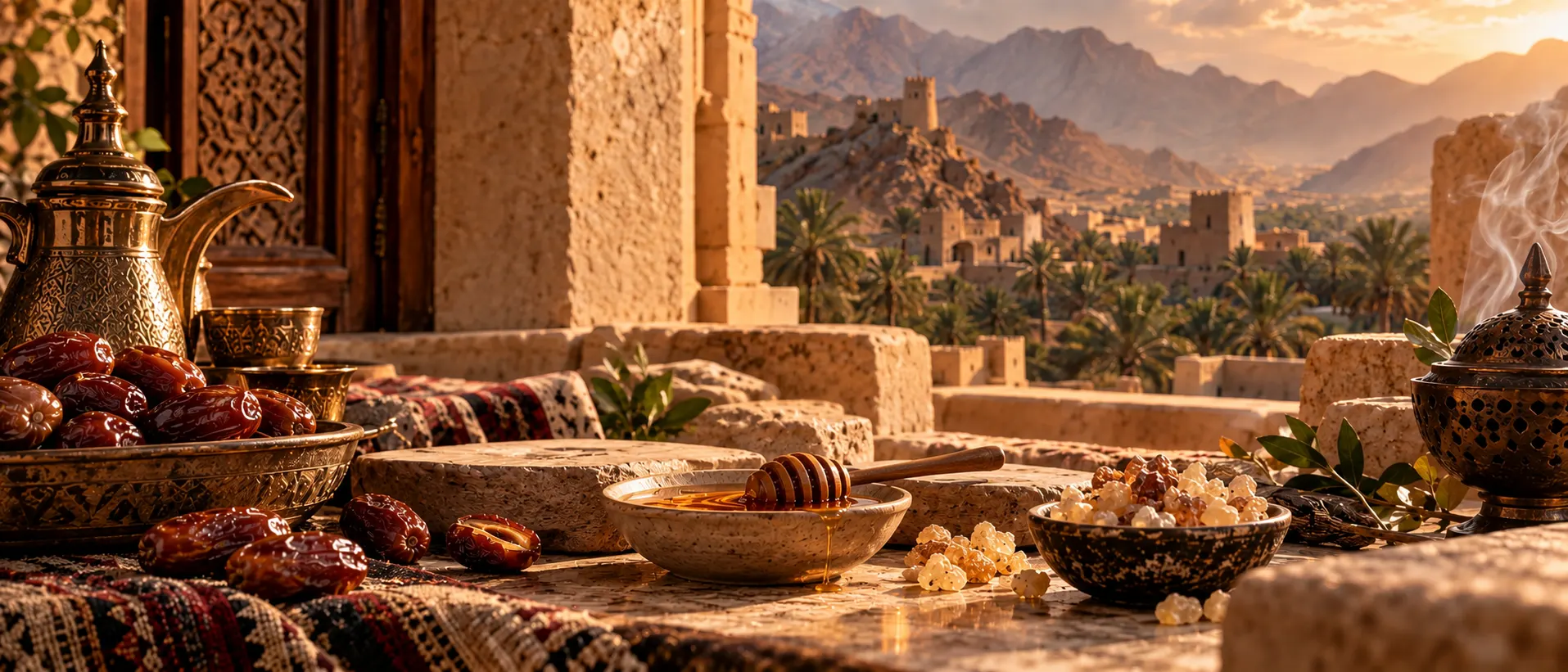
Omani honey is not one taste. This guide explains how Sidr, Samar and Luban-linked honeys differ, how geography changes the jar and how to choose well for gifting or tasting.
Oman does not produce one single honey identity
People often speak of Oman as if one word, tradition, could explain everything. But tradition is too wide to help the buyer who stands in front of several jars and wants to choose well. Omani honey is plural. It comes from different regions, seasons and ecologies. A useful guide therefore begins by refusing the myth of one single Omani taste.
Sidr, Samar and Luban-related honey are not interchangeable names. They point toward different expectations and different relationships between landscape and product. Once the buyer learns to separate those expectations, the Omani shelf becomes easier to understand and easier to enjoy.
Sidr is often the easiest entry point
Omani Sidr is frequently the first jar that buyers notice because the word Sidr already carries weight across the Gulf. The advantage of this familiarity is that it makes the product approachable. But the disadvantage is that buyers can become too casual, assuming that every Sidr tells the same story. Omani Sidr deserves more precision than that.
When chosen well, it offers an elegant entry into Omani honey because it combines a known category with a distinct regional identity. It works well for gifting, for first-time buyers and for people who want a jar that feels established but not generic. Our overview of Omani honey landscapes helps connect the category to place.
Samar answers a different desire
Samar tends to appeal to buyers who prefer depth, dryness and a stronger sensory profile. It broadens the image of Omani honey beyond a single familiar style and reminds the buyer that the country contains multiple dry-land ecologies, not only one aesthetic of forts and palms. In other words, Samar often matters because it complicates the stereotype of what Omani honey is supposed to taste like.
For that reason, Samar can be especially rewarding for more experienced buyers or for anyone seeking a jar with character rather than instant familiarity. It can also make a memorable gift for the right person, though it is usually a more personal choice than a safe default.
Luban requires the clearest explanation
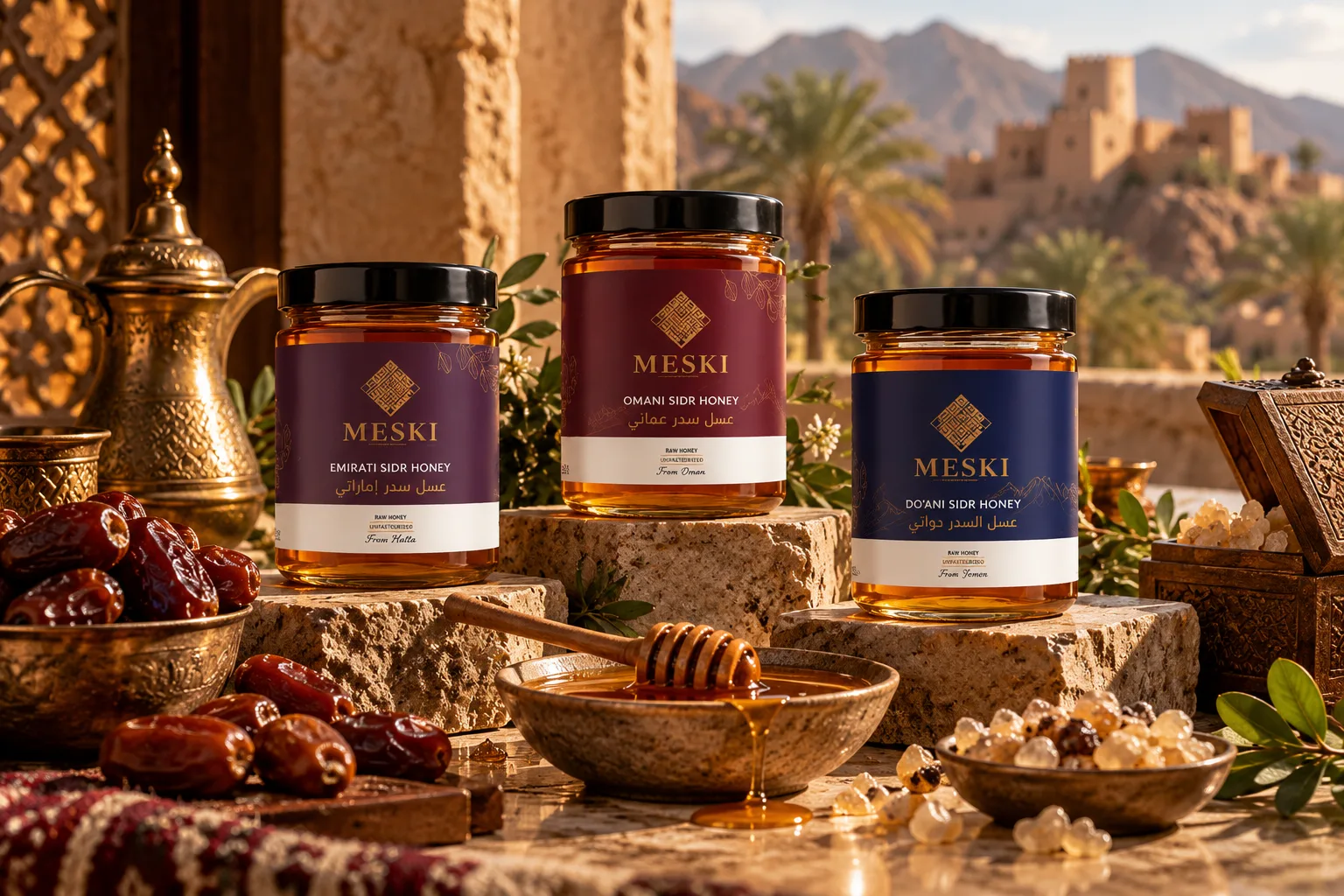
The word Luban has emotional force because frankincense is one of Oman’s strongest cultural signatures, especially in the south. This creates both opportunity and risk. Opportunity, because a honey linked honestly to that world can be fascinating. Risk, because the word can be stretched too loosely by sellers who rely on the romance of the term more than on clear explanation.
A buyer should therefore ask exactly what is meant. Is the honey linked to apiaries in frankincense landscapes, or is the word being used more vaguely? Clarity matters here more than almost anywhere else. A precise explanation allows the jar to become meaningful rather than merely exotic.
Use determines choice
If the goal is a gift, Sidr remains one of the easiest starting points because the category is already legible to many people. If the goal is a stronger private tasting jar, Samar may offer more reward. If the goal is to connect the gift or purchase to Dhofar and the wider frankincense world, a carefully explained Luban-related honey may be the best fit.
These are not absolute laws. They are simply practical patterns. By naming the purpose of the jar first, the buyer avoids confusion and begins asking more useful questions. Choice becomes less mystical and more deliberate.
Region matters inside Oman
Nizwa, Dhofar and other mountain or interior contexts do not express the same environment. Geography changes forage, season and cultural association before it even changes taste. That is why regional references matter. They are not decorative storytelling. They help explain why one Omani jar differs from another while both remain recognisably Omani.
Our Nizwa honey article and our article on the frankincense roads of Oman are useful because they link the honey back to the landscape rather than leaving it as an abstract luxury object.
How to choose well
Do not choose Omani honey through stereotypes alone. Oman’s reputation for continuity and authenticity may attract you, but it should not exempt the jar from ordinary questions of provenance, producer credibility, lot clarity and handling. Serious buying still depends on explanation and trust.
The simplest method is this: decide whether you want a gift, a first introduction, a stronger tasting jar or a honey linked to Dhofar’s frankincense world. Then choose Sidr, Samar or Luban-related honey accordingly. When the purpose, the place and the jar align, Omani honey becomes far easier to choose.
What the label cannot tell you alone
Many buyers expect the front label to do almost all the work. Yet a label can only suggest a direction. It cannot replace the conversation that should sit behind the jar. When you read Sidr, Samar or Luban, you are reading the beginning of a story, not the end. The real value appears when the producer or seller can explain region, season and the reason that floral identity is being claimed.
This is especially important in a market where names carry emotional force. The beauty of Omani honey deserves precision rather than vagueness. Labels should open better questions, not close them too early.
Gifting and personal tasting are not the same
A jar chosen for gifting usually needs easier readability. The recipient should be able to understand quickly why this jar was chosen and what makes it special. That is why Sidr often succeeds as a gift. Its name is legible. Samar can also be a beautiful gift, but it often rewards a recipient who already enjoys stronger honey styles. Luban-related honey may become the most memorable gift of all when the recipient is especially interested in Dhofar, frankincense and the southern cultural landscape.
For personal tasting, however, the buyer can become more adventurous. There is less pressure to explain quickly and more freedom to buy according to curiosity. The same person who gifts Sidr might buy Samar or a carefully explained Luban-linked jar for themselves. Again, use changes choice.
Questions worth asking the seller
A serious buyer of Omani honey can ask a short set of helpful questions. What region is this jar really linked to. What floral source is being claimed. Is the explanation attached to this lot or only to the brand in general. How was the jar stored. Is the presentation consistent with the story. These questions are not confrontational. They are simply practical.
They also help reward the best sellers. When buyers ask precise questions, clear and serious producers stand out. That is healthy for the whole market because it shifts attention away from empty romance and toward traceable quality.
One country, several entry points
Oman is one of the most rewarding countries in the Gulf honey conversation precisely because it offers multiple entry points. Some buyers enter through the familiar dignity of Sidr. Others enter through the stronger personality of Samar. Others are drawn by the evocative world of Luban and Dhofar. Each door is valid, and none needs to erase the others.
The best choice therefore does not come from chasing a mythical best jar. It comes from choosing the right door into Omani honey for your own purpose. Once you approach the shelf that way, complexity stops feeling like confusion and starts feeling like richness.
Authenticity without mythology
Omani honey benefits from a reputation for authenticity, yet authenticity should not be turned into mythology. The point is not to believe that any jar linked to Oman is automatically exceptional. The point is to understand that a strong beekeeping culture and a rich landscape provide the conditions for exceptional jars when the producers and sellers do their part seriously.
This distinction protects both buyer and product. It keeps the buyer demanding and it keeps the best Omani honey visible for the right reasons. Praise becomes more meaningful when it remains tied to explanation rather than to vague admiration.
How a first-time buyer can proceed calmly
A first-time buyer does not need to master all of Oman in one purchase. It is enough to decide whether familiarity or exploration is the priority. Familiarity usually points toward Sidr. Exploration may point toward Samar or a carefully explained Luban-linked jar. Then ask two or three precise questions and buy one coherent jar rather than many uncertain ones.
This calm method is often better than beginning with a large selection bought in confusion. One trusted jar teaches more than several poorly understood ones. Over time, that method builds a real sense of the country’s honey diversity.
Why this choice matters beyond the jar
Choosing Omani honey well matters because it changes the way the buyer relates to place. A careless purchase reduces the jar to a sweet luxury object. A thoughtful purchase reconnects the jar to mountains, wadis, southern landscapes, seasonal flowering and the work of beekeepers. In that sense, buying well is not only about product satisfaction. It is also about reading the landscape more intelligently.
This is why a guide to choosing Omani honey is worth writing at all. It allows the buyer to move from stereotype to attention. Instead of repeating that Oman is traditional, you begin to ask how different environments produce different honey identities and why that difference matters on the table.
The value of patient comparison
Comparing Omani honeys patiently is one of the best ways to understand them. Instead of trying to declare a universal winner, taste or buy with comparison in mind. Notice what changes when the story of the jar changes. Notice what remains stable. This approach reveals more than a rushed hunt for the single best jar ever could.
In that sense, the most rewarding buyers are often not those who buy the largest number of jars, but those who buy a few coherent jars with attention. They allow each one to speak more clearly, and the country’s honey diversity becomes more visible.
Frequently Asked Questions
Sidr is usually the best-known starting point, though Samar and Luban-related honey are also important.
No. They belong to different places, markets and terroir stories even when buyers compare them under one familiar word.
Buyers who enjoy a deeper and more assertive profile often appreciate Samar the most.
It should mean a honey honestly linked to the frankincense world or landscape, not just a vague marketing use of the word.
Yes. Sidr is often the easiest gift category, while Samar and Luban-related honey can be especially memorable for the right recipient.
Yes. They matter because geography changes season, forage and the cultural meaning of the jar.
No. Look for provenance, producer clarity and believable explanation rather than a single flattering word.
No. Colour may suggest something, but it cannot replace origin and handling information.
Decide what you want the jar to do, then choose the style that best matches that purpose.
Continue Exploring
Omani honey becomes much easier to choose once each style is linked to its landscape, its intention and its true explanation.