
Born in Fuweirat, Mohammed bin Thani moved to Al Bida, united tribes and signed the 1868 agreement that helped make Qatar visible as a distinct political entity.
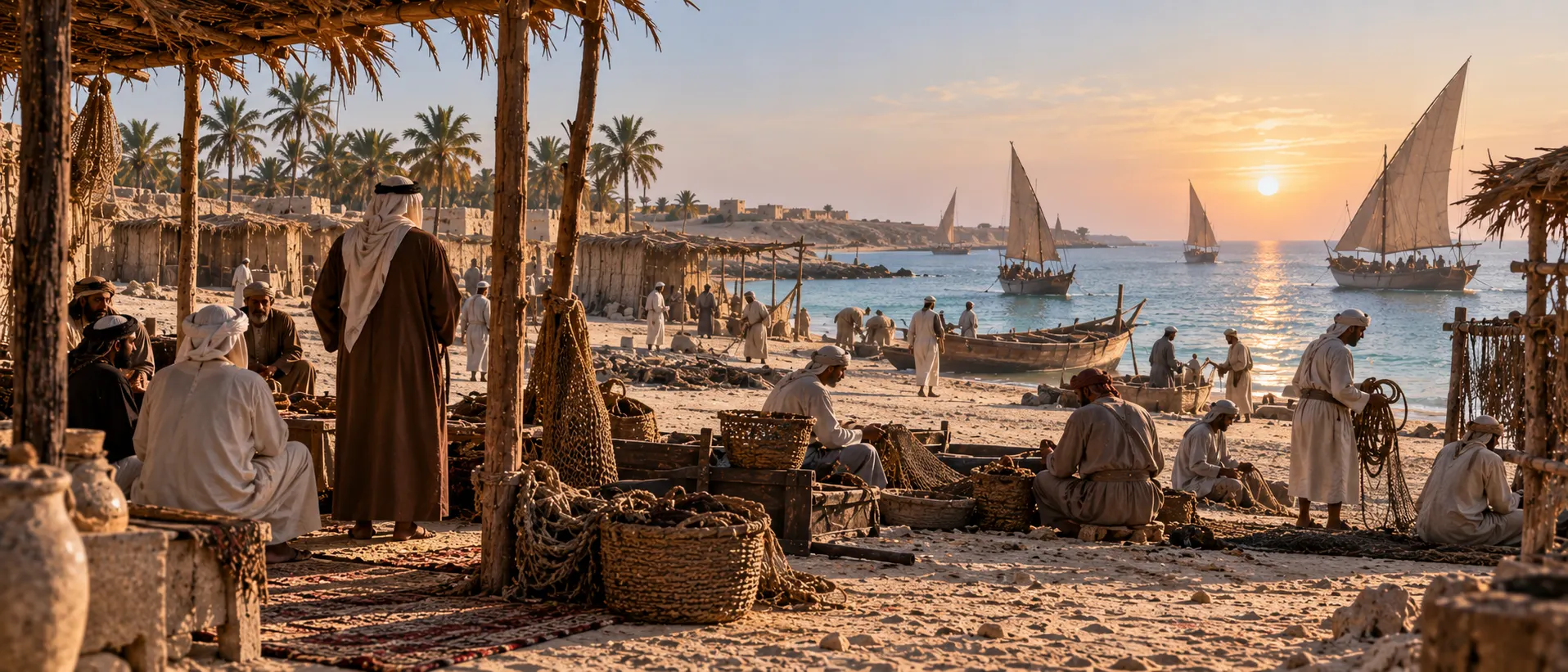
Before Doha became the political centre of Qatar, the ruling family had already moved through generations of Arabian geography. Mohammed bin Thani’s own journey was shorter but decisive: from Fuweirat to Al Bida, from tribal leadership to wider authority, and from local power to an agreement in 1868 that made outside governments increasingly treat Qatar as a distinct political entity.
Before Doha Was Doha, the Family Had Already Been Moving
The story of Mohammed bin Thani begins before Mohammed himself.
The Amiri Diwan traces the Al Thani family’s earlier migration from Ushaiger in Najd to Yibreen, then Askuk, Ruwais, Fuweirat and Zubarah before the family finally settled in Doha.
It is tempting to turn that into one heroic caravan journey. It was not one journey by one man.
It was a sequence of migrations across generations, shaped by trade, security, water, opportunity and the pull of Qatar’s coastal economy.
That distinction matters.
Mohammed Was Born in Fuweirat
Sheikh Mohammed bin Thani was born around 1776 in Fuweirat on Qatar’s northeastern coast.
He grew up there and eventually became chief of his tribe after his father in 1839, according to the Amiri Diwan.
Fuweirat matters because it keeps this story from beginning in the capital.
Qatar’s political centre did not appear fully formed in Doha. Leadership moved through a geography of northern settlements, pearling communities and coastal trade.
Why Families From Najd Were Drawn Toward Qatar
The Amiri Diwan’s history gives a practical explanation for the older migrations.
In the early eighteenth century, families moved from Najd toward Qatar during difficult economic and social conditions, while Qatar’s ports offered attraction through flourishing trade.
That sentence contains an entire world.
The interior offered tribal roots and routes. The coast offered boats, pearls, merchants and access to a much larger maritime economy.
Migration was not only escape. It could be a change of economic horizon.
Pearls Helped Change Social Power
The same official history notes that the pearl trade increased the Al Thani family’s wealth and strengthened its social and financial position.
Again, the sea enters political history.
A family able to participate successfully in trade gained resources, relationships and influence. In a fragmented political landscape, economic strength could help turn local leadership into broader authority.
Our Al Zubarah article shows what a pearl-driven Qatari trading town could look like in an earlier period.
By Mohammed bin Thani’s generation, pearling was still part of the economic world from which political power grew.
1848: The Move to Doha
In 1848, Mohammed bin Thani moved to Doha, then commonly referred to in historical sources through Al Bida, and became its chief.
The Amiri Diwan says his influence then extended across the country.
This is the moment the title Before Doha Was Doha becomes useful.
Doha existed, of course. Al Bida existed. People traded, fished, dived for pearls and lived there.
What did not yet exist was Doha as the unquestioned political, economic and visual centre that it later became.
A Capital Is Not Made Only by Buildings
Modern capitals are easy to recognise: ministries, palaces, roads, embassies, airports.
In Mohammed bin Thani’s period, a political centre was also made by who could bring people together, settle disputes, maintain alliances and speak for communities beyond one settlement.
The Amiri Diwan credits him with uniting the leading Qatari tribes under one banner and strengthening the sovereignty of the country.
Doha became more important because political relationships concentrated there, not because somebody first drew a capital plan.
1851: From Local Chief to Ruler
The Amiri Diwan dates Mohammed bin Thani’s rule from 1851.
That same year, his regional position was strengthened through an alliance with Imam Faisal bin Turki of the Second Saudi State, whom the official biography says he received in Qatar.
This is a reminder that Qatar’s formation happened inside a larger Arabian political world.
The peninsula was not isolated from Najd, Bahrain, Abu Dhabi, British Gulf policy or later Ottoman power.
The Road to 1868 Was Not Peaceful
The agreement of 1868 did not arrive in a calm diplomatic vacuum.
Conflict between Qatar, Bahrain and Abu Dhabi in 1867–1868 brought British intervention through the Political Resident, Colonel Lewis Pelly.
Qatar Digital Library explains that Pelly visited the region to enforce the maritime truce and formalise arrangements after the violence.
The treaty therefore belongs both to Qatar’s state formation and to Britain’s own strategic effort to police Gulf maritime order.
12 September 1868
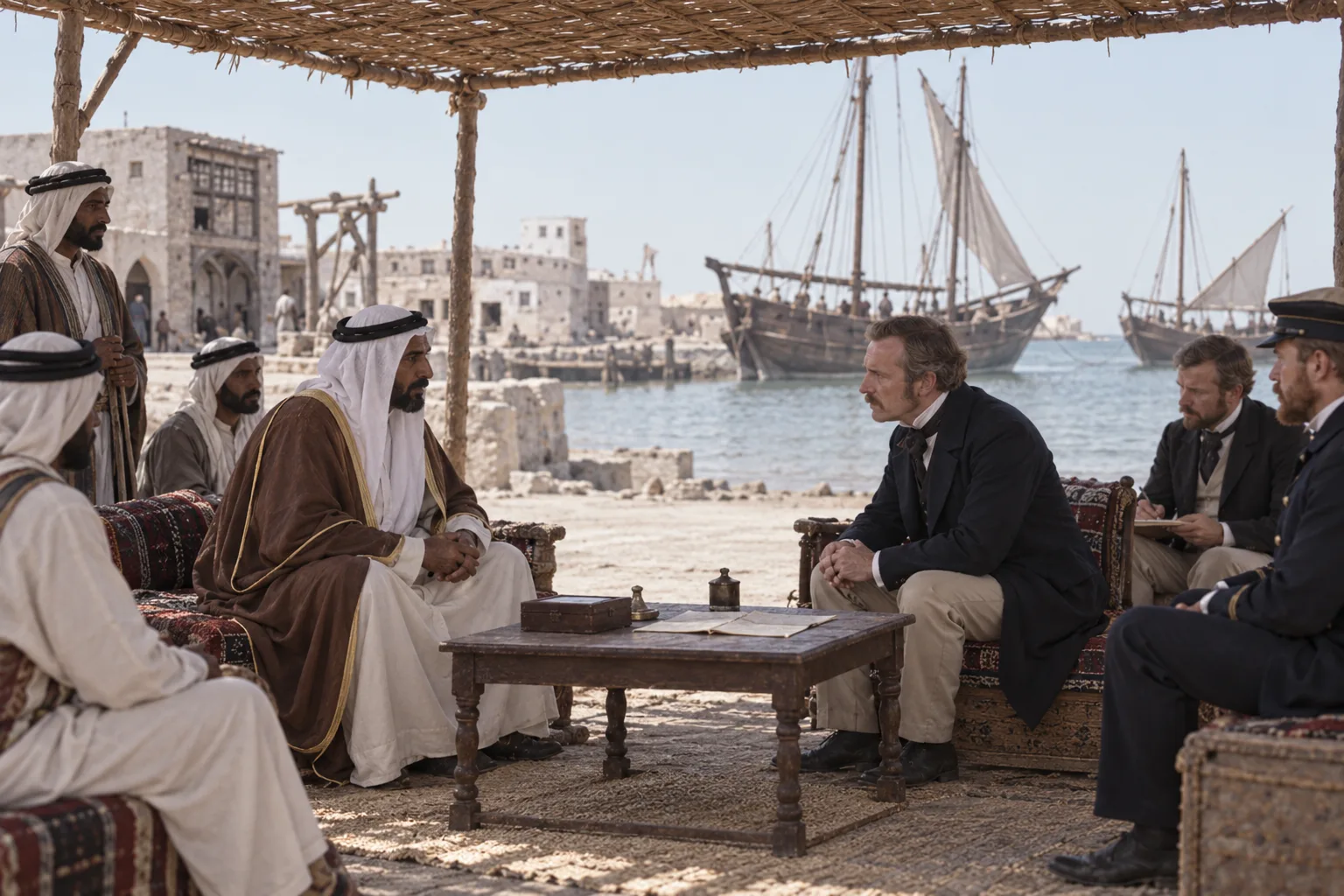
On 12 September 1868, Mohammed bin Thani signed an agreement with Lewis Pelly.
The Amiri Diwan describes it as the first international recognition of Qatar’s sovereignty under Sheikh Mohammed.
Qatar Digital Library phrases the significance more cautiously but just as importantly: Pelly’s declaration recognised Mohammed bin Thani as the principal ruler of Qatari tribes and marked Qatar as distinct from Bahrain.
Both readings point to the same historical change.
Qatar was being treated as a political entity with a recognised representative.
Recognition Is Not the Same as the Modern State Appearing Overnight
This is where historical language needs care.
The 1868 agreement did not create the present State of Qatar in one afternoon.
Borders, administration, external relationships and institutions continued to evolve. Ottoman forces arrived in 1871. Sheikh Jassim later became the central founder figure of the modern Qatari state. A further Anglo-Qatari treaty came in 1916.
But 1868 mattered because outside powers increasingly dealt with Qatar separately.
A political identity that had been built internally was becoming legible externally.
Then the Ottomans Arrived
In 1871, Ottoman forces established a presence in Qatar.
The Amiri Diwan says Ottoman dominance over internal affairs remained limited, while Mohammed bin Thani and his son Jassim retained effective powers.
That created a new political layer rather than erasing what had already been built.
Qatar’s nineteenth-century history is full of these overlapping authorities: local rulers, tribal alliances, Saudi influence, British maritime power and Ottoman claims.
Father and Son Overlapped
One of the most important transitions in the story is that Mohammed bin Thani’s son, Sheikh Jassim, was already involved in the country’s affairs before his father’s death.
Our article The Sheikh Who Wrote Poetry follows Jassim through Nabati poetry, maritime trade, Ottoman tensions and Al Wajbah.
The two articles should not compete over who ‘founded Qatar.’
The official Qatari narrative gives Mohammed bin Thani the role of first ruler and unifier, while Jassim is honoured as the Founder of the State.
State formation is often a family transition before it becomes a national date.
Migration Became Settlement, Settlement Became Authority
This is the larger pattern I see in Mohammed bin Thani’s life.
His ancestors moved across Arabia and within Qatar. He himself grew up in Fuweirat, became a tribal chief, moved to Doha and extended influence outward.
The movement gradually reversed direction.
At first the family moved toward places of opportunity.
Later, other political relationships began moving toward the family.
Doha Was a Port Before It Was a Skyline
Political consolidation worked because Doha was not an empty stage.
It was a coastal settlement within the same Gulf maritime economy that sustained pearling, fishing and trade.
That is why Souq Waqif and our modern cultural route through Doha’s museums make better sense when read against this older city.
Markets, coast and political authority gradually accumulated into a capital.
The towers came much later.
Do Not Turn the Migration Route Into a Perfect Family Legend
The official Al Thani migration route is valuable, but it should be read as a long family history, not as a GPS itinerary followed by Mohammed bin Thani personally.
Ushaiger, Yibreen, Askuk, Ruwais, Fuweirat, Zubarah and Doha belong to different stages and generations.
That makes the story more interesting, not less.
Political families, like other families, are shaped by movement before later histories make them look permanently rooted.
The Purple-Red Banner
The Amiri Diwan credits Mohammed bin Thani with uniting the leading tribes under the purple-red banner that became associated with Qatar.
Flags are powerful because they make unity visible.
But the banner works only after relationships exist beneath it.
The cloth did not unite the country by itself.
It represented the political work of bringing different communities under a shared leadership.
18 December 1878: One Life Ends, Another Era Begins
Mohammed bin Thani died on 18 December 1878.
That same date is central to Qatar’s national memory because Sheikh Jassim succeeded him and Qatar National Day is now observed on 18 December.
Father and son therefore meet in one date.
One man’s long journey from Fuweirat to political leadership ended as the next generation took formal control.
Sources & Further Reading
The main biographical source is the Amiri Diwan biography of Sheikh Mohammed bin Thani, which gives his Fuweirat upbringing, 1848 move to Doha, rule from 1851, 1868 agreement and 1878 death.
The wider family migration route comes from the Amiri Diwan history of Qatar, which traces the Al Thani ancestors from Ushaiger in Najd through Yibreen, Askuk, Ruwais, Fuweirat and Zubarah before settlement in Doha.
For a parallel archival perspective on 1868, Qatar Digital Library explains Lewis Pelly’s Gulf mission and the agreement’s role in recognising Qatar as distinct from Bahrain.
Where this article interprets migration as a change of economic horizon or political gravity, that is editorial analysis built on these documented movements.
Before Doha Was Doha
Doha did not begin when towers appeared.
It did not begin when gas wealth transformed Qatar.
It did not even begin when Mohammed bin Thani arrived in 1848.
But his move to Al Bida marks the moment when a family history of migration and trade became increasingly tied to one political centre.
Before Doha became the city the world recognises, it had to become the place from which Qatar could be spoken for.
That was the journey Mohammed bin Thani helped complete.
Questions People Ask
He was Qatar’s first ruler according to the Amiri Diwan, ruling from 1851 to 1878 and playing a central role in uniting the country’s leading tribes.
He was born around 1776 in Fuweirat in northeastern Qatar.
The Amiri Diwan records his move to Doha, or Al Bida, in 1848.
No. The longer route from Ushaiger in Najd through several Qatari settlements describes earlier Al Thani family migrations across generations. Mohammed himself was born in Fuweirat.
On 12 September 1868, Mohammed bin Thani signed an agreement with British Political Resident Lewis Pelly after regional conflict.
Qatar’s official history treats it as the first international recognition of Qatari sovereignty; Qatar Digital Library also highlights its recognition of Qatar as distinct from Bahrain under Mohammed bin Thani’s leadership.
Ottoman forces established a presence in Qatar in 1871.
Mohammed was the father of Sheikh Jassim bin Mohammed Al Thani, who succeeded him in 1878.
He died on 18 December 1878.
Continue Through Qatar’s Foundations
Mohammed bin Thani’s journey leads naturally into Sheikh Jassim, the pearl ports that preceded them and the modern Doha that later grew around the same coast.