
Emirates Heritage — Meski · Sharjah · UAE
Ghaf Honey:
The UAE’s Best-Kept Secret
The Ghaf tree — الغاف — has been the national tree of the UAE since 2008. It survives in pure desert without irrigation, without care, without any help from anyone. The honey its flowers produce is almost unknown outside the Emirates. It should not be.
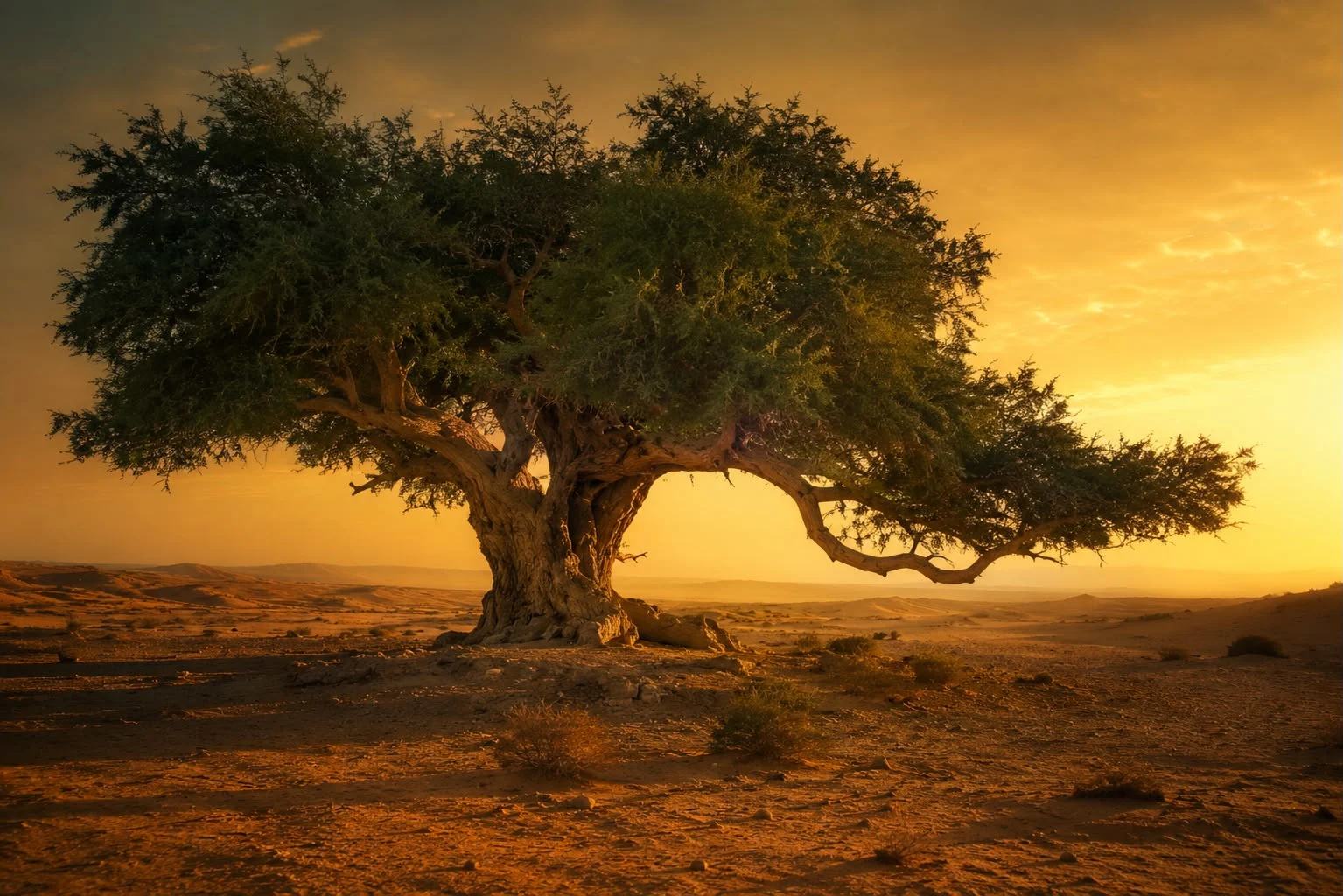
Most people in Dubai and Abu Dhabi walk past Ghaf trees every day without knowing what they are. They grow along roadsides, in desert parks, in the wadis of Fujairah and the dunes of Abu Dhabi. Small, thorned, unpretentious. Nothing about their appearance suggests that what they produce — briefly, once a year, from tiny yellow flowers that most people never notice — is one of the most locally significant honeys that exists anywhere in the Emirates. Almost no one outside the UAE has tasted it. Very few inside the UAE know to look for it. This is the article that changes that.
The Tree That Should Not Exist
To understand Ghaf honey, you first have to understand the tree that produces it. The Ghaf — الغاف, Prosopis cineraria — is, by any reasonable assessment, a tree that should not be able to exist where it grows. The UAE desert offers temperatures above 50°C in summer. Rainfall that averages less than 100mm per year. Sand that holds almost no water at the surface.
The Ghaf does not notice. Its taproot — documented by the UAE Flora database as growing up to 60 metres into the earth — finds water that nothing else can reach. It stays green when everything around it turns brown. The Environment Agency of Abu Dhabi calls it essential for the survival of animal and plant species alike. It can live for 120 years. Some individual trees in the Emirates are believed to be over 400 years old.
In 2008, the UAE declared it the national tree. In 2019, it became the symbol of the Year of Tolerance — chosen because it offers shade, shelter, and sustenance to everything that passes beneath it, without asking anything in return. That is the tree whose flowers the bees find, once a year, and turn into something worth keeping.
60m
Maximum depth of the Ghaf taproot — how it finds water in pure desert
120
Years a Ghaf tree can live — some UAE specimens believed to be 400+ years old
2008
Year the UAE declared the Ghaf its national tree — symbol of tolerance since 2019
What the Honey Tastes Like
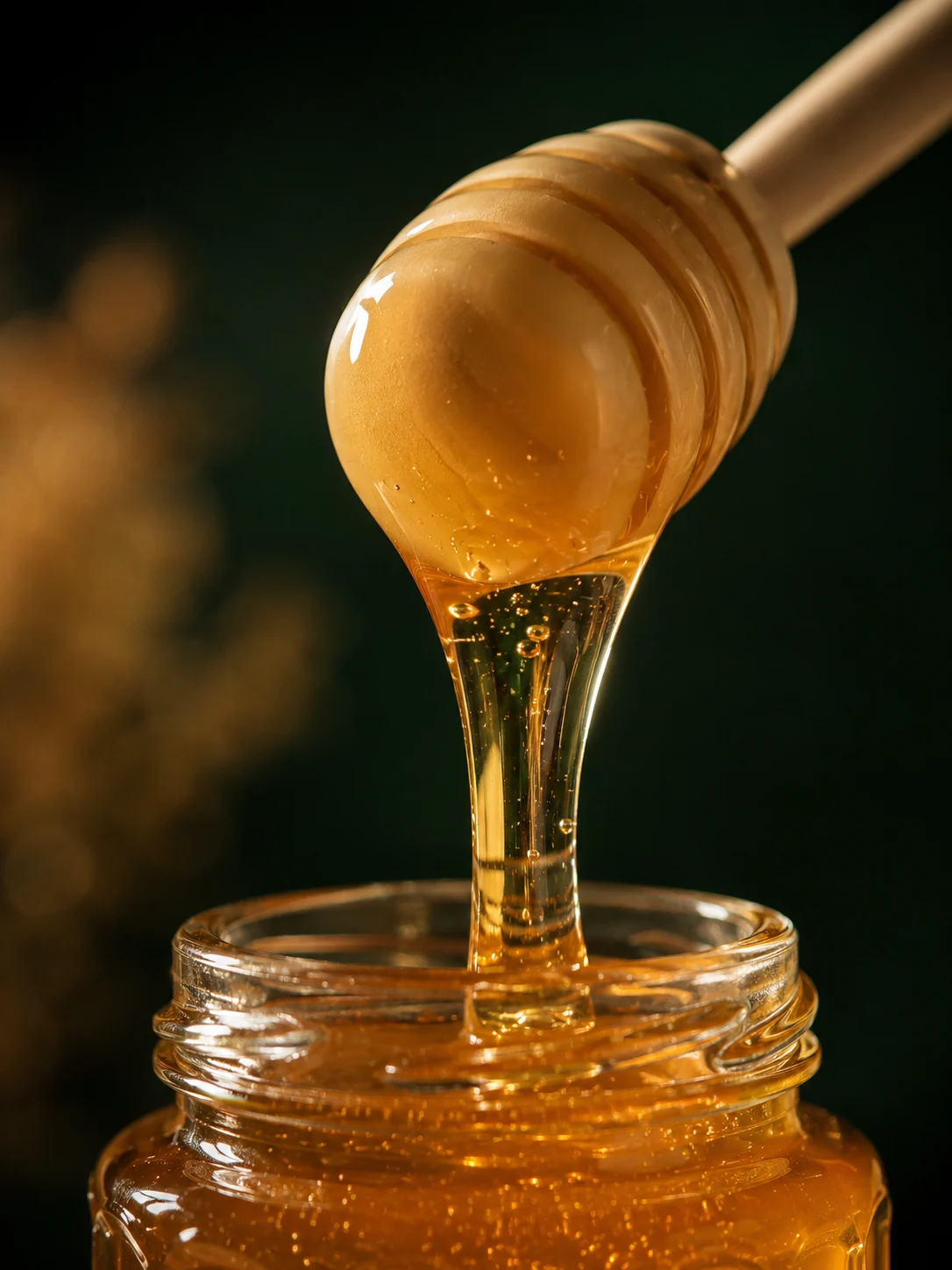
Ghaf honey is light amber — noticeably paler than Sidr, closer in colour to a good acacia honey. Its flavour is distinctive in a way that takes a moment to place: caramel first, then something almost buttery, a faint whisper of the desert itself — warm, mineral, dry — beneath the sweetness. Some describe it as butterscotch.
It is not as intense as Sidr — عسل السدر. It does not have the deep woody complexity of Yemeni mountain honey. What it has is something different and rarer in the honey world: a flavour that is entirely, unmistakably, from this place. From the UAE’s desert. From a tree that is part of this country’s official identity.
You cannot find this flavour in Morocco or Yemen or New Zealand. It is local in a way that very few honeys anywhere in the world can claim — produced by a protected national tree, in a habitat that exists nowhere else on earth in quite the same form.
The Ghaf has survived in the UAE desert for centuries without anyone’s help. The honey it gives once a year carries that quiet endurance in every spoonful.
Why So Few People Know It
Ghaf honey is rare for reasons that have nothing to do with marketing. It is rare because the tree flowers briefly — a few weeks, once a year — and because the Emirates’ desert landscape supports a bee population that is itself limited by the aridity of the environment.
There are no Ghaf honey farms in the conventional sense. What exists are traditional beekeepers — Emirati families, mostly in the mountain wadis of Fujairah and the desert oases of Abu Dhabi and Sharjah — who have maintained hives near Ghaf trees for generations, reading the season, reading the bees, knowing which wadis produce and which do not.
The UAE Flora database formally lists the Ghaf under “Apiculture” — confirming its documented role as a nectar source for honey production. The Environment Agency Abu Dhabi notes that within Abu Dhabi emirate specifically, the Ghaf is considered locally endangered due to urbanisation and habitat loss. The honey it produces is not just rare. It is becoming rarer.
Ghaf and Sidr — The Two Emirates Honeys
The UAE produces two honeys with genuine local identity. Sidr — عسل السدر — from the jujube trees of the Hatta mountains, dense and dark and awarded internationally. And Ghaf — عسل الغاف — from the national tree of the desert plains, lighter and more delicate, almost unknown outside the country.
They are not the same honey. They are not trying to be. Sidr carries the weight of centuries of Arab trade routes, Quranic reference, and mountain terroir. Ghaf carries something more intimate — the specific landscape of this country, the tree that the UAE chose to represent itself, the flavour of a desert that has learned to sustain life where no one expected it.
For someone who wants to taste the UAE in a jar — not the UAE of superlatives and records, but the UAE of the desert and the wadi and the bees that were here long before the towers — Ghaf honey is the more honest answer.
Questions About Ghaf Honey
Ghaf honey is light amber with a caramel-butterscotch flavour profile. It is sweeter and lighter than Sidr honey, with a faint floral note from the Ghaf tree’s small yellow flowers and a subtle warm mineral character that reflects the desert environment. It pairs naturally with Arabic bread, labneh, and warm tea.
The Ghaf tree flowers briefly once a year, in a desert environment that limits bee populations. There is no industrial Ghaf honey production — what exists comes from traditional Emirati beekeepers maintaining hives near Ghaf groves in wadis and oases. The Environment Agency Abu Dhabi also notes that the Ghaf is locally endangered in Abu Dhabi emirate due to urbanisation, which further limits future production potential.
They are different honeys with different characters, not competitors. Sidr is denser, darker, more complex — with deep phenolic richness and centuries of cultural significance. Ghaf is lighter, more approachable, and carries something Sidr cannot: it comes from the UAE’s own national tree, produced in the Emirates’ desert, with a provenance that is entirely local. For daily use and gifting within the UAE specifically, Ghaf honey offers a story that no imported honey can match.
The Ghaf tree grows across all seven emirates. The most productive areas for Ghaf honey tend to be the mountain wadis of Fujairah and Ras Al Khaimah, where the combination of Ghaf trees, Sidr trees, and wild desert flowers gives bees a diverse nectar environment. The UAE Flora database specifically lists Wadi Wurayah National Park in Fujairah as a documented Ghaf apiculture site.
The UAE declared the Ghaf its national tree in 2008 because it embodies values the country identifies with: resilience, sustainability, and the ability to sustain others in a harsh environment. In 2019 it became a symbol of tolerance — because it gives to everything that passes beneath it without discrimination. Its honey, in this context, is not simply a food product. It is the yield of the country’s own symbol.
Two Trees. One Emirates.
The Sidr honey from Hatta and the Ghaf honey from the desert wadis are the two faces of Emirati honey — one ancient and internationally recognised, one local and almost undiscovered. Both worth knowing. Both worth tasting.
Explore the range