
Four botanical worlds reveal adaptation to desert, mountain and coast.
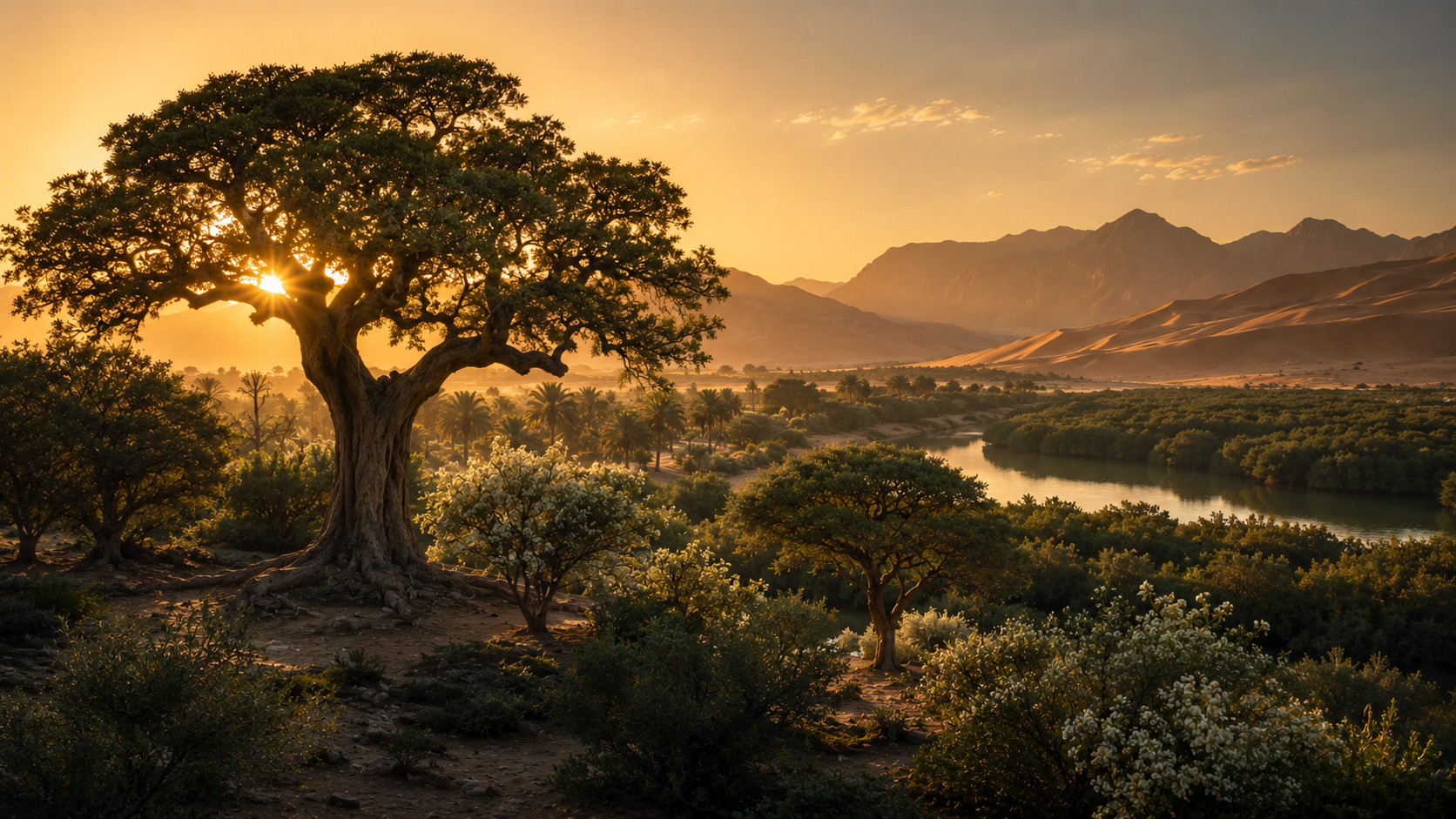
The UAE is often imagined through sand and skyline, yet its native plant life tells a richer story of deep roots, seasonal flowering and salt tolerance.
The UAE Is Not Botanically Empty
Native plants occupy desert, mountain, coastal and marine environments.
Their sparse distribution reflects adaptation to water, salinity and soil.
Use botanical names carefully
Common names can vary and similar species may be confused.
Four Essential Native Tree Stories
Each expresses a different survival strategy.
Ghaf
National tree associated with resilience and shade.
Sidr
Jujube tree valued for fruit, culture and bee forage.
Samar
Desert acacia-type tree important to pastoral landscapes.
Mangroves
Salt-tolerant coastal forests supporting marine life.
Why These Trees Matter
Native trees provide shade, forage, nesting structure, nectar and soil stability.
Mangroves protect shorelines and shelter juvenile marine organisms.
Native Trees and Their Ecological Settings
Each species is tied to particular conditions.
| Tree | Typical setting | Contribution |
|---|---|---|
| Ghaf | Desert plains | Shade and habitat |
| Sidr | Wadis and foothills | Nectar and fruit |
| Samar | Dry desert | Forage and flowers |
| Mangroves | Saline coasts | Shore protection |
Protect Mature Trees and Complete Habitats
A newly planted tree cannot immediately replace the habitat and genetic value of a mature specimen.
Conservation must protect root zones, water flows and surrounding ecological relationships.
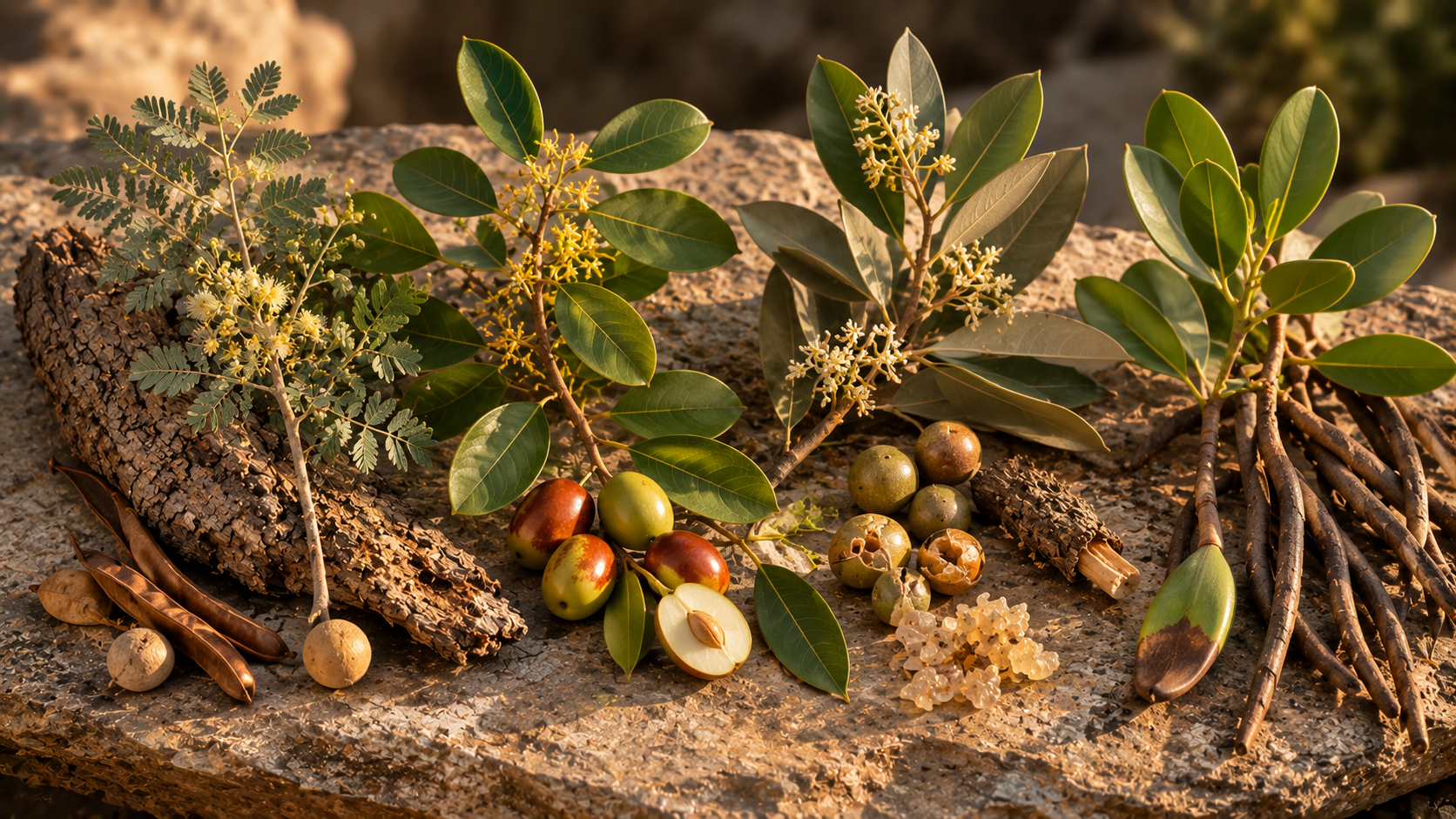
Desert
Ghaf, Sidr and Samar reveal dryland resilience.
Coast
Mangroves reveal salt tolerance.
Conservation
Mature habitats need long-term protection.
Selected Sources and Further Reading
Frequently Asked Questions About Native UAE Trees
The Ghaf.
Ziziphus spina-christi is accepted as native across the Gulf region.
A regional name associated with desert acacia-type trees.
Yes, salt-tolerant woody plants.
They protect shores and support marine life.
They provide established habitat and genetic value.
Yes, depending on flowering and hive placement.
Avoid damage and support native conservation programmes.