
Discover why the most meaningful purchases are guided by genuine curiosity, personal understanding and cultural knowledge — rather than price, popularity or packaging.
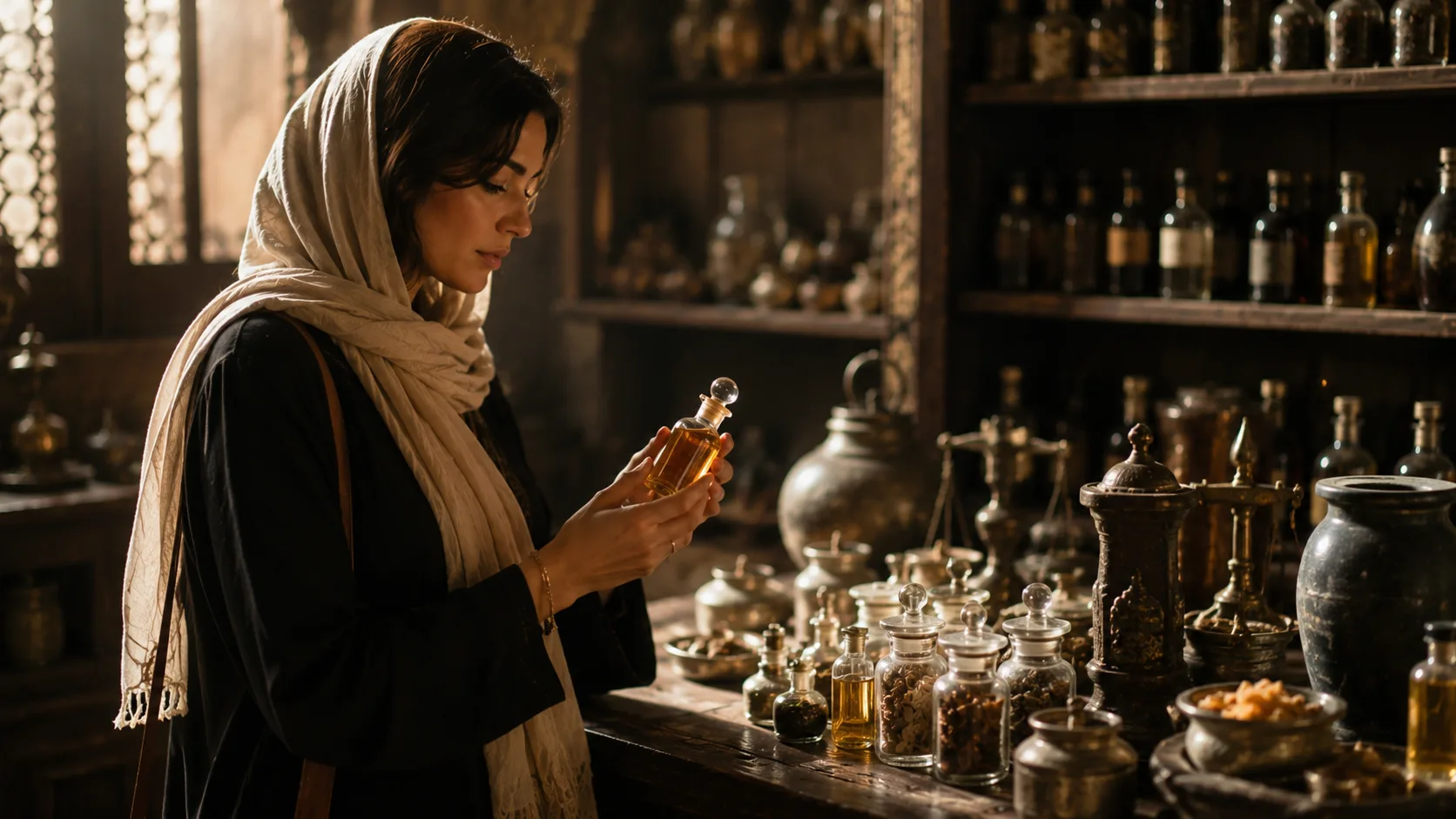
Buying with curiosity transforms a simple transaction into an act of knowledge. Whether you are choosing authentic food products, artisan honey or a gift that carries meaning, the most confident buyers are not those who follow crowds — they are those who ask questions, listen carefully, and choose with genuine understanding.
A Different Way to Buy
I don’t buy something because everyone else buys it. I buy it because it speaks to me.
That sentence may seem simple. But follow it to its conclusion and it changes everything about the way you shop, the way you eat, the way you travel, the way you choose gifts — and the way you understand the world.
Most of us have been trained, quietly and persistently, to buy differently. We are shown what is trending. We are told what is popular. We are guided by star ratings, viral reviews and the reassurance that millions of other people chose the same thing before us. There is comfort in that. But there is also a loss: the loss of the moment when something speaks directly to you, and only to you.
Curiosity does not follow crowds. It follows interest. It pauses in front of the unusual jar on a market shelf. It asks questions that others have already left behind. It finds its way into a conversation with a beekeeper, a date farmer, a grandmother who remembers a recipe no one has written down. And that is where the most meaningful discoveries begin — not in the trending section of an online shop, but in the quiet act of wanting to understand.
This is not an article about rejecting commerce. It is an article about transforming it — from an act of acquisition into an act of knowledge.
Buying with Curiosity
When a child encounters something unfamiliar — a new fruit, a new smell, a jar of something golden and thick — the first instinct is never to check the price. The first instinct is to ask: What is this? Where does it come from? Can I taste it?
Somewhere between childhood and adulthood, many of us trade that instinct for a shortcut. We look at the packaging. We check the number of reviews. We compare the price with a similar product and make a decision based on information that, in truth, tells us very little about what we are actually buying.
Curiosity is the restoration of that original instinct. It is the willingness to slow down before choosing — not out of indecision, but out of genuine interest in what lies behind the label.
What Curiosity Actually Means in Practice
Curiosity, applied to buying, is not complicated. It begins with a few simple habits.
It means asking where something was made — not to judge, but to understand. A honey harvested from wild Sidr trees in the mountains of Yemen carries a story entirely different from a honey packaged in a factory warehouse. Both may occupy the same shelf. Only one of them has a story worth knowing.
It means reading beyond the front of the label. The front of a jar is designed to attract. The back — with its origin, its process, its producer — is where the honest conversation begins.
It means noticing texture, colour and scent before taste. Raw honey from mountain flowers crystallises differently from honey produced at lower altitudes. A deep amber jar behaves differently on the tongue than a pale golden one. These differences are not flaws. They are signatures.
And it means being willing to admit what you do not yet know — because that admission is precisely what opens the door to learning something worth remembering.
Why Diversity Makes the World Richer
Imagine, for a moment, that everyone in the world liked exactly the same things. The same honey. The same coffee. The same perfume. The same style of architecture and the same way of welcoming a guest.
The idea sounds efficient. It would be a catastrophe.
Diversity is not merely a social ideal. In the world of food, craft and culture, it is the source of everything worth discovering. The reason that a thyme honey from a Greek hillside tastes nothing like a Sidr honey from a Yemeni valley — and that both are extraordinary — is precisely because the bees, the flowers, the altitude, the wind, the season and the hands of the beekeeper are all different. These differences are not accidents. They are the accumulated result of landscape, climate and centuries of human knowledge passed quietly from one generation to the next.
When we choose based solely on what is popular, we risk collapsing that diversity. We begin to reward one taste, one origin, one appearance — and in doing so, we allow a thousand others to fade quietly from existence.
The World Has More Than One Honey
There are, depending on how you count, more than three hundred distinct varieties of honey documented in the United States alone. Across the world — across Morocco, the Arabian Peninsula, Turkey, Ethiopia, New Zealand, Provence, the mountains of Oman — the number multiplies into something close to infinite.
Acacia honey from Hungary is almost transparent, slow to crystallise, with a delicate sweetness that dissolves without heaviness. Buckwheat honey from the American Northeast is dark, almost molasses-like, with a mineral depth that surprises first-time tasters. Sidr honey from the valleys of Hadramawt has a density and warmth that has made it one of the most prized honeys in the Arabian world for centuries. Lavender honey from Provence carries the scent of its source so clearly that closing your eyes and tasting it is, briefly, like standing in a summer field.
None of these is better than the others. Each is a place, captured in amber.
When you allow curiosity to guide you, you do not choose between them. You explore them — one by one, with the same patience you would give to learning any language worth speaking.
Asking Better Questions
There is a kind of confidence in asking questions that looks, from the outside, like expertise. The person who asks a beekeeper which flowers were blooming at the time of the harvest is not necessarily a specialist. They are simply someone who has decided that understanding matters more than appearing to already know.
Don’t be afraid to ask questions. Every answer teaches you something. Every question brings you closer to authenticity.
That principle holds across every market, every shop, every encounter with a producer or a craftsperson. People who make things well — who raise bees, press olives, cure dates, weave baskets, roast coffee — almost universally welcome a genuine question. It tells them that you see their work rather than simply its price.
What to Ask When You Don’t Know Where to Begin
If you are new to buying honey with intention, a few questions open almost every door:
Where do the bees forage? This tells you the floral character of the honey — the specific landscape encoded into its flavour.
Is this honey raw or processed? The difference matters practically. Raw honey retains its natural enzymes, pollens and aromatic compounds. Processing — particularly heating above certain temperatures — dissolves much of what makes a honey distinctive.
How is the harvest carried out? A beekeeper who answers this question with ease and detail is almost always someone who takes genuine care of their craft.
How should I store it, and what should I expect it to do over time? Crystallisation, colour changes, shifts in aroma — these are all signs of a living product, not a defective one. A producer who explains this openly is one you can trust.
These questions work equally well for olive oil, for dates, for coffee, for any traditional food that carries the memory of a place. The specific words are less important than the genuine interest behind them.
Learning from Every Conversation
There is a quiet assumption that runs through much of modern commerce: that the seller knows everything and the buyer knows nothing. The transaction moves in one direction. The knowledge, presumably, comes pre-packaged with the product.
That assumption flattens something important.
Every person who walks into a market — every traveller, every curious reader, every grandmother who has been buying dates from the same seller for forty years — carries knowledge that cannot be found on a label. The traveller who has tasted honey in three different countries brings a comparative understanding that no brochure can replicate. The grandmother carries a standard of freshness, sweetness and texture that she has refined over decades, without ever having read a single article about it.
Every Person Carries Knowledge Worth Discovering
Someone may know honey — the difference between a spring harvest and an autumn one, between bees kept at altitude and those kept near orchards.
Another person may know bees — their behaviour across seasons, the signs of a healthy colony, the way a poor summer affects the taste of what comes after it.
Someone else understands coffee — the roasting levels that suit particular beans, the water temperature that changes an entire cup, the way a Yemeni bean differs from an Ethiopian one not only in taste but in history.
Another has spent a lifetime growing olive trees — watching the same trees his grandfather planted produce differently in wet years and dry years, understanding that the oil from slightly underripe fruit tastes sharper and lasts longer.
Curiosity allows all these worlds to meet. When you approach a producer with a genuine question, you are not asking them to convince you. You are inviting them to share something they know — and that invitation, more often than not, is returned.
Never underestimate what you yourself can teach others. Your experience of a flavour, your memory of a tradition, your question about something no one else has noticed — these are contributions to a shared conversation that becomes richer every time someone chooses curiosity over convenience.
Choosing with Confidence
There is a paradox at the centre of this subject that is worth naming clearly.
The person who buys based on price, packaging and popularity feels, in the moment of purchase, very certain. They have the reviews. They have the brand recognition. They have the reassurance of crowds. And yet, in many cases, they know almost nothing about what they have actually chosen.
The person who has asked questions, who has tasted, who has listened to the story behind a product, who has understood — even imperfectly — where something comes from and how it was made — that person chooses with a different kind of confidence. Not the confidence of the crowd. The confidence of understanding.
On Price, Packaging and Popularity
Let us be direct about three things that deserve more scepticism than they usually receive.
Price. An expensive product is not automatically a better one. In the world of honey alone, some of the most extraordinary varieties — harvested by small family beekeepers in remote regions, produced in modest quantities without marketing budgets — cost less than commercially produced honeys sold in beautiful bottles at double the price. Price reflects many things: branding costs, import fees, market positioning, scarcity created by demand. It does not always reflect the quality of the craft, the honesty of the process, or the depth of the flavour.
Packaging. A beautiful jar is a pleasure. But the beauty of the jar tells you nothing about what is inside it. The most trusted artisan producers in the world often use the plainest containers, because their confidence lives in the product — not in its presentation. This does not mean all beautiful packaging is dishonest. It means that packaging alone should never be the reason you buy.
Popularity. A product that a million people buy may be genuinely good. It may also be the product with the largest advertising budget, the most aggressive SEO, or the most shareable image. Popularity measures reach. It does not measure craftsmanship, authenticity, or the care of the person who made the thing you are considering buying. History is full of products that were universally loved until someone looked closely and found they were largely illusion.
None of this is cause for cynicism. It is cause for curiosity.
Final Thoughts
The best purchase is not the one everyone recommends. It is the one you truly understand.
Understanding comes from questions asked honestly and answered openly. It comes from conversations with people who have spent years — sometimes generations — learning something worth knowing. It comes from tasting slowly, from reading carefully, from being willing to say I don’t know yet rather than pretending to certainty that was never earned.
This is not a counsel of perfectionism. You will not always have time to investigate every purchase. You will sometimes buy on instinct or convenience, and that is entirely reasonable. But when something matters — a gift for someone you love, a product you will bring into your home and eat, an object that carries tradition — that is when curiosity repays every moment you give it.
The world is full of extraordinary things made by people who care deeply and who rarely appear in the places that are easiest to find. They are in markets and valleys and workshops and family homes. They are on hillsides tending hives and in groves tending trees and in kitchens preserving recipes that no algorithm has yet indexed. The only way to find them is to look — and to ask.
At The House of Meski, we try to be one of those places where a genuine question is always welcome — whether you buy something today, in five years, or never. The conversation itself is enough.
نسأل الله أن ييسر لكم الخير حيث كان
May God make goodness easy for you, wherever it may be found.
Begin with a Honey Worth Understanding
If you are ready to explore beyond what is most widely sold, our raw honey collection offers origins from Oman, the UAE, Morocco and Corsica — each with a story, a landscape and a producer behind it.
Frequently Asked Questions
Buying with curiosity means approaching a product with a genuine desire to understand it — its origin, its production method, its cultural context and what makes it different — before making a decision based solely on price, brand or popularity. It transforms a simple transaction into an act of learning.
Price reflects many factors: branding, marketing, import costs, packaging design and market positioning. A product can carry a high price without superior craftsmanship, and a genuinely excellent product — made by a small producer with no advertising budget — may cost far less. Understanding what you are buying is more reliable than using price as your only guide.
Start with the basics: Where do the bees forage? Is the honey raw or has it been heated during processing? Was it harvested from a single floral source or a blend? Who produced it, and how do they keep their bees? These questions are not difficult to ask, and a producer who welcomes them openly is usually one worth trusting.
Beautiful packaging is not dishonest — but it should never be the primary reason for a choice. A well-designed label signals investment in presentation. It does not guarantee the quality, origin or authenticity of what is inside. The most reliable artisan producers often let their product speak for itself.
When everyone buys the same products, the variety and richness of regional craftsmanship gradually disappears. Small producers, traditional methods and regional varieties survive when people are willing to explore beyond what is most widely sold. Diversity in preference is not merely a personal pleasure — it is a form of cultural preservation.
Confidence comes from understanding, not from the reassurance of crowds. The more you ask, taste, read and listen — the more you accumulate personal knowledge that allows you to choose for reasons that are genuinely your own. This process takes time, but each question you ask brings you closer to it.
An artisan product is one made by hand or through traditional methods, typically in small quantities, by someone with deep knowledge of their craft. The defining qualities are care, skill, and the presence of human judgment at every stage of production — as opposed to industrial automation designed to maximise volume at minimum cost.