
A refined, practical guide to building a balanced lifestyle — where nourishment and pleasure coexist, and where quality ingredients replace empty restriction.
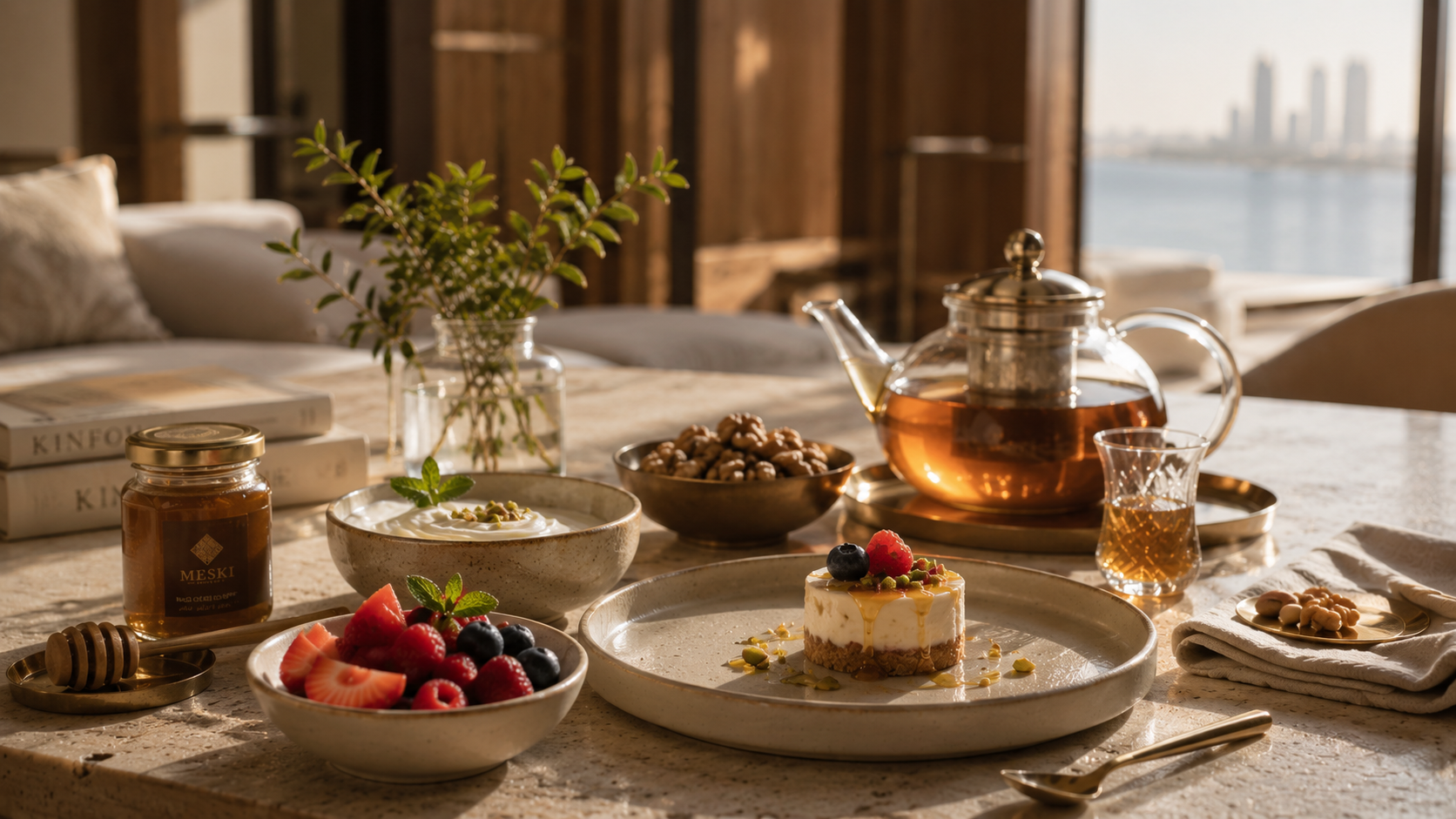
Healthy eating without deprivation is not a compromise — it is a philosophy. True well-being is found in discernment: choosing with intention, eating with awareness, and building habits that feel as natural as they are nourishing. Whether you are in Dubai or Riyadh, London or New York, the principles are universal — when you eat well without punishing yourself, the results are not only more sustainable, they are infinitely more enjoyable.
Why Restrictive Diets Often Fail
The appeal of a strict diet is understandable. The promise is simple: cut this out, lose that. But the science tells a more complex story. When the body senses a significant caloric deficit, it responds with a coordinated biological pushback — slowing metabolism, increasing hunger hormones such as ghrelin, and reducing satiety signals. Research consistently shows that most weight lost on restrictive diets is regained within twelve months of stopping — and often with additional weight gained on top.
A landmark review cited by nutritionists found that hormonal adaptations triggered by calorie restriction can persist for at least twelve months after the diet ends — meaning the body continues actively working against the restriction long after the person has stopped dieting. This is not a failure of willpower. It is a biological response.
The All-or-Nothing Trap
When a single food is labelled as forbidden, the craving for it intensifies. Research in behavioural nutrition shows that eliminating pleasurable foods triggers stronger cravings, increases stress around eating, and often leads to cycles of restriction followed by overindulgence — the so-called yo-yo effect. The shift from removing to choosing is where lasting change begins.
Build Healthy Habits Instead of Following Diets
Lasting change is not dramatic. It is built incrementally, through small decisions repeated daily until they become effortless. Rather than overhauling everything at once, identify one or two anchors — a morning ritual, a hydration habit, a weekly meal you genuinely enjoy preparing — and build from there. Habit research consistently shows that people who maintain healthy lifestyles long-term are not those who exercised the most willpower at the start, but those who created low-effort systems aligned with their existing routines.
Start Small, Stay Consistent
Choose one repeatable daily action — a nourishing breakfast, a hydration ritual, a walk after dinner. Consistency over intensity is the engine of sustainable change.
Anchor Your Day With Nourishing Rituals
In many cultures across the Gulf and the broader Arab world, the morning begins with warm water, a handful of dates, or a spoonful of raw honey — not as a health protocol, but as a tradition of care and intention. Beginning the day with something deliberate and unhurried sets a tone that carries through every subsequent choice.
Stack Habits, Not Rules
Attach new behaviours to existing ones: a glass of water before coffee, vegetables before the main course, stillness before a meal. These micro-decisions compound into a lifestyle.
Portion Control Without Feeling Hungry
Portion control is frequently misunderstood as eating less. In practice, it is about eating proportionately. A well-structured plate — roughly half vegetables and leafy greens, a quarter lean protein, a quarter whole grains or complex carbohydrates — provides both volume and satiety without the experience of deprivation. Because whole grains and vegetables are high in dietary fibre, they create a sustained feeling of fullness that refined carbohydrates simply cannot match.
| Plate Section | Content | Benefit |
|---|---|---|
| 50% | Vegetables & leafy greens | High fibre, high satiety, low density |
| 25% | Lean protein | Sustained fullness, muscle support |
| 25% | Whole grains / complex carbs | Slow-release energy, digestive health |
| Limit | Refined carbs & added sugars | Rapid blood sugar spikes, low satiety |
The physiological signal of fullness travels from the stomach to the brain in approximately twenty minutes. Slowing down — putting the fork down between bites, chewing thoroughly, engaging with flavours and textures — allows the body’s natural satiety mechanisms to function as intended. Traditional dining culture across the Middle East has always privileged the experience of eating: a communal table, unhurried conversation, food served in thoughtful sequence. These are, in the language of modern nutrition science, evidence-based behaviours.
Choosing Quality Over Quantity
There is a fundamental difference between eating less and eating better. When the quality of what is on the plate is genuinely high — produce that is fresh and flavourful, proteins that are well-sourced, fats that are rich and real — the eating experience becomes more satisfying with smaller quantities. This is the logic behind why premium extra-virgin olive oil, drizzled generously over a simple salad, is more satisfying than a tablespoon of industrial dressing. Quality, in food as in life, achieves more with less.
Yemeni Do’ani Sidr Honey
Cold-extracted from the highlands of Yemen, Do’ani Sidr honey is among the most prized raw honeys in the world — dense, complex, and rich in natural antioxidant compounds. A small drizzle over labneh or warm water with lemon is a morning ritual of genuine nourishment.
Omani Sidr Honey
Harvested from the valleys of Oman, this raw Sidr honey carries the mineral depth of its terroir. Spooned alongside a handful of walnuts or stirred into a warm drink, it transforms a simple moment into a nourishing ritual.
Moroccan Olive Oil Tazaouia
A premium cold-pressed olive oil from Morocco’s ancient groves — rich in monounsaturated fats and polyphenols. A generous drizzle over vegetables or a simple salad delivers flavour and satiety that processed alternatives cannot approach.
The Role of Natural Sweeteners in a Balanced Diet
The desire for something sweet is not a weakness to be eliminated — it is a natural human inclination to be guided intelligently. Among the most thoughtful substitutions available is the replacement of refined sugar with high-quality raw honey. Unlike refined sugars, raw honey contains trace enzymes, flavonoids, and phenolic acids — natural antioxidant compounds absent from processed sweeteners.
A meta-analysis from researchers at the University of Toronto found that moderate consumption of raw and monofloral honeys was associated with positive effects on certain cardiometabolic health markers, including blood sugar and cholesterol levels, when consumed as part of a balanced diet. At Meski Dates Factory, our raw Sidr honeys — harvested in the highlands of Yemen and the valleys of Oman — are cold-extracted and unprocessed, preserving the full complexity of their natural composition.
Enjoying Desserts Without Guilt
The idea that dessert must be earned or repented is one of the more counterproductive narratives in modern wellness culture. Research in nutritional psychology consistently demonstrates that attaching guilt to food makes the relationship with eating less healthy, not more. A more elegant approach is to make the dessert itself worthy of the occasion: a bowl of fresh fruit with a drizzle of raw Sidr honey and a pinch of cinnamon, or a traditional Arab dessert made with whole ingredients and natural sweeteners.
When the dessert is truly excellent, a small amount is entirely sufficient. The experience is complete. There is no aftertaste of guilt — only the clean satisfaction of something well chosen.
Choose Quality Sweetness
Opt for naturally sweetened options — raw honey, fresh fruit, quality dark chocolate — over ultra-processed sweets. The depth of flavour means less is always more.
Make It an Experience
Plate your dessert deliberately. Eat it without a screen. Savour each element. The ritual of attention transforms a small indulgence into a complete and satisfying experience.
No Arithmetic, No Apology
Counting calories around dessert increases anxiety and reduces satisfaction. Trust your body’s signals and the quality of what you have chosen — then move on without commentary.
The Importance of Mindful Eating
Mindful eating is one of the most evidence-supported approaches to long-term dietary well-being — and one of the most frequently misunderstood. It means bringing deliberate attention to the experience of eating: noticing flavours, textures and aromas; recognising hunger and fullness signals; eating without the distraction of screens or multitasking. Studies have found that people who practise mindful eating tend to consume fewer calories without consciously trying to, report greater satisfaction from meals, and experience less anxiety around food choices.
In the Gulf tradition, the act of sharing a meal has always carried ceremonial weight — from the preparation of coffee and dates to welcome a guest, to the careful arrangement of dishes for a family gathering. This cultural instinct toward hospitality and presence at the table is, in many ways, mindful eating in its most natural and most ancient form. The wisdom of the table, passed across generations, anticipated what nutritional science is only now confirming.
Creating a Sustainable Healthy Lifestyle
A sustainable healthy lifestyle is not a destination — it is an ongoing relationship with your own body, appetites and circumstances. The framework that endures is not the strictest one, but the most honest one: it accounts for the days when cooking is impossible, for celebrations that call for indulgence, and for the simple reality that eating is one of life’s greatest pleasures.
Plan Without Rigidity
Have a general framework for weekly meals without punishing yourself for departing from it. Flexibility is not failure — it is sustainability.
Stock Your Kitchen Intentionally
When quality ingredients — raw honey, cold-pressed olive oil, whole grains, fresh produce — are readily available, convenience and nutrition are no longer in conflict. A well-stocked pantry is the foundation of effortless healthy eating.
Hydrate Consistently
In the warmth of the Gulf climate, adequate hydration is a foundational pillar of both energy and appetite regulation. Begin each morning with water before anything else.
Move, Sleep, Allow Pleasure
Physical activity and good nutrition reinforce each other. Sleep deprivation disrupts hunger hormones — rest is a nutritional lever, not a lifestyle luxury. And a life without culinary joy is simply a restricted one.
Final Thoughts: Eat Well, Eat Beautifully
The most enduring lesson in the science and culture of nourishment is also the simplest: eat well, eat beautifully, and eat without fear. The goal was never to remove enjoyment from the table — it was to ensure that what is on the table is genuinely worth enjoying. When quality leads, when intention guides, and when pleasure is treated as a legitimate part of health rather than its enemy, the pursuit of well-being stops feeling like a sacrifice. It begins to feel — as it always should have — like one of the finest things about being alive.
Meski Dates Factory sources its raw Sidr honeys from the highlands of Yemen and the valleys of Oman, and its extra-virgin olive oil from the ancient groves of Morocco — for those who believe that eating well and living well are one and the same.
Elevate Your Daily Rituals With Meski
From cold-extracted raw Sidr honeys to premium Mediterranean olive oil — every product in our collection is sourced with intention, so that nourishment and pleasure are never in conflict.
Frequently Asked Questions
Yes — and the research strongly supports this approach. Studies consistently show that people who practise moderate, balanced eating without eliminating favourite foods are more successful at maintaining a healthy weight long-term than those who follow highly restrictive diets. The key is portion awareness and overall dietary quality, not elimination.
For most people, portion control combined with mindful eating offers significantly better long-term outcomes than strict caloric restriction. It preserves dietary variety, reduces food-related anxiety, and works with — rather than against — the body’s natural hunger and satiety signals.
Raw honey can be a thoughtful alternative to refined sugar as part of a varied and balanced diet. Unlike processed sweeteners, raw honey retains trace enzymes, flavonoids, and phenolic compounds. Research suggests that moderate consumption of raw and monofloral honeys may support certain cardiometabolic markers when consumed as part of an overall balanced dietary pattern. It is not a treatment for any condition, but a quality ingredient worth choosing over highly processed alternatives.
Mindful eating is the practice of bringing full attention to the experience of eating — noticing flavours, textures and aromas; recognising genuine hunger versus emotional hunger; and eating without distraction. To start, try one meal per day without screens, eaten slowly and with full attention. Evidence suggests this approach supports better portion regulation and greater satisfaction, without the need for strict calorie counting.