
When Your Honey Solidifies
The science and elegance of crystallization — one of the most reliable signs of authenticity, purity, and uncompromised quality.
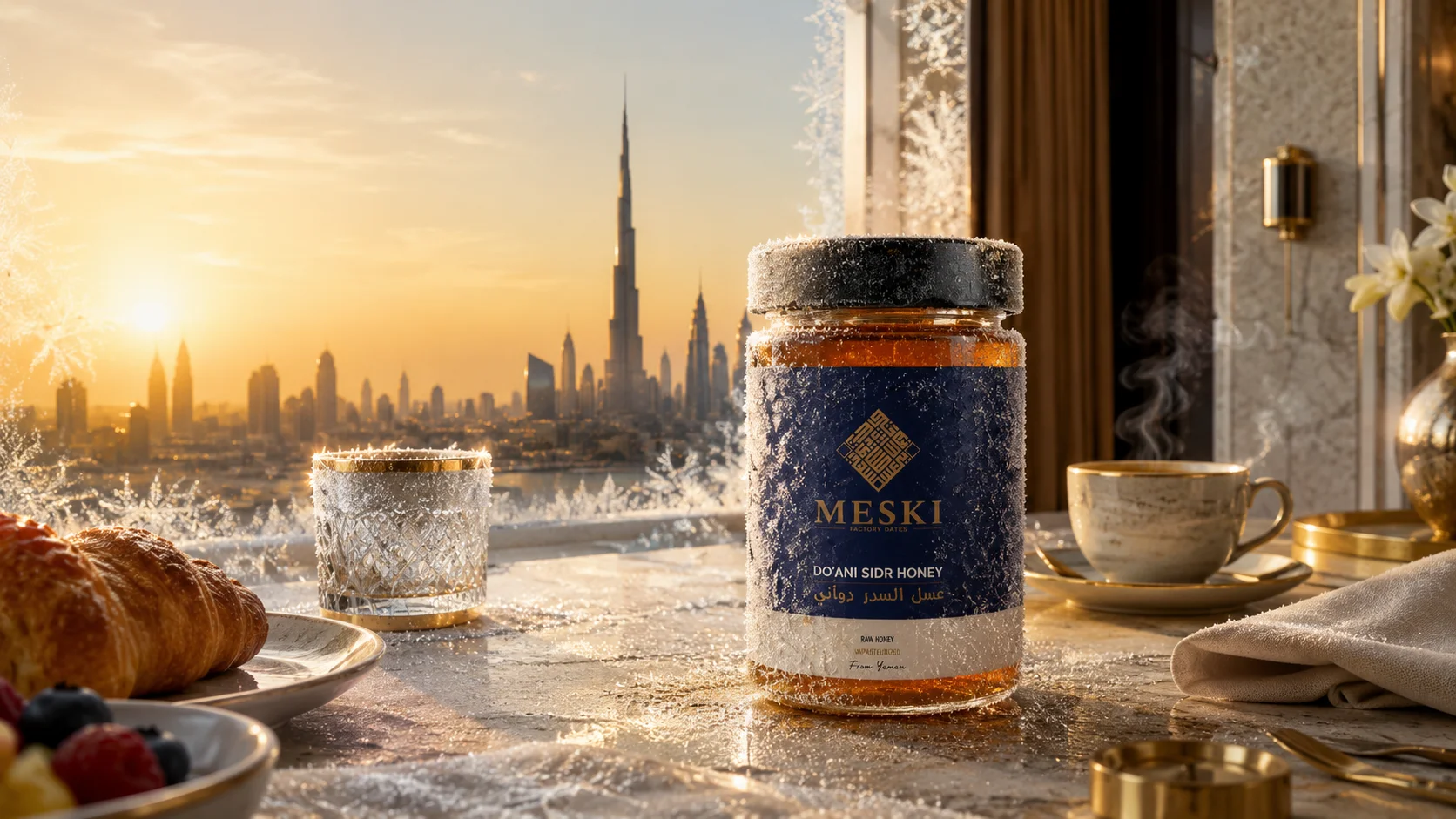
Honey crystallization is not a defect — it is one of the clearest indicators that your honey is raw, unprocessed, and authentic. This guide explains the science behind the change, what it reveals about fraud in the honey market, and how to read your jar with the confidence of an informed buyer.
A Jar That Has Turned Solid — and What It Quietly Tells You
You ordered a jar of premium raw honey. It arrived beautifully sealed, its amber depth hinting at the landscape from which it came — a Yemeni wadi, an Omani mountain plateau, perhaps the highlands of a Mediterranean island. And then, weeks later, you noticed it: the honey had thickened. Turned grainy. Perhaps even fully solidified into a pale, opaque mass.
For the uninitiated, this moment triggers alarm. Has it spoiled? Was it fake? Did something go wrong in transit?
For the knowledgeable buyer, this moment tells an entirely different story. It is, in fact, one of the clearest indicators that what you hold in your hands is the genuine article — raw, unprocessed, and alive with the full complexity of its origin.
Understanding honey crystallization is not merely a matter of food science. It is a mark of literacy in the world of premium honey — and a tool that protects you from the vast ocean of adulterated, heat-treated, and misrepresented products that flood the market at every price point.
The Chemistry Behind the Change: Glucose, Fructose, and the Laws of Nature
Honey is, at its most fundamental level, a supersaturated sugar solution. Bees collect nectar — a diluted liquid — and concentrate it within the hive through evaporation, reducing its water content to typically below 20%. The result is a dense, richly complex substance in which sugars are held in a state of chemical tension, always inclined to find equilibrium.
The two dominant sugars in honey are fructose and glucose. Their ratio varies by floral source, region, and season, and this ratio is the single most important factor in determining whether a given honey will crystallize — and how quickly.
Glucose has a relatively low solubility in water. Over time, glucose molecules naturally separate from the liquid portion of the honey and begin to form tiny crystals. Fructose, by contrast, is far more soluble and remains fluid. As glucose crystallizes, it draws water toward itself, leaving behind a fructose-rich liquid — which is why partially crystallized honey often displays two distinct textures: a granular base and a darker, more liquid layer on top.
This is not spoilage
Crystallization is a natural chemical process. Only raw, unheated, minimally processed honey retains the capacity to crystallize authentically.
Why Some Honeys Crystallize Faster Than Others
A honey with a higher glucose-to-fructose ratio will crystallize sooner. Rapeseed honey is notorious for solidifying within days of extraction. Acacia honey, with its dominant fructose content, can remain liquid for years. Most Yemeni Do’ani Sidr Honey and Omani Sidr Honey fall between these extremes — crystallization will occur eventually in any truly raw specimen.
The presence of microscopic particles in raw honey — pollen grains, trace wax, enzyme residue — also accelerates crystallization by providing nucleation sites around which glucose crystals can form. A beautifully clear, perfectly liquid honey that has never crystallized after eighteen months at room temperature is, paradoxically, a cause for scrutiny rather than reassurance.
The Role of Temperature and Storage
Temperature plays a direct role in the rate of crystallization. The optimal range for crystallization is between 10°C and 15°C. In the Gulf region, where ambient temperatures are high for much of the year, raw honey in a well-sealed jar at room temperature may remain liquid considerably longer — without this being any sign of adulteration.
Temperatures below 0°C slow crystallization significantly, while temperatures above 40°C will begin to re-liquefy crystallized honey — though prolonged exposure above those thresholds risks degrading the very compounds that make raw honey exceptional.
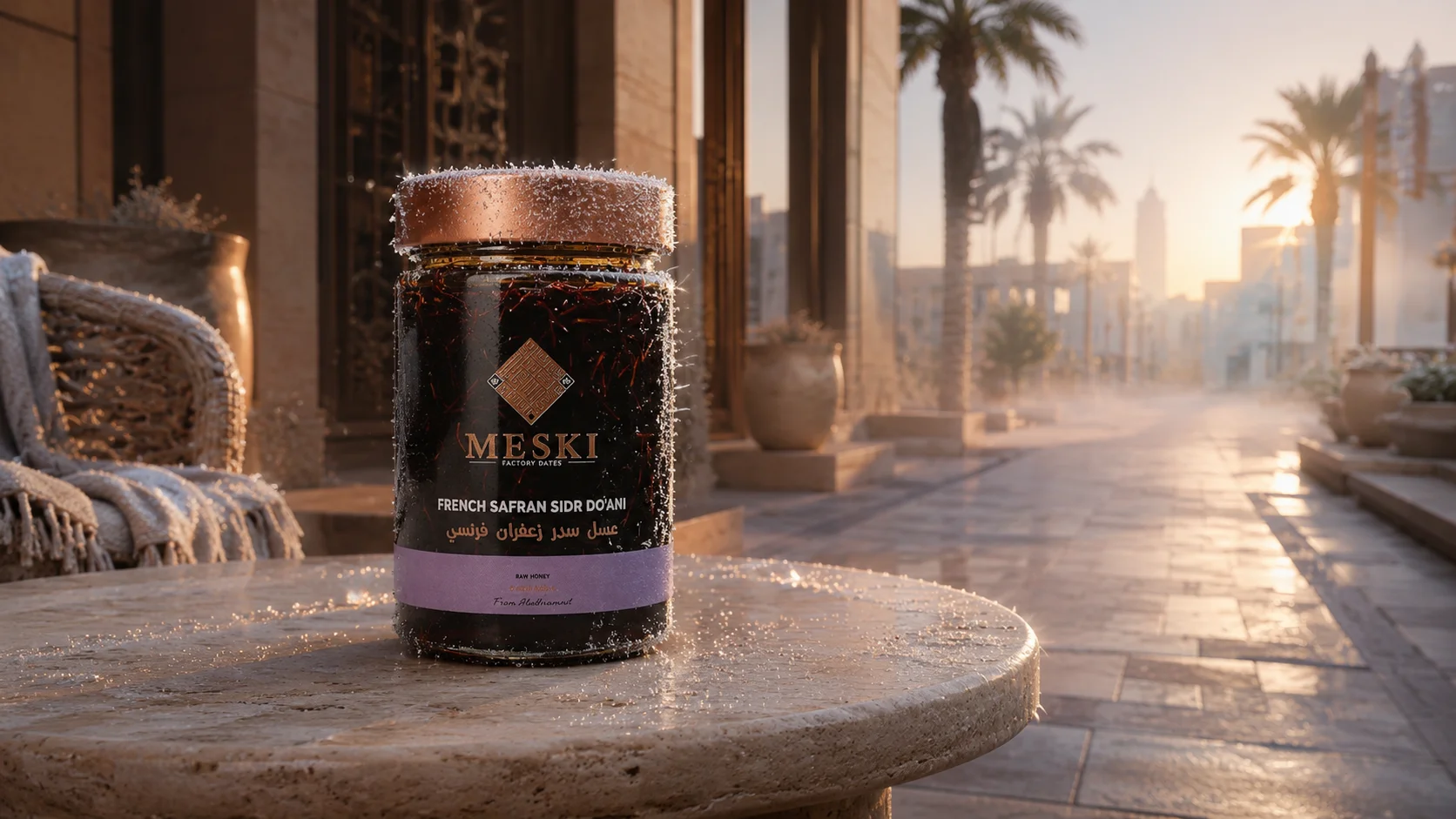
What Crystallization Reveals About Processing — and About Fraud
Here is the point where honey literacy becomes buyer protection. The global honey market is, by multiple accounts, one of the most adulterated food markets in the world. Food safety agencies across Europe, the United States, and the Gulf region consistently report that a significant proportion of commercially available honey has been blended with sugar syrups, diluted, or heat-treated beyond recognition of its original botanical character. In the UAE and broader GCC markets, demand for premium Sidr honey in particular has driven a proliferation of mislabeled products.
Crystallization — or the deliberate absence of it — is one of the most telling indicators in this landscape.
The Heat Treatment That Erases Authenticity
Most large-scale commercial honey producers subject their honey to high-temperature pasteurization, typically above 60°C. The stated purpose is to delay crystallization and improve visual appeal. The unstated consequence is the destruction of heat-sensitive enzymes (such as diastase and invertase), volatile aromatic compounds responsible for complex flavor profiles, and the biological markers that allow laboratory traceability to a specific floral origin.
A highly processed honey will not crystallize — or will do so only very slowly — because nucleation particles have been filtered away and the glucose structure has been partially altered. It will remain permanently liquid, perfectly clear, and largely devoid of the layered character that makes a genuine raw Sidr honey worthy of its provenance.
When a honey marketed as “raw” and “pure” never crystallizes over years of storage, the informed buyer has reason to ask questions.
A Practical Test Any Buyer Can Perform
While no home test replaces certified laboratory analysis, there are simple observations any buyer can make:
The crystallization timeline
A genuinely raw honey stored at moderate room temperature (20–25°C) should show some inclination toward crystallization over months to years, depending on variety. Indefinitely liquid honey at these temperatures merits scrutiny.
The texture of crystallization
Natural crystallization produces a smooth to grainy texture depending on glucose-to-fructose ratio. Adulteration with sugar syrups sometimes produces unnaturally coarse or gritty textures distinct from natural grain.
The dissolution test
A small quantity of raw honey dissolved in room-temperature water will leave a slight cloudiness and residue of pollen and fine particles. Heavily filtered or adulterated honeys dissolve with unusual clarity.
The aroma test
Raw honey retains distinct aromatic compounds tied to its floral source. Heat-treated honey loses much of this complexity and presents a flat, generically sweet fragrance.
Sidr Honey and Crystallization: A Nuanced Case
For buyers of Sidr honey specifically — harvested from the Ziziphus spina-christi tree across Yemen, Oman, the Emirates, and parts of Saudi Arabia — crystallization presents a nuanced picture worth understanding.
Wadi Do’an Sidr
Higher fructose profile means slower crystallization. Authentic raw specimens from Do’an will eventually develop a soft, creamy thickening over many months — a testament to botanical integrity.
Dhofar Highland Sidr
Similar fructose-dominant profile to Yemeni Sidr. Expect a gentle, gradual solidification rather than hard granulation, particularly under cooler storage conditions.
Emirati Sidr
In Gulf ambient temperatures, crystallization naturally slows. A liquid Emirati Sidr stored at room temperature is not suspect — but should still show texture shifts over sufficient time.
At Meski Dates Factory, all raw Sidr honeys — whether sourced from the mountains of Yemen, the coastal highlands of Oman, or the valleys of the UAE — are extracted cold and minimally handled, preserving precisely this capacity to crystallize authentically over time. A jar that eventually thickens on your shelf is not a jar that has failed. It is a jar that has remained true.
How to Restore Your Honey Without Damaging It
Should you prefer your honey in its liquid state — for drizzling, for presentation, or for ease of use — returning crystallized honey to liquid form is straightforward, provided one cardinal rule is observed: never exceed 40°C.
| Method | Temperature | Result |
|---|---|---|
| Warm water bath (30–60 min) | 35–40°C | Fully safe — integrity preserved |
| Near a warm window (Gulf climate) | 30–38°C | Gentle and effective |
| Prolonged heat source exposure | >40°C sustained | Begins to degrade aromatic compounds |
| Boiling water bath or microwave | >60°C | Irreversible damage to enzyme profile |
Some connoisseurs actively prefer the crystallized form: spread onto warm bread, used as a textured accompaniment to cheese, or incorporated into dressings where a denser consistency is an asset. The crystallized state is not a lesser state. It is simply a different expression of the same extraordinary substance.
Crystallization as a Mark of Respect for the Beekeeper’s Craft
There is a final dimension to this conversation that transcends chemistry and buyer protection — one most acutely felt in the cultures of the Arabian Peninsula, where honey has been exchanged, gifted, and revered for centuries as a substance of singular worth.
In the tradition of Yemeni mountain beekeepers, raw honey is handled with a deliberateness that borders on ritual. The harvesting of Sidr honey — conducted twice a year, aligned with the blooming of the Sidr tree — involves generations of transmitted knowledge: the reading of weather patterns, the placing of hives at precise elevations, the timing of extraction to the hour. For these craftsmen, subjecting their harvest to industrial heat treatment would represent not merely a commercial compromise, but a dishonoring of the work itself.
Heritage
Meski sources from beekeeper families whose craft spans multiple generations, preserving practices that industrial production cannot replicate.
Cold Extraction
Every raw honey in the Meski collection is extracted below 40°C, maintaining full enzyme activity and botanical traceability.
Provenance Integrity
From Wadi Do’an to the Dhofar highlands to the valleys of the UAE — every origin is selected and verified for authenticity before bottling.
When you receive a jar of raw honey and find it crystallized, you are receiving the honest testimony of that entire chain of human care. The honey has not been corrected, smoothed, or made more presentable at the cost of its truth. It has arrived as it was, carrying within its texture the signatures of soil, climate, season, and craft.
A Final Word for the Discerning Buyer
The next time a jar of premium honey in your possession turns thick, grainy, or opaque, resist the impulse to question its quality. Instead, read it as you would a hallmark on a piece of fine silver — a quiet but unambiguous declaration of authenticity.
Raw honey crystallizes. Processed honey does not. That distinction, simple as it sounds, carries within it the entire difference between a product crafted with integrity and one manufactured for appearance. For further reading on how to identify genuine provenance and avoid adulterated products, explore our Omani Sidr Honey and Emirati Sidr Honey UAE — each cold-extracted and traceable to its origin.
Discover Raw Honey That Behaves as Nature Intended
Explore Meski’s full range of cold-extracted raw honeys — from the storied valleys of Yemen to the sun-drenched plateaus of Oman and beyond.
Your Questions About Honey Crystallization, Answered
Yes, crystallized honey is perfectly safe and retains all the characteristics of raw honey. Crystallization is a natural process driven by glucose separating from the liquid fraction — it does not indicate spoilage, contamination, or any loss of quality. In fact, it is typically a positive sign that the honey has not been heavily processed or heat-treated.
Sidr honey generally has a higher fructose-to-glucose ratio compared to varieties like rapeseed or clover honey. Since fructose remains soluble and does not crystallize easily, raw Sidr honey can remain liquid or semi-liquid for many months — especially in warm Gulf climates. This is entirely normal for an authentic product. Over sufficient time, however, even genuine raw Sidr honey will show some texture change.
Place the sealed jar in a bowl of warm water — comfortably warm to the touch, not boiling — and leave it for 30 to 60 minutes, replacing the water as it cools. Never exceed 40°C. Avoid microwaving or placing the jar near a direct heat source, as temperatures above this threshold begin to degrade the enzyme profile and aromatic compounds that define premium raw honey.
A honey that remains perfectly liquid after 18 months or more at moderate room temperature (20–25°C) warrants careful scrutiny. Most genuinely raw honeys will show at least some inclination toward crystallization over time. Indefinitely clear, liquid honey may have been pasteurized at high heat, micro-filtered to remove nucleation particles, or blended with high-fructose syrups — all of which inhibit crystallization. No home test is definitive, but the crystallization timeline is one of the most accessible indicators a buyer can observe.