
Arabian Lifestyle · Food & Honey
Honey on Meat
The Gulf Meal I Did Not Expect
The lamb arrived. Then came small bowls of honey. I poured one over the other, and a combination that sounded strange for a second suddenly made complete sense.
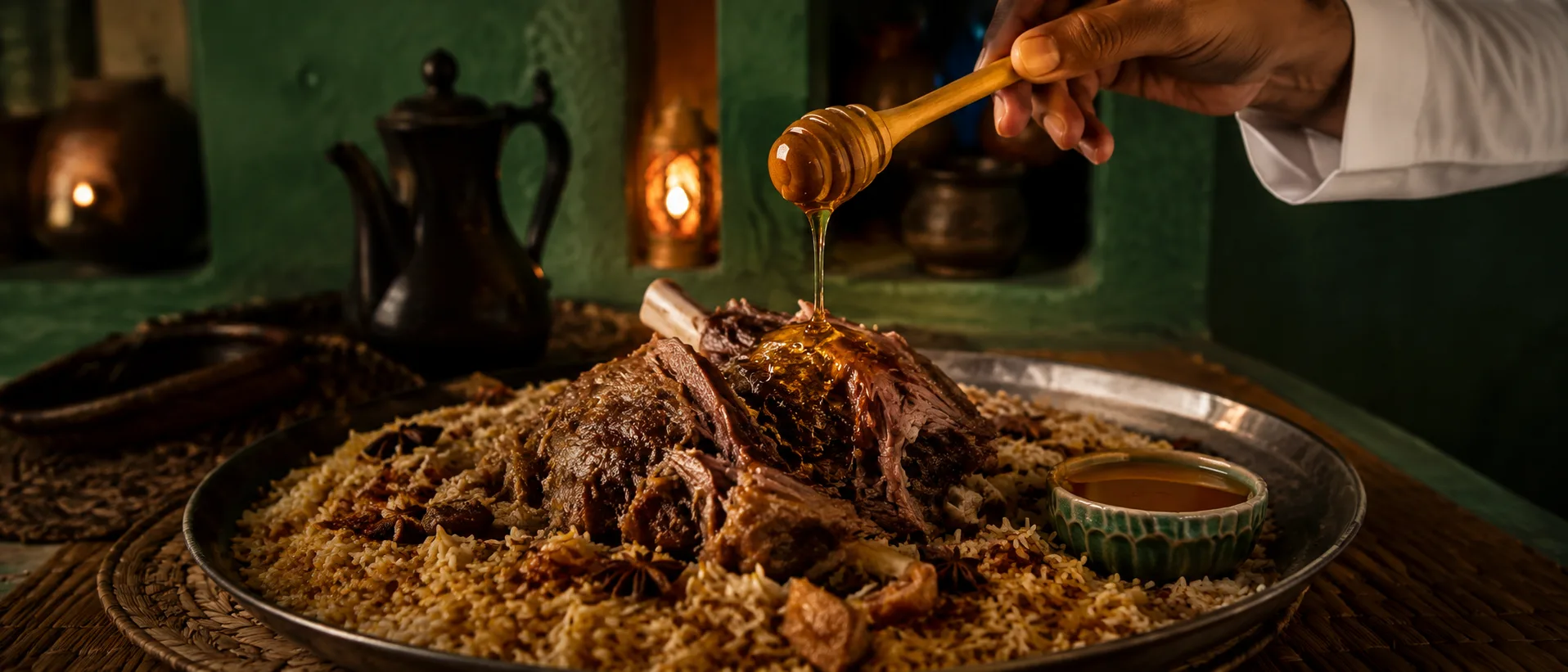
I am always looking for traditional restaurants when I travel in the Gulf.
Not because modern food is less good.
Not because every traditional restaurant is automatically authentic.
I simply want the possibility of being surprised by a combination I would not have ordered somewhere else.
In the UAE, that surprise once arrived in a small bowl.
Honey.
“The most memorable meals are sometimes the ones that make you hesitate for one second before taking the first bite.”
Meskaoui
The Lamb Was Already Enough
I had found a traditional Emirati restaurant and ordered lamb.
The meat was exactly what I wanted from that kind of meal: rich, tender, deeply savoury and surrounded by the aromas of the rice and spices.
Then I noticed the bowls.
Small portions of honey had been placed with the food.
My first reaction was curiosity.
My second was obvious.
I poured it.
Why It Worked
The honey did not turn the lamb into dessert.
That is the important part.
Used with restraint, sweetness can make savoury flavours more visible rather than hide them. The richness of the meat becomes more obvious. Salt feels sharper. Warm spices can seem more aromatic. Fat carries fragrance, while honey adds viscosity and a different kind of finish.
The pleasure came from contrast.
Too much honey would have destroyed it.
The right amount opened it.
I Am Not Calling This a Universal Emirati Tradition
This distinction matters to me.
I experienced honey served beside lamb in one traditional Emirati restaurant. I loved it.
That does not give me the right to announce that all Emirati lamb is traditionally eaten with honey, or that every Emirati family recognises the same pairing.
Food writing becomes unreliable when one memorable restaurant experience is promoted into a national custom without evidence.
So I prefer to say exactly what happened.
It was served to me.
I tried it.
It was extraordinary.
Sweet and Savoury Already Speak to Each Other in Gulf Food
The combination still makes cultural sense because Gulf cuisines are not strangers to the meeting of sweet and savoury.
Rice dishes may include raisins or other sweet elements. Dates sit beside bitter Arabic coffee. Omani qabooli can bring rice, meat, nuts and raisins into the same plate. Balaleet in the Gulf brings sweet vermicelli together with egg.
These dishes are not evidence that honey on lamb is a universal custom.
They show something broader: sweetness does not have to live only at the end of a meal.
The Honey Matters Too
If I recreated the experience at home, I would not choose honey only by prestige.
I would choose it by flavour.
A very floral honey can dominate delicate meat. A darker honey can become too heavy if the lamb is already intensely seasoned. A rounded Sidr with caramel and warm notes could work beautifully, but the exact pairing depends on the dish.
This is where tasting becomes more useful than marketing.
The “best honey” is the one that supports the plate in front of you.
What I Would Try at Home
I would keep it simple.
Slow-cooked lamb.
Rice.
A honey served separately, not poured in the kitchen.
Then taste the meat first without honey.
Add a small amount.
Taste again.
If the sweetness begins to become the main flavour, stop.
The goal is not to cover the meat. It is to create a second version of the same bite.
Why This Meal Stayed With Me
I have eaten more elaborate meals.
I have eaten in more expensive restaurants.
But price is a poor predictor of memory.
This plate stayed with me because it changed one small assumption.
Honey belonged to breakfast, bread, tea, dessert, maybe cheese.
Then one meal moved it beside lamb and made me reconsider the ingredient.
That is what I want from travel.
Not only to see another place.
To let the place change something small in the way I taste.
A House of Meski Kind of Pairing
Honey is at the commercial heart of MESKI, but I do not want every honey article to end with the same message: buy a jar.
Honey existed as food long before it became a luxury product category.
It can be drizzled, cooked, paired, shared and argued about.
Putting it next to meat reminded me of that.
The jar matters.
The table matters more.
Honey With Lamb and Savoury Food
This article describes a specific meal experienced by Meskaoui in a traditional Emirati restaurant. We are not presenting honey with lamb as a universal Emirati custom. Practices vary by restaurant, family and dish.
In small amounts, sweetness can contrast with salt, fat, roasting flavours and warm spices. The result depends heavily on the meat, seasoning and the honey’s own aroma.
There is no universal answer. A rounded, aromatic honey such as some Sidr harvests can complement lamb, but very strong honey can overpower the plate. Taste the honey and meat separately first, then combine a small amount.