
A balanced, responsible guide for parents — grounded in official guidance, without turning honey into a miracle food or a cause for alarm.
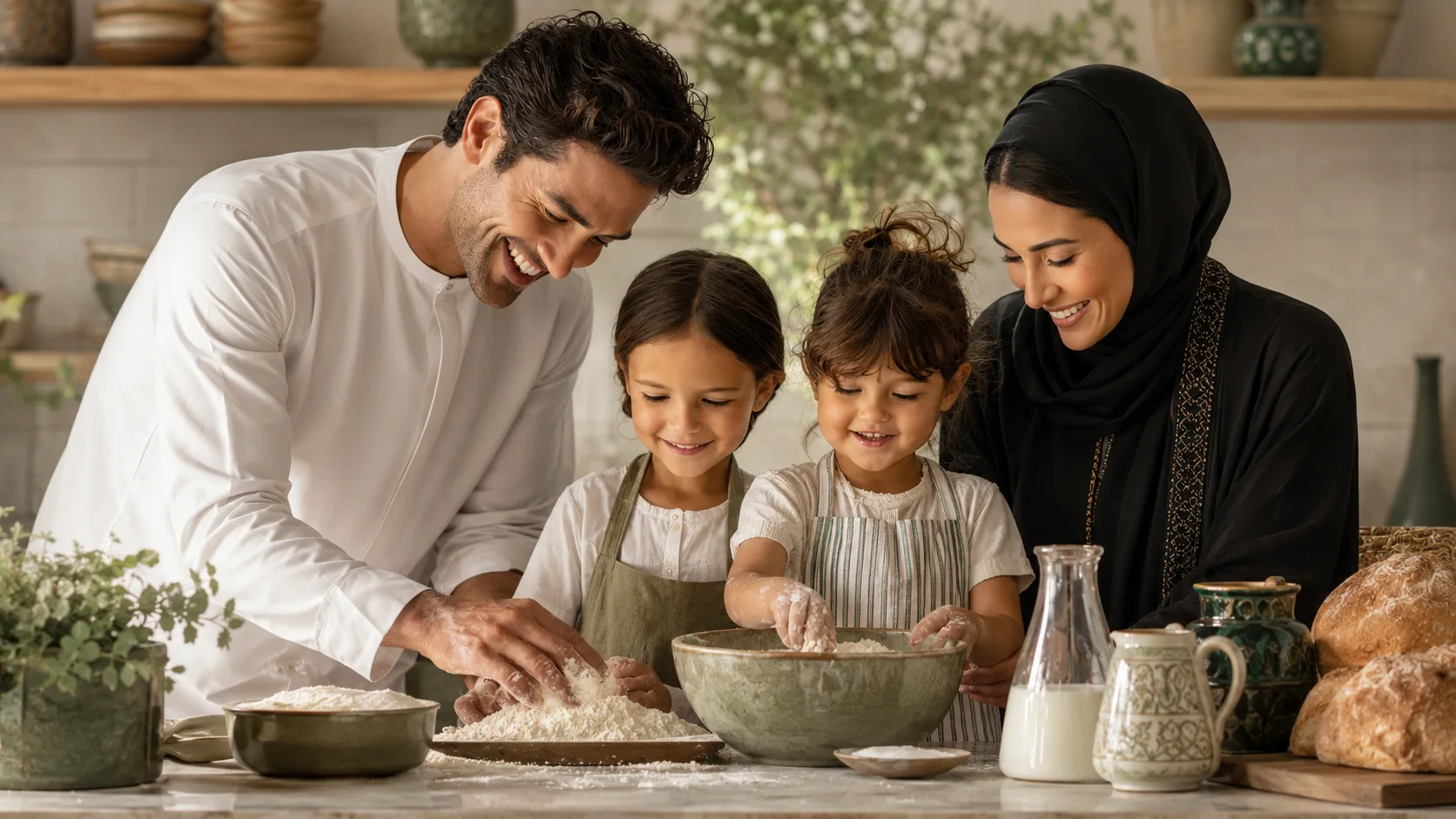
It begins with a small decision at the breakfast table. The sugar bowl is pushed aside. A jar of honey is opened instead. A golden thread falls onto the porridge, and somewhere behind the spoon, a quiet thought forms: is this better?
Many parents ask exactly this question. The subject of honey vs sugar for children sits at the intersection of everyday cooking, genuine concern and a great deal of well-meaning but imprecise advice circulating online. Some sources present honey as a natural remedy that replaces refined sugar entirely. Others dismiss any distinction as irrelevant. Neither position is entirely accurate.
The honest answer is somewhere more useful than either extreme. Honey brings a different flavour, a different texture, and small amounts of naturally occurring compounds that table sugar does not contain. It can be used thoughtfully as an ingredient in a family kitchen. But it remains, in the language of international nutrition guidance, a source of free sugars — and should be treated accordingly. It is not a medicine. It is not a replacement for a balanced meal. And for babies under twelve months, it must not be given at all.
This guide is written for parents, families and anyone preparing food for children. It draws on official health guidance rather than commercial claims. Its purpose is to leave you better informed, not to sell you a spoonful of something.
Medical notice
This article provides general educational information based on publicly available official guidance. It does not constitute medical or dietary advice. Parents of children with allergies, diabetes, metabolic conditions, swallowing difficulties or any specific dietary needs should always consult a qualified healthcare professional before making changes to their child’s diet.
Is Honey Actually Better Than Sugar for Children?
The short answer: in some meaningful ways, yes — but not in the way the question usually implies.
Honey is not sugar-free. It is not a superfood. It does not cancel the need to think carefully about how much sweetness a child’s diet contains. But it is also not identical to table sugar, and treating it as if it were misses something worth understanding.
Honey carries a distinctive flavour that varies by origin, season and flower source. Because it is somewhat sweeter than table sugar by taste, smaller amounts can achieve the same result in many preparations. It also contains trace amounts of naturally occurring compounds — enzymes, antioxidants and minor minerals — that refined sugar does not. These amounts are genuinely small and cannot be relied upon as a significant nutritional source. But they exist.
The more important point for parents is this: whether a child eats honey or table sugar, the total amount of free sugars in their diet across the day is what matters most. Replacing a spoonful of sugar with a spoonful of honey does not transform a meal. Thinking more carefully about sweetness overall — its sources, its quantity, its role in daily eating — does.
Honey can be a more interesting, more flavourful ingredient than refined sugar. That is a reasonable reason to use it. It should not be introduced as a cure, a supplement or a worry-free alternative. It should be introduced as what it is: a remarkable natural food with a long history in human kitchens, worth understanding and worth using with thought.
What Is the Difference Between Honey and Table Sugar?
Understanding the difference begins with the chemistry — which is simpler than it sounds.
Table sugar is sucrose, a disaccharide made of one glucose molecule bonded to one fructose molecule, in equal proportions. It is approximately 100% sugar by weight, with no water, no minerals and no additional compounds of note. It is extracted from sugarcane or sugar beet and refined into the white crystals most people recognise.
Honey is a different kind of structure. It consists of roughly 40% fructose, 30% glucose and about 17–20% water. The remaining percentage includes other minor sugars, trace enzymes, amino acids, antioxidants, and very small amounts of vitamins and minerals. Crucially, in honey the glucose and fructose molecules are separate rather than bonded — which means the body processes them slightly differently from sucrose, though both are ultimately broken down for energy.
Because fructose is sweeter than glucose, and because honey has a higher proportion of it, honey tends to taste sweeter than an equivalent weight of table sugar. This means that to achieve the same level of sweetness in food or drink, a smaller amount of honey is often sufficient — which may naturally reduce the total quantity used.
Calorie-wise, a teaspoon of honey contains approximately 21–22 calories, compared to around 16 calories in a teaspoon of granulated sugar. However, honey is denser: a tablespoon of honey weighs considerably more than a tablespoon of sugar, so comparisons by volume can be misleading. By weight, the calorie difference is modest.
The trace compounds in honey — particularly polyphenols and antioxidants, which are more concentrated in darker varieties — have been the subject of genuine scientific interest. However, the amounts present in a typical serving are small enough that honey should not be considered a meaningful dietary source of these nutrients. A child does not need honey to obtain antioxidants; fruits and vegetables do that work far more reliably.
In summary: honey is more complex than table sugar in its composition and flavour. But both are classified by the World Health Organization as free sugars, and both contribute to total daily free-sugar intake.
Why Can Babies Under 12 Months Not Eat Honey?
Safety rule — no exceptions
Honey must not be given to any baby under 12 months old, in any form — not raw, not pasteurised, not cooked, not baked, not dissolved in water, not on a pacifier.
This warning exists for one specific and serious reason: infant botulism.
Honey can naturally contain spores of Clostridium botulinum, a bacterium found widely in soil, dust, water and air. In adults and children over one year old, the digestive system is sufficiently developed to prevent these spores from causing harm. In babies under twelve months, the intestinal environment is not yet mature enough to block the spores from germinating and producing a neurotoxin — a poison that impairs the nervous system.
The resulting condition, infant botulism, is a medical emergency. Its symptoms include constipation, general muscle weakness, a floppy appearance, drooping eyelids, difficulty sucking and feeding, loss of head control, and, in severe cases, respiratory failure. According to CDC surveillance data from 2018, 162 cases of infant botulism were reported in the United States in a single year. Most affected babies were younger than six months old.
Crucially, neither cooking nor pasteurisation reliably destroys C. botulinum spores. This is why the recommendation applies to honey in baked goods, cereals and other processed foods too, not only raw honey. The CDC, the American Academy of Pediatrics and public health authorities worldwide are unanimous: no honey before the age of twelve months, in any form and under any circumstances.
This warning applies equally to raw honey, pasteurised honey, organic honey and any other variety. The spore risk is not a function of how the honey was processed. It is a function of the baby’s age.
At What Age Can Children Eat Honey?
The general guidance from the CDC, the American Academy of Pediatrics, the NHS and equivalent public health authorities internationally is consistent: honey is considered safe to introduce from twelve months of age.
By the time a child reaches their first birthday, the digestive system has typically developed enough to handle Clostridium botulinum spores without danger. The botulism risk that makes honey so strictly off-limits in infancy no longer applies in the same way after this threshold.
This does not mean honey should be given freely or in large quantities once a child turns one. The question of age eligibility is separate from the question of appropriate amount. For children of any age, total free-sugar intake matters — and honey contributes to that total.
The NHS advises specific daily limits for free sugars by age group: no more than 10g per day for children aged one, 14g for ages two to three, 19g for ages four to six, and 24g for ages seven to ten. The American Heart Association recommends that children aged two to eighteen consume no more than 25g of added sugar per day. These figures include all sources of free sugars — honey, table sugar, syrups, fruit juices and any other sweetened foods or drinks.
Parents of children with specific health conditions — including allergies to bee products, diabetes, or any metabolic disorder — should seek advice from their child’s healthcare provider before introducing or increasing honey in the diet.
Is Honey a Healthy Breakfast Ingredient?
A drizzle of honey across a bowl of plain yoghurt. A thin spread over a slice of whole-grain bread, alongside a sliced banana. A small spoonful stirred into warm porridge. In modest amounts, used alongside nourishing foods, honey can be a pleasant and flavourful part of a child’s breakfast without causing concern.
The key word is alongside. Honey does not make a nutritionally poor breakfast into a good one. But it can contribute positively to a breakfast that is already well-constructed — one that includes whole grains, dairy or alternatives, and fruit.
Consider the comparison between a bowl of sweetened breakfast cereal from a packet, containing multiple teaspoons of added sugar and little fibre, and a bowl of plain oats with a small drizzle of honey and a handful of berries. The total sugar content of the second option might be similar or lower, and the accompanying nutrients are substantially better. The difference is not the honey alone — it is the overall construction of the meal.
Plain yoghurt with a small amount of honey is a practical example cited by paediatric nutrition resources including Johns Hopkins All Children’s Hospital. It offers protein and calcium from the yoghurt, a modest natural sweetness from the honey, and keeps added-sugar levels under control compared to pre-sweetened yoghurts. The portion of honey should be small — a teaspoon or less — rather than a generous pour.
The quality of the honey itself contributes to the breakfast experience too. A floral, aromatic honey from a clearly labelled origin will bring genuine flavour complexity that a child can learn to notice and appreciate. This is not a health argument; it is a culinary one. Teaching children to taste, rather than simply to eat, is one of the lasting gifts a breakfast table can offer.
Does Honey Affect Teeth Differently from Sugar?
Directly: honey can still contribute to tooth decay. Parents should not assume that because honey is natural, it is harmless to dental health.
The mechanism of tooth decay is well understood. Bacteria in the mouth feed on sugars — all sugars — and produce acids as a byproduct. These acids gradually erode tooth enamel, leading over time to cavities. The WHO classifies sugars naturally present in honey as free sugars specifically because they behave in this way in the mouth, just as added sugars do.
Some research has explored whether honey’s minor antibacterial compounds — including hydrogen peroxide and certain polyphenols — might offer some protective effect against cariogenic bacteria. The evidence is suggestive in laboratory conditions but has not been established convincingly in clinical settings. It would be misleading to tell parents that honey is safe for children’s teeth in the way that, for example, plain water or unsweetened foods are safe.
Practical guidance remains simple and consistent with general dental-health advice:
- Never put honey on a pacifier or dip it into any sweet substance.
- Do not add honey to a baby’s bottle or feeder cup.
- Encourage children to rinse their mouth with water after eating honey, particularly if it is consumed as a snack between meals rather than as part of a full meal.
- Continue regular tooth brushing and follow your dentist’s advice about fluoride.
- Total daily free-sugar intake, and how often sweet foods contact the teeth, matters more than which specific sweetener is used.
Can Honey Replace Sugar in Children’s Recipes?
Yes, technically — but with two important caveats that are often overlooked.
The first is practical: honey behaves differently in recipes. Because it contains approximately 17–20% water, it adds moisture to baked goods. Because it is denser and more viscous than granulated sugar, volume measurements are not directly interchangeable. Because its fructose content causes it to caramelise more quickly, oven temperatures generally need to be reduced by about 15°C when substituting honey for sugar in baking. The commonly cited ratio is roughly three-quarters of a cup of honey for every full cup of sugar, accompanied by a reduction in other liquids in the recipe.
The result is often a softer, moister crumb with a more complex flavour — which many cooks find genuinely preferable. Different varieties of honey also bring their own character: a mild acacia or sidr honey will integrate more quietly into a recipe, while a stronger thyme or buckwheat honey will announce itself.
The second caveat is the more important one from a nutritional perspective: substituting honey for sugar does not remove free sugars from the recipe. It changes their source and, potentially, the total quantity used — but honey is still a concentrated source of sugar. A batch of muffins made with honey instead of white sugar is not a low-sugar food. It may be a more interesting food, and it may use slightly less total sweetener if the ratio is adjusted thoughtfully, but it is not a health food by virtue of the substitution alone.
Honey, Dates, Fruit or Sweets: What Is the Difference?
Parents are often told to swap sweets for “natural” alternatives — honey, dates, fruit — without a clear explanation of what that actually means in practice. The differences are real and worth understanding, though none of these foods should be treated as unlimited.
| Food | Main sugars | Dietary fibre | Typical processing | Portion consideration | Practical use |
|---|---|---|---|---|---|
| Honey | Fructose (~40%), glucose (~30%) | Negligible | Harvested, typically filtered and/or pasteurised | 1 teaspoon (approximately 7g) is a reasonable condiment amount | Flavouring, ingredient in cooking, drizzle over yoghurt or porridge |
| Dates (whole fruit) | Glucose, fructose, some sucrose | 6–8g per 100g — meaningful fibre content | Whole fruit, dried naturally or fresh | 1–2 dates per snack; still a concentrated source of sugar | Snack, natural sweetener in homemade recipes, part of a balanced meal |
| Whole fresh fruit (e.g. apple, banana) | Fructose, glucose, sucrose (varies by fruit) | 1.5–3.5g per 100g depending on fruit | None — intrinsic sugars in whole fruit are not counted as free sugars by WHO | Portion matched to age; fruit remains one of the most beneficial snack options | Snack, breakfast, dessert, ingredient |
| Table sugar | Sucrose (50% glucose, 50% fructose) | None | Extensively refined from cane or beet | Contributes to free-sugar total with no accompanying nutrients | Baking, cooking, occasional table use |
| Commercial sweets / confectionery | Sucrose, glucose syrup, HFCS and others | Usually none | Heavily processed; often combined with fat, colouring, additives | Smallest portion, least frequently; no nutritional argument for regular consumption | Occasional treat; not a daily food |
The key distinction between whole fruit and the other foods in this table deserves emphasis. The WHO’s definition of free sugars explicitly excludes sugars intrinsic to whole, intact fruit. This means that an apple eaten as a piece of fruit does not contribute to a child’s daily free-sugar quota in the same way that honey, dates, fruit juice or table sugar do. The fibre in whole fruit changes how the sugars are absorbed and processed. Dates, while a whole fruit, are significantly denser in sugar per gram than most fresh fruit — which is why portion matters.
None of this means parents must become nutritionists. It means understanding that the question is rarely “is this food good or bad?” but rather “how much, how often, and alongside what?”
How Can Parents Teach Children About Sweetness?
Research from the University of Illinois and other institutions has established something that experienced parents often already sense: children perceive sweetness differently from adults. Their taste threshold for sweetness is higher, meaning they require more sugar to detect the same intensity that adults find strong. They also naturally prefer sweeter concentrations. This is not a moral failing — it is biology, partly linked to childhood growth and energy needs.
What this means in practice is that simply telling a child that something is “too sweet” makes little sense from their perspective. Taste education works differently from instruction. It works through experience, comparison, curiosity and gradual exposure.
Some approaches that research and nutritional practice support:
- Offer comparisons, not judgements. Place two yoghurts side by side — one plain, one sweetened — and invite the child to taste both without telling them which is “better.” Ask what they notice. What does the sweet one remind them of? What does the plain one taste like without the sweetness?
- Reduce sweetness gradually. If a child drinks diluted juice, add slightly more water over several weeks. If porridge has always had honey, try reducing the quantity slowly. Abrupt changes are rarely effective. Gradual shifts in the baseline are more lasting.
- Teach label reading as a game. Show children where to find the “of which sugars” line on a nutrition label. Compare two similar products. Which one has more sugar per 100g? Learning to read a label is a skill that lasts a lifetime.
- Introduce different honeys. Show a child that honey is not one single taste — it varies by flower, geography, colour and season. A pale acacia honey smells and tastes differently from a dark mountain honey. This is an introduction to the idea that food has stories, origins and complexity beyond sweetness alone.
- Avoid moral language. Calling sugar “bad” or honey “good” creates a framework where eating is about virtue rather than understanding. Foods are not morally charged. Some are more nourishing than others; some are eaten more often than others; some are celebrated on special occasions. A child who understands these distinctions is better equipped than one who has only learned rules.
- Let natural flavours become familiar. Plain water, unsweetened herbal teas, whole fruit, plain yoghurt — these taste of something real when a child is given time and patience to discover them. Familiarity builds preference. Preference, in turn, shapes habit.
A Family Honey Tasting Activity
Suitable for children from 12 months and above, with age-appropriate amounts. Very young children should taste only a tiny amount on a spoon rather than eat freely.
This activity is designed to take approximately twenty minutes and requires nothing beyond a few small jars of different honeys, plain crackers or unsweetened bread, and curious participants.
Look
Place the jars in a row. Before opening any of them, invite the children to simply look. What colour is each honey? Does one look lighter, almost transparent? Does another look dark, almost amber? Tilt the jar gently — which honey moves most slowly? These are real observations that reveal real differences in composition.
Smell
Open each jar one at a time. Hold the opening beneath the child’s nose and ask: does it smell of flowers? Of something dark and earthy? Of something fruity? There are no wrong answers here. Honey absorbs the aroma of the flowers the bees visited. A beekeeper in the Hadramawt valley and a beekeeper in a French lavender field will produce honeys that smell of entirely different worlds.
Taste
Using a clean spoon for each honey, offer a small taste. Encourage the child to hold it on their tongue for a moment before swallowing. What do they notice first? Is it immediately sweet? Does the sweetness arrive slowly? Is there something warm, or floral, or sharp at the edges? A small bite of plain cracker between each honey allows the palate to reset.
Read the label
For children old enough to read, look at the jar together. Where does the honey come from? What plant or flower is mentioned? A honey labelled sidr comes from the jujube tree, known across Arabia for centuries. A honey labelled thyme most likely came from Mediterranean hillsides. Labels carry geography, botany and history in a very small space.
After the tasting
Ask each child which honey they would choose to have with plain yoghurt. Which one would they put on toast? Which one would they prefer to smell rather than eat? The activity has succeeded if the child now understands that honey is not simply “sweet” — it is a food with origin, variety and a story worth reading.
Five Simple Ways to Use Less Added Sugar
These suggestions are practical rather than prescriptive. They are offered without promises about health outcomes — simply as ideas that many families find useful when they want to reduce sweetness gradually without conflict or disruption.
- Start with plain versions of familiar foods and add sweetness yourself. Plain yoghurt with a small drizzle of honey gives you control over quantity in a way that pre-sweetened yoghurt does not. The same logic applies to porridge, pancakes and breakfast drinks.
- Use the natural sweetness of ripe fruit. A very ripe banana mashed into porridge adds genuine sweetness without added sugar. Stewed apples or pears can sweeten a simple cake batter in the same way. The sugar is still there, but it comes with water, fibre and other compounds.
- Dilute gradually. If a child drinks juice regularly, begin adding water — slowly, incrementally, over several weeks. The goal is to shift the expected baseline, not to cause a sudden shock to the palate.
- Read labels on products that seem savoury. Pasta sauces, bread, breakfast cereals and flavoured dairy products are among the most common hidden sources of added sugar in children’s diets. Knowing what a label says is the first step toward making a different choice.
- Offer dates as an occasional sweet treat. A Medjool date, soft and rich, can satisfy a craving for something sweet while also providing fibre and minerals. It is still a concentrated source of sugar, but it comes with more to offer than a hard-boiled sweet. One or two at a sitting is plenty.
Common Myths About Honey and Children
The internet carries a great deal of confident misinformation about honey. These are some of the most frequent misunderstandings, corrected as clearly as possible.
Myth 1: Honey is sugar-free
Honey is primarily composed of sugar — approximately 80% by weight. It is one of the most concentrated naturally occurring sources of free sugars that exists. The WHO, the NHS and every other major nutrition authority classify it as a free sugar. Using honey does not mean avoiding sugar.
Myth 2: Dark honey can be consumed without limits because it contains more nutrients
Darker honeys do tend to contain higher concentrations of certain antioxidants and polyphenols. This is accurate. But the amounts are still modest, and they arrive alongside very large quantities of sugar. Eating more dark honey to obtain antioxidants is not a useful nutritional strategy. Eating a wider variety of vegetables and fruits will do that work far more effectively.
Myth 3: Raw honey is automatically safe for babies
This is one of the most dangerous misconceptions about honey. The botulism risk for infants comes from Clostridium botulinum spores, which can survive in raw, pasteurised and cooked honey alike. Raw honey, in particular, has not been subjected to any heat treatment and carries the same — or potentially higher — risk. No honey of any kind should be given to babies under twelve months.
Myth 4: Honey prevents illness in children
Honey has been used traditionally across many cultures for soothing sore throats and minor ailments. There is some limited scientific interest in its antimicrobial properties in certain contexts. However, honey is not a medicine, does not prevent illness, and should not be given to a child in place of medical care. Parents concerned about a child’s health should consult a doctor.
Myth 5: Honey cannot cause tooth decay
It can. The bacteria responsible for dental caries consume sugars from honey just as readily as from any other source. Honey’s minor antimicrobial compounds do not neutralise this risk in the conditions of everyday eating. Frequent contact between honey and teeth — especially outside of mealtimes or in drinks — carries real dental risk.
Myth 6: Natural sugar does not count toward daily limits
This misunderstanding stems from a real but often misapplied distinction. Sugars intrinsic to whole fruits and vegetables are not counted as free sugars by the WHO. Honey is explicitly included in the WHO’s definition of free sugars, alongside syrups and fruit juice, regardless of its natural origin. Natural origin does not confer exemption from daily sugar guidance.
A Note from The House of Meski
We sell honey. We think it is worth knowing that before reading what follows.
We also believe — genuinely, not as a marketing strategy — that the most valuable thing we can teach a child about honey is not that it is better than sugar. It is that honey is a jar containing geography, seasonality, the work of a colony of bees and the patience of a beekeeper. A child who pauses at the breakfast table to notice whether a honey smells of orange blossom or mountain thyme, and who wonders why that is, has received something more durable than a dietary rule.
Rules change. Curiosity compounds.
We would rather pass on the habit of asking questions about food than the habit of replacing one spoon with another. A palate that has learned to find pleasure in the subtlety of an unfamiliar honey — or the gentle sweetness of a good date, or the honest flavour of plain yoghurt — is a palate that will make wiser choices for a lifetime, without needing to be told what is allowed.
A reminder before you leave
This article provides general educational information. It does not replace professional dietary or medical advice. If your child has an allergy to bee or pollen products, a diagnosis of diabetes, a metabolic condition, swallowing difficulties, or any specific dietary need, please consult their paediatrician or a registered dietitian before changing their diet. Every child is different. General guidance is a starting point, not a prescription.
Authoritative Sources Consulted
- World Health Organization — Guideline: Sugars Intake for Adults and Children (2015)
- World Health Organization — Sugars and Dental Caries (Fact Sheet)
- Centers for Disease Control and Prevention (CDC) — Infant and Toddler Nutrition: Foods and Drinks to Avoid or Limit
- Centers for Disease Control and Prevention (CDC) — National Botulism Surveillance Summary, 2018
- American Academy of Pediatrics (AAP) — honey and infant safety guidance
- American Heart Association — Added Sugars and Cardiovascular Disease Risk in Children (Circulation, 2016)
- NHS UK — Sugar: the Facts
- Infant Botulism Treatment and Prevention Programme (infantbotulism.org)
- UCSF SugarScience — honey composition data
- PMC / NCBI — Sugars and Dental Caries: Evidence for Setting a Recommended Threshold (2016)
- PMC / NCBI — The Sweetness and Bitterness of Childhood (taste preference research)
- University of Illinois — sweet taste perception study (Nutrients journal)
Frequently Asked Questions
Honey and table sugar are both sources of free sugars. Honey brings a more complex flavour, is somewhat sweeter by taste (so less may be needed), and contains trace compounds absent from refined sugar. These differences are real but modest. Both contribute to daily free-sugar intake, and neither should be consumed without thought. Honey is a more interesting culinary ingredient than refined sugar; it is not a health food that can replace it freely.
Official guidance from the CDC, the American Academy of Pediatrics and the NHS indicates that honey can be introduced from twelve months of age. Before that age, honey must not be given in any form due to the risk of infant botulism. After twelve months, honey may be used as an occasional ingredient or condiment, keeping total free-sugar intake within age-appropriate limits.
Honey can contain spores of Clostridium botulinum. In babies under twelve months, the digestive system is not yet mature enough to prevent these spores from producing a neurotoxin in the gut. The resulting illness, infant botulism, is a medical emergency. This warning applies to all forms of honey — raw, pasteurised, cooked or baked — and must not be disregarded.
For children over twelve months without specific health vulnerabilities, raw honey is not associated with the botulism risk that applies to infants. However, raw honey is unpasteurised and may carry other microorganisms. Parents of children with compromised immune systems or any specific health condition should consult a healthcare professional before offering raw honey. For healthy children over one year, small amounts of good-quality honey — raw or pasteurised — are generally considered safe.
Honey can be part of a child’s daily diet in modest amounts as long as total free-sugar intake remains within recommended limits for their age. The NHS recommends no more than 19g of free sugars per day for children aged four to six, and 24g for those aged seven to ten. One teaspoon of honey contains approximately 7g of sugar. This means that a small daily drizzle can fit within a well-managed diet, but only if other free-sugar sources across the day are also kept in check.
A small amount of honey used as a flavouring in breakfast — drizzled over plain yoghurt, stirred into porridge, or spread thinly on whole-grain bread alongside fruit — can be a pleasant and appropriate part of a child’s morning meal. The quantity matters: a teaspoon is a condiment amount. Honey does not make a poorly constructed breakfast healthier, but it can add genuine flavour interest to a well-balanced one.
Honey can contribute to tooth decay. Like all free sugars, it provides fuel for the bacteria in the mouth that produce enamel-eroding acids. Some research suggests honey’s minor antibacterial properties may be slightly less harmful to teeth than pure sugar in laboratory conditions, but this does not make honey tooth-safe in everyday use. Good dental hygiene, limiting sweet foods between meals, and following a dentist’s advice remain the most reliable protections.
Yes, with adjustments. The standard ratio is approximately three-quarters of a cup of honey for every full cup of sugar, reducing other liquids in the recipe and lowering oven temperature by about 15°C. The result is often softer and more flavourful. However, the substitution does not remove free sugars from the recipe. A cake made with honey is still a sweet cake. It may use slightly less total sweetener, and it gains complexity of flavour — but it is not a low-sugar food.
Dates are a whole fruit and contain dietary fibre (approximately 6–8g per 100g), potassium, and other naturally occurring compounds. Commercial sweets are typically refined sugar combined with additives and offer no nutritional benefit. In that comparison, dates are nutritionally more interesting. However, dates are also a concentrated source of sugar — around 60–70g of sugars per 100g of dried dates — and should be offered in measured portions, typically one or two at a time, rather than freely.
There is no universal recommended daily portion of honey for children, because the appropriate amount depends on the child’s age, their total diet and all other sources of free sugars across the day. The more useful measure is the total free-sugar limit for the child’s age group (for example, 19g per day for children aged four to six, per NHS guidance). A teaspoon of honey contributes approximately 7g of sugar toward that total. Parents should account for all sources — honey, fruit juice, sweetened dairy, sauces and snacks — rather than focusing on honey in isolation.
Curious about honey? Explore our raw honey collection.
At The House of Meski, every honey is selected for its traceability, its origin and its distinctive character. From the sidr valleys of Oman to the wildflower hills of Morocco — each jar tells a story worth reading to a child.