
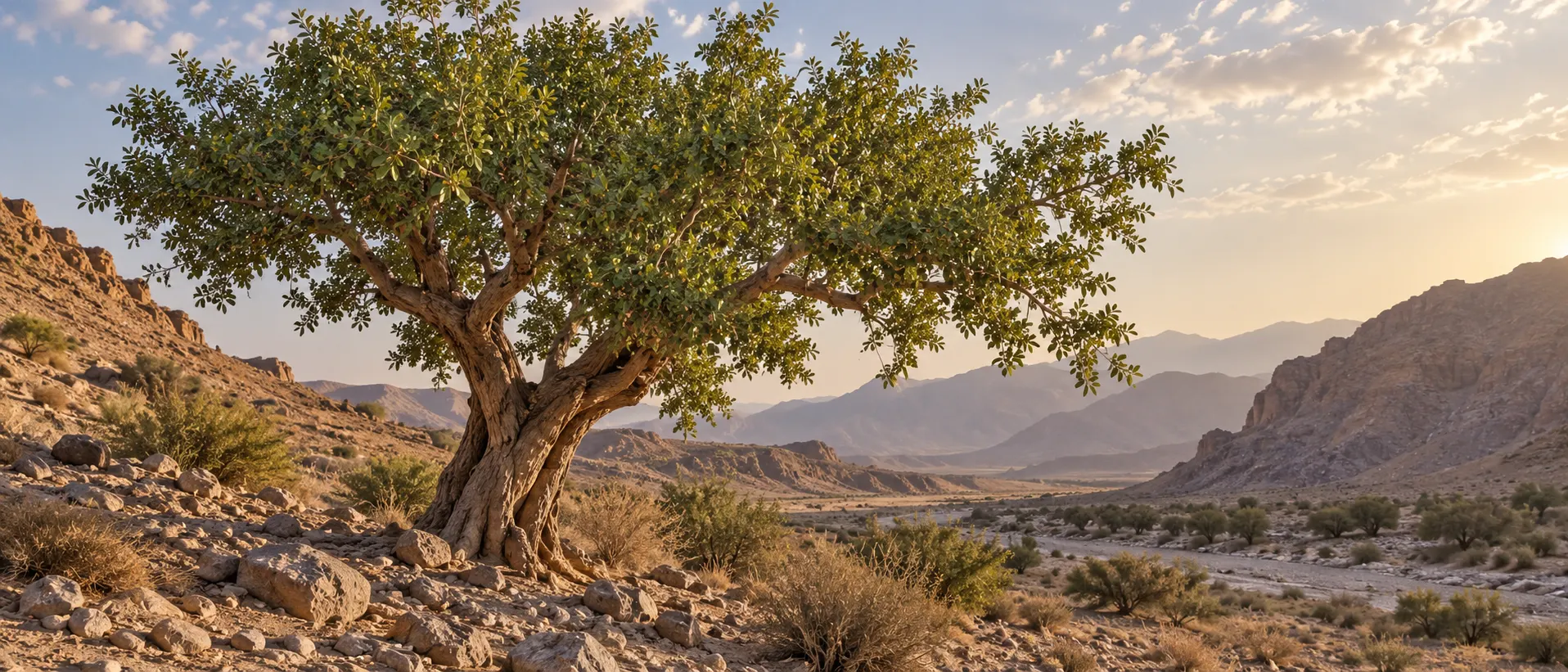
Some trees remain in memory because of their fruit. Others because of their wood, their shade or their beauty. Sidr remains in memory for all of those reasons and for one more. It has stayed close to the intimate life of families. In many homes, the word Sidr does not begin with a product. It begins with a tree, a leaf, a washing ritual, an old habit, or a jar of honey on a table.
That is why Sidr leaf deserves more respect than the quick language often used around natural products. We are not speaking about a miracle ingredient. We are speaking about a leaf that lives inside landscape, household knowledge, devotional memory and the long cultural life of the Arab and Muslim worlds. From Yemen to Oman, from the Emirates to Saudi Arabia, and even in Morocco where jujube shrubs belong to harsh earth and old memory, the leaf belongs to a wider story.
A leaf becomes precious when people keep returning to it without advertising. Sidr survived because families remembered it before brands discovered it.
Meskaoui
A leaf that only makes sense when the tree is remembered
Sidr leaf should never be separated from the tree that gives it meaning. The tree stands in difficult climates and does not ask for soft conditions. It can be associated with wadis, dry ground, mountain edges and rural environments where resilience matters. The emotional force of Sidr begins there. It begins in the idea that this tree survives, shades, blossoms and feeds bees.
If you have read our article on the jujube tree around the world, you already know that Sidr is more than one simplified commercial image. It belongs to a family of places and meanings. The leaf is one doorway into that universe, perhaps the most domestic one.
How Sidr leaves entered everyday tradition
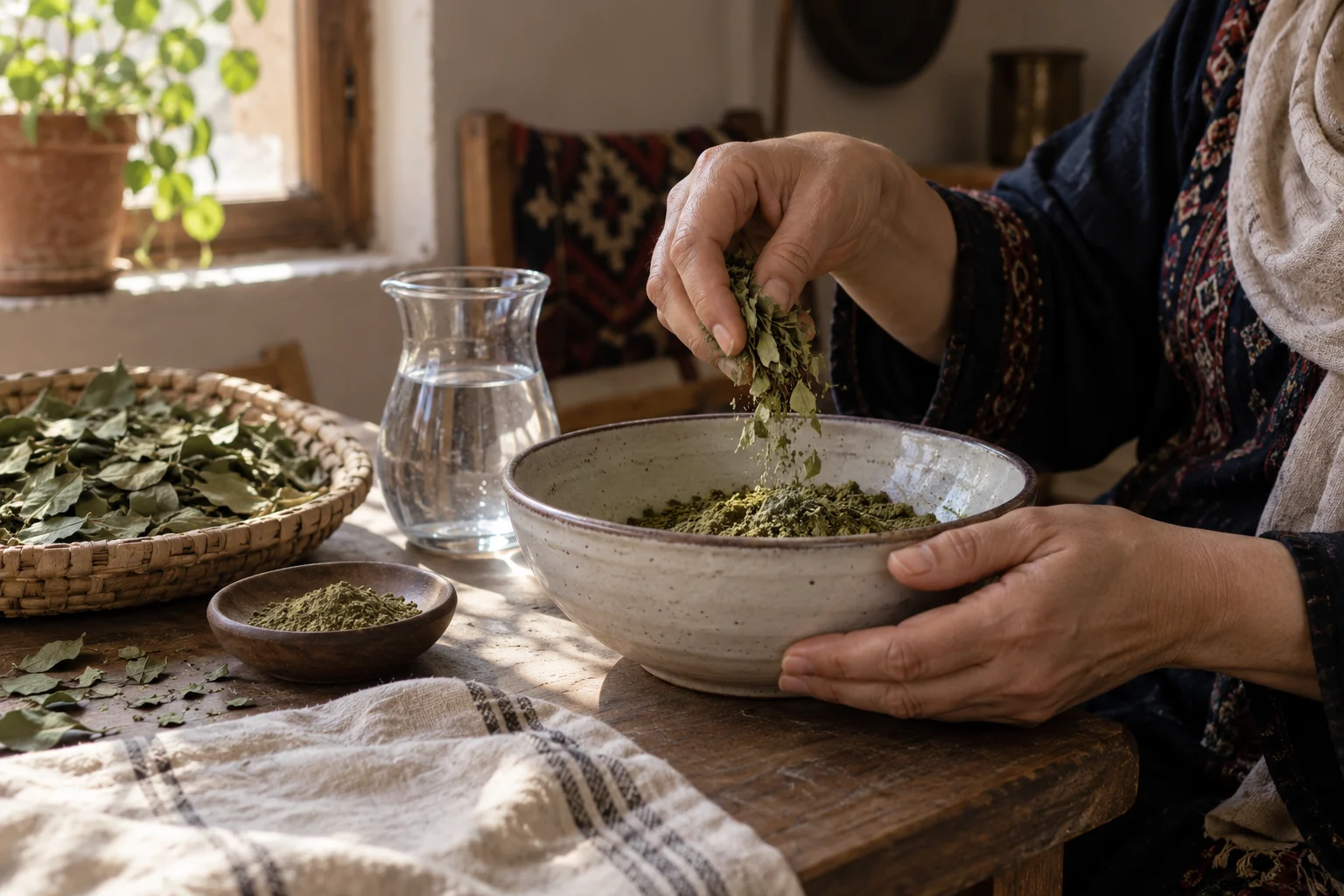
For many families, Sidr leaf is known through practice rather than theory. The leaves may be dried, powdered, soaked in water or prepared in simple household ways. People speak about cleansing, washing, hair care, skin care, and sometimes spiritual comfort. Some use it because their mothers used it. Others because they still trust the old household intelligence that knew how to do much with very little.
This matters because it reminds us that popular tradition is not empty folklore. It is lived repetition. A thing remains in use over generations because people found a place for it in daily life. That does not automatically transform habit into science, but it does give the habit cultural weight. Sidr leaf has that weight.
Beauty, washing and inherited knowledge
One of the most common ways people encounter Sidr leaf is through beauty or cleansing routines. In some homes it is associated with washing the hair. In others it is remembered for the skin or for a general feeling of cleanliness. It can be part of a weekly routine or something brought out only from time to time. The details change from region to region, but the pattern remains recognizable.
What interests MESKI is not to turn that routine into a universal prescription. What interests us is that a leaf kept its place in a world full of synthetic alternatives. That says something about trust. It says something about the memory of the hand, the bowl, the water, and the calm domestic knowledge that often travels through women, families and homes.
Folk medicine, testimony and limits
Sidr leaf also appears in the language of folk medicine. Some people speak about it for comfort. Others mention it in relation to the skin, cleanliness or general wellbeing. There are also published studies exploring different Ziziphus species and their compounds. That is worth noting. But it would be dishonest to blur the difference between traditional testimony, religious affection and clinical proof.
At MESKI, we prefer a cleaner line. We can respect what people inherited. We can mention that researchers have studied related plants. We can admit that certain people feel helped by old practices. But we do not convert this into hard treatment claims. Heritage becomes more trustworthy when it is told carefully.
Honey, cough, the Quran and Prophetic memory
No discussion of Sidr can stay far from honey. Honey occupies a unique place in Muslim memory because it is present both at the table and in devotional imagination. In Surat an Nahl, the Quran speaks of the drink that comes from the bee and says that in it there is healing for people. For centuries, that verse shaped reverence, reflection and affection around honey.
Hadith literature strengthened that closeness. Over time, honey became not only a food but also a symbol of blessing, comfort and trust. Many households naturally speak about honey in relation to the throat, seasonal discomfort or general weakness. These conversations are real and belong to lived culture. But a cultural memory is not the same thing as a medical conclusion, and it is better for everyone when we say so openly.
That is also why the world of Sidr honey cannot be reduced to flavour alone. When people buy Sidr honey, they are often buying into a much older confidence in the tree, its blossom and the stories that gathered around it.
People rarely ask only whether Sidr honey tastes good. Deep down they are asking whether the tree, the place and the trust behind it are real.
Meskaoui
From leaf to blossom, from blossom to jar
Sidr leaf and Sidr honey are not the same thing, yet they belong to the same living chain. The leaf stays with people in washing, memory and household habit. The blossom belongs to the bee. The bee turns landscape into honey. The honey returns to the home, to breakfast, to a spoon beside tea, to a gift for a guest, or to a small remedy prepared in confidence and affection.
That circle is part of what makes Sidr so powerful in cultural imagination. The tree is useful without being noisy. It offers leaf, shade, blossom and meaning. In a time when packaging often tries to replace knowledge, returning to the leaf is a way of returning to the source.
If your curiosity began with the jar, you may continue with our article on authentic Yemeni Sidr honey in the UAE. If it began with the tree, the jujube article is the better road. And if it began simply with wonder, then the MESKI Journal remains open.
Why this subject still matters
A simple leaf can reveal how traditional cultures think. It shows that the value of a plant is not always isolated in one extract, one laboratory phrase or one marketing promise. Value may live in continuity. It may live in the fact that a grandmother reached for the same leaf long before modern wellness language existed. It may live in the way a Quranic verse gives honey moral tenderness in the heart of a believer.
That is enough reason to write about Sidr leaf carefully. The point is not to impress. The point is to preserve a way of speaking truthfully about heritage, faith, domestic practice and nature without exaggerating any of them.
* Editorial note. MESKI shares traditional uses, spiritual references and published research for informational purposes only. We are not doctors, scientists or researchers, and we do not diagnose or prescribe. Every person is different. Sidr leaves and honey do not replace medical advice or treatment. For illness or persistent symptoms, consult a qualified health professional. Honey should not be given to children under 12 months.
Frequently asked questions
Is Sidr leaf the same as Sidr honey?
No. Sidr leaf is the leaf of the tree. Sidr honey is the honey connected to its blossom and ecosystem. They are linked, but they are not the same thing.
Can MESKI say Sidr leaf cures illness?
No. MESKI discusses traditional uses, religious memory and published research with caution, but we do not make clinical treatment claims.
Why are honey and cough often mentioned together?
Because many households associate honey with comfort for the throat and seasonal discomfort. That is part of domestic memory, but it should not replace proper medical advice.
Why is Sidr important beyond products?
Because Sidr belongs to a whole cultural world that includes the tree, the leaf, the blossom, honey, family habits and spiritual memory.
Why include a caution note at the end?
Because heritage deserves honesty. Traditional knowledge and modern medical proof are not identical.