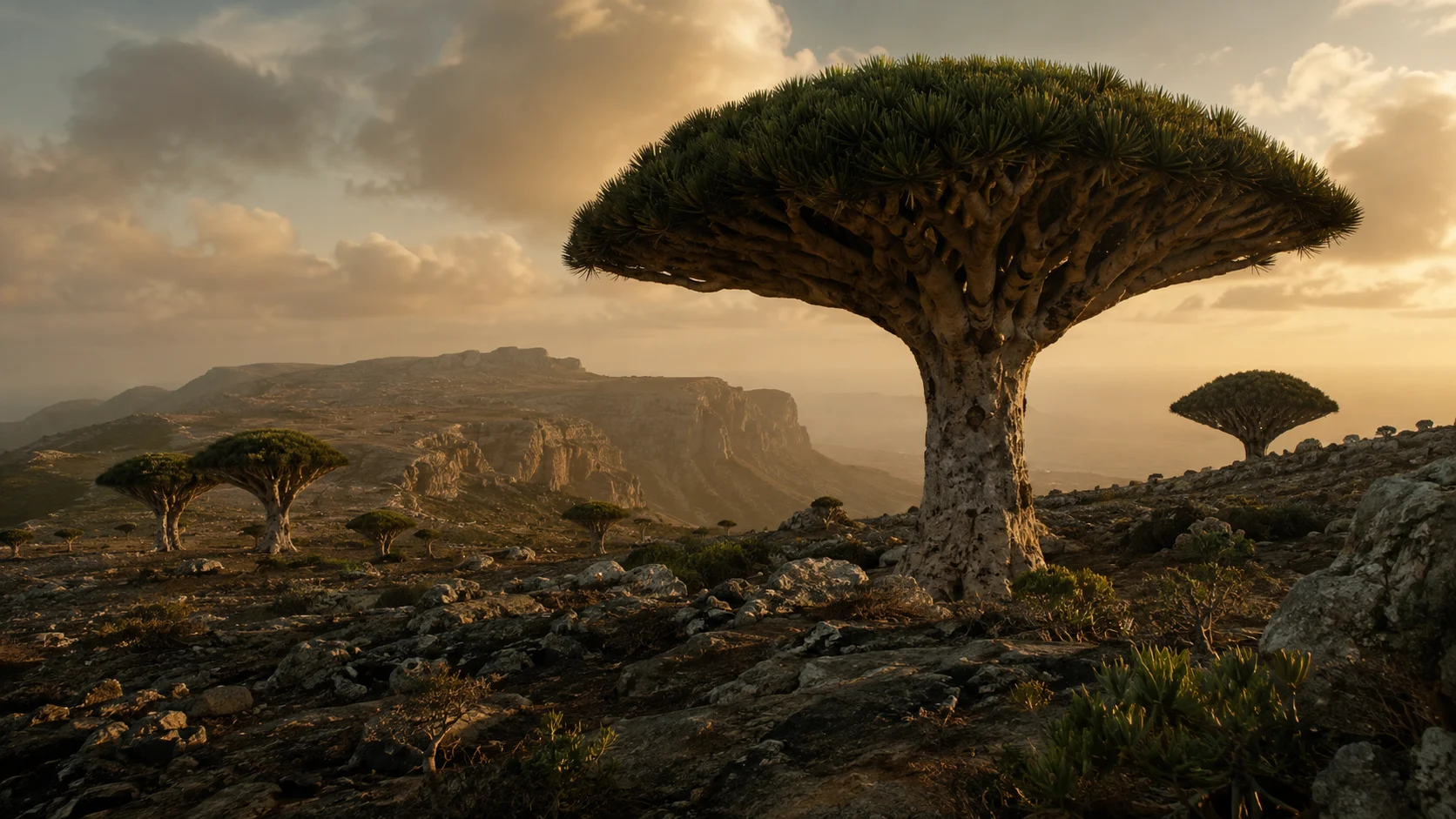
Yemen · Socotra Archipelago · Hadibu
Socotra
Honey
عسل سقطرى
From an island so unlike anywhere else, even the honey refuses to taste familiar.
Off the coast of Yemen, the Socotra archipelago holds a third of its plant life found nowhere else on Earth — and a honey gathered among the island’s dragon-blood forests unlike anything drawn from the mainland.
Terroir
Socotra, an island that kept its own rules
Socotra is a UNESCO World Heritage site and biosphere reserve, isolated far enough off the Horn of Africa that roughly a third of its plant life, and the majority of its reptiles, evolved nowhere else on the planet. Its most iconic resident, the umbrella-shaped dragon’s blood tree, structures entire pockets of forest.
Bees here forage across this singular flora rather than a single crop — the honey is multi-floral by nature, drawn from dozens of endemic trees and flowers unique to the archipelago.
| Location | Socotra Archipelago, Hadibu district, Yemen |
| Landscape | Isolated island forest and mountain terrain, extreme endemism |
| Floral source | Multi-floral — over a hundred endemic trees and flowers, dragon’s blood forest among them |
| Harvest | Chiefly during the island’s rainy season |
| Volume | As little as 100–300 kg gathered in a season |
“An island where a third of the plants exist nowhere else was never going to give an ordinary honey.“
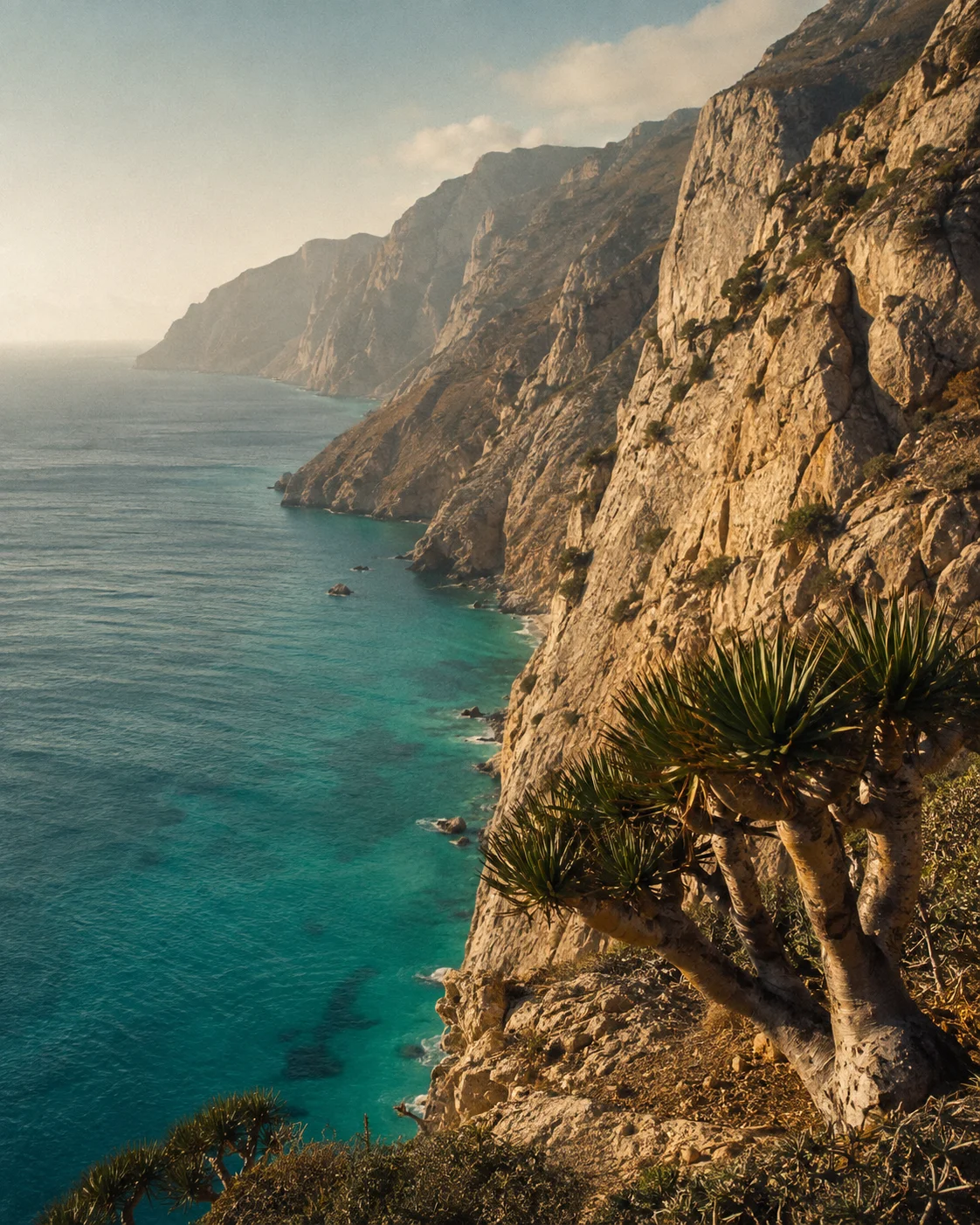 Socotra · Hadibu district
A modern answer to an old threat
Hives placed to help the forest, not just the harvest
A conservation programme founded in 2022 now places migratory hives directly in Socotra’s dragon-blood tree forests — improving pollination for trees threatened by storms and overgrazing, while giving Bedouin communities a sustainable income from the honey itself. The bees are here to help the forest as much as to feed on it.
Tradition
A landscape shaped by resin long before honey
Long before Socotra’s honey drew outside attention, the island’s dragon’s blood resin was already traded, used to dye wool, make ink, and treat wounds — the stone walls still visible across the landscape mark centuries of managing these trees.
A dedicated honey centre, supported in part by the French Embassy in Yemen, now applies quality standards to what island beekeepers bring in — testing, grading, and refusing anything that cannot be traced back to Socotra itself.
Centuries
Resin before honey
Dragon’s blood resin was harvested, traded and used in dye, ink and medicine long before the island’s honey found a market beyond it.
2008
A world heritage listing
UNESCO listed the Socotra Archipelago as a World Heritage site, formally recognising an endemism rate found almost nowhere else on the planet.
Recent decades
A honey centre, and a standard
A dedicated centre began testing and grading Socotran honey, refusing any batch that could not be verified as genuinely from the island.
Since 2022
Hives for the forest’s sake
A conservation programme began placing migratory hives directly in dragon’s blood forests, tying honey production to the trees’ own survival.
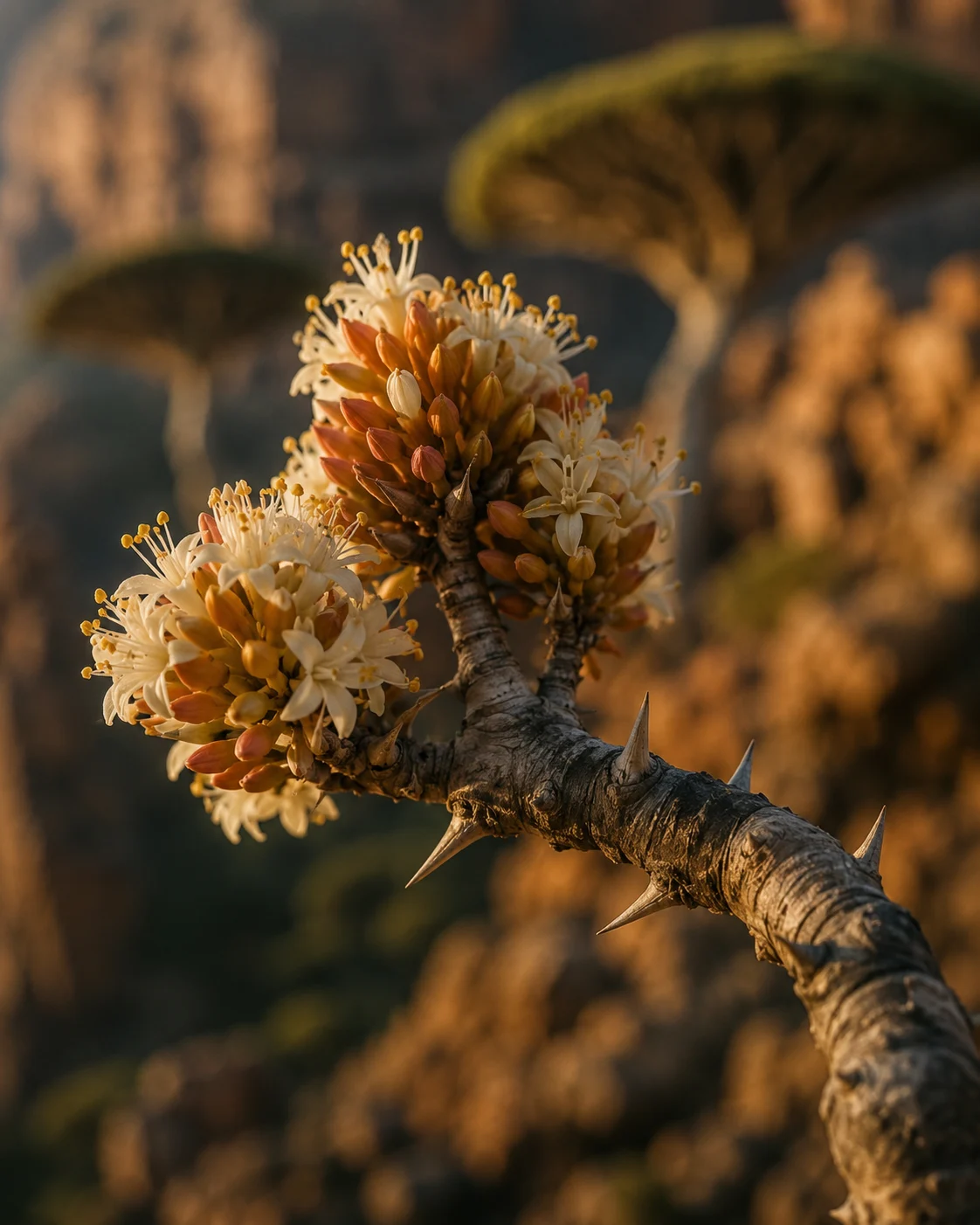 Endemic forest flora · Socotra
“Everywhere else, a honey tells you about one tree. This one tells you about an entire island that got left alone.”
— The House of Meski
Rarity
Rare because the island itself allows so little
Mountainous terrain, a harsh climate and a genuinely small endemic forest mean Socotra’s honey was never going to scale — a season’s harvest is measured in a few hundred kilograms, not tonnes.
Why it cannot scale
Socotra cannot simply produce more of this honey on demand. The island’s own geography sets the ceiling.
Beekeeping
Beehouses given, forests tended in return
Socotran beekeepers have been provided with over a thousand beehouses through the island’s honey centre, with quality equipment used to test what comes back before it is ever sold under the island’s name.
The practice
More recently, migratory hives have been placed directly among dragon’s blood tree nurseries — extraction follows standard modern practice, but the placement of the hives is deliberately tied to forest conservation, not just honey volume.
Sensory reading
Bittersweet, and unmistakably its own
Texture
Thick and full-bodied, closer in weight to a dense forest honey than to anything from Arabia’s deserts.
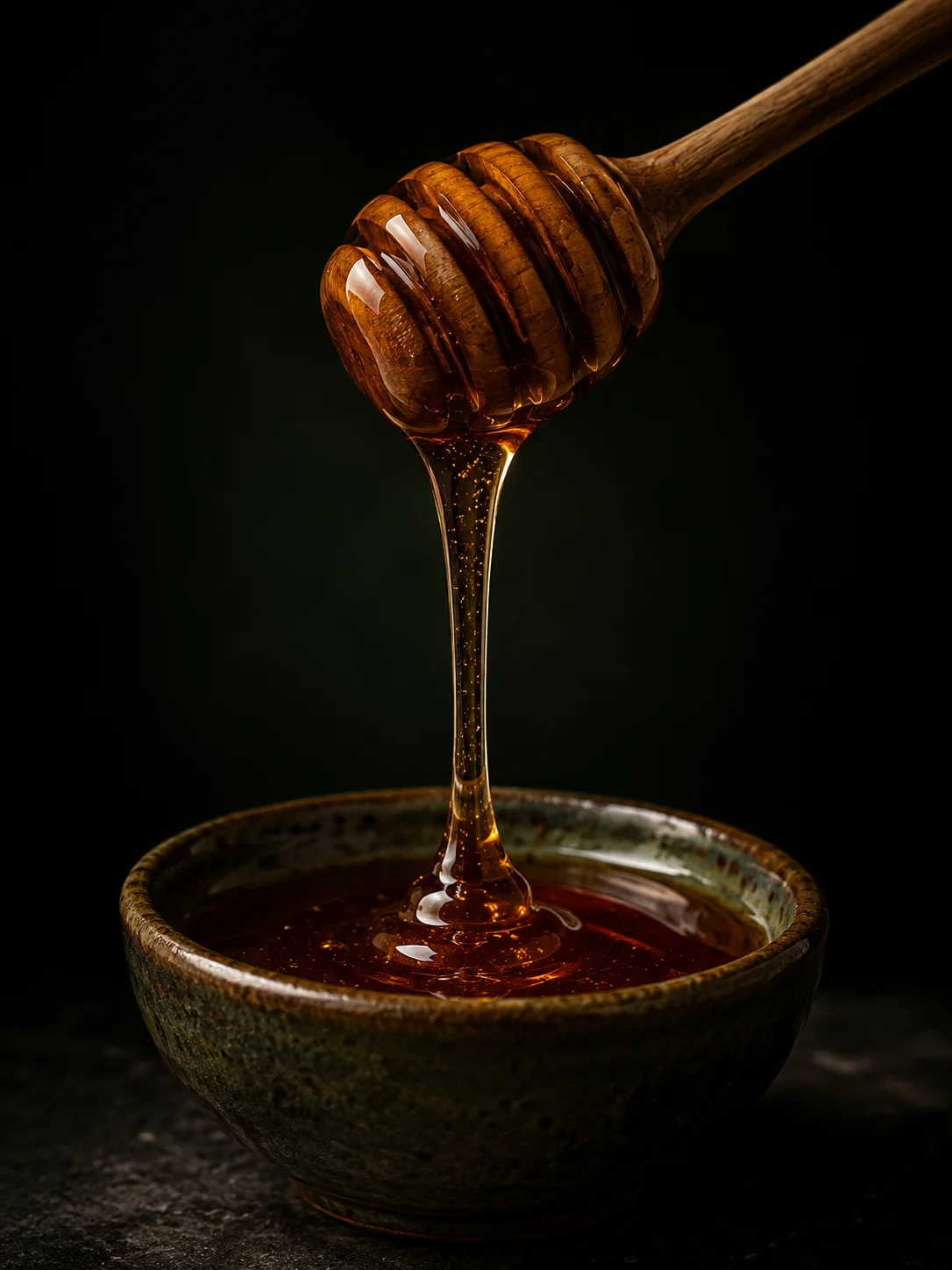
Harvest notebook
From the field — a season the mountain barely allows
Socotra’s rainy season is short, and the terrain unforgiving — beekeepers move hives across mountainous ground that offers little room for error.
What returns from a good season passes through the island’s own honey centre before it earns the right to be called Socotran at all — tested, graded, and only then bottled.
It is, by any measure, one of the rarest honeys this Atlas holds — not because of a marketing story, but because an island this isolated was never going to give up very much of it.
Pairings
How to serve it
Bittersweet and full-bodied — treat it as a rare thing to taste alone before adding anything else.
Meski rating
An editorial reading, not a certification
Six criteria of the House, judged in tasting. This rating describes the appellation, is revised for each lot presented, and replaces no analysis or certificate.
Provenance
The Meski Confidence Chain
Rare honey is one of the most counterfeited foods in the world, and Sidr is no exception. Confidence does not come from a single certificate — it comes from a chain that stays continuous, from bloom to jar.
Read: How to read a rare honeyAnalysis describes the sample received by the laboratory. It does not automatically prove that every jar sold under the same name comes from that sample. A continuous chain does.
Continue the Atlas
An origin is never an island
Compare not to name a winner, but to understand what place, season and craft shift in the cup.