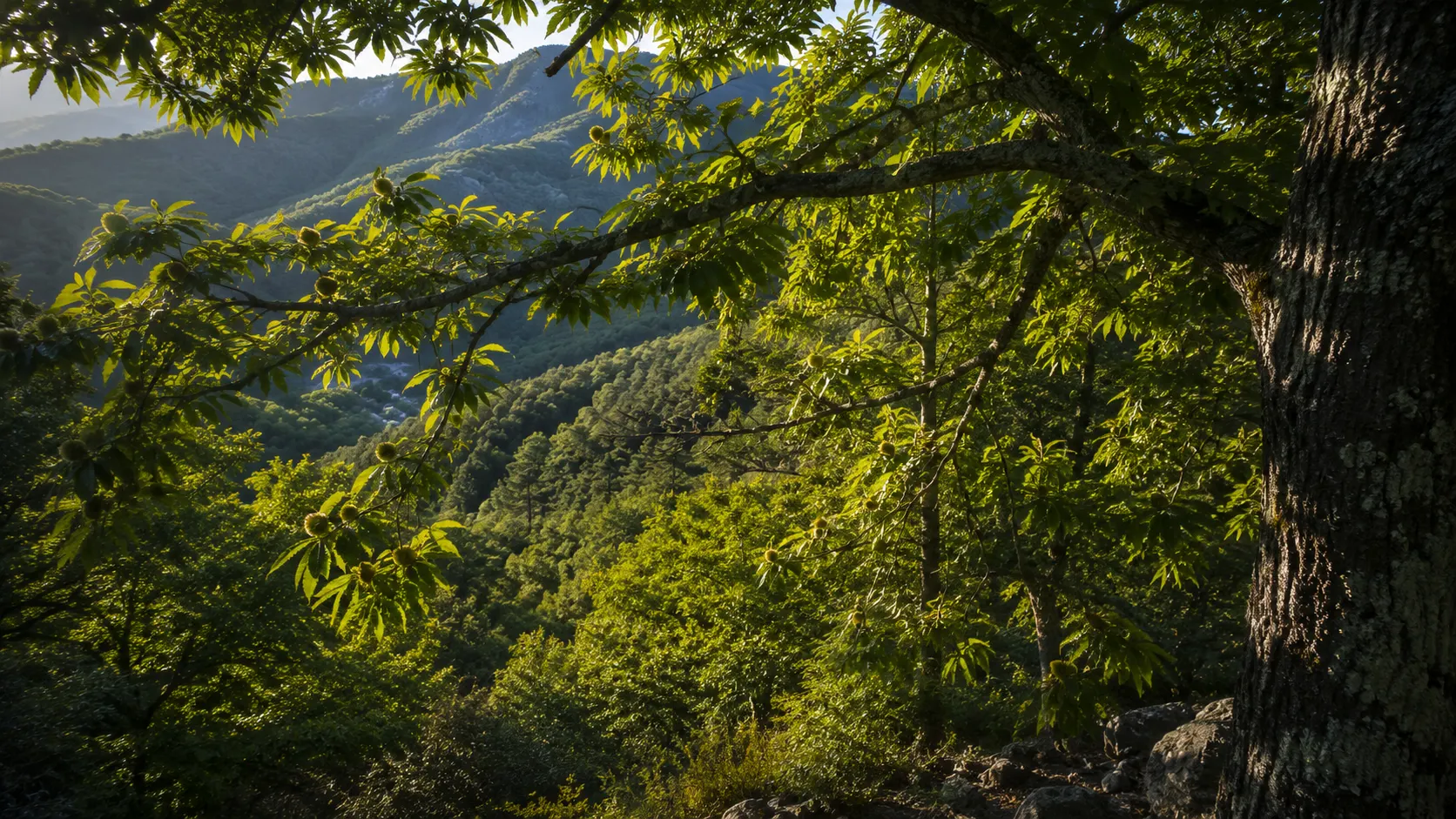
France · Cévennes · Ardèche
French
Chestnut Honey
عسل الكستناء الفرنسي
A forest honey now shadowed by a wasp the size of a grain of rice.
In the chestnut forests of the Cévennes and Ardèche, one of Europe’s most characterful honeys is harvested each summer — and, in recent years, increasingly threatened by a parasite few outside beekeeping circles have heard of.
Terroir
The Cévennes, a mountain built on one tree
The Cévennes and neighbouring Ardèche, in the Auvergne-Rhône-Alpes region, are France’s historic chestnut country — slopes between 400 and 900 metres covered in Castanea sativa, planted and tended for centuries as a food staple long before honey was the point.
Beekeepers move their hives into these forests each summer specifically for the chestnut bloom, transhumance in miniature — a short, intense encounter between bees and a canopy that flowers for barely two weeks.
| Location | Cévennes and Ardèche, Auvergne-Rhône-Alpes, France |
| Altitude | Roughly 400–900 m |
| Tree | Sweet chestnut — Castanea sativa |
| Bloom | Late June into July, around two weeks |
| Harvest | July, sometimes extending into early autumn |
“A forest that flowers for two weeks a year leaves no room for a beekeeper’s mistake.“
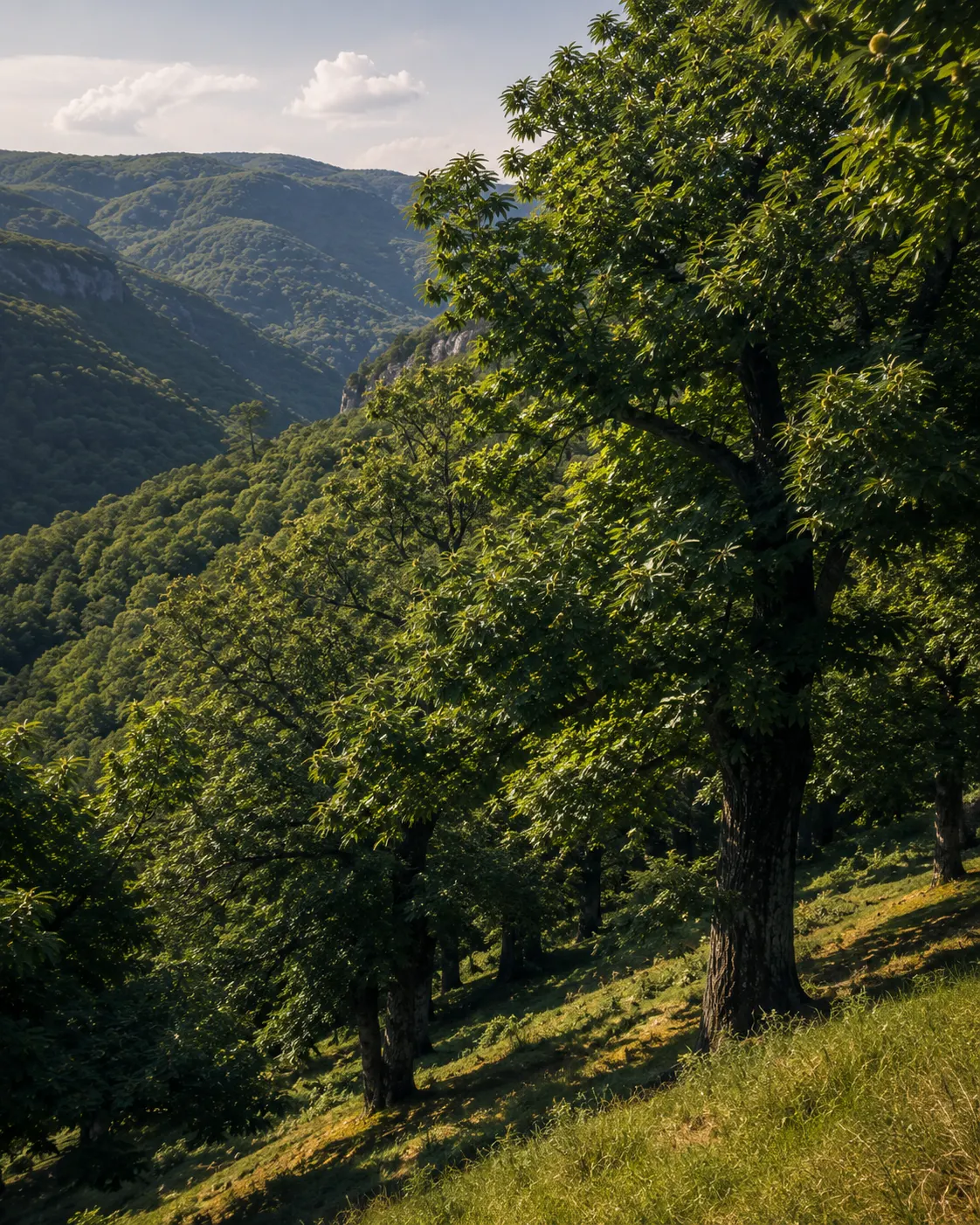 Ardèche · chestnut forest
A current threat, not folklore
The Cynips wasp is changing this harvest
Since its arrival in French chestnut country, the Asian chestnut gall wasp (Cynips) has damaged flowering and fruiting across the Cévennes and Ardèche, measurably reducing both chestnut and chestnut-honey harvests in affected years. This is not a historical footnote — it is an active, ongoing challenge for the beekeepers this fiche describes.
Tradition
A tree that fed the mountain before it sweetened it
For centuries, chestnuts were a staple food across the Cévennes — ground into flour, roasted, boiled — the mountain’s answer to famine years when grain failed. The honey was always secondary to the fruit.
Only in recent decades has chestnut honey earned its own recognition as a distinct, prized monofloral — appreciated now for the very bitterness and strength that once made it a minor, overlooked product beside the fruit itself.
Centuries
Bread before honey
Chestnuts fed the Cévennes through generations of poor harvests — the tree’s fruit mattered long before its honey did.
Recent decades
A honey of its own
Chestnut honey shed its status as a byproduct and became a recognised, sought-after monofloral in its own right.
Since the 2010s
An unwelcome arrival
The Asian chestnut gall wasp, Cynips, spread through French chestnut country, damaging blossom and reducing yields in affected orchards.
Today
A harvest under watch
Beekeepers and foresters work to manage the parasite while the bloom, when it holds, still gives one of France’s most characterful honeys.
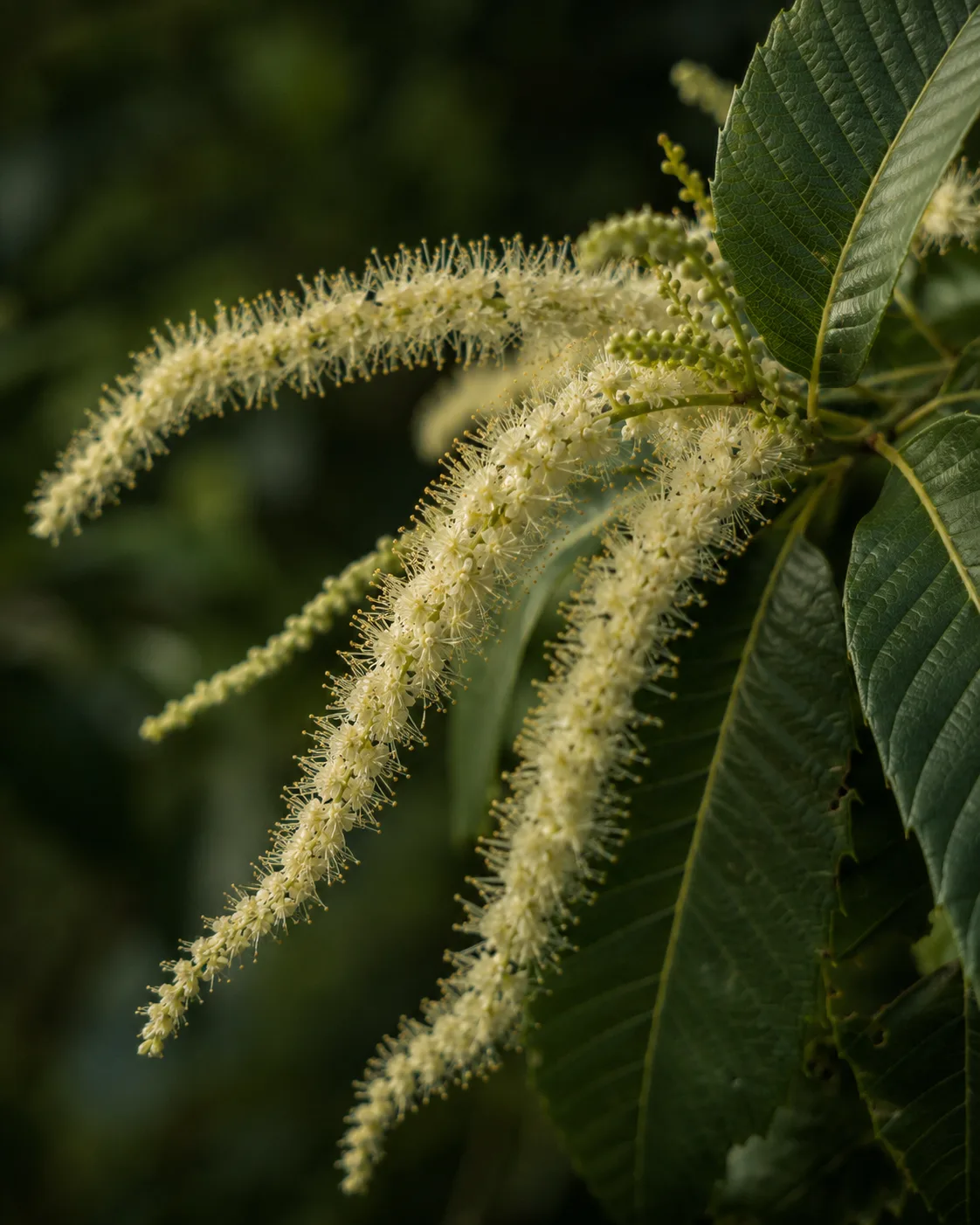 Chestnut bloom · Cévennes
“The forest does not ask the wasp’s permission, but it answers to it all the same.”
— The House of Meski
Rarity
Two weeks, one parasite, no guarantees
Even without the Cynips threat, chestnut honey was never an easy harvest: a two-week bloom, sensitive to heat and rain, gone before most other summer flowers even start. The parasite has only tightened that margin.
Why it cannot scale
Chestnut honey was already a narrow-window harvest. A parasite that damages the very blossom bees depend on makes it narrower still.
Beekeeping
A summer transhumance into the forest
Beekeepers move their hives into the Cévennes and Ardèche forests specifically for the chestnut bloom, then move them out again once the brief flowering ends — a seasonal migration built around a two-week window.
The practice
Extraction uses standard modern equipment — smoker, uncapping knife, extractor — nothing unusual beyond the timing and the forest itself.
Sensory reading
Strength that divides opinion, on purpose
Texture
Stays liquid for a remarkably long time, resisting crystallisation far longer than most honeys.
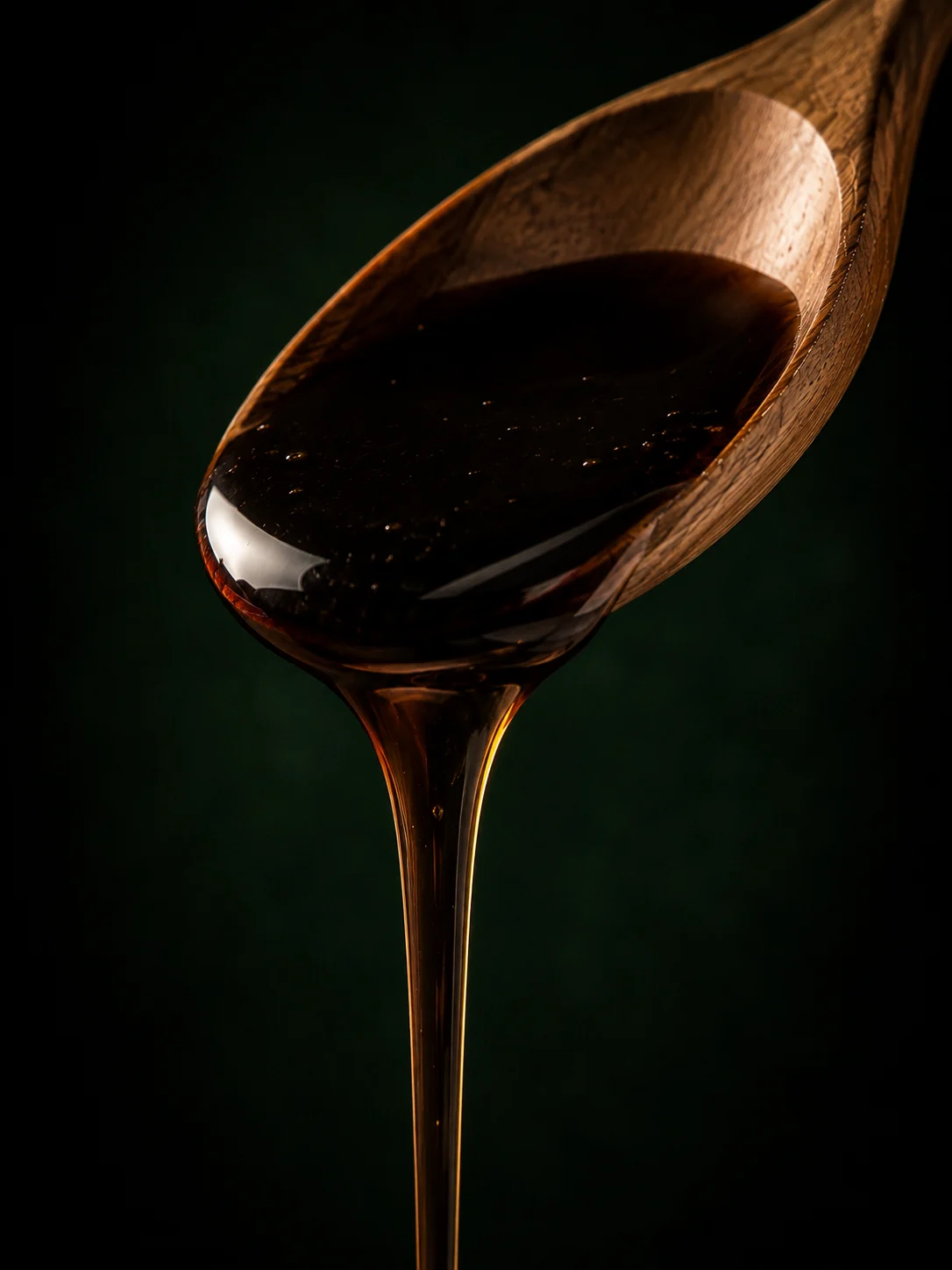
Harvest notebook
From the field — racing a two-week bloom
The chestnut canopy gives almost no warning. Beekeepers watch the forest closely in June, ready to move hives in the moment the first flowers open.
In a good year, the bloom holds for a full fortnight and the bees work it hard. In a year troubled by the Cynips wasp, flowering can be visibly thinner, and the harvest smaller before it even begins.
What comes back, when the season holds, is a honey that owes its strength to a tree under real, current pressure — not a folklore of scarcity, but a working beekeeper’s actual yearly gamble.
Pairings
How to serve it
Strong enough to meet strong flavours head-on.
Meski rating
An editorial reading, not a certification
Six criteria of the House, judged in tasting. This rating describes the appellation, is revised for each lot presented, and replaces no analysis or certificate.
Provenance
The Meski Confidence Chain
Rare honey is one of the most counterfeited foods in the world, and Sidr is no exception. Confidence does not come from a single certificate — it comes from a chain that stays continuous, from bloom to jar.
Read: How to read a rare honeyAnalysis describes the sample received by the laboratory. It does not automatically prove that every jar sold under the same name comes from that sample. A continuous chain does.
Continue the Atlas
An origin is never an island
Compare not to name a winner, but to understand what place, season and craft shift in the cup.