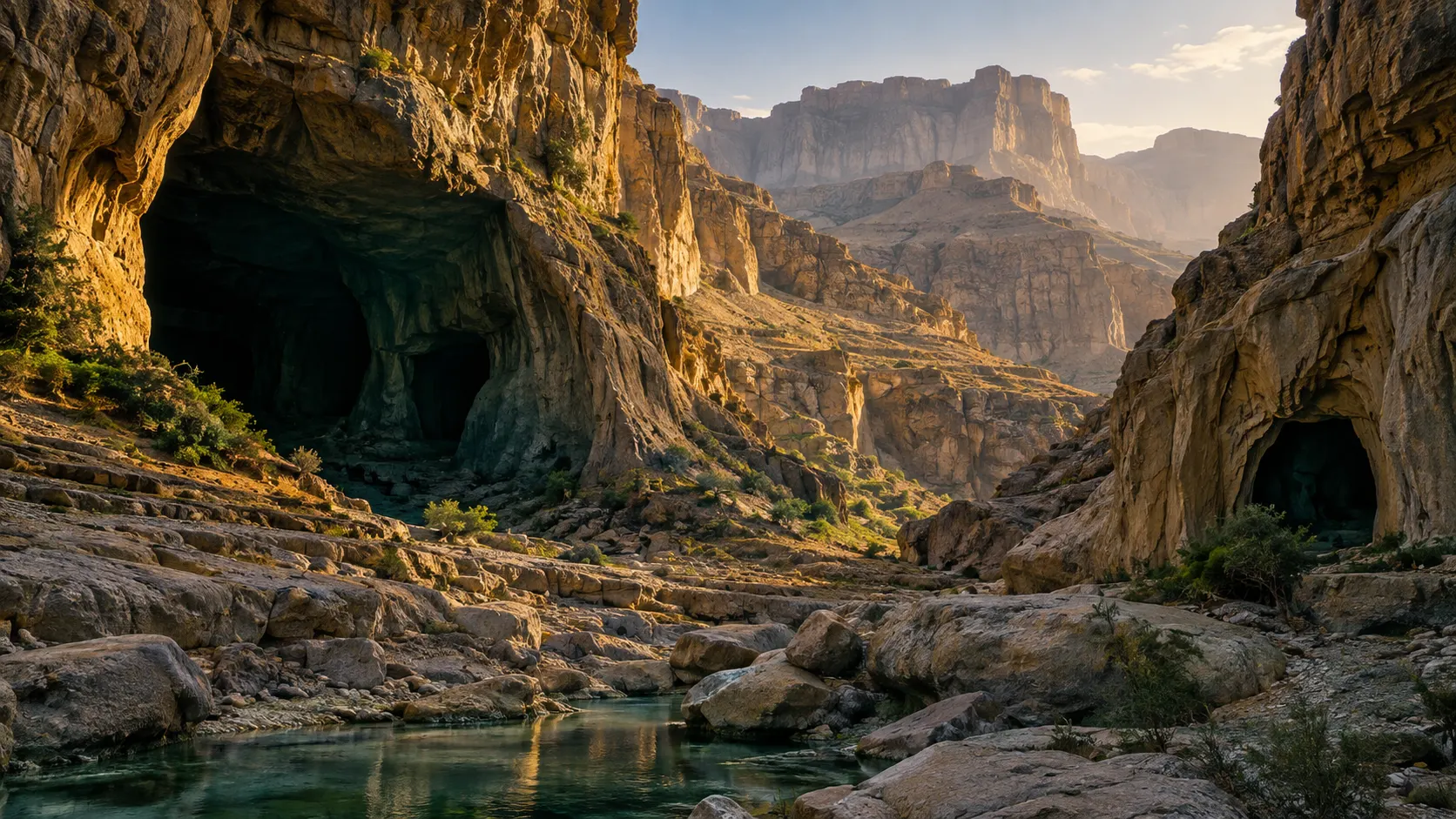
Yemen · Hadramaut · Wadi Amd
Royal Cave
Honey
عسل الكهوف الملكي
A honey defined less by one blossom than by the mountain caves where wild colonies keep it cool, hidden and painfully scarce.
In Wadi Amd, deep in Hadramaut, certain wild colonies build inside mountain cavities and narrow caves. The result is a honey whose fame rests on difficulty: difficult to reach, difficult to harvest, difficult to find in meaningful quantity.
Terroir
A mountain honey born in shadow
Wadi Amd is part of Hadramaut’s steep interior landscape: hard rock, fractured mountain walls and deeply cut routes that shelter wild bee colonies from direct sun.
The defining feature is not only flora but habitat. Bees build in caves and rock cavities, where cooler darkness shapes the conditions of the hive and where human access is limited to the patient and the brave.
| Location | Wadi Amd, Hadramaut, Yemen |
| Landscape | Remote mountain ravines and cave systems |
| Floral source | Wild mountain forage; often presented commercially as a premium cave honey |
| Harvest | Irregular, depending on access and wild colony presence |
| Volume | Exceptionally low; often described in only a few hundred kilograms |
“Before it tastes rare, cave honey must first be reached.“
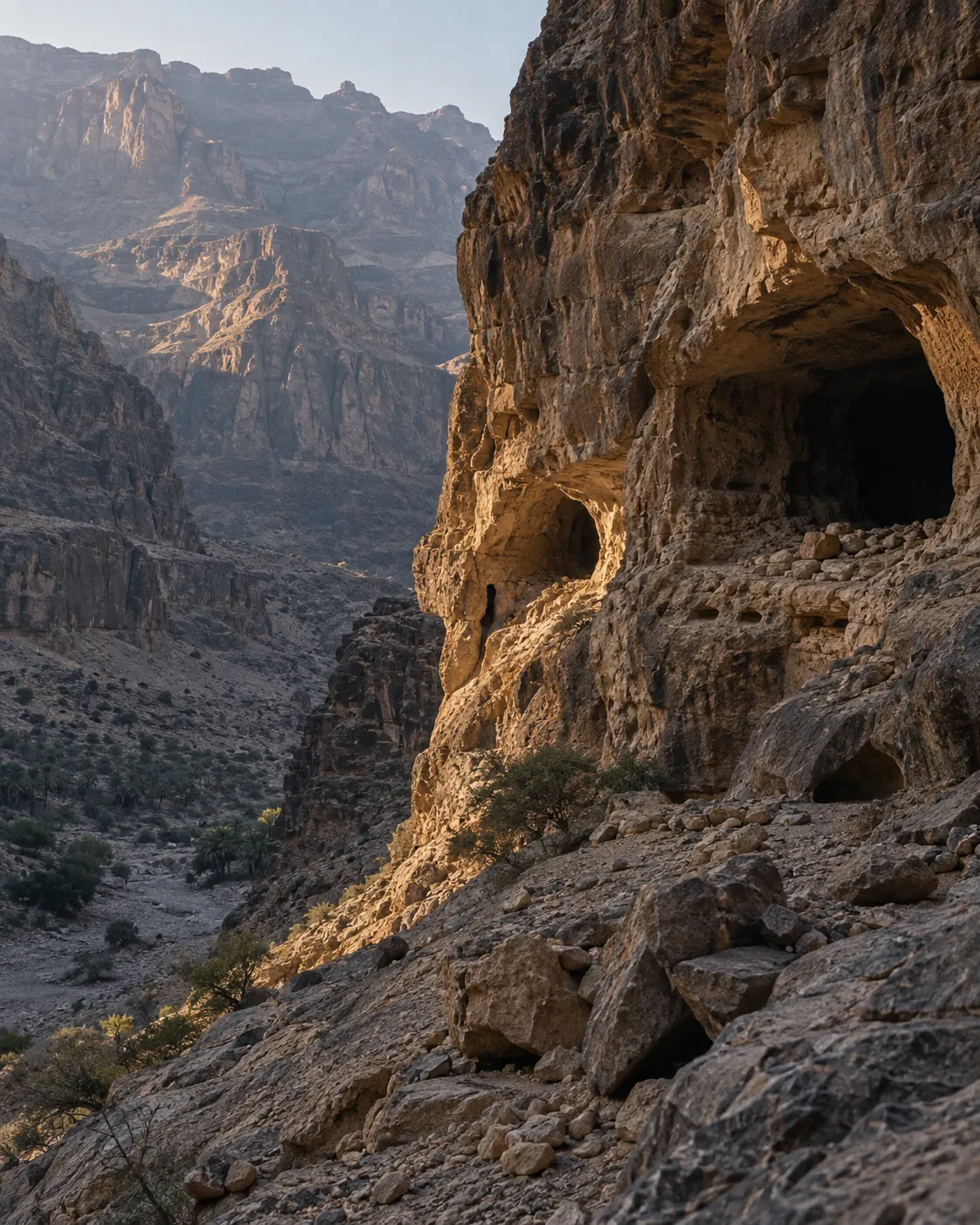 Hadramaut · Wadi Amd
Why it stands apart
The cave is not a metaphor
Royal Cave Honey is not simply expensive Yemeni honey with a dramatic name. Its defining claim is literal: wild colonies set inside mountain caves, where access itself limits production.
Tradition
A prestige honey tied to the difficulty of harvest
In the Arabic honey world, cave honey — kahouf or kohouf — carries an aura of honour. Part of that reputation comes from scarcity, part from the physical ordeal required to gather it without destroying the colony.
The Atlas treats that reputation carefully. It is the cave setting, the low volume and the hand harvest that make the category meaningful — not the mythology that tends to accumulate around it.
Wild colonies
Wild colonies
Bees occupy mountain cavities and caves away from the sun.
Difficult access
Difficult access
Harvesters crawl through fissures and narrow openings to reach comb.
Tiny outputs
Tiny outputs
Seasonal volumes are described in mere hundreds of kilos, not tonnes.
Luxury status
Luxury status
The honey becomes a prestige product across Gulf and diaspora markets.
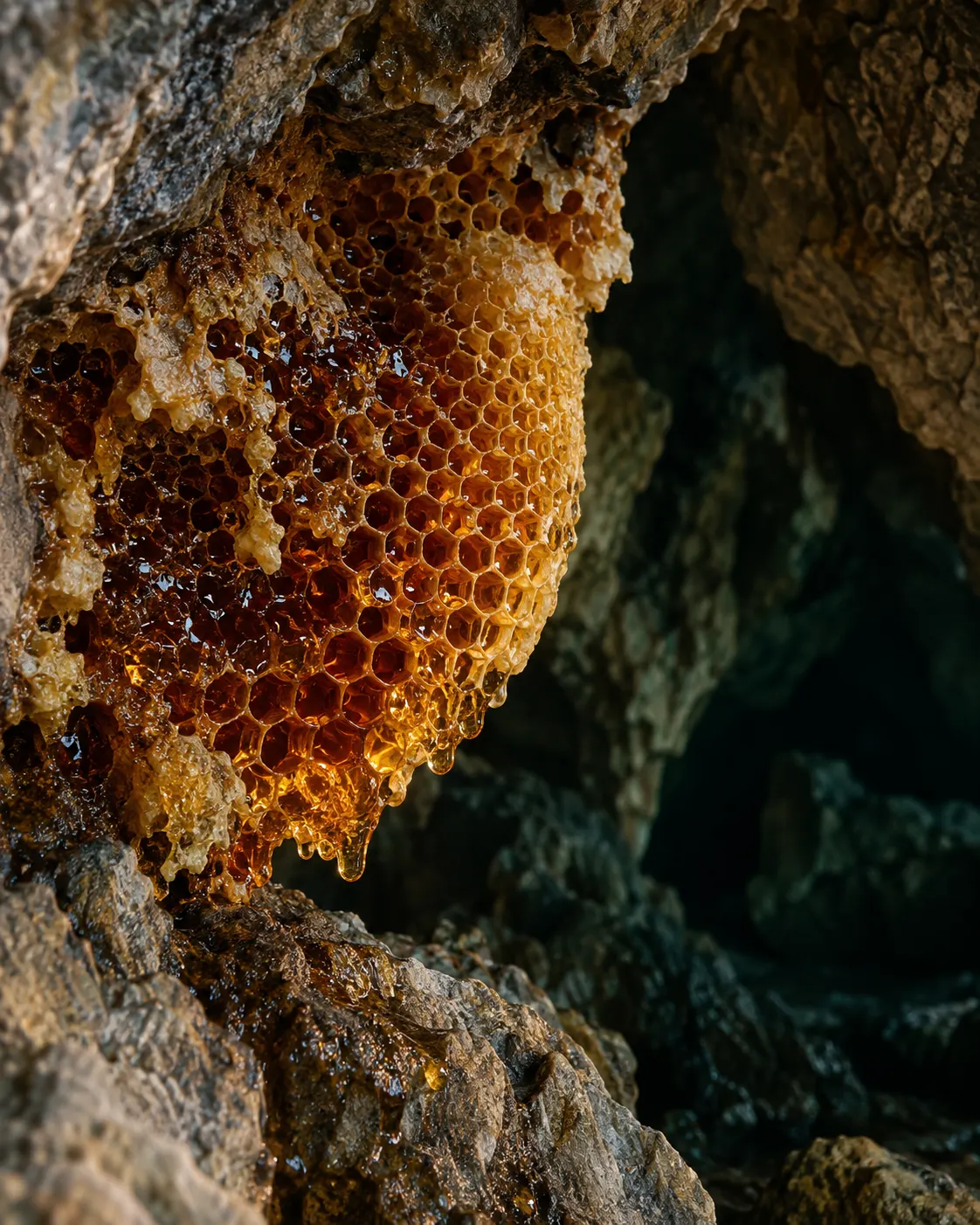 Botanical detail · Yemen
“Here, rarity begins with the rock itself.”
— The House of Meski
Rarity
Rare because access is part of production
A cave honey cannot be scaled like orchard honey. The rock walls choose the site, the bees choose the cavity, and harvesters take only what can be removed without breaking the colony.
Why it matters
Its scarcity is structural, not fashionable.
Beekeeping
Wild harvest, minimal intervention
This is less beekeeping in the managed agricultural sense than careful wild harvest. Human skill lies in finding the colonies, entering safely and preserving enough comb for the bees to continue.
The practice
That makes provenance especially important: with a honey so scarce, the story of place can easily be imitated unless the chain from cave to jar remains clear.
Sensory reading
Dense, dark and cave-cooled
Texture
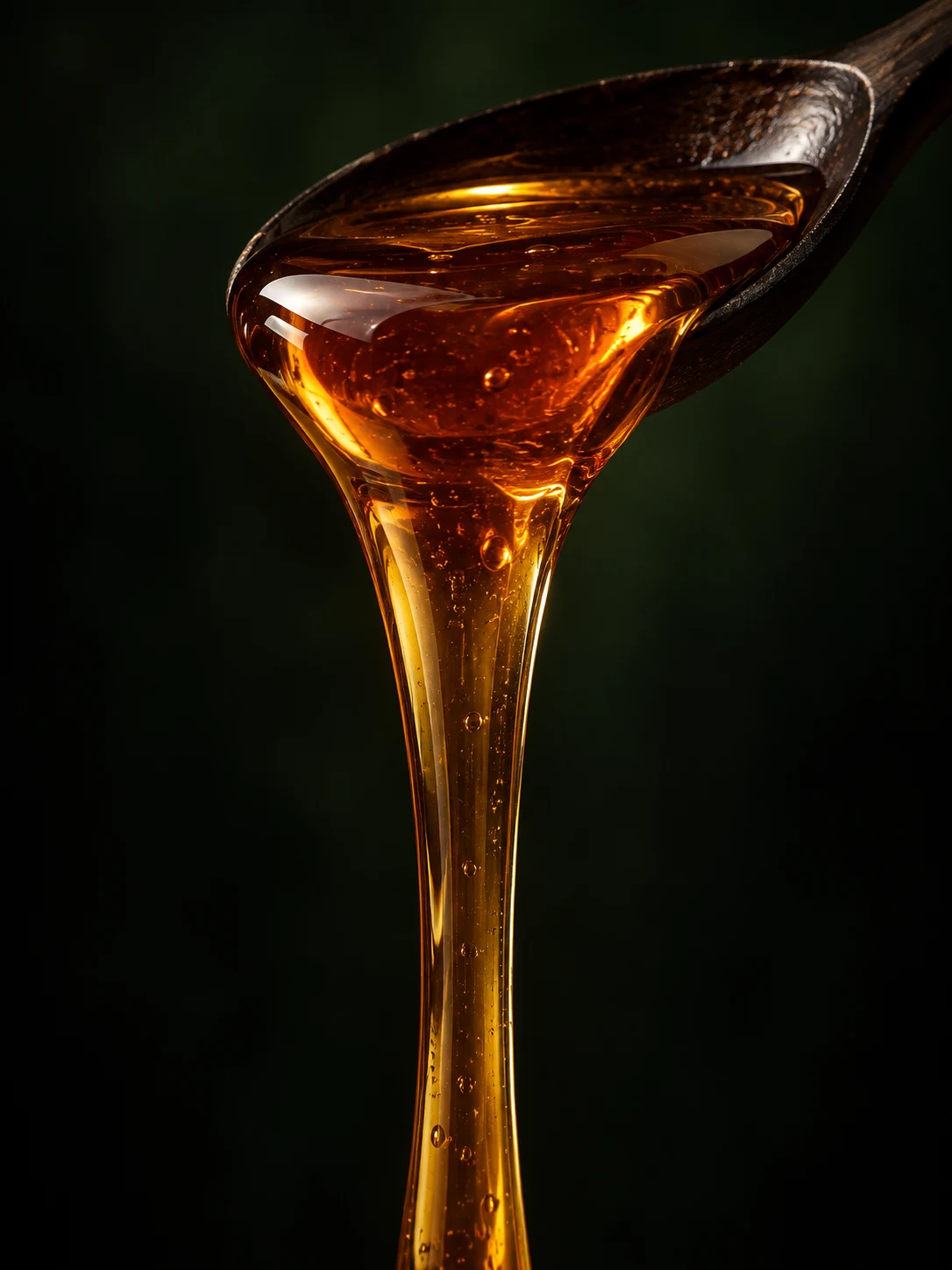
Exceptionally viscous, with a slow-moving ribbon that speaks of concentration.
Notebook
Tasting notebook
Cave honey does not taste theatrical, but it does feel monumental. The palate is generous and dense, yet the most memorable part may be its physical presence — a honey that seems to move more slowly than ordinary honey.
Pairings
Ways to serve it
Meski rating
An editorial reading, not a certification
Six criteria of the House, judged in tasting. This rating describes the appellation, is revised for each lot presented, and replaces no analysis or certificate.
Provenance
The Meski Confidence Chain
Rare honey is one of the most counterfeited foods in the world, and named origins are no exception. Confidence does not come from a single certificate — it comes from a chain that stays continuous, from bloom to jar.
Read: How to read a rare honeyAnalysis describes the sample received by the laboratory. It does not automatically prove that every jar sold under the same name comes from that sample. A continuous chain does.
Continue the Atlas
An origin is never alone
Compare not to name a winner, but to understand what place, season and craft shift in the cup.