
Yemen · Hadramout · Summer wildflower routes
Yemeni Wildflower
Honey
عسل الزهور البرية اليمني
A seasonal summer honey whose identity comes from variation itself: the bloom changes, and the honey follows.
Wildflower honey is often treated as a generic category. In Hadramout it should be read more carefully: a summer honey gathered from a shifting field of blossoms, where the appeal lies precisely in the fact that no two seasons express the same balance.
Terroir
A honey built from a chorus, not a soloist
This honey is associated with Hadramout and with the nomadic movement of beekeepers following seasonal bloom. Rather than one emblematic tree, it gathers many voices into one harvest.
That makes it harder to reduce and more interesting to taste. It is a seasonal register of place rather than a fixed monofloral statement.
| Location | Hadramout, Yemen |
| Landscape | Seasonal bloom zones followed by nomadic beekeepers |
| Floral source | Mixed wildflowers and seasonal blossoms |
| Harvest | Summer |
| Volume | Variable by year and bloom conditions |
“Some origins promise consistency. Wildflower promises fidelity to the season.“
 Hadramout · Summer wildflower routes
Core idea
Variation is not a flaw
Wildflower honey should not be forced to taste identical every year. Its value comes from seasonal truth: when the bloom shifts, the profile should shift with it.
Tradition
Nomadic beekeeping, seasonal reading
Yemeni wildflower honey is linked to movement. Beekeepers follow the season rather than waiting for it, placing colonies where a temporary abundance of blossom opens and closes over the summer.
This gives the honey a wide but not chaotic identity: floral, warm, naturally sweet, and always marked by the year in which it was gathered.
Seasonal bloom
Seasonal bloom
Mixed blossoms open across Hadramout in summer.
Nomadic placement
Nomadic placement
Beekeepers move with the flowering zones.
Multifloral harvest
Multifloral harvest
Lots gather several plant voices into one honey.
Yearly variation
Yearly variation
Each season redraws the balance of aromas and sweetness.
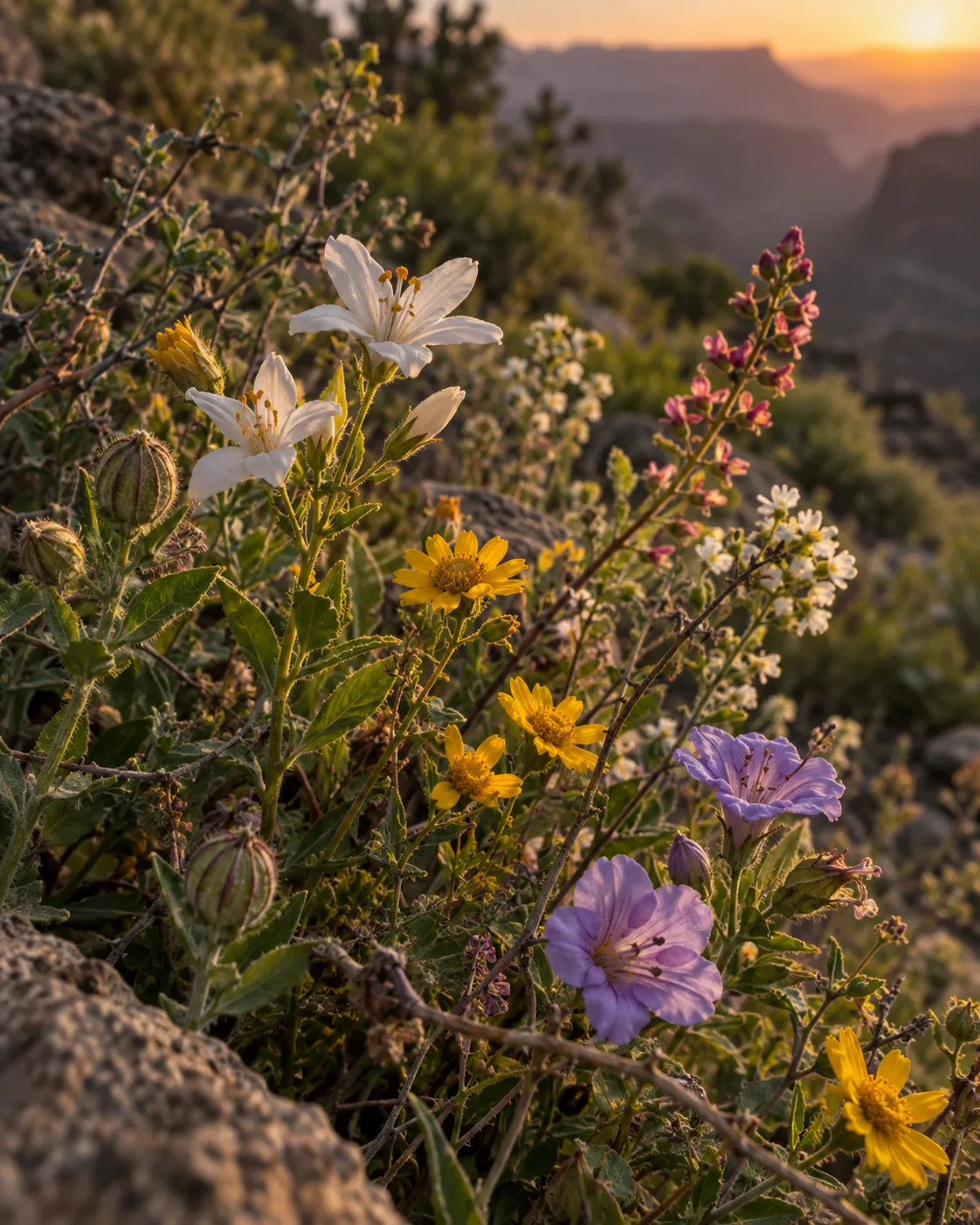 Botanical detail · Yemen
“Wildflower honey does not repeat itself. That is its grace.”
— The House of Meski
Rarity
Rare less by volume than by honesty
Wildflower honey can exist in many places. What makes a good one distinctive is not scarcity theatre but faithful expression of the season and the refusal to flatten everything into generic sweetness.
Why it matters
It is a seasonal document, not a fixed formula.
Beekeeping
Following bloom instead of forcing it
This style depends on moving colonies according to floral availability. The beekeeper’s craft lies in reading when and where blossom is strong enough to justify relocation.
The practice
Because the honey is multifloral, lot integrity matters especially: it is easy to speak vaguely of wildflowers, but harder to preserve a genuine seasonal identity.
Sensory reading
Summer in layers
Texture
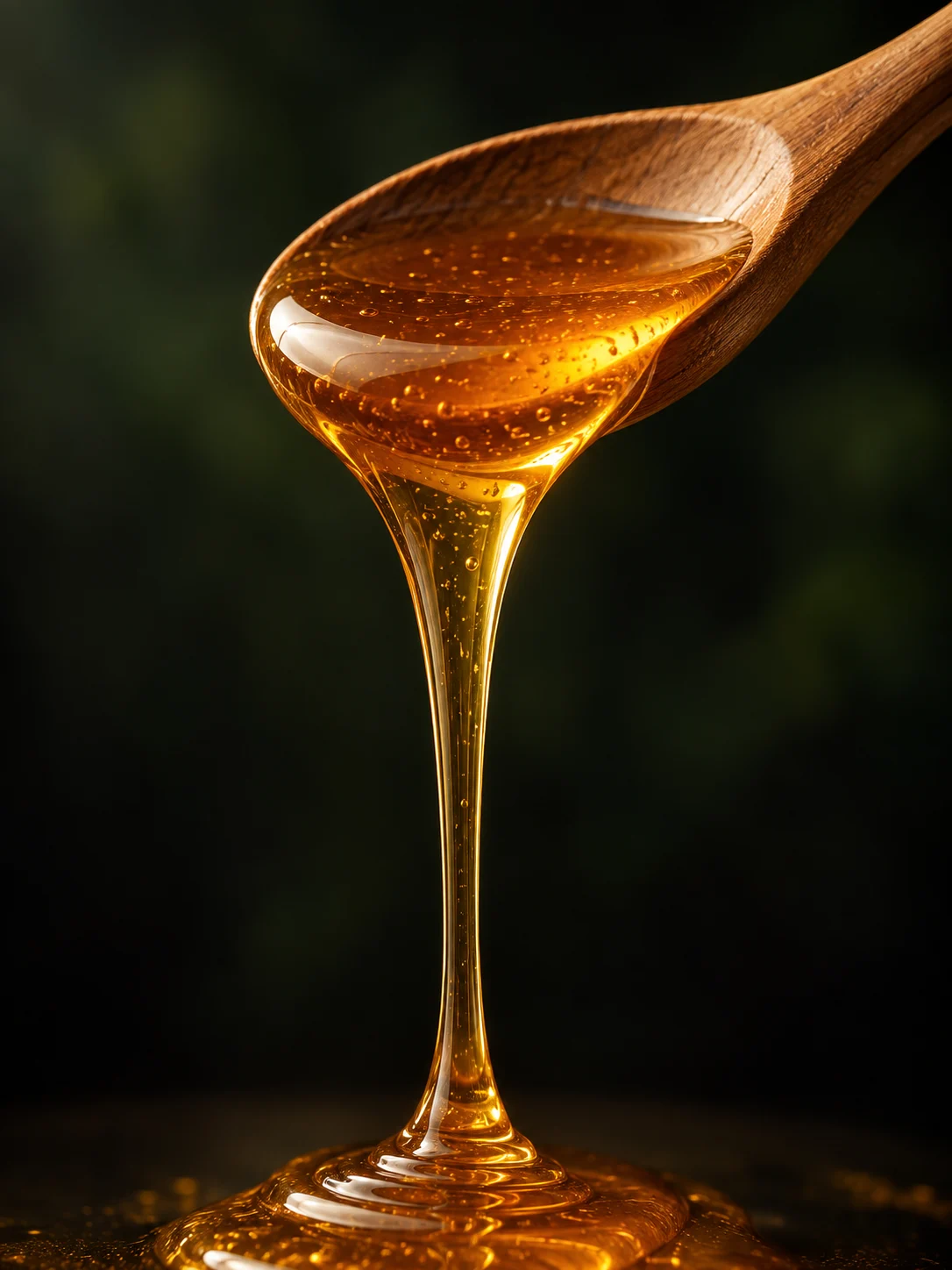
Smooth and medium-thick, generous without the density of prestige Sidr.
Notebook
Tasting notebook
Wildflower honey is often underrated because it lacks one famous tree to stand behind. But when the season is good, it offers something monofloral honey cannot: a wider picture of place, more atmospheric than singular.
Pairings
Ways to serve it
Meski rating
An editorial reading, not a certification
Six criteria of the House, judged in tasting. This rating describes the appellation, is revised for each lot presented, and replaces no analysis or certificate.
Provenance
The Meski Confidence Chain
Rare honey is one of the most counterfeited foods in the world, and named origins are no exception. Confidence does not come from a single certificate — it comes from a chain that stays continuous, from bloom to jar.
Read: How to read a rare honeyAnalysis describes the sample received by the laboratory. It does not automatically prove that every jar sold under the same name comes from that sample. A continuous chain does.
Continue the Atlas
An origin is never alone
Compare not to name a winner, but to understand what place, season and craft shift in the cup.