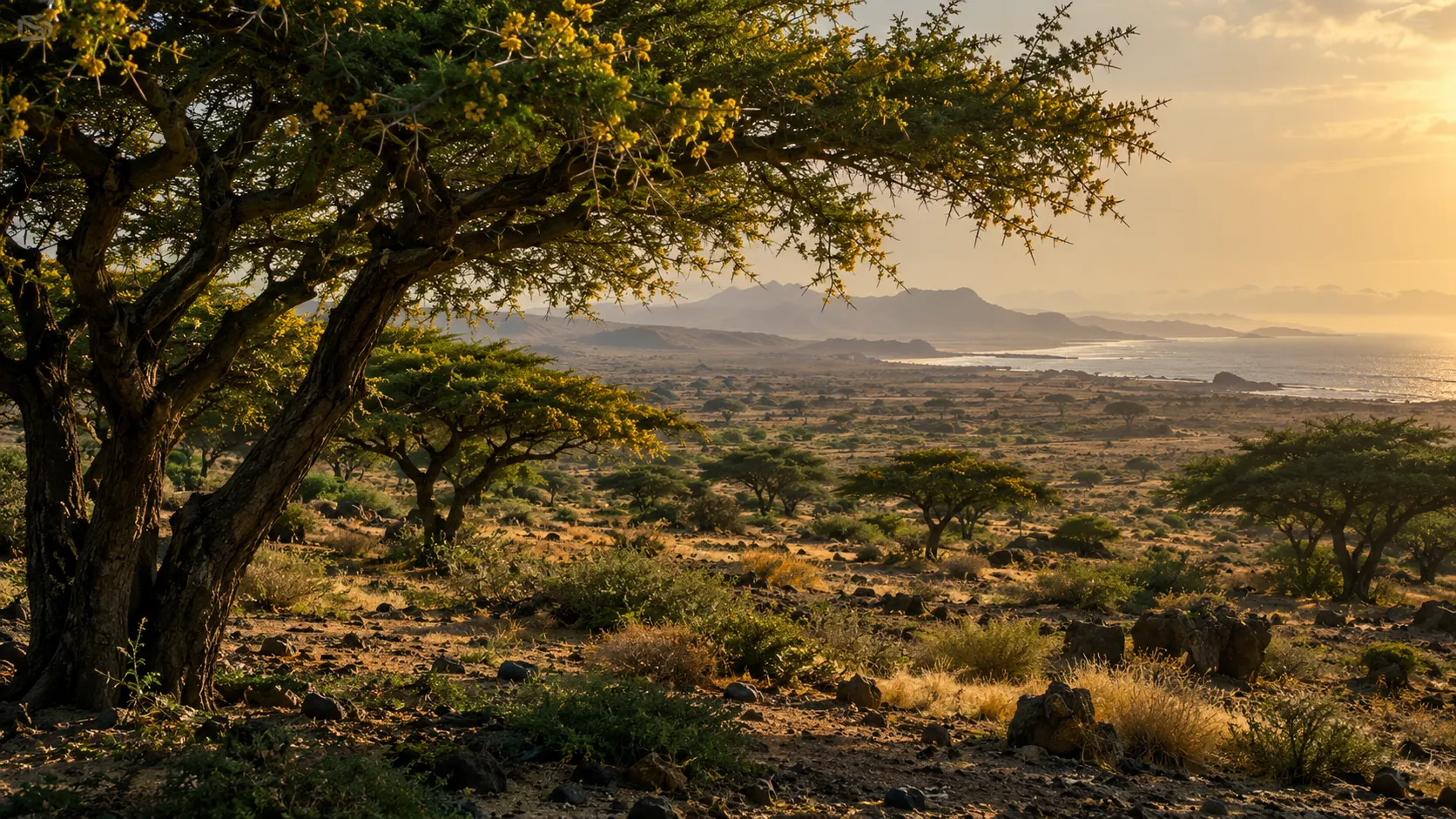
Yemen · Tihama · Red Sea Coast
Yemeni Salam
Honey
عسل السَّلَم اليمني
A tart coastal acacia honey from Tihama, where Salam trees flower against heat, dust and the Red Sea plain.
Along Yemen’s western Tihama, the Salam tree thrives in one of the country’s hottest landscapes. Bees work its yellow bloom in late winter and spring, producing a dark, thick honey with a noticeably tart edge rather than simple sweetness.
Terroir
Tihama, where the coast turns brutally hot
Tihama runs along Yemen’s Red Sea coast: a broad, low plain of heat, seasonal watercourses and drought-adapted vegetation. Salam is one of the trees built for this environment.
The tree — Vachellia flava, also known as Acacia ehrenbergiana — is strongly associated with the region and valued locally for several uses, including beekeeping. Its flowering period creates a distinct seasonal honey flow.
| Location | Tihama, Red Sea coastal plain, Yemen |
| Landscape | Hot lowland plain, seasonal wadis and dry acacia scrub |
| Floral source | Salam — Vachellia flava (syn. Acacia ehrenbergiana) |
| Harvest | February to April |
| Character | Less sweet, dark and distinctly tart |
“A coastal acacia honey that chooses tartness over easy sweetness.“
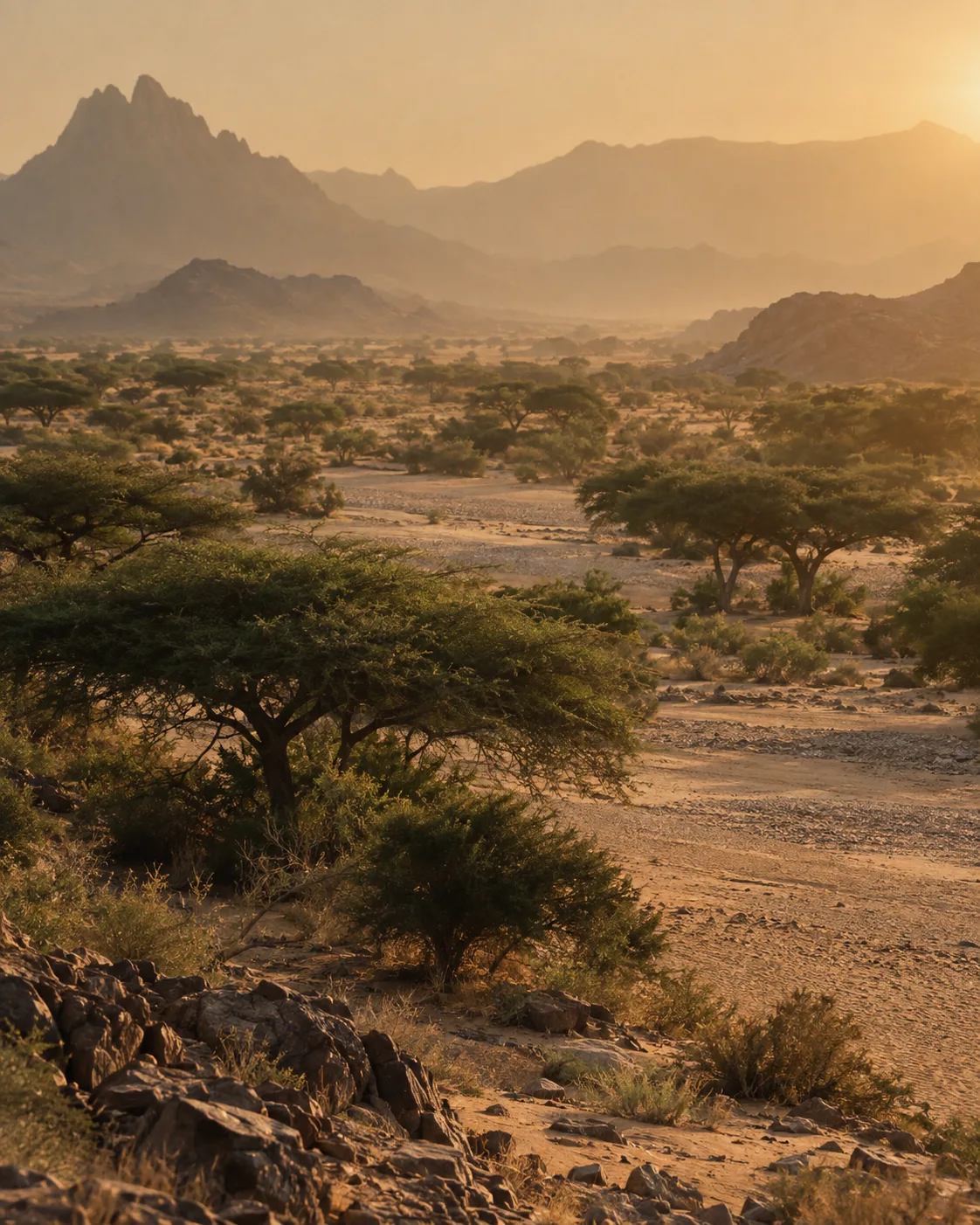 Tihama · Red Sea coastal plain
Botanical identity
Salam is not Samar
The names are close, but the trees are not the same. Salam is Vachellia flava / Acacia ehrenbergiana; Samar is generally Vachellia tortilis. Keeping that distinction is essential if the Atlas is to mean anything.
Tradition
A useful tree long before it became an export honey
In Tihama, Salam has never been only a nectar source. The tree has long been valued for wood, charcoal, qatran and livestock use, making it part of a practical dryland economy.
Beekeepers move colonies toward Salam areas as the trees flower. The honey therefore belongs to a seasonal landscape rather than to a fixed industrial apiary.
Dryland tree
Dryland tree
Salam becomes one of Tihama’s useful native trees.
Seasonal migration
Seasonal migration
Beekeepers move hives toward flowering Salam stands.
Feb–Apr
Feb–Apr
The main flowering window creates the honey flow.
Today
Today
Salam remains a lesser-known Yemeni origin beside Sidr and Somour.
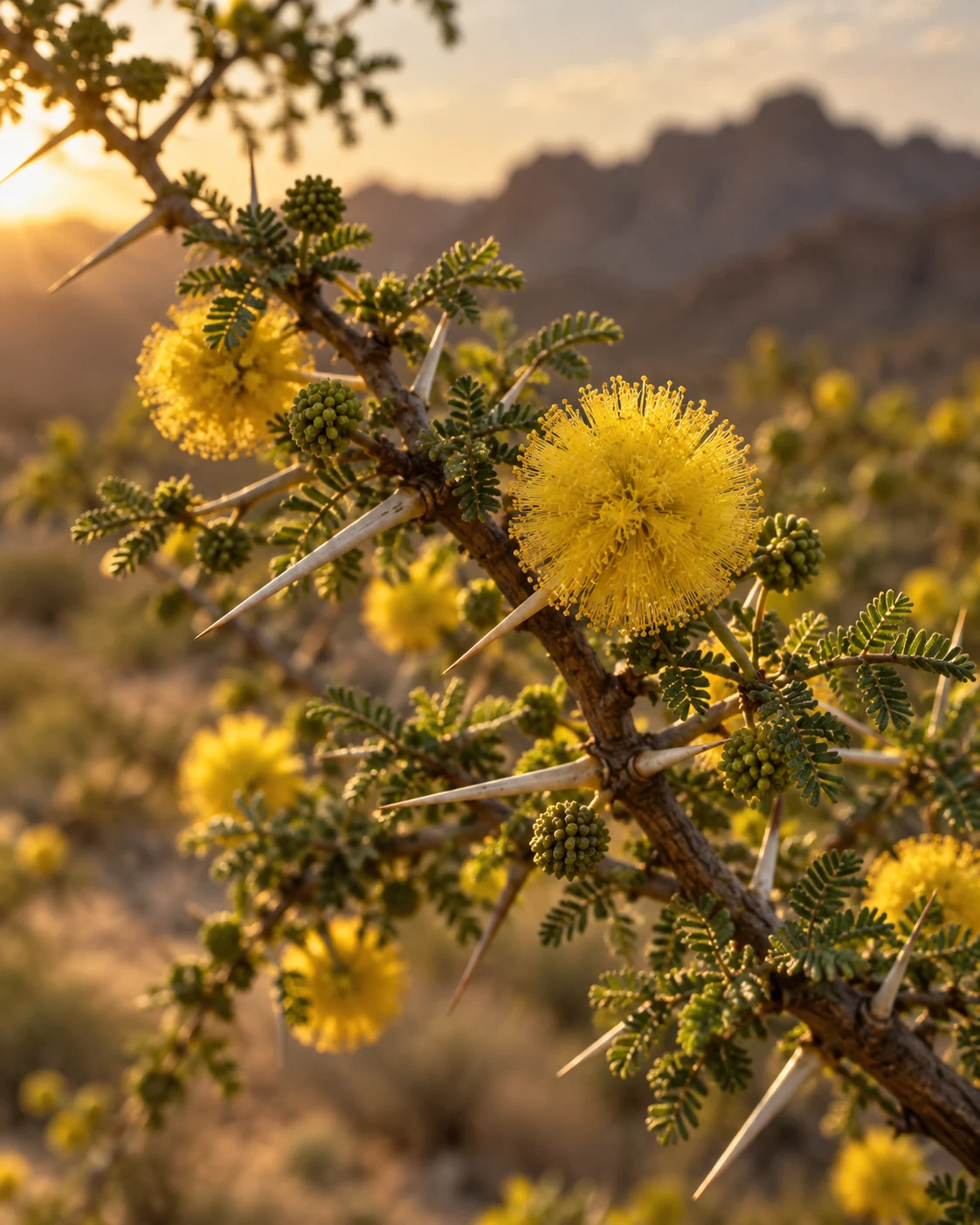 Botanical detail · Yemen
“In Tihama, even sweetness carries something of the land’s edge.”
— The House of Meski
Rarity
Rare because the world asks for Sidr first
Salam is not Yemen’s most internationally famous honey, which is precisely why good single-origin lots remain a discovery. Its identity depends on a short flowering period and on keeping the botanical source separate from other acacia honeys.
Why it deserves its own fiche
It expands the Atlas beyond the usual Yemeni Sidr story.
Beekeeping
Moving the hive to the flowering tree
Traditional Salam production follows the bloom. Beekeepers shift colonies to areas where the trees are flowering rather than treating the landscape as permanent forage.
The practice
That movement makes harvest timing and location part of the honey’s identity — two details worth preserving on every lot.
Sensory reading
Tartness before sweetness
Texture
Thick and concentrated, with a slow ribbon rather than a watery pour.
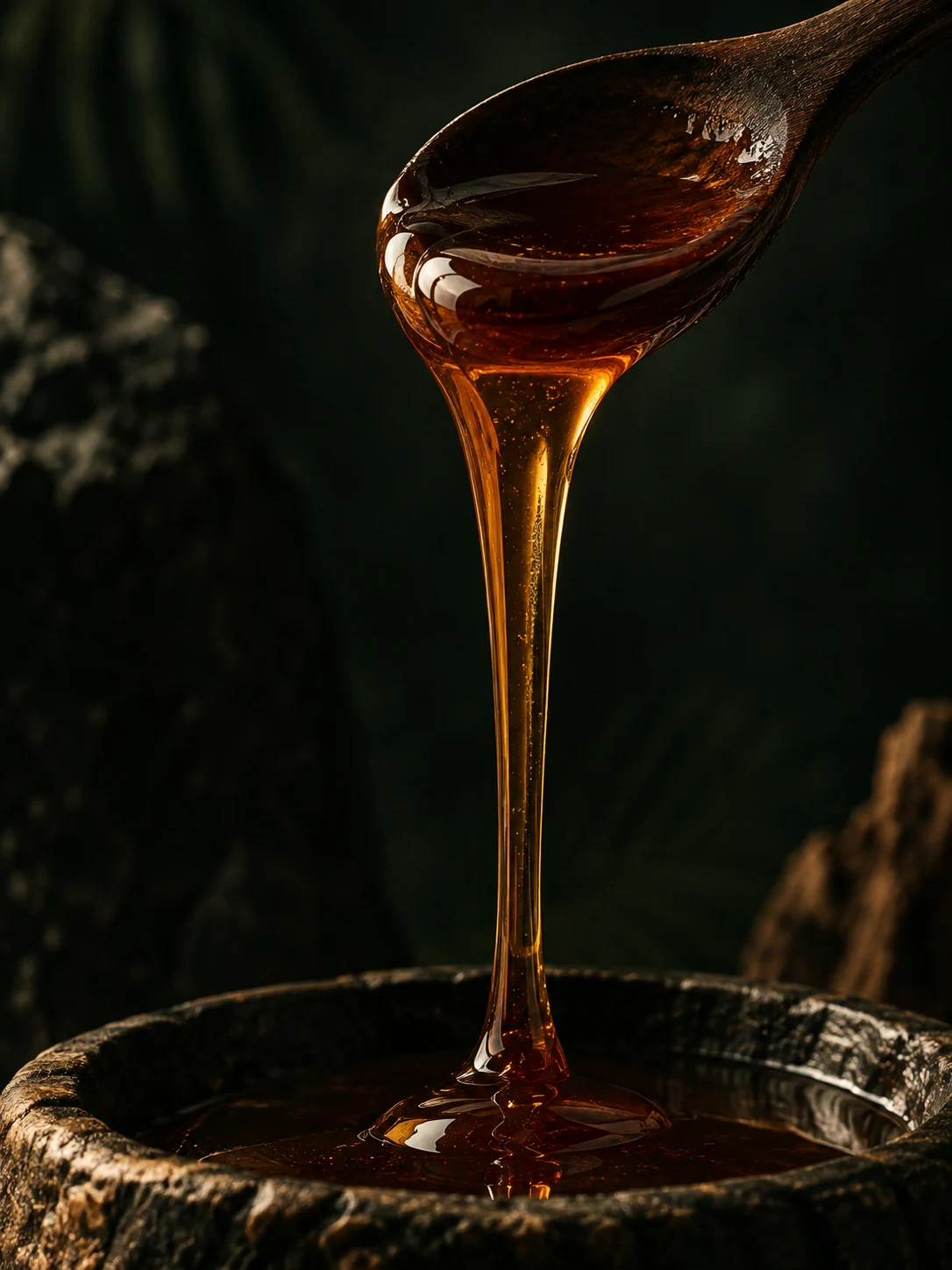
Harvest notebook
A honey that corrects the palate
Salam is useful after several very sweet honeys because it resets expectations. It shows that a good honey can be less sweet, more tart and still feel complete.
Pairings
How to serve it
Bittersweet and full-bodied — treat it as a rare thing to taste alone before adding anything else.
Meski rating
An editorial reading, not a certification
Six criteria of the House, judged in tasting. This rating describes the appellation, is revised for each lot presented, and replaces no analysis or certificate.
Provenance
The Meski Confidence Chain
Rare honey is one of the most counterfeited foods in the world, and Sidr is no exception. Confidence does not come from a single certificate — it comes from a chain that stays continuous, from bloom to jar.
Read: How to read a rare honeyAnalysis describes the sample received by the laboratory. It does not automatically prove that every jar sold under the same name comes from that sample. A continuous chain does.
Continue the Atlas
An origin is never an island
Compare not to name a winner, but to understand what place, season and craft shift in the cup.