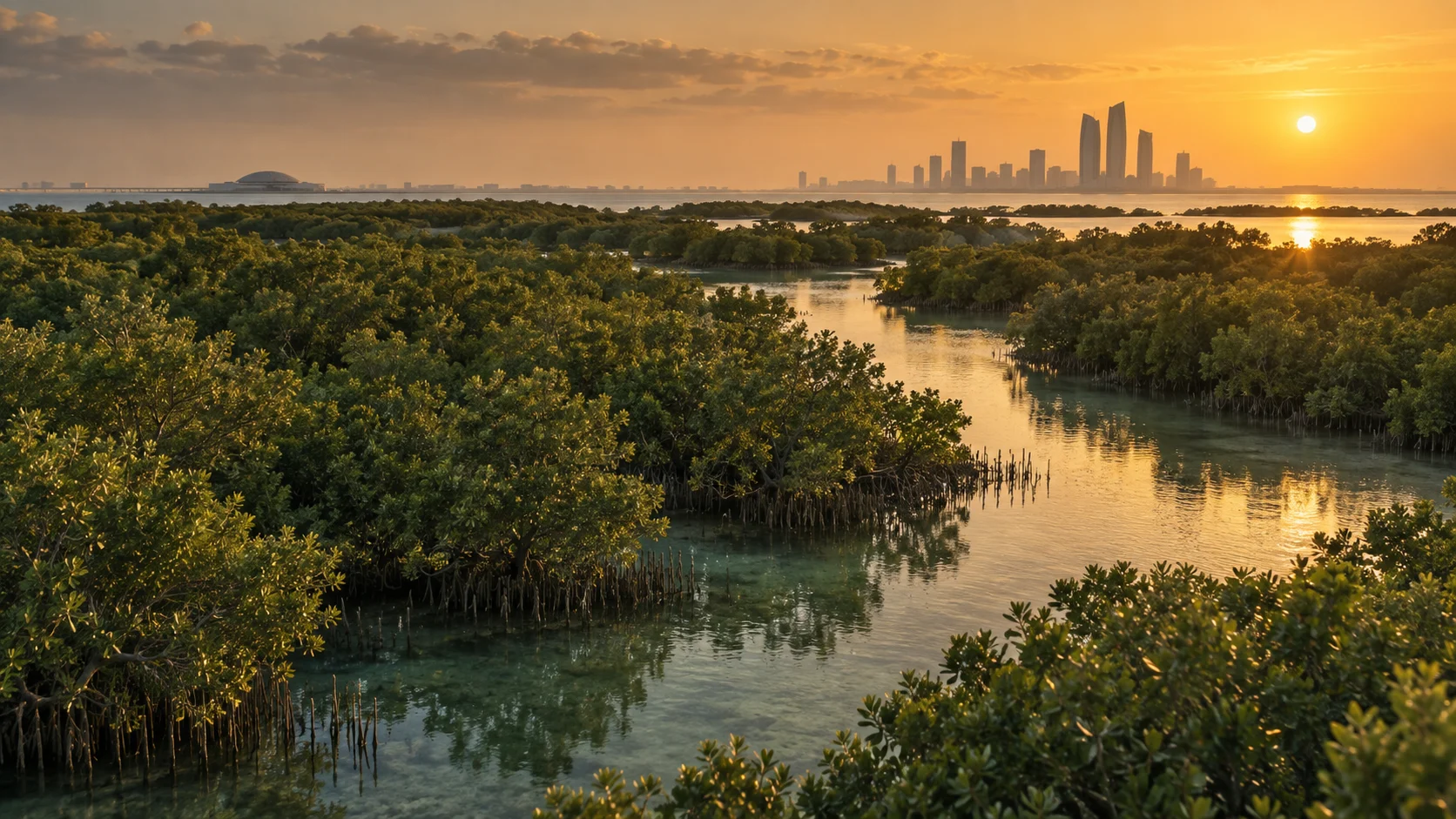
United Arab Emirates · Coastal Mangroves · Qurm
Emirati Mangrove
Honey
عسل القرم الإماراتي
A coastal honey from trees standing in salt water — dark amber, strikingly fluid and unlike the UAE’s desert honeys.
Along the UAE coast, grey mangrove — Avicennia marina, locally called qurm — grows directly in the intertidal zone. Bees work its seasonal blossom and produce a honey whose habitat is the opposite of Sidr or Ghaf: tidal, saline and maritime.
Terroir
Honey from a forest that floods twice a day
The UAE’s mangroves occupy protected shorelines, lagoons and islands. The country’s naturally occurring mangrove is grey mangrove, Avicennia marina, a tree adapted to salt, heat and tidal inundation.
That makes mangrove honey one of the Atlas’s most unusual environmental expressions: the bees forage in a coastal forest whose roots stand in seawater.
| Location | UAE coastal mangrove habitats |
| Landscape | Intertidal forests, lagoons and protected shorelines |
| Floral source | Grey mangrove — Avicennia marina |
| Harvest | June to July |
| Character | Dark rich amber, sharp and notably fluid |
“A honey whose forest is rooted in salt water.“
 UAE coast · Qurm mangroves
Landscape shift
From desert to tide line
The UAE Honey Atlas is not only mountains and desert trees. Mangrove honey adds a coastal ecology: saline water, mud, tides, birds and a nectar source growing at the edge of the sea.
Tradition
A modern honey from an ancient coastal ecosystem
Mangroves have long protected Gulf coastlines and supported fisheries and birdlife. Their role in honey is less famous, but increasingly recognised within Emirati apiculture.
Abu Dhabi’s current honey initiatives explicitly include mangrove environments alongside Sidr, Samar and Ghaf, giving this coastal honey a clear place in the country’s developing premium-honey identity.
Coastal habitat
Coastal habitat
Grey mangrove establishes in saline intertidal zones.
Flowering
Flowering
Mature trees flower through late spring into early summer.
Jun–Jul
Jun–Jul
Beekeepers harvest mangrove honey during the main local window.
Today
Today
Mangrove joins Sidr, Samar and Ghaf as a recognised Emirati honey type.
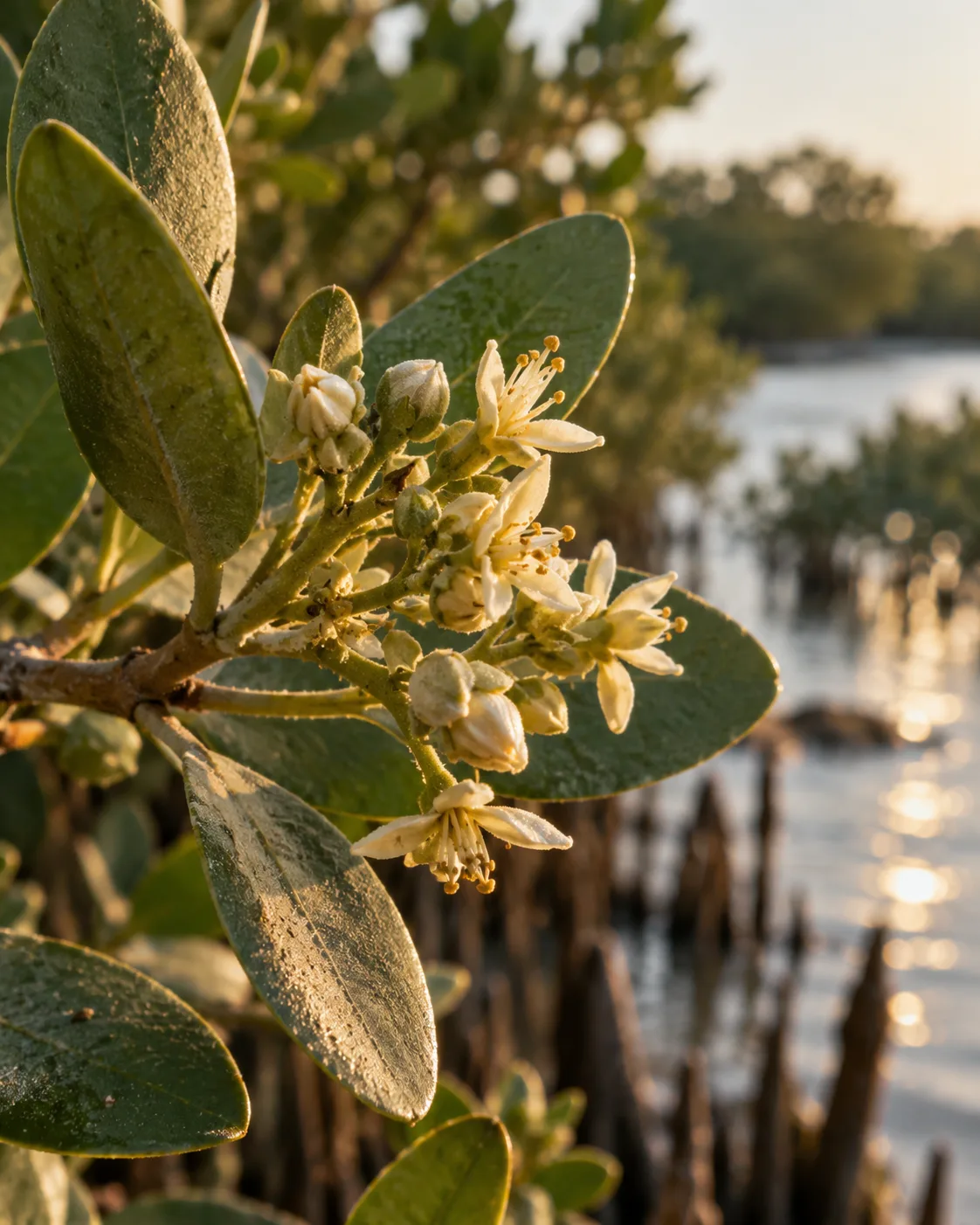 Botanical detail · United Arab Emirates
“A honey from a forest that keeps one foot in the sea.”
— The House of Meski
Rarity
Rare because coastlines are finite ecosystems
Mangrove honey is limited by habitat, flowering and access. The forest cannot simply be expanded for honey without changing the ecology that makes the honey interesting in the first place.
Why it cannot become generic
Its value depends on the mangrove ecosystem remaining real, healthy and traceable.
Beekeeping
Beekeeping at the edge of land and sea
Mangrove apiaries work with heat, humidity, salinity and tidal landscapes very different from inland UAE beekeeping. The floral window is seasonal and local.
The practice
The result is one of the country’s most distinctive textures: a honey described by local producers as unusually light and watery despite its dark colour.
Sensory reading
Dark colour, unexpectedly light body
Texture
Extremely light and fluid for such a dark honey.
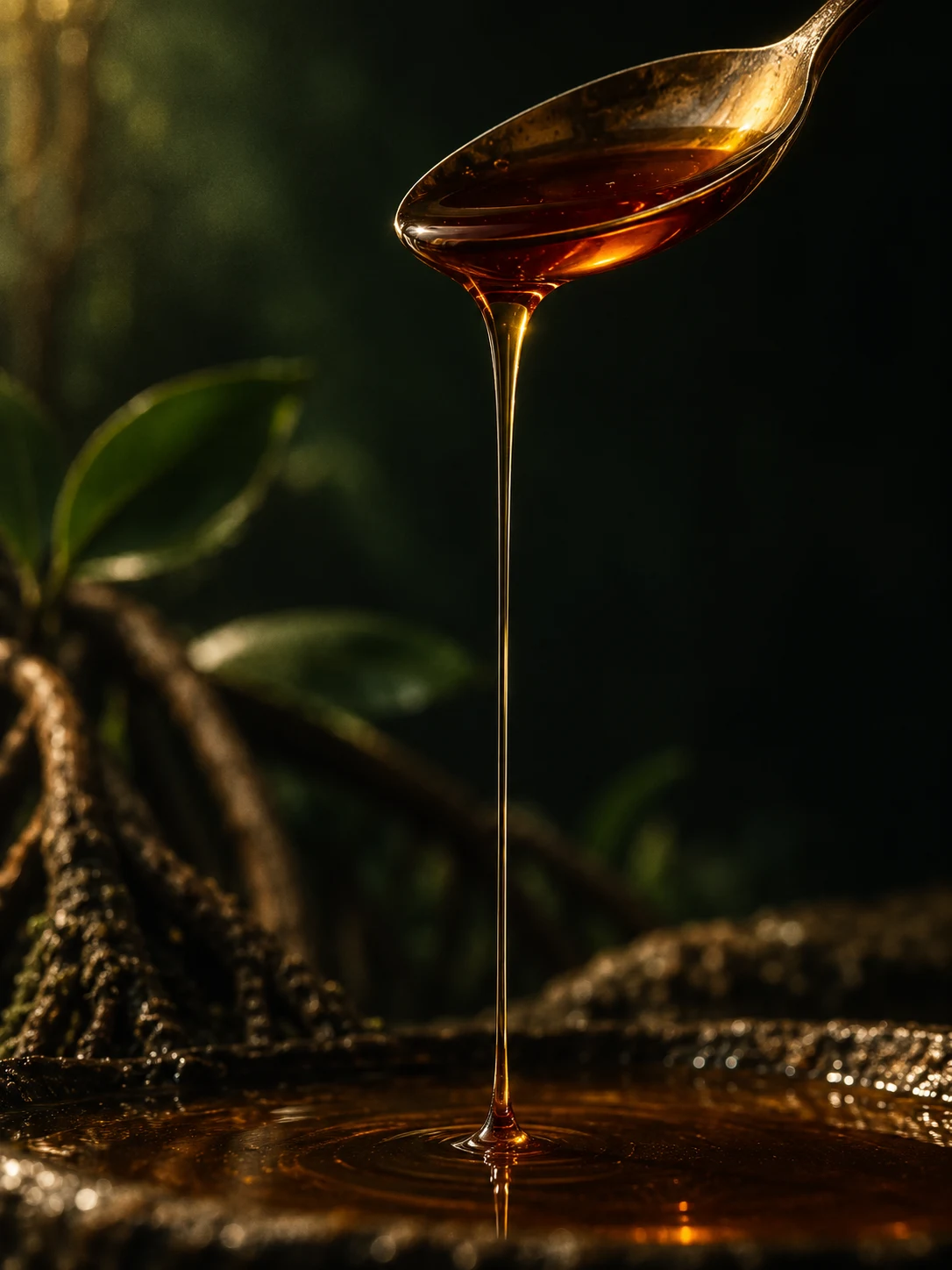
Harvest notebook
The visual trick is half the pleasure
Mangrove honey looks as if it should pour slowly. It does not. That contradiction — dark colour, light body — is one of the quickest ways to understand why it belongs in the Atlas.
Pairings
How to serve it
Bittersweet and full-bodied — treat it as a rare thing to taste alone before adding anything else.
Meski rating
An editorial reading, not a certification
Six criteria of the House, judged in tasting. This rating describes the appellation, is revised for each lot presented, and replaces no analysis or certificate.
Provenance
The Meski Confidence Chain
Rare honey is one of the most counterfeited foods in the world, and Sidr is no exception. Confidence does not come from a single certificate — it comes from a chain that stays continuous, from bloom to jar.
Read: How to read a rare honeyAnalysis describes the sample received by the laboratory. It does not automatically prove that every jar sold under the same name comes from that sample. A continuous chain does.
Continue the Atlas
An origin is never an island
Compare not to name a winner, but to understand what place, season and craft shift in the cup.