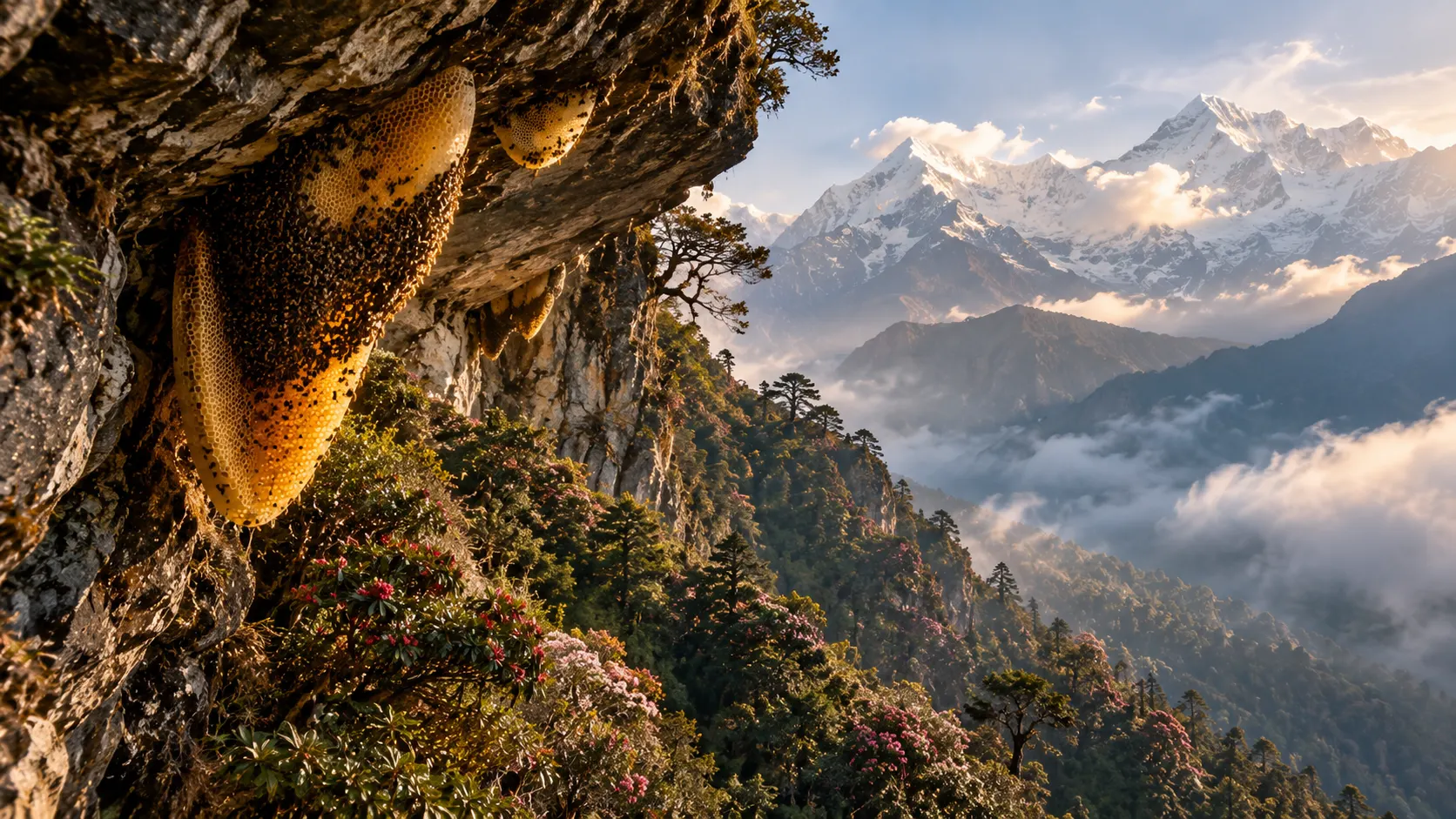
Nepal · Himalayan Cliffs · Apis laboriosa
Nepal Mad
Honey
عسل الهيمالايا السام
A wild rhododendron cliff honey containing grayanotoxins — culturally famous, scientifically toxic, and not an ordinary table honey.
Nepal’s so-called mad honey comes from wild Himalayan cliff colonies of Apis laboriosa foraging on toxin-producing rhododendrons. The same ecological chain that makes it famous can also cause poisoning, including dangerous bradycardia and hypotension.
Terroir
A honey whose chemistry begins in the rhododendron
In Nepal’s mid-Himalayan belt, giant honey bees build exposed combs on steep cliff faces. During rhododendron bloom, some colonies collect nectar containing grayanotoxins.
Those toxins can pass into the honey. Potency varies with plant species, season, altitude and the proportion of rhododendron nectar, which is why the category cannot be treated like an ordinary culinary honey.
| Location | Mid-Himalayan Nepal; cliff-harvest districts including Gandaki and other hill regions |
| Bee | Apis laboriosa — Himalayan giant honey bee |
| Floral source | Rhododendron species capable of contributing grayanotoxins |
| Harvest | Primarily spring; autumn harvests also occur |
| Safety | Can cause clinically significant grayanotoxin poisoning |
“Its rarity is real. So is its toxicity.“
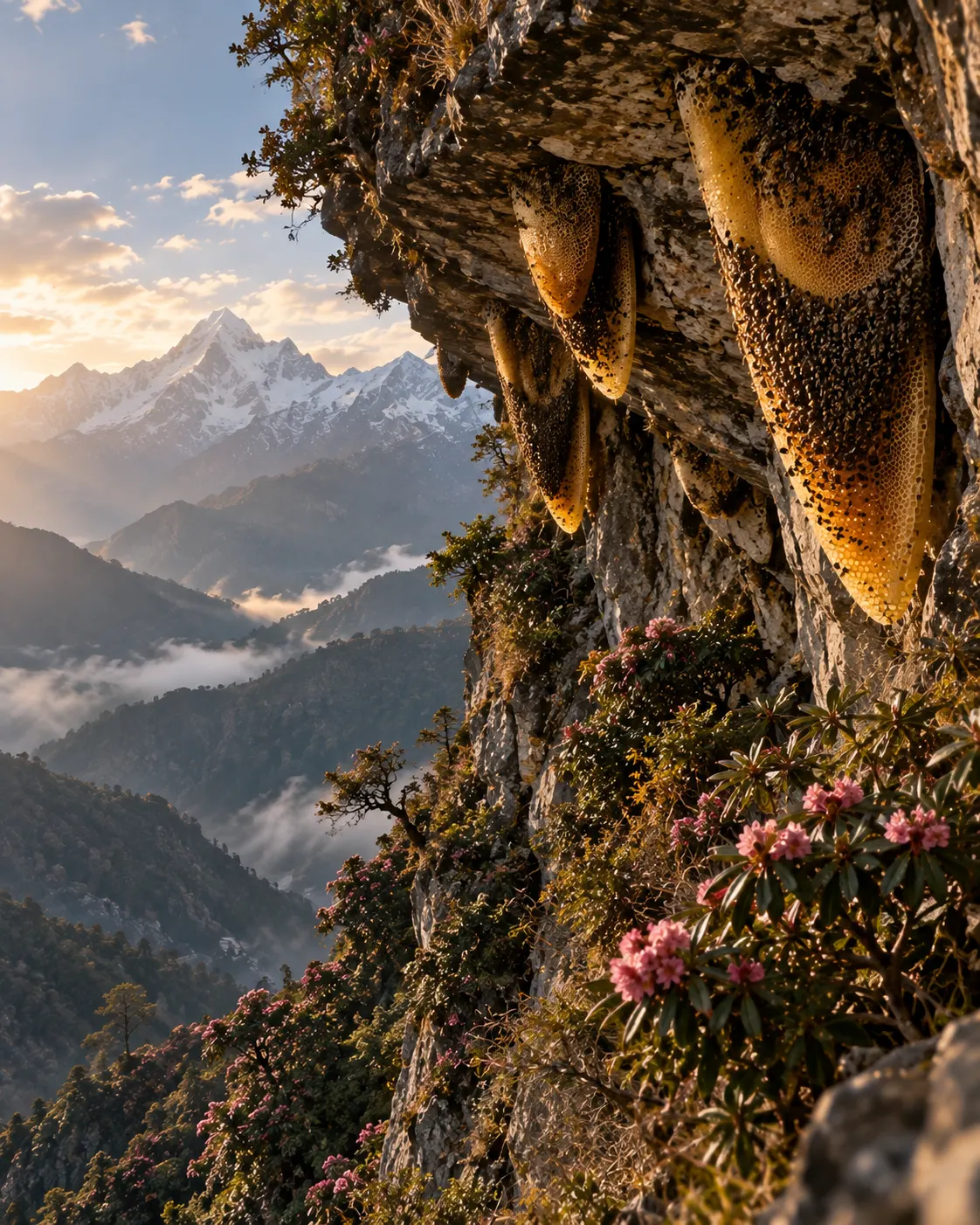 Nepal · Himalayan cliff habitat
Safety note
The Atlas does not give a “safe dose”
Grayanotoxin concentration varies by batch, plant mix and season. Published clinical reports describe hypotension, bradycardia, dizziness, nausea and more serious cardiac effects. This fiche is cultural and botanical, not a consumption guide.
Tradition
A cliff harvest that is more than spectacle
Gurung and other Himalayan communities have long harvested wild cliff honey using rope and bamboo ladders, smoke and highly specialised local knowledge.
The practice is now under pressure from falling bee numbers, habitat stress, climate change and commercial demand. The tradition is therefore part ecological story, part cultural story and part safety story.
Wild colonies
Wild colonies
Apis laboriosa builds large exposed combs on Himalayan cliffs.
Spring bloom
Spring bloom
Rhododendron nectar can introduce grayanotoxins into the honey.
Traditional harvest
Traditional harvest
Cliff-hunting knowledge passes through local communities.
Modern concern
Modern concern
Trade expands while poisonings and bee decline draw scientific attention.
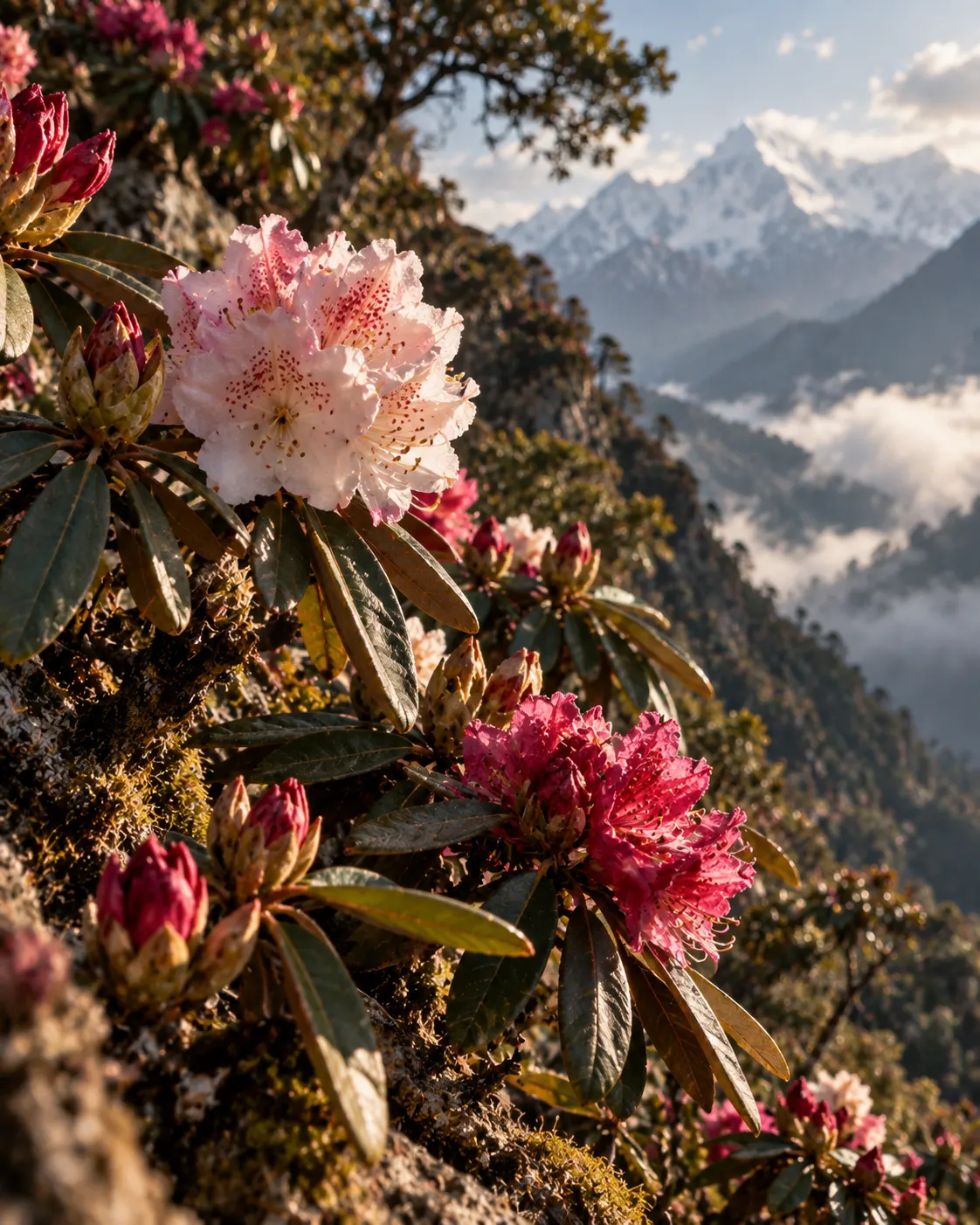 Botanical detail · Nepal
“Strangeness is not an invitation to take a risk.”
— The House of Meski
Rarity
Rare, dangerous and ecologically fragile
Mad honey is scarce because the full chain is specific: the right rhododendrons, the right high-altitude bee, the right cliff colonies and the right season. That same specificity is what makes toxin levels unpredictable.
Why rarity is not a health claim
The Atlas treats this honey as a toxic natural product with cultural significance, not as a wellness product.
Beekeeping
Honey hunting rather than managed beekeeping
These colonies are wild and cliff-nesting. Harvesters descend steep rock faces to cut comb, often using smoke and traditional ladders rather than opening a managed hive.
The practice
Responsible storytelling should include the pressure placed on Apis laboriosa populations as well as the drama of the harvest itself.
Sensory reading
Dark, floral and bitter-edged — with a warning attached
Texture
Often viscous and slow-moving, but texture does not indicate toxin concentration.
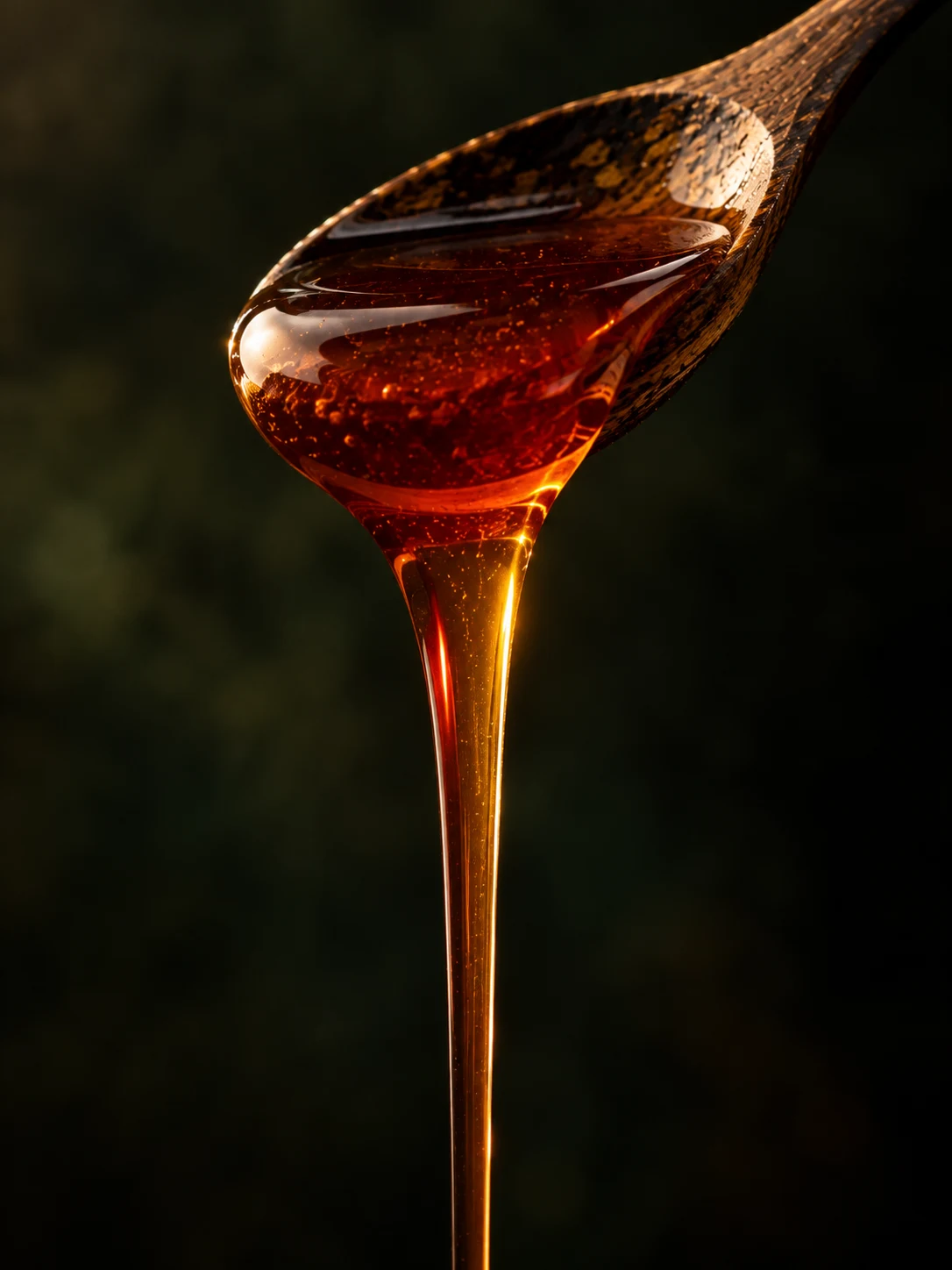
Harvest notebook
A tasting note cannot replace toxicology
Mad honey is one of the few Atlas entries where sensory language must stop short of invitation. Its cultural and ecological story is fascinating, but the chemistry is variable and clinically relevant.
Pairings
How to serve it
Bittersweet and full-bodied — treat it as a rare thing to taste alone before adding anything else.
Meski rating
An editorial reading, not a certification
Six criteria of the House, judged in tasting. This rating describes the appellation, is revised for each lot presented, and replaces no analysis or certificate.
Provenance
The Meski Confidence Chain
Rare honey is one of the most counterfeited foods in the world, and Sidr is no exception. Confidence does not come from a single certificate — it comes from a chain that stays continuous, from bloom to jar.
Read: How to read a rare honeyAnalysis describes the sample received by the laboratory. It does not automatically prove that every jar sold under the same name comes from that sample. A continuous chain does.
Continue the Atlas
An origin is never an island
Compare not to name a winner, but to understand what place, season and craft shift in the cup.