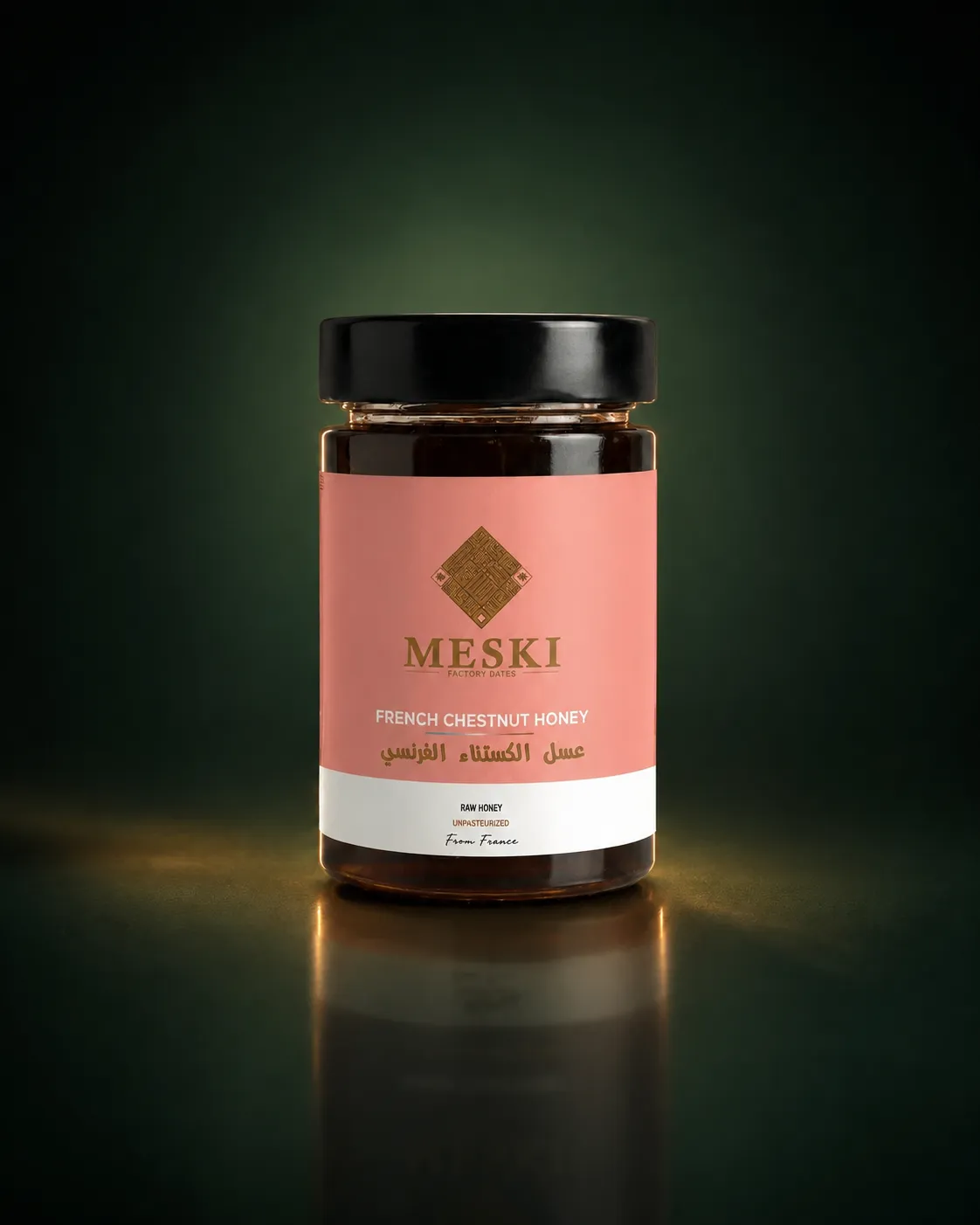
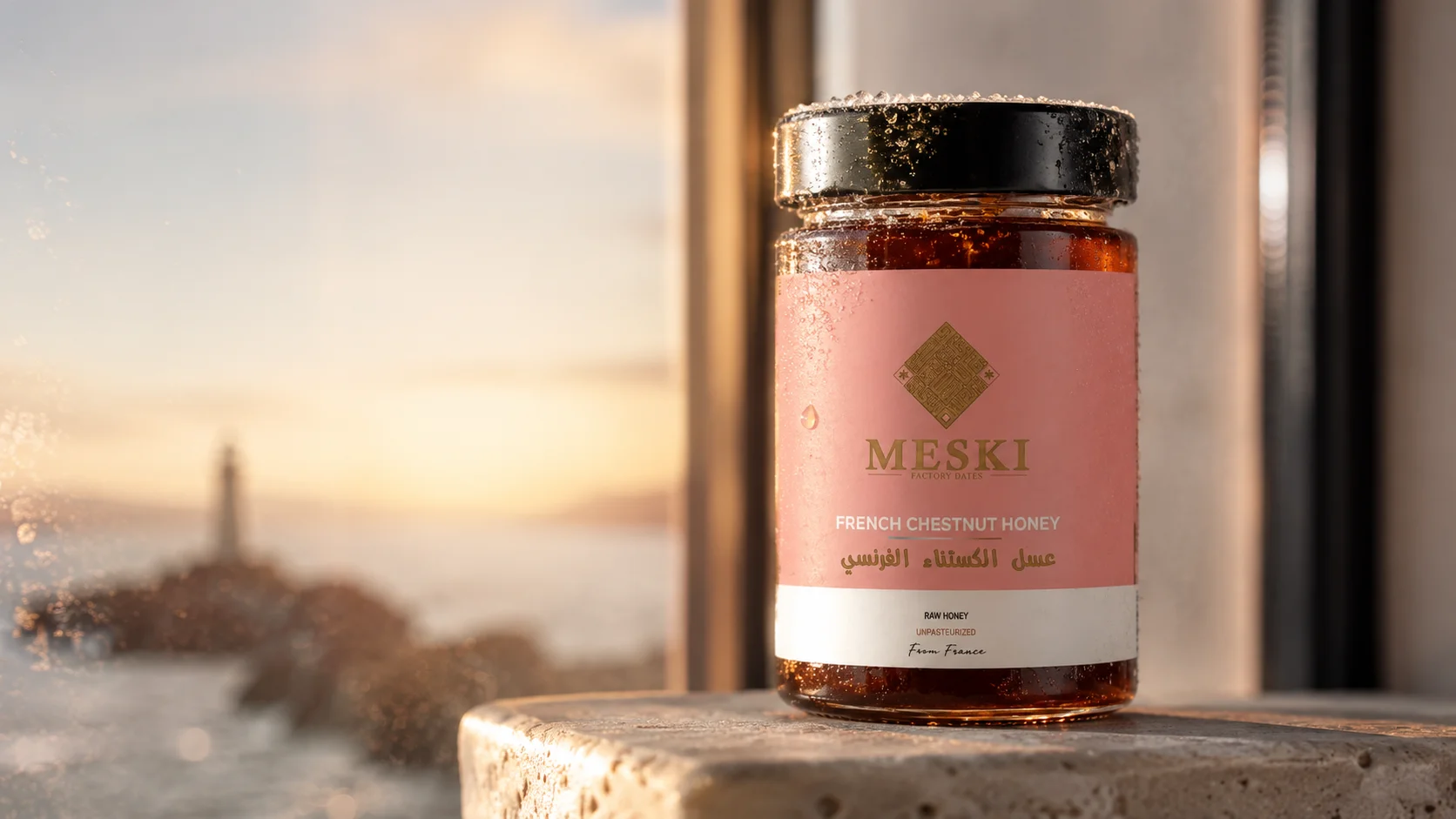
عسل كستناء كورسيكا
The Wild Soul of Cap Corse
A Grand Cru Honey with the Depth of the Mountains
Some honeys charm through sweetness. This one seduces through character.
French Corsican Chestnut Honey AOP is harvested in the ancient chestnut groves of Cap Corse, where mountain air, summer heat and island biodiversity shape a honey of remarkable intensity.
Deep amber, woody and delicately bitter, it unfolds with notes of chestnut blossom, roasted hazelnut and a subtle leathery warmth. Its finish is long, tannic and unmistakably gastronomic.
Protected by the AOP “Miel de Corse — Mele di Corsica”, this 400 g jar is made for palates that value complexity, origin and character rather than simple sweetness.
Raw. AOP protected. Organic certified. Selected for intensity.
كاب كورس
The Terroir
Where Ancient Chestnut Groves Meet the Mediterranean
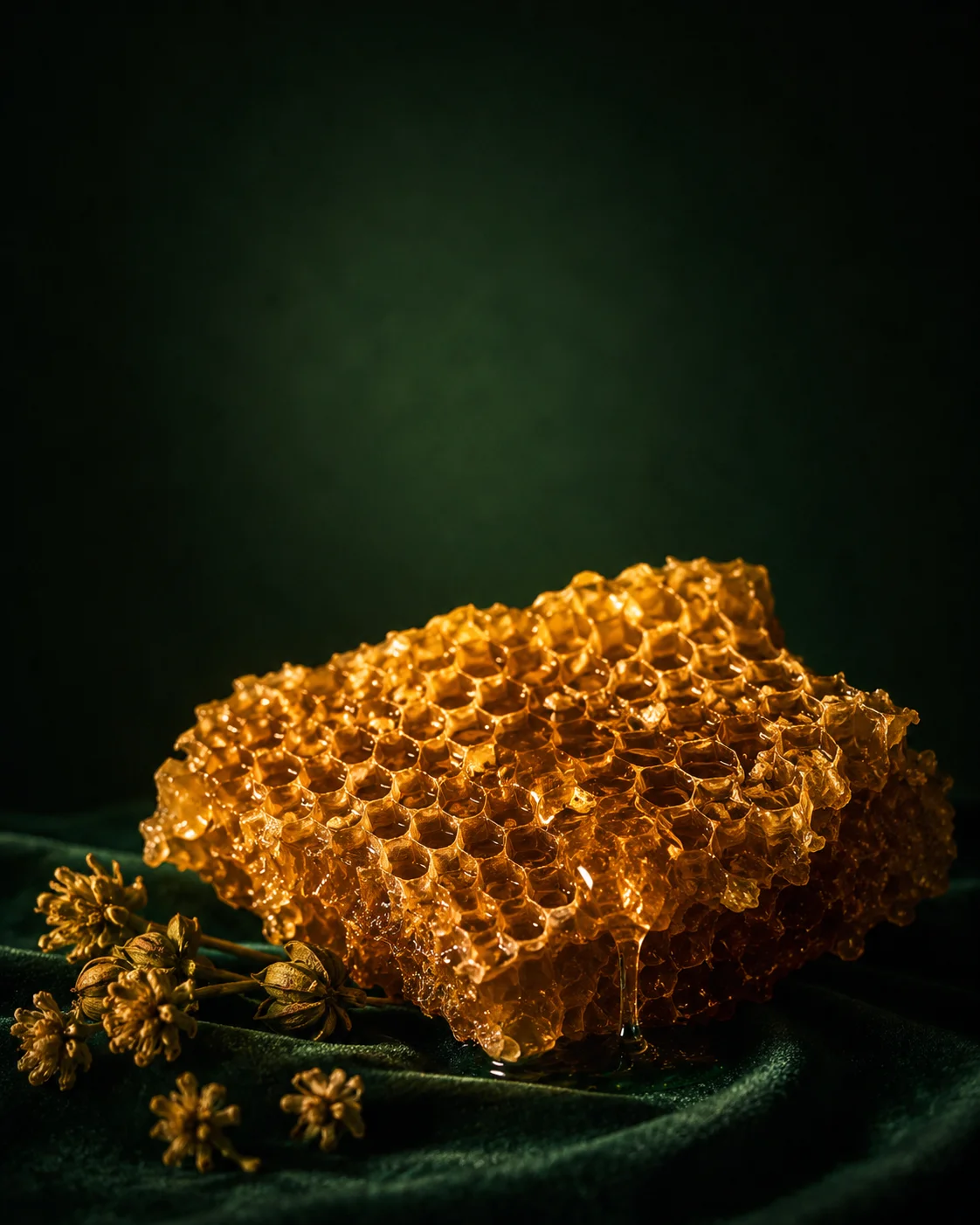
Cap Corse is a land of steep slopes, old stone villages and mountain forests descending toward the Mediterranean. At altitude, ancient chestnut trees grow beside wild brambles, broom, nepita and anthyllis.
During the height of summer, between June and July, bees forage across this rich mosaic of island flora. Chestnut blossom dominates the harvest, while the surrounding biodiversity adds nuance, freshness and depth.
The result is a raw Corsican chestnut honey with a powerful regional identity: aromatic, slightly austere and unmistakably different from a mild floral honey.
قوة وأناقة
Power with Elegance
Why This Corsican Chestnut Honey Is Exceptional
01
AOP Miel de Corse
Protected by the official “Miel de Corse — Mele di Corsica” designation of origin.
02
Cap Corse Origin
Harvested in ancient chestnut groves located at altitude in northern Corsica.
03
Summer Harvest
Collected during the peak flowering period between June and July.
04
Cold Extracted
Extracted at low temperature to preserve its natural aromatic identity.
05
Organic Certified
Produced through organic and eco-responsible beekeeping certified by Ecocert.
06
A Honey for Connoisseurs
Powerful, tannic and delicately bitter, with an exceptionally persistent finish.
شخصية حسّية
The Sensory Signature
Woody, Tannic and Endlessly Persistent
Colour
Deep Amber
Warm amber to captivating brown, with a dark and elegant visual presence.
Texture
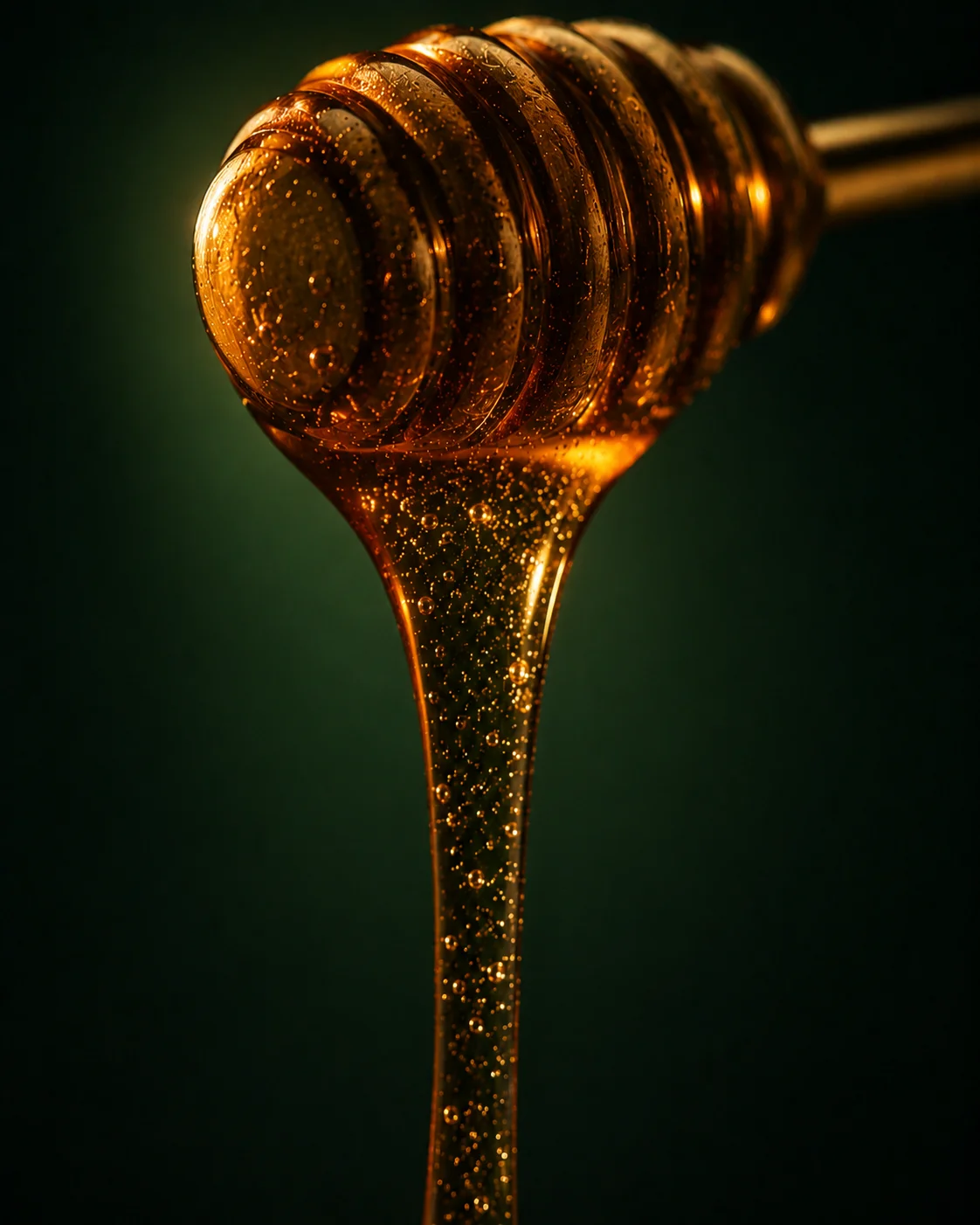
Smooth & Fluid
Naturally fluid, with slow crystallisation linked to its composition.
Flavour
Woody & Bitter
Chestnut blossom, roasted hazelnut, noble woods and a subtle leathery touch.
Its bitterness is not a defect. It is part of the distinctive character that gives chestnut honey its balance, length and gastronomic identity.

مرارة نبيلة
The Beauty of Bitterness
When Sweetness Learns Restraint
Chestnut honey occupies a special place in the world of fine honey because it refuses easy sweetness. Its natural bitterness brings structure to the palate and gives the tasting greater depth.
This contrast allows its deeper notes to emerge: roasted nuts, bark, warm wood and a refreshing touch of acidity.
The result is a honey with tension and elegance — powerful enough to remain memorable, yet balanced enough for refined gastronomic pairings.
عسل للمائدة
A Chef’s Honey
Created for Bold Pairings
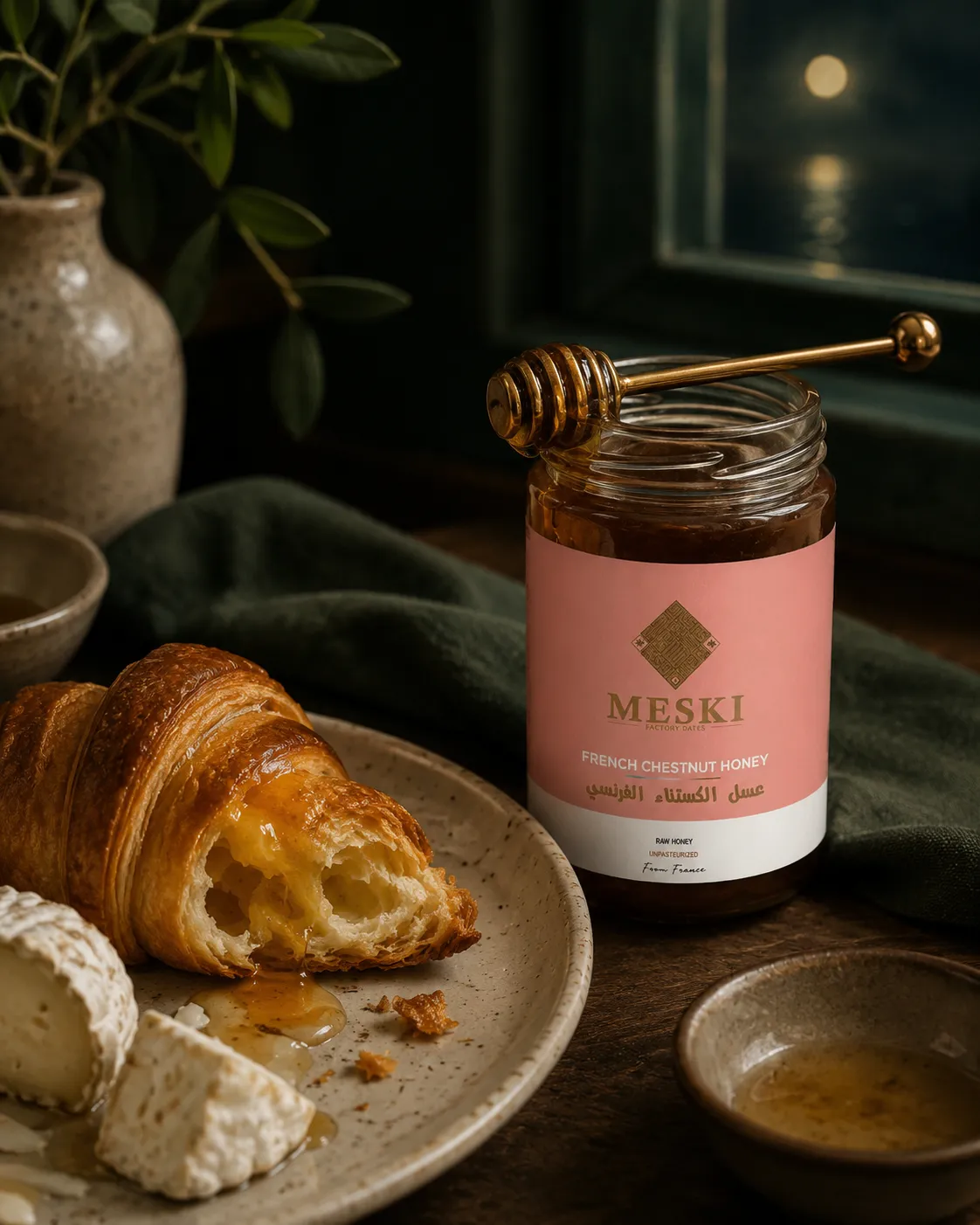
Corsican Cheese
Duck & Glazed Meats
Roasted Vegetables
Dark Chocolate
طقوس التذوق
How to Enjoy
Three Ways to Reveal Its Character
I
With Aged Corsican Cheese
Pair with mature sheep’s cheese, goat cheese or tomme to create a powerful balance between salt, richness, bitterness and sweetness.
II
In Fine Cuisine
Use in glazes for duck breast, roasted meats or vegetables where its tannic structure can add depth and a caramelised finish.
III
Pure, by the Spoon
Taste a small spoonful alone and allow the bitterness, acidity and woody finish to unfold slowly.
تفاصيل المنتج
Product Details
Specifications
| Product | French Corsican Chestnut Honey |
|---|---|
| Protected Origin | AOP “Miel de Corse — Mele di Corsica” |
| Origin | Cap Corse, Corsica, France |
| Honey Variety | Raw Chestnut Honey |
| Ingredients | 100% Raw Corsican Chestnut Honey |
| Harvest Period | June to July |
| Extraction | Cold extracted |
| Certification | Organic certified by Ecocert |
| Net Weight | 400 g |
| Storage | Store tightly closed at room temperature, away from direct sunlight, excessive heat and moisture. |
قبل التذوق
Before You Discover It
Questions About Corsican Chestnut Honey
Why does chestnut honey taste bitter?
Is chestnut honey suitable for people who dislike very sweet honey?
What foods pair best with Cap Corse chestnut honey?
Why does this honey crystallise slowly?
What makes Cap Corse chestnut honey different from other chestnut honeys?
Who will appreciate this honey most?
اكتشف عسل كورسيكا
Continue the Journey
Discover the Corsican Honey Collection
Discover Corsican Maquis Honeydew Honey
Explore the honey
Maquis & Chestnut AOP Gift Box
Explore the collection
Why Natural Honey Crystallises
Read the article