
Does Honey Boost the Immune System?
One of the most repeated claims about honey, examined against actual clinical research — and against what official food safety regulators have ruled on the matter.
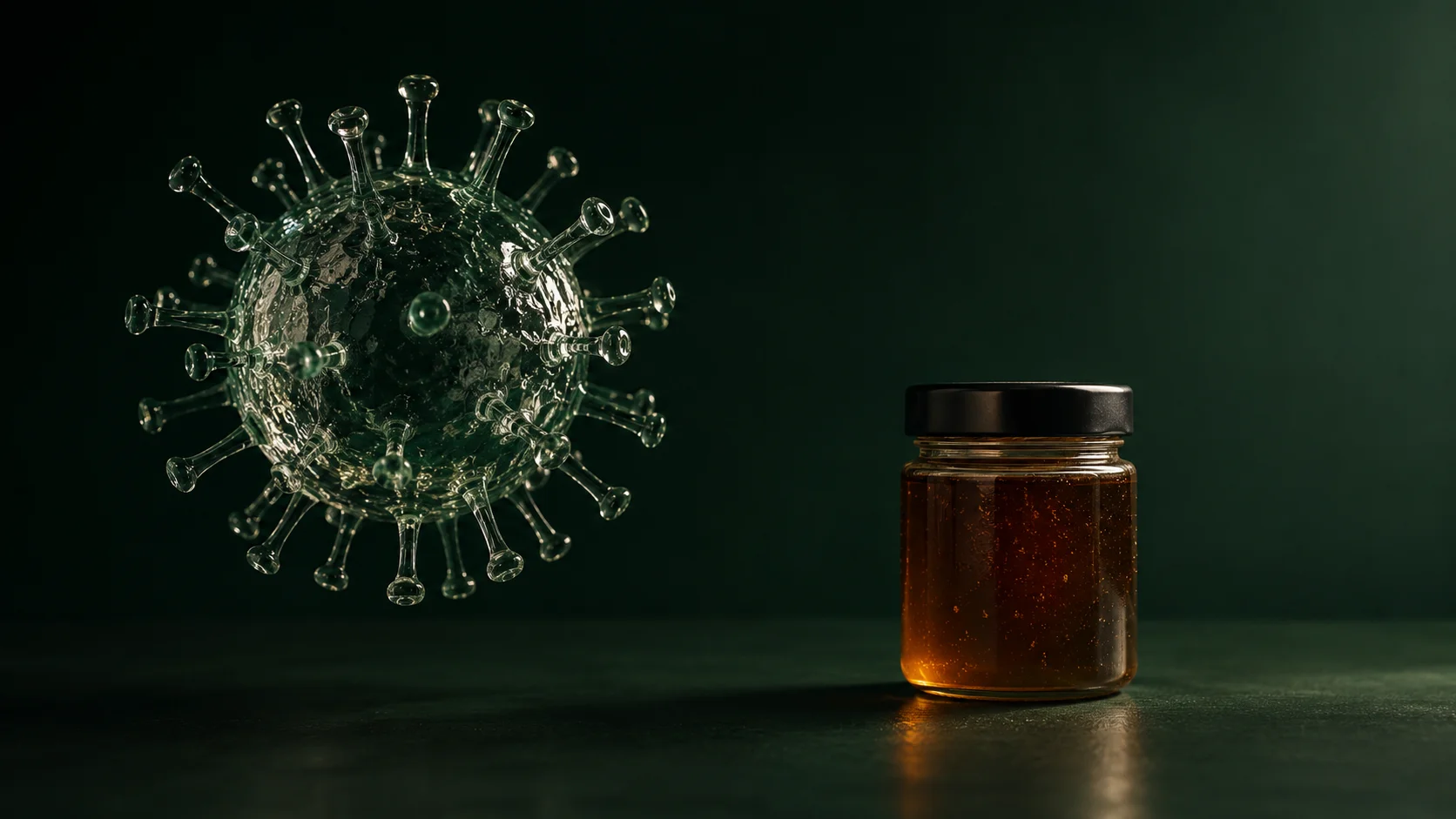
“Boosts the immune system” may be the single most common phrase attached to honey worldwide — printed on labels, repeated in articles, assumed as common knowledge. It is also, specifically, a phrase that a major food safety regulator has already reviewed and declined to approve for use on product labelling. This article looks at both sides: what the clinical research has actually measured, and why regulators have been unwilling to let the claim stand unqualified.
What a Major Food Regulator Actually Ruled
In 2010, the European Food Safety Authority (EFSA) — the body responsible for evaluating health claims made on food products across the European Union — reviewed a submission proposing that honey be permitted to carry claims including “it stimulates the whole metabolism and the immune system” and “respiratory health through presence of antioxidant phytochemicals.”
EFSA’s conclusion was direct: honey was “not sufficiently characterised” in relation to these claimed effects. This is not the same as a ruling that honey has no effect — it is a statement that the evidence submitted did not meet the bar required to state the effect as established fact on a product label.
This is precisely the standard Meski holds itself to under UAE food safety regulation (ESMA) as well: a traditional reputation, however old, is not the same as a demonstrated clinical effect.
What the Clinical Research Has Actually Measured
A 2023 comprehensive review compiled 48 clinical trials conducted between 1985 and 2022, covering 3,655 human participants in total. Rather than a single “immune system” measurement, these trials examined a range of specific, measurable outcomes: cardiovascular and metabolic risk markers, glucose tolerance, mucositis (mouth and throat inflammation) in patients undergoing chemotherapy or radiotherapy, cough frequency in children, and wound healing.
The review’s own summary is carefully worded: it found “more beneficial effects… than no or negative effects” across these outcomes — a genuinely positive signal, but one the authors immediately qualify. The studies used different types of honey, different doses, different trial designs, and different patient populations, making it difficult to combine them into a single, confident conclusion.
200+ Bioactive Compounds
Honey contains a genuinely complex mixture of sugars, enzymes, amino acids, minerals and plant compounds such as flavonoids and polyphenols.
Antioxidant Activity
Many of honey’s compounds have measurable antioxidant properties in laboratory settings — a plausible, if indirect, link to immune-related processes.
Highly Variable by Origin
Honey’s exact compound profile depends heavily on the flowers bees forage from — meaning “honey” is not a single, standardised substance to test.
A Closer Look at One Human Trial
Among the more rigorous human studies is a controlled trial (McCarthy et al., 2019) examining immune markers in healthy adults after honey consumption, using laboratory-stimulated immune responses to observe changes in specific compounds. Some honey types were found to contain naturally occurring substances associated with priming particular immune signalling pathways.
This is a genuine, published, peer-reviewed finding — and it illustrates the current state of the science well. It identifies a plausible biological pathway in a controlled setting. It does not, on its own, establish that eating honey measurably reduces how often a healthy person gets sick, which is the much broader claim most marketing implies.
| What is often claimed on labels and blogs | What the evidence actually supports |
|---|---|
| “Honey boosts your immune system” — as an established fact | An EU regulator explicitly ruled this claim insufficiently proven for labelling |
| Applies equally to any honey, any amount | Compound content varies significantly by floral origin and processing |
| Prevents illness or infection | No clinical trial has established this specific outcome in healthy people |
| May support specific measured outcomes (wound healing, cough relief in children, glucose response) | Supported by multiple published clinical trials, with caveats on standardisation |
Why a Regulator Can Say “Not Proven” Without Saying “False”
EFSA’s role is not to declare foods harmful or beneficial in the abstract — it is to decide whether a specific, worded claim meets a scientific evidence threshold high enough to print on packaging sold across an entire union of countries. A claim can be biologically plausible, partially supported by research, and still fail that specific bar. This is a stricter standard than “some studies suggest,” which is why traditional reputation and regulatory approval are two different things.
Where This Leaves an Honest Answer
Multiple human clinical trials show specific, measurable benefits from honey consumption in specific contexts — wound care, certain inflammatory conditions, childhood cough, some metabolic markers. That is a real and useful body of evidence, and it is more substantial than exists for many other traditional food claims.
What it does not yet support is the broad, unqualified claim that eating honey “boosts” or “strengthens” the immune system as a whole, in a healthy person, sufficient to prevent illness. That specific claim has been reviewed by regulators and found unproven — not disproven, but not yet demonstrated to the standard required.
Questions About Honey and Immunity
No — several specific benefits (wound healing, cough relief, certain metabolic markers) are supported by real clinical trials. The caution here applies specifically to the broad “boosts immunity” phrasing, not to honey’s value overall.
Regulations and their enforcement vary significantly by country. A claim restricted in the European Union may be unregulated elsewhere. This does not mean the claim has been proven where it still appears — only that it has not been formally challenged there.
Heat and filtration are known to degrade some of honey’s enzymes and antioxidant compounds. Most of the clinical trials referenced above used raw or minimally processed honey, which is consistent with how Meski’s honeys are handled — though this alone does not establish a specific immune outcome.
No. Our laboratory analysis verifies purity, raw processing and authenticity of origin — not medicinal or immunological effects. We would rather describe the evidence honestly than print a claim regulators themselves have not approved.
Our Position, Simply Stated
Meski does not make health claims about our honeys beyond what is scientifically established. Where the evidence is genuinely encouraging, as it is for several specific uses of honey, we say so. Where a claim has been reviewed and found unproven by the regulators responsible for such judgments, we say that too. What we can promise, without qualification, is a raw, traceable, laboratory-verified honey — chosen for its rarity and its taste.
Shop now →