
Does Honey Really Help with Colds and Coughs?
Of every traditional honey claim, this is the one with the strongest clinical backing — confirmed by Cochrane, not just by grandmothers.
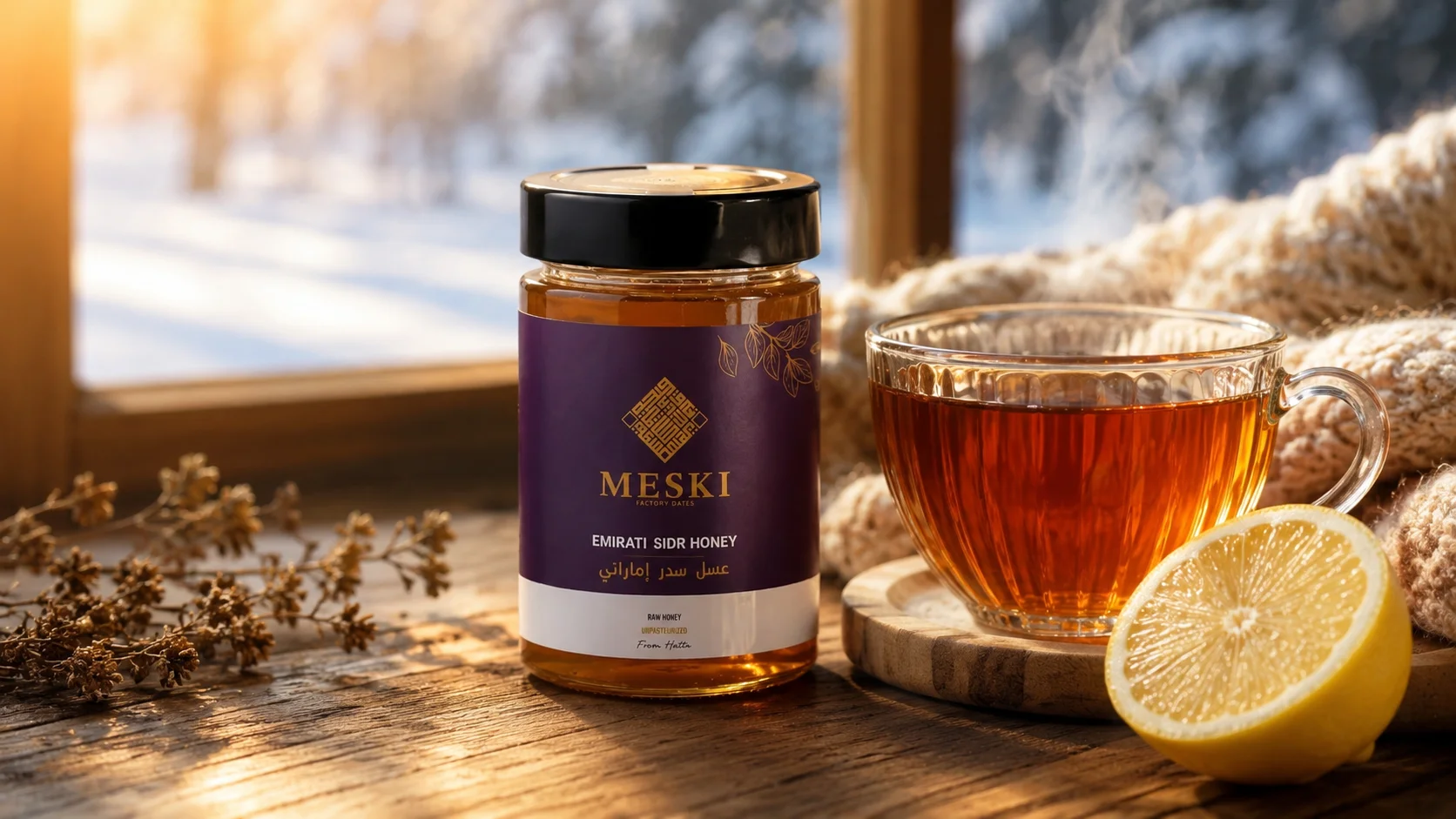
Most honey health claims examined in this series turned out to rest on thin evidence. This one is different. When it comes to cold and cough symptoms, honey has been tested in real clinical trials, reviewed by Cochrane — the strictest standard in evidence-based medicine — and found to genuinely help. This is the article in the series where we can finally say more than “maybe.”
He’s also a well-known taster — the kind of man who hands you a spoon of his fir honey at a market stall, or in his small village, and lets you savour it for far longer than a spoonful should reasonably last. That golden drop is the culmination of a life — or rather, of thousands of small ones.
It begins with the queen, the central figure of the hive, laying thousands of eggs that give rise to all three castes of bee: an unfertilised egg becomes a male, the drone; a fertilised egg becomes a female — a queen if her larva is fed exclusively on royal jelly, or a worker if fed instead on jellies rich in honey and pollen but poor in royal jelly.
A worker’s lifespan varies dramatically: around six weeks in summer, but up to a hundred and sixty days during the quiet season, when the colony slows almost to stillness. Over her short life she moves through one role after another — housekeeper of the hive, producer of royal jelly, of honey, of wax, guard at the entrance, forager among the flowers, and finally scout, capable of travelling several kilometres in search of new sources of food.
Imagine her, passport-less, foraging across Arabia, Oman, Yemen, and returning home to the UAE. When she isn’t drawing nectar or gathering pollen from Sidr blossom, she seeks something rarer still: honeydew, the viscous liquid behind Samar or Luban honey, produced not by flowers at all but by tiny insects like aphids, which pierce the tenderest parts of plants to feed on their sap.
To make roughly 450 grams of honey, the bees of a hive will together fly more than 55,000 miles — nearly twice around the world — visiting some two million flowers along the way. All of that, and far more besides.
One day, we’d like to keep a hive of our own. We don’t think we’d ever tire of watching their choreography among the flowers, before they produce — who knows — Sidr, Samar, wildflower, Ghaf, frankincense, and others still. Each one carrying its own character on the tongue: bitter, sweet, caramelised, and more, running from palest gold to the deepest amber, with white somewhere in between.
What Cochrane Actually Found
Cochrane’s review of honey for acute cough in children concluded that honey “probably relieves cough symptoms to a greater extent than no treatment, diphenhydramine, and placebo.” In a head-to-head trial, honey outperformed a common antihistamine at reducing cough frequency.
A 2021 systematic review and meta-analysis in BMJ Evidence-Based Medicine, covering 14 studies and nearly 1,800 people, found honey improved upper respiratory infection symptoms and, in some cases, shortened their duration by one to two days compared to usual care.
A Direct Comparison Worth Knowing
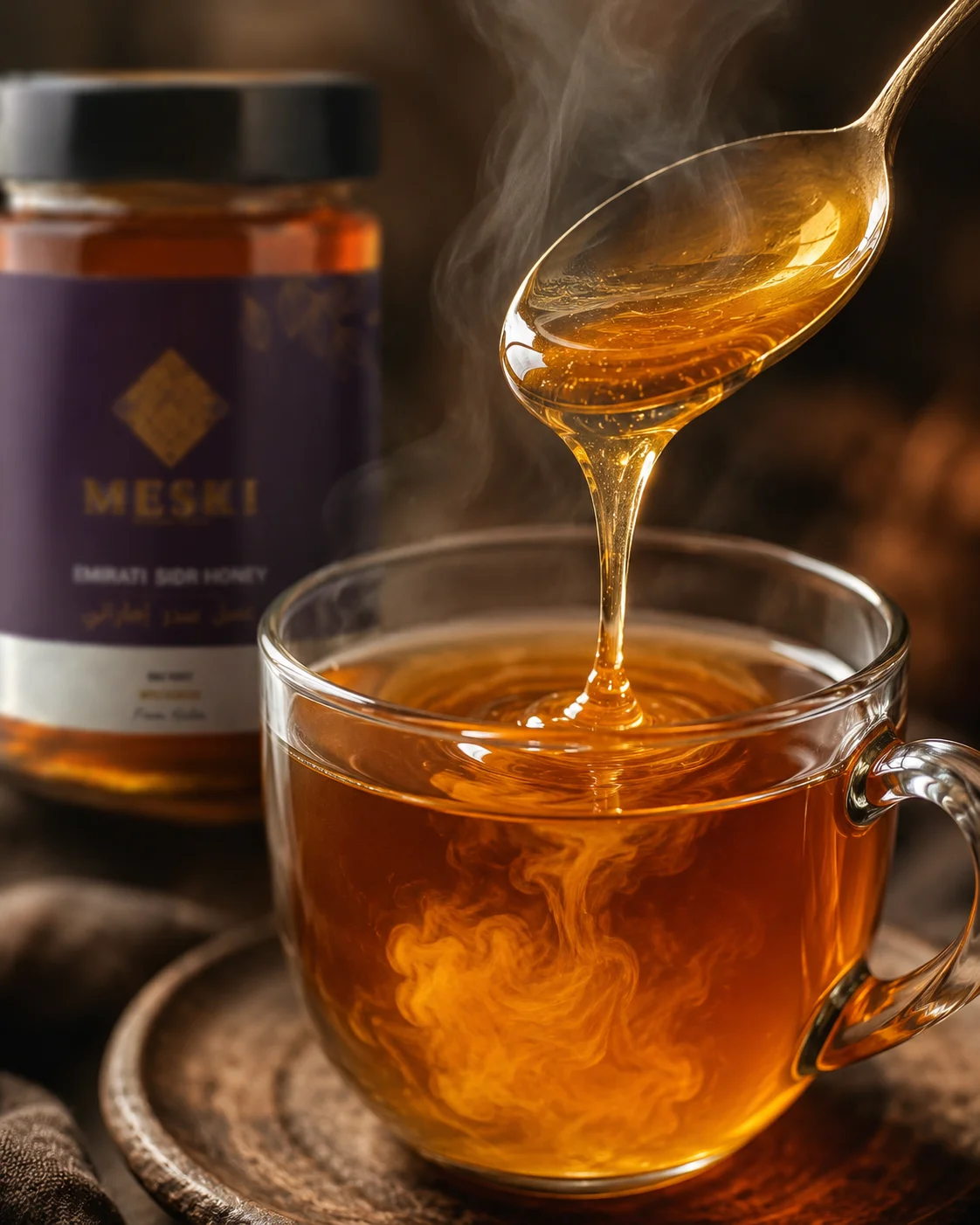
A randomised, double-blind trial at Aga Khan University compared honey, the asthma medication salbutamol, and a placebo in children with cold-related cough. The result was unambiguous: “Honey was most effective in symptomatic relief of symptoms associated with the common cold, whilst salbutamol or placebo offered no benefit.”
Cough Frequency
Consistently reduced across multiple trials, in both children and adults.
Nocturnal Cough
Honey reduced the impact of night-time cough after just one dose in some studies — helping sleep for both child and parent.
Symptom Duration
Some trials found colds resolved one to two days faster with honey than with usual care alone.
One Honest Limit
Honey should never be given to children under one year old, due to a small risk of infant botulism. For everyone else, researchers note it is safe, inexpensive, and — unlike antibiotics, which do nothing against the viruses behind most colds — it comes with none of the resistance concerns doctors now worry about.
Questions About Honey and Colds
Most studies used it stirred into warm (not boiling) water or tea, or taken directly by the spoonful before bed. Boiling water can degrade some of honey’s beneficial compounds.
Not identically — as with caffeine keeping one person awake and letting another sleep soundly, individual response varies. The clinical trend across studies is positive, but your own experience may be stronger or milder.
Most trials used standard commercial or eucalyptus honey. Raw, unheated honey is generally presumed to retain more of its natural compounds than heavily processed honey, though not every study compared types directly.
Our Position, Simply Stated
This is the rare case where the evidence lets us speak plainly: honey has real, Cochrane-reviewed backing for easing cold and cough symptoms. We still won’t call it a cure or a substitute for medical care when that’s genuinely needed — but on this one, tradition and science agree.
Shop now →