
A plot first meant for camels became a water project, lucerne field and 1,600 date palms in one of the Gulf archives’ most unexpected stories.
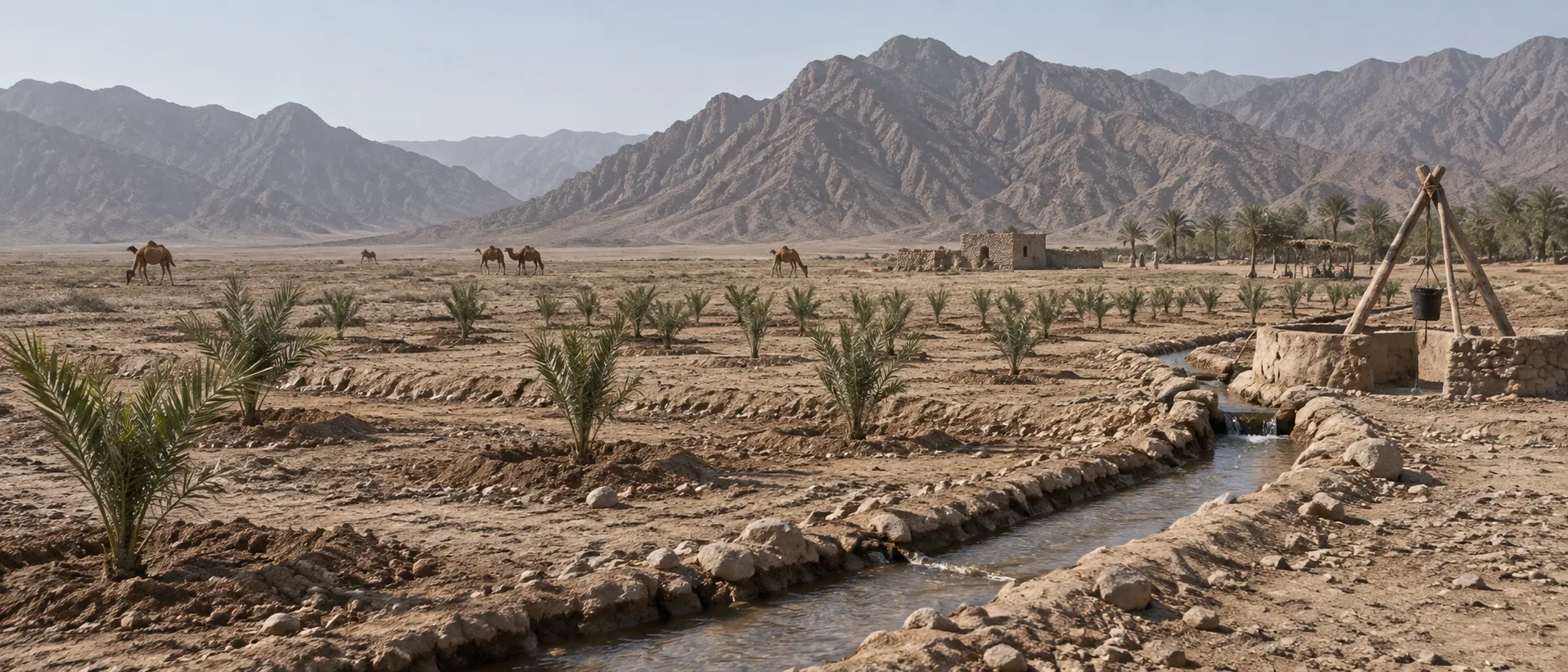
I was looking for an unusual Gulf story and found a file whose title sounded too dry to hide anything beautiful. Then I opened it. In 1947, land in Ras Al Khaimah was given to Dubai’s ruler and members of his family. One undeveloped plot received by Sheikh Rashid was first meant for camels. Then he found water, cultivated lucerne and planted 1,600 date palms. A bureaucratic file became a story about how a gift can grow.
The Archive File Has an Almost Impossible Title
The British Library file is not poetic. Its title is almost bureaucratically perfect: Presentation of Date Gardens to Shaikh of Dubai by Shaikh of Ras Al Khaimah. That is exactly why I like it.
Behind that dry title sits a 1947 story about rulers, family, land, camels, water and agriculture, long before the skyline became the easiest way to describe Dubai.
The file records land in Ras Al Khaimah presented by Sheikh Sultan bin Salim Al Qasimi to Sheikh Saeed bin Maktoum, the Ruler of Dubai, and members of his family.
Sometimes the most beautiful Gulf story is hiding behind the least beautiful archive title.
Meskaoui
The Gift Was Land, Not 1,600 Ready-Made Palms
The detail that stopped me appears in an August 1947 letter. A large undeveloped plot in a place rendered as Jirri had been received by Sheikh Rashid bin Saeed Al Maktoum as a gift from the Ruler of Ras Al Khaimah.
Its first practical purpose was simple: grazing ground for his camels.
That matters because the popular version can easily become misleading. The 1,600 palms were not handed over as the gift. The land was the gift. What happened next is the real story.
Water Changed the Meaning of the Land
The letter says Sheikh Rashid was developing the land’s latent water supplies. Once water could be used, the land stopped being merely grazing ground.
He began cultivating lucerne, or alfalfa, and planted 1,600 date palms.
I love that sequence because it is practical, not romantic: camels, then water, then fodder, then palms. A future was built by finding what the land could support.
Sheikh Rashid Before He Became Ruler
In 1947 Sheikh Rashid was not yet Ruler of Dubai. His father, Sheikh Saeed bin Maktoum, still ruled the emirate. Sheikh Rashid would become ruler in 1958 and later be remembered for the creek, ports, roads and the infrastructure that helped shape modern Dubai.
This archive catches a quieter scene years earlier. No port expansion, no highway, no skyline. Just a piece of land and the question of how to make it productive.
A Small Agricultural Scene That Feels Familiar
I am careful not to turn one archival paragraph into a grand theory of Sheikh Rashid. Still, it is hard not to notice an instinct that later becomes familiar in Dubai’s history: identify a resource, develop it, connect it to usefulness.
Water, lucerne and palms are much quieter than ports and roads, but the logic of making something work is already visible.
British Officials Saw More Than a Friendly Gesture
The correspondence shows that British political officers worried about land transfers between ruling families. One official questioned why the Ruler of Ras Al Khaimah was giving away land when every inch might carry future value.
Later correspondence proposed that oil and mineral rights should be reserved in future transfers and that transactions should be formally registered.
A gift could be friendship. It could also become ownership, jurisdiction and politics.
Oil Was Already Changing the Meaning of Empty Land
This is one of the strangest layers in the file. On the surface, the land carried camels, lucerne and date palms. Under the surface, officials were already thinking about minerals and oil.
The same plot could therefore hold two futures at once: agricultural value above ground and strategic value below it.
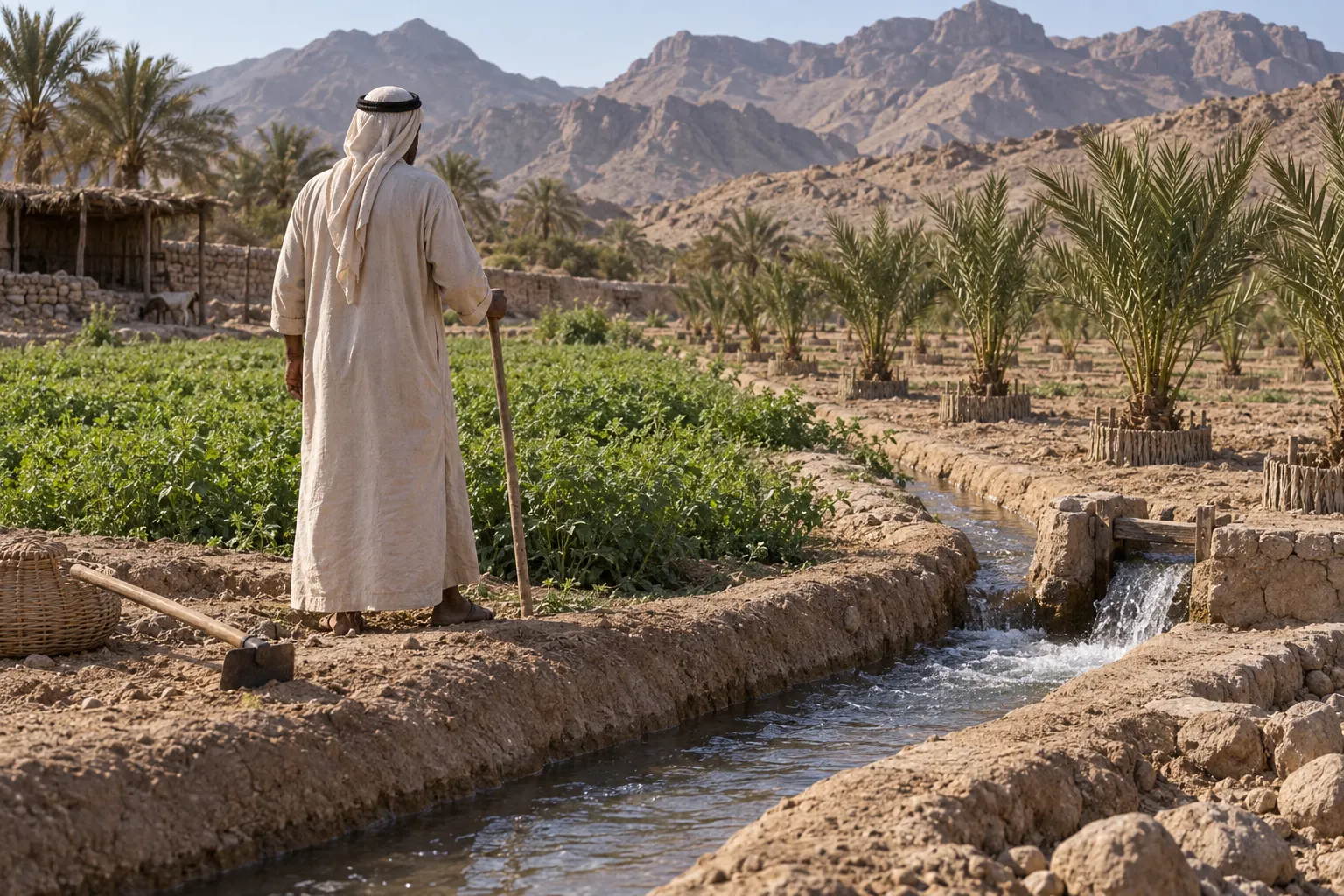
Ras Al Khaimah Was Also an Agricultural Landscape
Sheikh Sultan bin Salim Al Qasimi ruled Ras Al Khaimah from 1921 to 1948 according to the emirate’s heritage authority.
The emirate was never only mountains and coast. Agriculture, groundwater, date gardens and rural settlements formed another part of its history.
That side of the landscape connects naturally with our newer article on Ras Al Khaimah and its honey landscapes. One story follows bees. This one follows palms.
A Date Garden Was Wealth You Could Eat
Today a gift often means an object. A watch, perfume, jewellery, a box. A date garden worked differently.
It could produce food year after year. It could provide shade, support workers and animals, and become a family asset rather than a momentary gesture.
Our article A Date Palm Is Never Just a Tree explains why 1,600 palms meant far more than ornamental greenery.
Try to Imagine 1,600 Palms
One palm is easy to picture. Ten make a small grove. One hundred change the character of a field.
Now imagine 1,600, each needing planting, water, pollination, protection and years of attention.
The archive compresses all that labour into a short sentence. History often gives us the number and leaves us to imagine the hands.
The Lucerne Detail Matters Too
Everyone remembers the palms because the number is dramatic. I do not want to lose the lucerne.
Lucerne is fodder. It brings the camels, agriculture and daily utility back into the story. The land did not leap from emptiness to a postcard oasis. It became a working agricultural project.
A visionary does not always begin with a skyline. Sometimes he begins by asking what the water beneath a piece of land can do.
Meskaoui
The Archive Has Limits
We do not know every private conversation behind the gift. We should not invent them.
The British file is evidence, but it is also a colonial administrative record written through British political concerns.
So the responsible reading is simple: keep what the document supports, separate it from interpretation, and leave the silences alone.
From One Gift to a Whole Series of Questions
This land story opens directly into another article: The Gifts Between Rulers.
What did rulers give one another when value could mean a horse, a pearl, a sword, a boat, land or a garden? The answer tells us something about what the Gulf considered precious before modern luxury branding existed.
Sources and Archive Notes
The main source is British Library India Office file IOR/R/15/2/624, digitised by Qatar Digital Library.
The key 27 August 1947 folio is available here. It describes Sheikh Rashid’s undeveloped plot, camel grazing, water development, lucerne and 1,600 date palms.
For Sheikh Rashid’s later rule, see Dubai Protocol. For Sheikh Sultan bin Salim Al Qasimi’s chronology, see Ras Al Khaimah heritage records.
The Gift That Grew
The reason I love this story is that the gift did not end when ownership changed hands.
It kept growing: first camels, then water, then lucerne, then 1,600 palms.
Maybe that is the best kind of gift. Not the one that looks richest on the day it is given, but the one that still has a future inside it.
Questions People Ask
The archive records land and date gardens in Ras Al Khaimah presented to Dubai’s ruler and members of his family.
No. Sheikh Rashid received undeveloped land and later developed water, cultivated lucerne and planted 1,600 palms.
He was the son of Dubai ruler Sheikh Saeed bin Maktoum. He became Ruler of Dubai in 1958.
The letter says it was primarily grazing ground for Sheikh Rashid’s camels.
They worried about ownership, political consequences and future oil and mineral rights.
British Library file IOR/R/15/2/624, digitised by Qatar Digital Library.
They turned the land into a long-term agricultural asset rather than a one-day gift.
No. It is one small archival glimpse before his later rule.
The wider MESKI story on documented gifts between Gulf rulers.
Follow the Gift Beyond the Archive
The land story opens into date palm civilisation, Ras Al Khaimah’s landscape and the wider history of gifts between Gulf rulers.